Category Archives: Classics

Review: A Game of Hide and Seek by Elizabeth Taylor

I bought this title a few months back when the New York Review of Books had a fantastic winter sale.  Please visit their website for a full list of their amazing titles: http://www.nybooks.com/books/imprints/classics/

My Review:
A Game of Hide and SeekHarriet and Vessey have known each other for their entire lives.  When they turn eighteen there is a physical and emotional attraction between them which neither one feels comfortable or mature enough to acknowledge.  When they babysit Vessey’s younger cousins, they play hide and seek with the children so they can be together; they are so shy and naive that they don’t take advantage of this time alone while they are hiding to reveal their true feelings.

When Vessey moves away and goes to college and eventually begins his second rate acting career, Harriet settles down with a comfortable and safe man named Charles.  But for the duration of her married life she holds Charles up to her ideal image of Vessey against which fantasy Charles could never compete.  Harriet tries to make the most of her marriage by keeping a tidy home and taking care of their daughter Betsey.  But there is a feeling of loneliness and isolation that pervades Harriet’s life.

Taylor also shows us her comedic side in this otherwise serious novel through the introduction of a group of spinster ladies with whom Harriet works at a local dress shop.  They spend their days avoiding work, gossiping, primping themselves and discussing their latest male conquests.  They give Harriet who at this point is still unmarried, the worst relationship advice.

An aspect of Taylor’s writing style in this book that is worth mentioning is her transitions both within chapters and between chapters; time shifts very abruptly in the novel which is fitting for the topics of love, marriage and how our opinions of these things change, sometimes rather drastically, as we grow older.  When Vessey reappears in Harriet’s life she is middle-aged and well-settled in her marriage.  Will she choose a life with Vessey that she has idealized for so many years or will she stay with her husband and daughter and keep her family together.

A GAME OF HIDE AND SEEK is a wonderful novel to begin with if you want to sample Elizabeth Taylor’s work.  In June I will be reading and reviewing her novel A View of the Harbour, which is another reissue from The New York Review of Books.

About The Author:
Elizabeth TaylorElizabeth Taylor (née Coles) was a popular English novelist and short story writer. Elizabeth Coles was born in Reading, Berkshire in 1912. She was educated at The Abbey School, Reading, and worked as a governess, as a tutor and as a librarian.

In 1936, she married John Micael, a businessman. She lived in Penn, Buckinghamshire, for almost all her married life.

Her first novel, At Mrs. Lippincote’s, was published in 1945 and was followed by eleven more. Her short stories were published in various magazines and collected in four volumes. She also wrote a children’s book.

Taylor’s work is mainly concerned with the nuances of “everyday” life and situations, which she writes about with dexterity. Her shrewd but affectionate portrayals of middle class and upper middle class English life won her an audience of discriminating readers, as well as loyal friends in the world of letters.

She was a friend of the novelist Ivy Compton-Burnett and of the novelist and critic Robert Liddell.

Elizabeth Taylor died at age 63 of cancer.
 

7 Comments

Filed under Classics, Literary Fiction, New York Review of Books

Review: The Edith Wharton Dover Reader

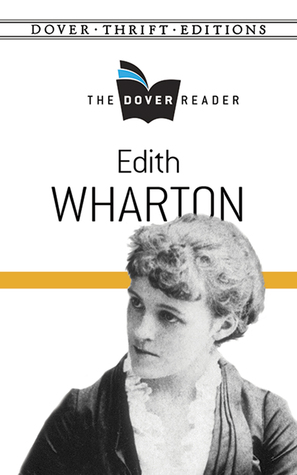
Dover publications has a fantastic list of books that are anthologies of famous authors.  I love this series because it allows us to get the various works of an author all in one, cost-friendly volume.  This particular book of Edith Wharton’s writings contains short stories, poems, two novels and a work of non-fiction.  Since it is poetry month I have decided to review and comment on the poems that are contained in the collection.

My Review:
Edith WhartonThe first aspect of Edith Wharton’s poetry that I noticed are the vivid descriptions of natural phenomenon.  Nine of her poems are included in this anthology.  One of her most famous and recognizable, “An Autumn Sunset” is a commentary on the yearly cycle of nature but she also extends the metaphor and applies it to all life.  As the sun sets on the outposts of the earth, she questions whether or not she, too, will be carried to some distance shore where all things, good and bad, in life are forgotten.

The second poem in the collection, entitled “Life” picks up on this idea of the soul being carried to another world that is reminiscent of the Underworld in Greek and Roman mythology.  She seems to be standing on the banks of the river Lethe, the river of “forgetfulness, from which souls drink before they come back to life.  Life if breathed back into her in the form of music and she is transported across a vibrant world of birds, insects, meadows and storms.

One of the poems that surprised me the most is the poem about marriage.  Edith Wharton was trapped in what seemed like a loveless marriage with her husband Teddy Wharton.  When she finally dissolved the marriage it was due to his philandering and extramarital activities.  Yet, Edith Wharton did have high hopes and high praise for the institution of marriage in the poem included in this collection.  “The Last Giustiniani” was written in 1889, three years after her marriage to Teddy, so perhaps she still was still happy in her own domestic situation.  In the poem, a soon-to-be-ordained monk is summoned by the abbot to tell him that he is the last of the House of Giustiniani so he cannot take a vow of chastity, but instead must be married so that he can extend his family lineage.  The former monk’s sense of freedom at this news is unbridled euphoria.  He takes his new vows of marriage very seriously and is proud and blissful as he is standing at the altar with his bride.  The poems ends on a lovely and hopeful note:

Without a prayer to keep our
Lips apart
I turned about and kissed
You where you stood,
And gathering all the
gladness of my life
Into a new-found word, I
Called you “wife!”

The Edith Wharton Dover reader is wonderful collection of her best works.  I hope you enjoyed learning about some of her poetry.  If you pick up this book you will also be treated to her well-known novels Ethan Frome and The Age of Innocence.  There is a work of non-fiction she wrote about how to decorate a home which I found fascinating.  Thanks to Dover Publications for bringing us another great collection of classics at a very affordable price.

About The Author:

Edith Newbold Jones was born into such wealth and privilege that her family inspired the phrase “keeping up with the Joneses.” The youngest of three children, Edith spent her early years touring Europe with her parents and, upon the family’s return to the United States, enjoyed a privileged childhood in New York and Newport, Rhode Island. Edith’s creativity and talent soon became obvious: By the age of eighteen she had written a novella, (as well as witty reviews of it) and published poetry in the Atlantic Monthly.

After a failed engagement, Edith married a wealthy sportsman, Edward Wharton. Despite similar backgrounds and a shared taste for travel, the marriage was not a success. Many of Wharton’s novels chronicle unhappy marriages, in which the demands of love and vocation often conflict with the expectations of society. Wharton’s first major novel, The House of Mirth, published in 1905, enjoyed considerable literary success. Ethan Frome appeared six years later, solidifying Wharton’s reputation as an important novelist. Often in the company of her close friend, Henry James, Wharton mingled with some of the most famous writers and artists of the day, including F. Scott Fitzgerald, André Gide, Sinclair Lewis, Jean Cocteau, and Jack London.

In 1913 Edith divorced Edward. She lived mostly in France for the remainder of her life. When World War I broke out, she organized hostels for refugees, worked as a fund-raiser, and wrote for American publications from battlefield frontlines. She was awarded the French Legion of Honor for her courage and distinguished work.

The Age of Innocence, a novel about New York in the 1870s, earned Wharton the Pulitzer Prize for fiction in 1921 — the first time the award had been bestowed upon a woman. Wharton traveled throughout Europe to encourage young authors. She also continued to write, lying in her bed every morning, as she had always done, dropping each newly penned page on the floor to be collected and arranged when she was finished. Wharton suffered a stroke and died on August 11, 1937. She is buried in the American Cemetery in Versailles, France.
– Barnesandnoble.com

3 Comments

Filed under Classics, Literature/Fiction, Poetry, Short Stories

Review: Ending Up by Kingsley Amis

I received an advanced review copy from The New York Review of books. Please visit their website for the full collection of their classics series: http://www.nybooks.com/books/imprints/classics/.

My Review:
Ending UpIn this comedy about old age, Amis provides us with a geriatric cast of characters living under the same roof who are basically trying to stay as comfortable and happy as possible before they die.  There are five septuagenarians in total, three men and two women.  Although they want nothing put peace in their final years, they manage to annoy each other and bicker to the point where peace is the last thing that any one of them is going find.

Adela is the one who holds the whole operation together by paying the bills, doing all of the cooking and shopping and generally trying to make peace among her roommates.  She is not the most attractive woman and she has never been married but she is the caretaker to everyone in the house to the point that she ignores her own health issues.

Adela’s brother Bernand, the most cantankerous one of the bunch, is also the most amusing.  He has a bad leg which seems to be better or worse, depending on whether or not he is asked to do physical labor.  He provokes the others into arguments during conversation for his own amusement and he is very fond of attempting practical jokes.  His favorite weapons are stink bombs, feces, a squirt gun and urine.

A happy drunk named Shorty is also one of the residents of the cottage.  Shorty loves alcohol and he thinks he is fooling everyone about his habit by hiding bottles all over the house.  He is also the servant of the group and is always cleaning up and serving tea.  Shorty and Bernard are actually ex-lovers, which fact produces a few bawdy jokes throughout the book.

The other woman in the group is a flighty woman named Marigold.  Marigold loves to write letters, spend time with her grandchildren and do everything she can to avoid Bernard.  When Marigold starts losing her memory, she is desperate to keep this secret from Bernard whom she is sure will use this information against her.

The last member of the household is George, a former brother-in-law of Bernard.  George is a kindly old professor who has had a stroke and cannot get around on his own.  The group has taken him in because he has no where else to go and Bernard is not happy about this situation.

ENDING UP is a funny novel about the inevitability of growing old and dealing with the vast array of issues that come along with this mortal condition.  It is ironic and funny that each of these septuagenarians are responsible for his or her own demise at the end of the book.  Thanks again to the New York Review of Books for reviving another great classics.

About The Author:
AmisSir Kingsley William Amis, CBE was an English novelist, poet, critic, and teacher. He wrote more than twenty novels, three collections of poetry, short stories, radio and television scripts, and books of social and literary criticism. He fathered the English novelist Martin Amis.

Kingsley Amis was born in Clapham, Wandsworth, Couty of London (now South London), England, the son of William Robert Amis, a mustard manufacturer’s clerk. He began his education at the City of London School, and went up to St. John’s College, Oxford April 1941 to read English; it was there that he met Philip Larkin, with whom he formed the most important friendship of his life. After only a year, he was called up for Army service in July 1942. After serving in the Royal Corps of Signals in the Second World War, Amis returned to Oxford in October 1945 to complete his degree. Although he worked hard and got a first in English in 1947, he had by then decided to give much of his time to writing.

7 Comments

Filed under Classics, Humor, Literary Fiction, New York Review of Books

Review: Prometheus Bound by Aeschylus

I received a review copy of this title from The New York Review of Books through Edelweiss.  As my regular readers know, I am a big fan of their line of classics.  For more information on their titles visit their website: http://www.nybooks.com/books/imprints/classics/.

My Review:
PrometheusI have to admit that when I found out that the translator of this ancient classic drama is not himself a classicist and does not know Ancient Greek I was rather skeptical.  After reading the introduction to the work, however, I began to come around to the idea that Joel Agee was capable of giving us a modern rendition of this play while making it accessible to a 21st century audience.  Agee describes his process of consulting older, literal translations as well as consulting experts in Ancient Greek philology.  The result is an impressive translation of one of the oldest Greek dramas in existence.

Prometheus is a Titan and in Zeus’ fight against the generation of Titans, Prometheus knows that Zeus will reign supreme and so Prometheus wisely takes the side of the god of thunder.  Yet, after his defense of Zeus, Prometheus betrays him by stealing fire for mankind.  As his name in Greek tells us, Prometheus is literally “forethought,” he knows what will happen before anyone else.  So we might wonder why Prometheus chose to steal fire from Zeus and gift it to humans if he understands perfectly well that his punishment from Zeus will be long-lasting and most severe.

When the play opens Prometheus is being chained to a rock by Hephaistos for his crimes against Zeus.  Zeus is about to destroy man and create a new race of beings when Prometheus gives these pathetic humans the gift of fire.  Fire allows them many things, including warmth, food, light, and civilization.  Prometheus becomes the champion of civilized societies, artists and those who fight against any form of tyranny.

One of the most interesting aspects of this play is the fact that Zeus himself is not a character and never speaks a word.  Zeus’ thugs, or henchmen, which include Kratos (Power), Bia (Force), Hephaistos and Hermes speak on his behalf.  The Chorus in the play is a group of water-nymphs, the Oceanids, who are horrified at and sympathetic to Prometheus’ sufferings.  The other female in the play, which I have always found to be an interesting choice, is Io who also explains her path of suffering which is caused by Zeus.  Io and Prometheus commiserate with one another and Prometheus, even though he is tortured, still manages to give Io hope about her own situation and her release from torment.  It is Io’s progeny who will ultimately be responsible for freeing Prometheus.

Prometheus Bound is not the most action oriented of the early Greek dramas yet, it is one of the more thought-provoking: Is Prometheus the champion of mankind who opposes all manner of tyranny or is he a dangerous revolutionary who challenges the authority that is necessary to maintain order and justice?

Thanks to the New York Review of Books Classics series for providing us with another great translation of a classic.

About The Authors:
Aeschylus (525 BC–456 BC), the first of ancient Greece’s major dramatists, is considered the father of Greek tragedy. He is said to have been the author of as many as ninety plays, of which seven survive.

Joel Agee is a writer and translator. He has received several prizes, including the Berlin Prize of the American Academy in Berlin in 2008 and the Helen and Kurt Wolff Prize for his translation of Heinrich von Kleist’s verse play Penthesilea. He is the author of two memoirs—Twelve Years: An American Boyhood in East Germany and, more recently, In the House of My Fear. His translation of Prometheus Bound was produced at the Getty Villa in 2013. He lives in Brooklyn, New York.

Leave a comment

Filed under Classics, Literature in Translation, New York Review of Books

April Is Poetry Month: What are you reading?


Essential PoemsI received a collection of poems from Open Road Integrated Media which was put together especially for NetGalley users.  I enjoyed the collection because it allowed me to sample so many works from different poets. My favorites from the collection are the poems written by Erica Jong and May Sarton.

Erica’s Jong’s poems are short, yet vivid reflections on love and loss of love.  There are only three of her poems included in this collection but the sample is enough to understand that Jong adeptly employs the rhetorical question to make the reader think about his or her own experiences with lost love: “Who loved you so relentlessly?” Her use of the chiasmus (ABBA patterns) is equally thought-provoking: “I want to hate you and I cannot. But I cannot love you either.”  One of my favorite poetic devices in Latin poetry, especially Catullus, is the polyptoton, the use of the same word in different forms.  I found in Erica Jong’s poetry some of most intriguing uses of polyptoton I have encountered in English poetry: “Betrayal does that–betrays the betrayer” and “It is our old love I love, as one loves certain images from childhood-.”  For more information on Erica Jong and her full collection of poems as well as her novels, visit Feed Your Need to Read.

Poetry Preview:

I have acquired quite a few collections of poetry which I will be reviewing throughout the month of April.  This is a little Proust Poemsteaser of what is to come.  One of the collections that I am most excited about is The Collected Poems of Proust, published as a dual language edition with the original French of each poem facing the English translation.  These poems show us a very different side of the novelist and were written throughout his life, from the age of seventeen to his death at the age of fifty.

The next collection I will be reviewing are a series of poems written by Edith Wharton that are include in the Dover Reader.  This collection of her writings includes her most famous novels, Ethan Frome and The Age of Innocence, but it also contains four of her poems which I am excited to read.

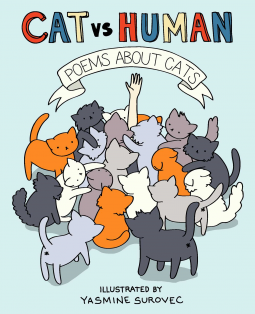
Poems about CatsI also have also acquired a book called “Poems about Cats.”  Now don’t laugh, but my love of our furry friends was not the only thing that drove me to request this tome from the publisher.  This collection includes poems about felines from famous poets such as Shakespeare, Wadsworth, and Blake.  Who knew that so many famous poets were also admirers of our feline friends!  The book also includes whimsical drawings on each page by the famous illustrator Yasmine Surovec.

Finally, I will review the City Lights Pocket Poets Anthology: 60th Anniversary Edition.  Poetry from some of City Lights Poetsthe most famous American and international poets are gathered together in this one special volume; Jack Kerouac, Allen Ginsberg, Vladimir Mayakovsky, Julio Cortázar, and Frank O’Hara all have poems featured in the collection.

I will mention that I am also translating the poems of Catullus and selections from Vergil’s Aeneid this semester with my students.  I would be remiss if I didn’t give a nod to my favorite Latin poets.  I will, however, spare everyone from my reviews of these poets for fear that my commentary would be much too lengthy to keep anyone’s attention.

This is my poetry review list for April.  I would love to hear what everyone else is reading for poetry month!  Let me know in the comments.

5 Comments

Filed under Classics, Poetry