
Category Archives: Classics

Review: Little Boy Lost by Marghanita Laski

My Review:
Little Boy LostIt’s about time that I reviewed another title from Persephone Books.  I haven’t found one yet that I didn’t like.  Although, I must admit, that I wasn’t sure if I would make it through this one because the beginning is so incredibly sad.

Hilary Wainwright returns to France after World War II in order to find his lost infant son.  He has only met his son once, on the day he was born, and so he has very little information to go on to track him down.  Hilary’s wife, Lisa, was living in Paris during the war and working for the resistance when the Nazis discovered her secret operations and arrested her.  Just before she is arrested, she passes off her baby to a family friend named Jean whom she hopes will be able to keep him safe.  But Jean is also arrested by the Nazis and she, too, has to relinquish the child before she is caught.  Jean’s fiancé, Pierre, is the only one who can help Hilary track down his son with the few clues that Jean left behind.

Hilary is so devastated by Lisa’s horrible and tragic death; she was the love of his life and his entire world and after the war he is not sure that he even wants to find his son.  To a lot of us this does not seem to make any sense.  Hilary’s son is a part of or an extension of his love with Lisa, but Hilary is afraid of more emotional turmoil if he fails to find his missing boy.  Hilary doesn’t want to open his heart again only to experience disappointment or hurt again.

Hilary’s search for his son leads him to an orphanage in a small town in France.  The scenes of the pathetic and abandoned children in the orphanage are heart wrenching.  When Hilary meets little Jean, the child whom they suspect is his son, Hilary is hesitant to become attached to the child for fear that he will experience another crippling emotional loss.   Hilary notices that Jean does not have any gloves and so he buys him a small pair of red gloves.  This is one of the most emotional scenes in the book because, although the gloves are too small for Jean, he insists on keeping them because he has never had such a nice gift before.

The end of the book deals with Hilary’s decision on whether or not to accept this son as his own.  For a while he even distracts himself from making a decision by entertaining a floozy he meets at his hotel.  The boy resembles Jean in a cursory way and we have to remember that there aren’t any DNA tests in the 1940’s.  Jean seems to want an obvious sign from the heavens pointing to the fact that this is his son.  It was my wish, though, that regardless of whether or not Jean was his biological son, that he would take pity on this small, abandoned boy anyway and decide it was worth opening up his heart again.

About The Author:
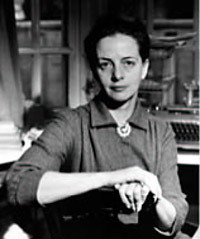
M LaskiEnglish journalist, radio panelist, and novelist: she also wrote literary biography, plays, and short stories.

Lanksi was to a prominent family of Jewish intellectuals: Neville Laski was her father, Moses Gaster her grandfather, and socialist thinker Harold Laski her uncle. She was educated at Lady Barn House School and St Paul’s Girls’ School in Hammersmith. After a stint in fashion, she read English at Oxford, then married publisher John Howard, and worked in journalism. She began writing once her son and daughter were born.

A well-known critic as well as a novelist, she wrote books on Jane Austen and George Eliot. Ecstasy (1962) explored intense experiences, and Everyday Ecstasy (1974) their social effects. Her distinctive voice was often heard on the radio on The Brains Trust and The Critics; and she submitted a large number of illustrative quotations to the Oxford English Dictionary.

An avowed atheist, she was also a keen supporter of the Campaign for Nuclear Disarmament. Her play, The Offshore Island, is about nuclear warfare.

6 Comments

Filed under British Literature, Classics, Persephone Books

Review: Confusion by Stefan Zweig

I have not been very active on the blog this week, but I have a great excuse.  Classes have started again so that means I am back in the classroom.  I have a record number of students who have signed up for Latin this year.  So when someone makes the comment that Latin is a “dead language” I reference my robust numbers of enthusiastic students.  Confusion is the perfect book to review for back-to-school since it highlights a rather unusual relationship between a student and teacher.  This book was originally published in the German in 1929 and this English translation is done by Anthea Bell.

My Review:
ConfusionWhen the novella opens, Roland is celebrating his sixtieth birthday and his thirtieth anniversary of teaching in the Department of Languages and Literature.  His colleagues and students have presented him with a book that is a complete biography of his academic career.  The only thing missing is an account of how he was inspired to begin his career in academics.  The rest of the story is an account of Roland’s youth and his experience with the teacher that inspired his career.

Roland first attends university in Berlin where he is bored and uninspired and as a result he does not take his studies seriously.  He spends months lounging around in coffee-houses and sleeping with many women and not tending to his studies at all.  One day his father shows up unannounced and this incident makes for a very funny and awkward scene in the book.  Roland is so embarrassed by his behavior that he agrees to leave Berlin and attend university in a small provincial town in central Germany.  This is where he encounters the teacher that will change his life and infuse in him a lifelong passion for literature.

When he first arrives at his new university, Roland stumbles into a lecture on Shakespeare which is being given by a passionate and well-spoken professor.  All of the students listening are captivated by this teacher and Roland is instantly inspired as well.  He finds the professor and enlists his help in mapping out a plan for his academic future.  Roland lives in the same building as the teacher and his wife so he quickly becomes very close with the couple.  Roland eats meals with the couple, spends evenings in the teacher’s study, and even goes on various social outings separately with the wife.

From the beginning it becomes clear that the teacher and his wife have a very strange marriage.  They never display an affection for each other and seem to be more roommates than husband and wife.  As Roland spends time with the wife, she drops hints here and there that they are not happily married and that the teacher is rather a difficult person to live with.  But the true details about the non-traditional relationship between husband and wife are not revealed until the very end of the book.

Throughout his time with the teacher, Roland is plagued by the constant mood swings of his mentor.  Sometimes his teacher is encouraging and kind and then all of a sudden he is insulting, distant and cold.  Roland works hard at his studies to impress his teacher, even to the detriment of his mental and physical health.  Roland feels like he is walking on eggshells because he never knows if his teacher will be kind or cruel.  The teacher’s feelings and reasons for his changeable behavior are not revealed until the end of the book.

As a teacher this book was interesting to read because it reminded me that we oftentimes never know what kind of an impact we can have on students’ lives and careers.  Roland has this one man to thank for his long and successful career but he never gets to tell the teacher about his inspiration.  It is significant that the teacher is never given a name; he remains a nameless entity even though he has such an amazing impact on Roland’s fate.   Furthermore, there could not be a more apt title for this book than the word “confusion.”  Roland is confused about his relationship to his teacher, and he is also confused about the relationship between the teacher and his wife.  And until the very end, the reader is confused about what, exactly, is going on with the teacher.

This is a touching, powerful and short read that I highly recommend.  I look forward to reading more of Zweig’s works.  Thanks to the New York Review of Books for reviving another fantastic classic work in translation.

About The Author:
Stefan Zweig was one of the world’s most famous writers during the 1920s and 1930s, especially in the U.S., South America and Europe. He produced novels, plays, biographies and journalist pieces. Among his most famous works are Beware of Pity, Letter from and Unknown Woman and Mary, Queen of Scotland and the Isles. He and his second wife committed suicide in 1942.

Zweig studied in Austria, France, and Germany before settling in Salzburg in 1913. In 1934, driven into exile by the Nazis, he emigrated to England and then, in 1940, to Brazil by way of New York. Finding only growing loneliness and disillusionment in their new surroundings, he and his second wife committed suicide.

Zweig’s interest in psychology and the teachings of Sigmund Freud led to his most characteristic work, the subtle portrayal of character. Zweig’s essays include studies of Honoré de Balzac, Charles Dickens, and Fyodor Dostoyevsky (Drei Meister, 1920; Three Masters) and of Friedrich Hlderlin, Heinrich von Kleist, and Friedrich Nietzsche (Der Kampf mit dem Dmon, 1925; Master Builders). He achieved popularity with Sternstunden der Menschheit (1928; The Tide of Fortune), five historical portraits in miniature. He wrote full-scale, intuitive rather than objective, biographies of the French statesman Joseph Fouché (1929), Mary Stuart (1935), and others. His stories include those in Verwirrung der Gefhle (1925; Conflicts). He also wrote a psychological novel, Ungeduld des Herzens (1938; Beware of Pity), and translated works of Charles Baudelaire, Paul Verlaine, and mile Verhaeren.

Most recently, his works provided inspiration for the 2014 film ‘The Grand Budapest Hotel’

12 Comments

Filed under Classics, German Literature, Literature in Translation, New York Review of Books, Novella

Giveaway: Austen in August-Pride and Prejudice Novel Journal

I received a box of beautiful and unique books and journals from Thunder Bay Press. Their selection of journals and classic books make great gifts for those who love literature, writing and journaling. For the Austen in August event hosted by Adam at  Roof Beam Reader I am giving away one Pride and Prejudice novel journal (US only).

Novel Journals:

Novel JournalAs a blogger I am always looking for journals in which to scribble my thoughts about books. I have a scattered collection of notebooks and I was thrilled to receive the journals from Thunder Bay Press so I could better organize my reviews. The sturdy, heat burnished covers ensure that the pages are not easily ripped and if I spill a beverage on the journal then the paper is still protected.

The durable nature of these journals, however, is not their most notable feature. Each journal contains the lines of a famous novel in tiny print. The lines of print serve as the lines one which to write in the journal. This would make a fabulous gift for anyone who likes to write and appreciates classic literature. Thunder Bay Press has a large collection of novel journals which include Pride and Prejudice, Jane Eyre, Great Expectations and TheJournal Text Adventures Huckleberry Finn. To see a complete list of journals that are available please visit this link: http://blog.thunderbaybooks.com/2015/03/novel-journals/


Giveaway:

I am giving away one Pride and Prejudice novel journal, just like the one pictured above. It contains the lines of Austen’s famous novel in small print.  To enter:

  •  Leave a comment below and tell me what your favorite Austen novel is.
  • You must also be signed up for the Austen in August event on Roof Beam Reader.
  • The giveaway runs from August 5th through August 12th.
  • I will choose one random winner who will be notified via e-mail.
  • The winner will have 48 hours to respond with a valid U.S. mailing address.
  • Open to U.S. residents only

24 Comments

Filed under British Literature, Classics, Favorites, Giveaways

Review: Two Novellas from Flaubert and Dostoevsky

I recently stumbled across a sale that Melville House Publishers was having on their novella series.  They have released 56 novellas from famous authors across the world.  I chose two titles, A Simple Heart by Gustave Flaubert and The Eternal Husband by Fodor Dostoevsky to review here.  Please check out all of the great titles in their selection.  You can even buy a subscription to the novella series and have novellas show up on your doorstep every month: http://www.mhpbooks.com/series/the-art-of-the-novella/

A Simple Heart by Gustave Flaubert:
A simple heartThis novella introduces us to a simple servant woman who is cast out of her own home as an orphan at an early age and searches for intimacy and love for the rest of her life.  Felicite falls in love with a young man who ends up rejecting her so that he can marry a rich, old widow and avoid conscription.  After this disappointing heartache, Felicite never finds another man that she can trust her heart to.  When she comes into the service of Madame Aubain, a young widow with two small children, she is the most faithful and loyal servant anyone could ask for.  Felicite bestows love on the two children who eventually leave home for school and meet a sorrowful end due to illness.  Felicite is also given a parrot which she lavishes with love and attention.  But, like everyone else in her life that she has loved, he dies and leaves her.  This is not a tale with a happy ending but gives us a realistic view of life, love and loss.


The Eternal Husband by Fodor Dostoevsky:
The eternal husbandThe story opens with Velchaninov living in St. Petersburg in an apartment flat by himself trying to iron out the details of a lawsuit.  He has become increasingly depressed and melancholy and has eventually cut himself off from all of his friends and acquaintances.  One day an old friend, whom he has not seen for nine years, shows up on Velchaninov’s doorstep.  He is stunned to see his friend after so many years and further shocked when Trusotsky announces that his wife has died of consumption.  Velchaninov had an affair with Trusotsky’s wife and that is the main reason he hadn’t visited the couple for nine years.  When Trusotsky’s wife broke the affair off, Velchaninov vowed never to see either of the again.

Velchaninov describes Trusotsky as “an eternal husband,” which to him means a man that is subservient to a domineering wife.  Nowadays we might call Trusotsky “henpecked” or “whipped.”  Trusotsky descends into a depression that is fueled by excessive drinking; he turns out to be a man who cannot live without a wife, who cannot operate in the world without the confines of a marriage.  In typical Dostoevsky fashion, we get a glimpse into the male psyche and an interesting and ironic storyline.  I thoroughly enjoyed this story as much as his longer works.

According to the Melville House website, novellas are oftentimes ignored by academics and publishers.  I would love to hear about other readers’ favorite choices as far as this overlooked style of writing.  Do you like novellas and, if so, what are some of your favorites?


18 Comments

Filed under Classics, France, Literature in Translation, Novella, Russian Literature

Review: Patience by John Coates

I am afraid that now that I have discovered the books published by Persephone Books that I am completely addicted.  Here is another great classic from their catalogue.

My Review:

Patience-cover-387x600When we meet Patience, the eponymous character of the novel, she is having a very serious discussion with her brother who is a devout Catholic.  The discussion between brother and sister that opens the book is amusing and sets the stage for what is a delightful exploration of love, faith and relationships.  Patience is not upset when her brother reveals to her that her husband Edward is cheating on her; she does not yell or get upset or even shed a tear.  She is, however, surprised that anyone would go to bed with Edward willingly.  This statement is very telling of Patience and Edwards’ marital relations and her lack of satisfaction.

Patience is first and foremost a mother and she adores her three blond haired daughters; she endearingly calls them her “babies.”  After doing some research in order to find out about Edward’s mistress, Patience also discovers that Edward’s first wife is not deceased.  A few hilarious discussions ensue as to the legitimacy of her three children.  Since Edward is technically still married to his first wife, and never legally married Patience, then aren’t her three children, she concludes, all bastards?

This story is really one of an awakening: spiritual, sexual and emotional.  It is not so much Edwards’ cheating that prompts Patience to reexamine her life, as her unexpected relationship with a man named Philip.   Patience meets Philip one night when she goes out dancing with her sister.  Philip is immediately attracted to Patience and he tells her so.  Patience is flattered and overwhelmed that a man could be so loving and attentive.  It is surprising that Patience sleeps with Philip immediately, but by doing so she realizes what a farce her marriage to Edward has been.

When Patience decides that she must leave Edward and live a happy life of peace and fulfillment Edward, in turn, decides that he will not let her go very easily.  Patience uses all of her guile and newly found sensuality to force Edward to let her and the children go.  Patience’s transformation into a confident, loving and sexual woman is funny, poignant and makes for a fantastic story.  Once again, Persephone Press has reissued another great classic which I highly recommend.

About The Author:
John Coates was born in 1912 into a Yorkshire engineering family. He went to Haileybury and then read English at Cambridge, where he spent most of his time acting and writing plays and became President of Footlights.


7 Comments

Filed under British Literature, Classics, Persephone Books