Category Archives: Classics

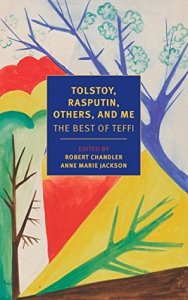
Review: Tolstoy, Rasputin, Others and Me by Teffi

My Review:
TeffiThis book is a collection of autobiographical essays from the renowned, female Russian author Teffi.  The essays were all written during the early part of the twentieth century and reflect Teffi’s own struggles with having to flee a turbulent and oppressive Russia.  The collection is divided into four parts, the first of which is entitled “How I Live and Work.”  These first few essays in the book capture her inner thoughts and self-doubts as she becomes Teffi “The Author.”

The second part of the book, “Staging Posts” deals with various aspects of Teffi’s personal life from her upbringing in a wealthy Russian family to her emigration to Paris during the Russian Civil War to her time in France during the German Occupation.   Teffi is well-known for her wit, but these essays show us an emotionally tender and serious woman.  She begins her essay entitled “Valya” on a sad and brutally honest note: “I was in my twenty-first year.  She, my daughter, was in her fourth.  We were not well matched.”  In this essay Teffi has a difficult time connecting with her daughter and I was not surprised to find out that her marriage was dreadfully unhappy and she eventually leaves her family in order to pursue her writing career.

My favorite essay in the third section of the book “Heady Days: Revolutions and Civil War” is the one that describes Teffi’s bizarre encounters with Rasputin.  This essay is a perfect example of Teffi’s ability to write a humorous essay but also to display her serious and emotional side.  When Teffi meets Rasputin, he is smitten with her and he tries to seduce her.  But Teffi sees right through his act; although many women have fallen for his smooth words and intimate gestures, Teffi finds his behavior strange and a little pathetic.  Rasputin comes across as a buffoon and we do laugh at his antics, but at the same time we also feel sorry for this ridiculous man who is finally killed by one of the many assassins who are after him.

The fourth and final part of the book is dedicated to some of the famous authors and artists that Teffi has come in contact with.  At the age of thirteen Teffi is enthralled with Tolstoy’s War and Peace.  She is so distraught by the death of Prince Andrei in this novel that she is determined to meet the author and ask him to change the story.   Teffi shows up at Tolstoy’s home but is so flabbergasted to meet him that all she can do is ask for his autograph and slink away in embarrassment.

The quality that comes through in every one of these essays is Teffi’s innate ability to read and truly understand people.  When she meets Lenin she senses a man who is crafty and cunning.  She meets many famous people throughout her life, from the Russian poet and novelist Merezhkovsky to the artist Repin to various other writers, journalists and politicians.  She is never fooled by the façade of their importance but instead she sees the true humanity beyond the exterior.

I have to admit that I am smitten with Teffi after reading this one volume from NYRB classics.  I ordered three more of Teffi’s books after I finished this one. I don’t think I’ve done Teffi’s writing justice in this brief review and so everyone must read a least one of her essays to experience her brilliant writing.

About the Author:
Teffi PicTeffi was a Russian humorist writer. Teffi is a pseudonym. Her real name was Nadezhda Alexandrovna Lokhvitskaya (Наде́жда Алекса́ндровна Лoхви́цкая); after her marriage Nadezhda Alexandrovna Buchinskaya (Бучи́нская). Together with Arkady Averchenko she was one of the most prominent authors of the Satiricon magazine.

13 Comments

Filed under Classics, Literature in Translation, New York Review of Books, Nonfiction, Russian Literature

Review: Brat Farrar by Josephine Tey

My Review:
B FarrarThe Ashby family has maintained their estate in the south of England for many generations.  The current family members who inhabit the estate are best known for their stables of beautiful horses.  Aunt Bee, the matriarch of the family, oversees the care of her ten-year-old nieces Jane and Ruth.  Bee supervises and runs the horse estate with the help of her niece Elenor and nephew Simon who are young adults.  Although to visit them for afternoon tea, one would believe that this is a happy and well-adjusted family, the Ashby’s have suffered some terrible tragedies.
The reason Aunt Bee has had to take over as parent for her three nieces and her nephew is that their parents died in a tragic airplane crash when Jane and Ruth were only a few months old.  Soon after the parents’ death, Simon’s twin brother committed suicide by throwing himself off of a cliff.  This second tragedy particularly surprised the family because Patrick was such a sweet and well-adjusted boy whom no one suspected was on the brink of taking his own life.

One day, a man walks into their life claiming that he is Patrick, the long-lost Ashby; he says that he didn’t commit suicide but instead ran away, assumed the name of Brat Farrar and spent the last eight years in America where he worked on horse ranches.  Aunt Bee is especially eager to believe Brat’s story and the fact that he looks like an Ashby helps to convince everyone in their immediate circle that Patrick is the long-lost heir.  The only one who seems skeptical about Brat’s identity is Simon.  It is Simon who has the most to lose from Patrick’s reappearance since Simon will no longer be the Ashby heir; the family fortune will revert back to Patrick who is the eldest son.

What I found most unique about this story is that Brat is supposed to be the bad buy in this story, the imposter, the crook.  But Brat’s story is very compelling and he is really not after the Ashby fortune.  Brat grew up in an orphanage and he has never had a family of his own.  When the opportunity to become part of an middle class English family presents itself, Brat’s desire for a sense of belonging and a place to call home prove to be a stronger temptation then the lure of money.

Brat is welcomed into the Ashby home and becomes a part of their everyday lives.  He is an expert horse trainer and he gets along especially well with Elenor for whom he develops more than sisterly feelings..  As he spends quality time with the family, he discovers through various clues that Simon has a sinister and mean side to him.  Simon’s reasons for being angry go much deeper than his disinheritance from the Ashby fortune.  I don’t want to give away too much, but the mystery surrounding Patrick’s disappearance and Simon’s involvement in it were very compelling plot lines and I finished the book very quickly.  I guess this would quality Tey’s book as a page turner.

Tey’s books are written in a classics and charming British style one would expect from a 20th century author.  Her characters are interesting in the sense that they are likeable but can be morally flexible.  Finally, the plot alone is reason enough to pick up this book.

I’ve also read Tey’s The Franchise Affair and enjoyed that book as well.  Has anyone else read any of Tey’s books?  I would love to hear about them.

About the Author:

iteyjos001p1

Josephine Tey was a pseudonym of Elizabeth Mackintosh. Josephine was her mother’s first name and Tey the surname of an English Grandmother. As Josephine Tey, she wrote six mystery novels including Scotland Yard’s Inspector Alan Grant.

The first of these, ‘The Man in the Queue’ (1929) was published under the pseudonym of Gordon Daviot , whose name also appears on the title page of another of her 1929 novels, ‘Kit An Unvarnished History’. She also used the Daviot by-line for a biography of the 17th century cavalry leader John Graham, which was entitled ‘Claverhouse’ (1937).

Mackintosh also wrote plays (both one act and full length), some of which were produced during her lifetime, under the pseudonym Gordon Daviot. The district of Daviot, nea Josephine Tey was a pseudonym of Elizabeth Mackintosh. Josephine was her mother’s first name and Tey the surname of an English Grandmother. As Josephine Tey, she wrote six mystery novels including Scotland Yard’s Inspector Alan Grant.

The first of these, ‘The Man in the Queue’ (1929) was published under the pseudonym of Gordon Daviot , whose name also appears on the title page of another of her 1929 novels, ‘Kit An Unvarnished History’. She also used the Daviot by-line for a biography of the 17th century cavalry leader John Graham, which was entitled ‘Claverhouse’ (1937).

Mackintosh also wrote plays (both one act and full length), some of which were produced during her lifetime, under the pseudonym Gordon Daviot. The district of Daviot, near her home of Inverness in Scotland, was a location her family had vacationed. The name Gordon does not appear in either her family or her history.

Elizabeth Mackintosh came of age during World War I, attending Anstey Physical Training College in Birmingham, England during the years 1915-1918. Upon graduation, she became a physical training instructor for eight years. In 1926, her mother died and she returned home to Inverness to care for her invalid father. Busy with household duties, she turned to writing as a diversion, and was successful in creating a second career.

Alfred Hitchcock filmed one of her novels, ‘A Shilling for Candles’ (1936) as ‘Young and Innocent’ in 1937 and two other of her novels have been made into films, ‘The Franchise Affair’ (1948), filmed in 1950, and ‘Brat Farrar’ (1949), filmed as ‘Paranoiac’ in 1963. In addition a number of her works have been dramatised for radio.

Her novel ‘The Daughter of Time’ (1951) was voted the greatest mystery novel of all time by the Crime Writers’ Association in 1990.

Miss Mackintosh never married, and died at the age of 55, in London. A shy woman, she is reported to have been somewhat of a mystery even to her intimate friends. While her death seems to have been a surprise, there is some indication she may have known she was fatally ill for some time prior to her passing.


10 Comments

Filed under British Literature, Classics, Mystery/Thriller

Review: Diary of a Short-sighted Adolescent by Mircea Eliade

I received an advanced review copy of this title from Istros Books.

My Review:
Short Sighted AdolescentAs a seventeen-year old adolescent living in the capitol of Romania in the twentieth century, Eliade faces the typical struggles of every teenage boy.  Eliade records his thoughts in his diaries with the hopes that he will eventually turn his writings into a novel.  When the entries in this diary begin, he is spending most of his time attending school at the lycee, hanging around with his friends and reading voraciously in his bedroom attic.  He is trying to figure out what the plot of his novel will be and decides he wants to have a hero as the center character of his novel.  He introduces us to his friends, especially Robert and Dinu, whom he contemplates basing the novel of his hero on.
Eliade also wants to include some sort of a romantic relationship in his novel but his lack of experience with girls frustrates him.  He asks a female cousin for advise and uses his imagination to dream about possibilities of a romantic plot line in his book.  Eliade believes that he is ugly and awkward and he often dwells on his lack of self-esteem throughout his diary.  His ignorance of the opposite sex, as evidenced by a few hilarious and awkward episodes that are described in his diary,  further increase his insecurity.

The struggles Eliade encounters at the lycee are, in my experience as a teacher, fairly typical of a teenage boy.  He would rather be doing a million other things than attending classes and he is easily distracted by his friends and his favorite books.  Eliade’s most dreaded classes are math and German.  He tells us the story of a humiliating experience in which he is called by the math teacher to solve a homework problem on the blackboard.  Eliade didn’t even attempt the homework and has no idea what he is doing.  When he can’t manage to copy the problem correctly the teacher becomes exasperated with him and makes he retake his seat.  He encounters similar stressful episodes in his German classes.  Despite failing grades and disappointed teachers, Eliade is never motivated to be more studious with his school work.

Eliade’s procrastination is a common theme throughout his diaries and his struggle against this procrastination makes for some funny scenes.  He decides that he will cram for his math exams and makes a strict schedule to reread his math book in the few days leading up to his exam.  He always finds something to distract him from his studies; he reads a book, talks a walk, has a nap and basically does anything but study for his exam.  His novel, likewise, never comes to fruition despite his plans that are outlined at the beginning of his diary.  As his diary entries continue, he mentions the novel less and less frequently.  The one thing in his life that keeps his attention are his books.  As a rabid bibliophile myself, I related to Eliade’s obsessive love of books.

Eliade shows us that adolescence is a struggle that all humans experience as a rite of passage.  We have all gone through that awkward phase during which we are still considered children but are looking forward to adulthood and the responsibilities that are not far away.  At one point in the diary Eliade is playing cops and robbers and throwing dirt at his friends.  In another episode he is frustrated with his lack of romantic and physical relationships so he seeks out prostitutes to fulfill his desires.  The end of the diary takes on a more melancholy tone as Eliade realizes that he will soon be graduating from the lycee and the comforting space of his attic room will not always be his.

This book is a philosophical commentary on what it means to step out of childhood and into the dark and scary world of adulthood.  Sometimes funny, sometimes contemplative, and sometimes sad this book will appeal to a wide range of readers.   Thanks to Istros Books for bringing this timeless classic to a new generation of English readers.

About the Author:
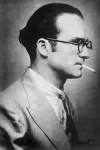
mircea-eliade-young_56d0650fb2d02_250x800rMircea Eliade was born in 1907 in Bucharest, the son of an army officer. He lived in India from 1928-1932, after which he obtained a doctorate in philosophy with a thesis on yoga, and taught at the University of Bucharest for seven years. During the war he was a cultural attaché in London and Lisbon, and from 1945 taught at the École des haut études in Paris and several other European universities.
In 1957 he took up the chair of history of religion at the University of Chicago, a post that he held until his death in 1986. Fluent in eight languages, his extensive body of work includes includes studies of religion and the religious experience that remain influential, such as The Sacred and the Profane, and numerous works of literature, including The Forbidden Forest, Bengal Nights and Youth without Youth, both of which were adapted for the screen. – See more at: http://istrosbooks.com/products/authors/mircea-eliade-67/#sthash.bpqkp6oR.dpuf


10 Comments

Filed under Classics, Literature in Translation

Review: Hill by Jean Giono

I received an advanced review copy of this title from NYRB classics.  The original title was written and published in French in 1928 and this English edition has been translated by Paul Eprile.

My Review:
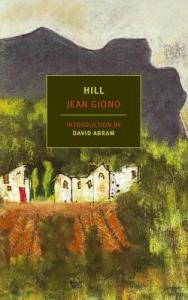
HillFour families live quiet and simple lives at the foot of a hill in Provence in the early twentieth century.  Their small community consists of four white houses and a small shack for an old bachelor that also lives among these peasants.  Their days consist of working the land, drinking wine and telling stories.  But their bucolic life is threatened when day when a black cat crosses their paths.
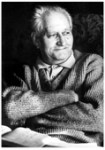
Janet, the eldest of the group, has lived at the foot of this hill for most of his life and the last time that this black cat came around it also meant trouble for their little village.  Janet’s son-in-law, a man named Gondran, as well as the other neighbors are all on high alert as they are anticipating some kind of calamity to happen to them.  The peasants believe in many old wives tales and different forms of superstition and to them a black cat is the ultimate sign of bad fortune about to strike.

When their well runs dry and they are desperate for water, the villagers decide that it is finally time to consult Janet about what to do.  But Janet is on his deathbed and spends his days laying in bed and mumbling gibberish.  Janet also has strange visions and at one point he thinks there are snakes coming out of his fingernails.  They are doubtful as to whether or not they can pry some useful information out of this delirious old man.

What Janet gives them is a beautiful and timeless commentary on mother earth and a lesson on how we ought to treat and respect nature.  Janet paints for them a picture of an earth where everything is alive and has feeling.  Every time we chop down a tree, or drive a spade into the dirt or hunt an animal the earth feels it and it hurts her.  The idea that the earth senses pain and actually cries out every time we use a foreign object to dig into the soil was one of the most powerful points in the book for me.

Giono personifies the earth through language rich with spiritual terms; he imagines a supreme protector of the earth who walks around in a sheep skin that was gifted to him by the animals.  And humans have harmed earth so much that the kindly, supreme being can no longer heal her many wounds.

The commentary on the spirituality of nature and our abuse and misuse of the limited resources that the earth gives us is a timely theme that we continue to discuss in the twenty-first century.  We must realize that the pollutants we put into the air, the poisons we put into the ground and the extraction of natural resources all have a negative effect on our environment.  Giorno’s words are just as applicable today as they were almost one-hundred years ago when he wrote this brief yet powerful little story.

The plot itself of this book is not necessarily a page-turner, but the inspirational language and social commentary are well worth the read.

About the Author:
Jean GionoJean Giono, the only son of a cobbler and a laundress, was one of France’s greatest writers. His prodigious literary output included stories, essays, poetry,plays, filmscripts, translations and over thirty novels, many of which have been translated into English.

Giono was a pacifist, and was twice imprisoned in France at the outset and conclusion of World War II.

He remained tied to Provence and Manosque, the little city where he was born in 1895 and, in 1970, died.

Giono was awarded the Prix Bretano, the Prix de Monaco (for the most outstanding
collected work by a French writer), the Légion d’Honneur, and he was
a member of the Académie Goncourt


12 Comments

Filed under Classics, France, New York Review of Books

Review: Cluny Brown by Margery Sharp

I received an advanced review copy of this title from Open Road Media through NetGalley.

My Review:
Cluny BrownI absolutely feel in love with the quirky, charming and free-spirited character of Cluny Brown.  We first meet her through the eyes of her Uncle Arn, who is distressed because he feels that Cluny doesn’t seem to know her proper place in life.  He tells a stranger that he meets in the park that his twenty year-old niece had the nerve to treat herself to tea at the Ritz.  Uncle Arn is simply beside himself that Cluny doesn’t understand that she is a plumber’s niece and has no business having tea at the Ritz.
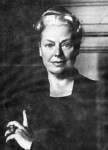

Cluny is a young woman living in London in 1938; she is an orphan was raised by her Aunt Floss who has just died.  She is left to live with her Uncle Arn for whose robust plumbing business she answers the phone.  Through a series of hilarious circumstances through which Uncle Arn is further convinced that Cluny doesn’t know her place in life, Cluny is asked to leave Uncle Arn’s house.  His orderly, neat life just can’t tolerate a loose canon like Cluny Brown.  He finds a nice place for her in the countryside where she is to be employed as a parlour-maid.

Cluny lands in Devon at the estate of a country squire which is called Friars Carmel.  Cluny serves the family at Friars Carmel which consists of the squire himself, Lord Henry, his wife Lady Carmel and their son Andrew.  The family of the house has their own funny entanglements which mainly revolve around the question of Andrew’s bachelor status which threatens the legacy of Friars Carmel.

Cluny arrives at Friars Carmel at the same time as one of Andrew’s friends, a Polish writer named Adam who has apparently fled from the Nazis.  Adam is also an interesting and quirky character in his own right as he spends his days basking in the country air, taking walks with Lady Carmel and trying to get some inspiration for his latest book.  Adam thinks Cluny is one strange girl and they have some hilarious conversations in which they unsuccessfully try to understand one another.

There are many scenes in the book that are charming and funny due to Cluny’s naïve nature.  When she meets the local chemist, Mr. Wilson, and he invites her to tea she is completely smitten with his cozy living room and his elderly mother.  Cluny also has some interesting adventures when she makes friends with a neighbor’s dog and attempts to walk the beast through the English countryside.

I cannot recommend this charming book enough for its wonderful characters and delightful writing style; the end is also a bit of a surprise when Cluny finally figures out where she belongs in life.

I first heard about Margery Sharp’s books from Jane at Beyond Eden Rock.  Please visit her site for more reviews of Sharp’s books.

About the Author:
M SharpMargery Sharp was born Clara Margery Melita Sharp in Salisbury. She spent part of her childhood in Malta.

Sharp wrote 26 novels, 14 children’s stories, 4 plays, 2 mysteries and many short stories. She is best known for her series of children’s books about a little white mouse named Miss Bianca and her companion, Bernard. Two Disney films have been made based on them, called The Rescuers and The Rescuers Down Under.

In 1938, she married Major Geoffrey Castle, an aeronautical engineer.

10 Comments

Filed under British Literature, Classics