Author Archives: Melissa Beck

Melissa Beck's avatar

About Melissa Beck

My reading choices are rather eclectic. I enjoy reading a wide range of books especially classics, literature in translation, history, philosophy, travel writing and poetry. I especially like to support small, literary presses.

Review: The Real Thing by Tom Stoppard

Today I have something a little different to review, a play by the Czech-born British writer Tom Stoppard.  This is a very short work, fewer than 100 pages long.  But it is full of great humor and insights about love and relationships.

My Review:
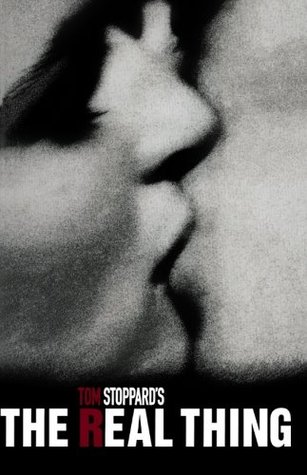
The Real ThingWhen the play opens, Max and Charlotte are having a discussion about Charlotte’s recent trip to Amsterdam.  It becomes evident to Max that Charlotte never went on any trip and it was all just a cover to have a clandestine rendezvous with her lover.  Max commends Charlotte for making the trip seem as authentic as possible by bringing back souvenirs for her mother.  We soon realize that the scene between Max and Charlotte are not really married but were acting in a play that was written by Charlotte’s husband, Henry.

Stoppard plays quite a bit with drama and reality and oftentimes blurs the distinctions between the two as I noted in the first scene.  We learn that Charlotte and Henry’s relationship, much like that of Charlotte and Max’s onstage relationship, has its issues.  After Henry and Charlotte separate and marry other people, Henry makes an interesting observation about commitment; he believes that many people say they are committed in a relationship and never give it a second thought.  But for a relationship to succeed, both parties involved must renew their commitment on a daily basis.  He concludes, very astutely, that there are no real commitments but bargains that are constantly being made between lovers.

The characters in the play are flawed and are trying, like everyone else, to figure out what love is and to find long-lasting love.  They deal with their relationship issues with humor but also with golden nuggets of wisdom that they have learned through experience.  One of my favorite speeches in the play is given by Henry to his young daughter about love.  He uses the Biblical Greek word “to know” in his definition; “to know” someone in a carnal sense is a euphemism in the Bible but Henry feels that it is a fitting definition for love because it is through the flesh that we allow one special person to truly know us like no other.

THE REAL THING is a quick yet thought-provoking read.  If you want to add more drama to your reading lists then I highly recommend it.  This play has also made me want to explore more of Stoppard’s works.

About The Author:
StoppardSir Tom Stoppard OM CBE FRSL (born Tomáš Straussler; 3 July 1937) is a British playwright, knighted in 1997. He has written prolifically for TV, radio, film and stage, finding prominence with plays such as Arcadia, The Coast of Utopia, Every Good Boy Deserves Favour, Professional Foul, The Real Thing, and Rosencrantz and Guildenstern Are Dead. He co-wrote the screenplays for Brazil, The Russia House, and Shakespeare in Love, and has received one Academy Award and four Tony Awards. Themes of human rights, censorship and political freedom pervade his work along with exploration of linguistics and philosophy. Stoppard has been a key playwright of the National Theatre and is one of the most internationally performed dramatists of his generation.

Born in Czechoslovakia, Stoppard left as a child refugee, fleeing imminent Nazi occupation. He settled with his family in Britain after the war, in 1946. After being educated at schools in Nottingham and Yorkshire, Stoppard became a journalist, a drama critic and then, in 1960, a playwright. He has been married three times, to Josie Ingle (m. 1965), then Miriam Stoppard (m. 1972), and Sabrina Guinness (m. 2014).


Leave a comment

Filed under Humor, Plays

Review: The Happy Tree by Rosalind Murray

My new favorite literary obsession is the wonderful novels from Persephone Books.  Please visit their website to learn more about this small press and the fabulous books they publish: http://www.persephonebooks.co.uk

My Review:
The Happy TreeFirst, I would like to mention that each Persephone book comes with beautiful endpapers and a matching bookmark.  Each endpaper and bookmark pattern that are chosen have a history of their own.  The picture here is the endpaper from The Happy Tree and is a replica of a 1926 printed woolen plush by TF Firth & Sons.

This novel shows us the devastating effects that World War I has on ordinary people who are trying to carry on in their daily lives while chaos and death have broken out around them.  The story is told from the point of view of Helen Woodruffe, who spends her childhood with her Cousin Delia and her two sons, Guy and Hugo.  Helen’s own father has died and Helen’s mother wants nothing to do with raising a child.  So Helen’s paternal relations step in and raise her.  She spends many happy days running around the family estate at Yearsly with Guy and Hugo.  Helen is particularly close to Hugo who is about her same age; they seem to have a special understanding of one another’s sensitive personalities and they share the same interests.

As Helen and Hugo develop into teenagers, it is evident that there is a strong attraction between them.  Everyone who is close to them assumes that they will eventually marry.  But when Hugo takes interest in another girl, Helen agrees to marry a man named Walter because she thinks Hugo is lost to her forever.  Walter is a good husband and loves Helen and it is sad that she comes to the conclusion that she has married the wrong person.  Helen has three children with Walter and she does seem happy for most of her married life with Walter.

The most interesting part of the book is reading about people’s reaction to the war; Helen and her family are at a dinner party when Franz Ferdinand is assassinated and no one believes that there will be a war and any fighting that does break out they believe it will be minor.  When Great Britain is pulled into the war and all of Helen’s young friends, including Guy and Hugo, join the fighting no one believes that the war will last for very long.  As the war drags on, Helen gets notice of one friend after another who has been wounded or killed in the fighting.  In the meantime, she has to deal with food rations, long lines and fuel shortages.  This begins to wear her down and she becomes very depressed, especially when her second child is born.

One of my favorite quotes from the book is one in which Helen describes the struggle of everyday existence during the war years:

This was not life, this daily drudgery, this struggle to keep going, to get through, to exist. I was marking time, we were all marking time, waiting and waiting for the strain to relax, for the war to end; and meantime our youth was going.

THE HAPPY TREE is a realistic view of World War I as see through the eyes of Helen and the everyday British citizens whose lives were worn down by this horrible conflict.  Persephone Books has given us another great classic that should go on the “must read” list for all those interested in World War I historical fiction.

About The Author:
rosalind-murray-copy_1Rosalind Murray (1890-1967) was the daughter of the well-known classical scholar Gilbert Murray and Lady Mary Howard. Brought up in Glasgow and Oxford, she was educated by governesses and at the progressive Priors Field School. She published her first novel, The Leading Note, in 1910 when she was 20, her second, Moonseed, in 1911 and her third, Unstable Ways, in 1914; this was the year after her marriage to the historian Arnold Toynbee, with whom she had three sons between 1914 and 1922. The Happy Tree came out in 1926; it was followed by another novel, Hard Liberty, and by a children’s history book.  During the 1930s Rosalind Murray’s interests turned to theology; although brought up agnostic, she was received into the Roman Catholic Church in 1933, and published several books about faith and religion. She parted from her husband in 1942 and spent the rest of her life farming in Cumberland.


3 Comments

Filed under British Literature, Classics, Historical Fiction, Persephone Books, World War I

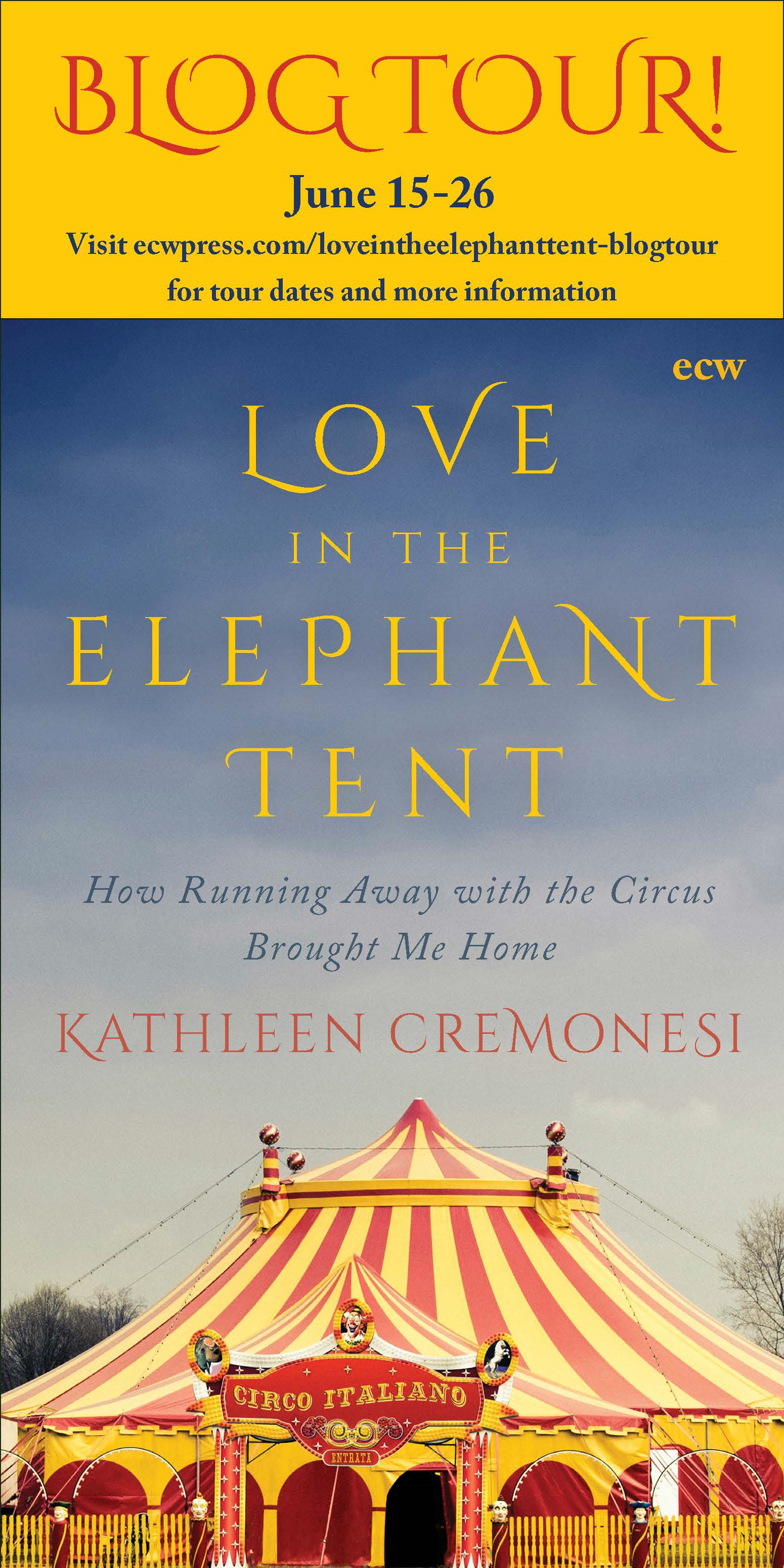
Review and Author Interview: Love in the Elephant Tent by Kathleen Cremonesi

I received an advanced review copy of this title from the publisher, ECW Press.

About The Book:
Elephant TentKathleen’s life has always been an itinerant one and from the time she was seventeen she took off from her small hometown and Oregon and went on the road.  She tries out different things that take her through various parts of the U.S. and Europe.  She finally lands in Spain where she starts to work for a circus and meets the Elephant trainer who completely changes her life.

What is interesting about Kathleen’s story is that there are a lot of bumps on the way to finding her true happiness.  She does immediately have feelings for Stefano but her parent’s rocky marriage has a negative effect on how Kathleen views commitment.  It is interesting to follow Kathleen on her emotional journey.

I also liked the fact that Kathleen talks about animal cruelty and the elephants she encounters.  Stefano tells her that elephants are nomadic animals and should be roaming free.  She does not gloss over or hide the fact that their captivity in a circus is not the best environment for them.

If you love memoirs and travel writing then LOVE IN THE ELEPHANT TENT is a great book to put on your reading list for the summer.

Author Q&A:
1. Can you please tell us a bit about yourself and how you became an author?
I have always aimed to create my own space in this world, and I have been self-employed for most of my adult life, usually in ways that incorporated art and creativity. In part, my inspiration to carve my own pathway through life comes from rebelling against the pain I saw my mother experience when her marriage dissolved, so I steered my life in the opposite direction by running away from any situation that even hinted of domesticity. Instead, I sought out adventure and refused to bend to others’ expectations and desires – which made life exciting but also lonely. It wasn’t until I met Stefano in Spain that I found someone I could imagine sharing a life with – but imagining something and living it are quite different, of course. It took a lot of growing up on my part, and Stefano’s, for us create a life together.

Once we did make that leap and moved from Italy to America, many people were curious about how we met, which of course brings up circus stories. Most people were anxious to hear more. I heard, “You should write a book,” so many times, that I finally decided to do just that. Unfortunately – or perhaps fortunately – I ran away with the Grateful Dead and then the circus instead of pursuing a college education, so I had to learn how to write before I could complete a book-length manuscript. Without any formal training, that took a lot of trial and error, and Love in the Elephant Tent is the product of all those years of work.

2. What is the best book you have read in the past year that you would recommend to my readers?
Oh, boy, does it have to be just one? Off the top of my head, three come to mind: Divine Secrets of the Ya-Ya Sisterhood, which I’ve read before but found myself reading again this year. Great book. Love the deep, sometimes flawed, but always real relationship those women shared and how they pass its essence on to the next generation. I also read Seven Years in Tibet by Heinrich Harrer for the first time. Wow. It’s written in such a straightforward manner but conveys such depth and adventure and willingness – no, need – to put your life on the line to obtain freedom and knowledge and feel fully alive. And last, but certainly not least, is Chiseled, a memoir by Danuta Pfeiffer. Full disclosure: she’s a member of my writing group and I’ve been reading successive versions of her book for about 17 years. She finally published it earlier this year, and reading a finished copy was a moving experience. This woman basically went to hell and back multiple times. In her youth, she wanted to be a nun, but events prevented that. Over the years, she was “saved” by God, rejected by his followers. Grew from being a hard-scrabble youth in rural Minnesota to becoming “the most prominent woman in Christianity” and co-hosting The 700 Club with Pat Robertson – only to walk away from it all, bike 1000 miles from Canada to Mexico with little experience, and finally reconnect with her liberal roots, as well as find love, peace and fulfillment in an Oregon vineyard. Great read, well told, highly recommended.

3. Since your book is an autobiography were you nervous about exposing details about your life for the public?
Absolutely. The thought still wakes me up in the middle of the night sometimes. Close friends who know my story with Stefano well have told me they’ll never look at us the same again. Those types of declarations freak me out as much as they make me smile with relief. As scary as such revelations are, it’s also a shame that we must fear exposing our vulnerabilities and sharing with the world who we truly were and are. Ninety-nine percent of what happened in the book took place over 25 years ago. I’ve grown since then, of course, become stronger and more confident. I look back on those years and judge my own actions, don’t agree with all of them, and sometimes would like to reach back in time and talk some sense into myself, so I won’t be surprised if others express the same desire. However, it is only through those long ago feelings and experiences that I have become the person I am today. A lot has happened between when Stefano and I left Italy and today. Those years we shared in the circus had a strong effect on who we’d become and how we’d deal with adversity and the challenges life threw at us individually and as a couple. Can’t say we would have made it this far without them. Back to your question: Nervous? Sure. Afraid of what might come of the exposure: I’ll meet those challenges as they come. Willing to share in case it could help another young woman find her place in this world or a couple keep their love alive? Definitely!

4. What writing projects are you working on next? Will you stick with non-fiction or will you delve into fiction this time?
I have made some initial strides in both genres, jotting down stories that cover everything from past generations to the twists and turns my life with Stefano took after we left the circus. I also love to write about food and travel, and I have been experimenting with the outline of a mystery. Which of these projects will flourish into a full-fledged manuscript remains to be seen – and I wouldn’t have it any other way at this time. I like to live in the moment as much as possible.

Thanks so much to Kathleen for her thoughtful responses.  To visit all of the stops on her book tour visit the link below.

Elephant Tent Banner


1 Comment

Filed under Author Interviews, Nonfiction, Travel Writing

Review: The Making of a Marchioness Parts l and ll by Frances Hodgson Burnett

My Review:
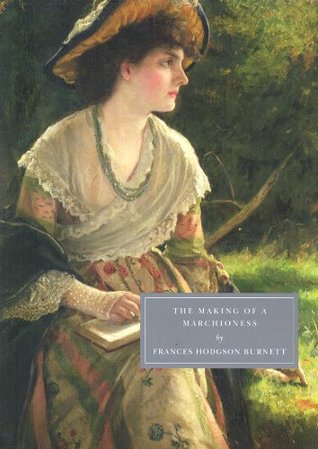
MarchionessThis is a simple yet sweet story of one woman who is saved from her dreary life by a British Lord.  Emily Fox-Seton was brought up in an aristocrat family in late 19th century England, but when both of her parents die and she is left penniless she is forced to make her own way in the world.  But Emily never, even for a minute, laments her fortune, or lack thereof, in life.  She rents a room from two kind ladies in a boarding house and she makes her living by running errands and doing odd jobs for British aristocrats.  It is an invitation from one such aristocrat, Lady Maria Bayne, that changes the course of her entire life.

At Lady Maria Bayne’s country estate, to which she is invited for a summer vacation, Emily is put to work by this selfish upper class woman.  Among Lady Maria’s guests are a plethora of silly young ladies who are each in need of a rich husband.  The most eligible bachelor present is Lord Walderhurst, a widower in his fifties whose aloof attitude leads us to believe that the last thing he wants or needs is a wife.  But the ingenuous nature of Emily catches his eye and he sweeps her off of her feet by asking her to be Lady Walderhurst.

The second part of the story deals with Emily’s adoration of her new husband and Lord Walderhurst’s growing appreciation and affection for his wife.  The marriage really seems to work for both of them and it is disappointing when Lord Walderhurst takes his leave of her for and extended business trip to India.  This part of the story is a bit ridiculous and melodramatic as the Lord’s heir, Alec Osbourn, tries to kill Emily and make it look like an accident.  Alec is a lazy drunk who, up until Lord Walderhurst’s marriage, assumes he will take over the Walderhurst title and money very soon.  He sees Emily as the only obstacle in his way of gaining an easy fortune.  Emily deals with the Osbourns in the same calm, stoic and intelligent way that she has handled all obstacles in her life.

THE MAKING OF A MARCIONESS is another delightful read from Persephone Books that I highly recommend.


About The Author:
F Hodgson BurnettFrances Eliza Hodgson was the daughter of ironmonger Edwin Hodgson, who died three years after her birth, and his wife Eliza Boond. She was educated at The Select Seminary for Young Ladies and Gentleman until the age of fifteen, at which point the family ironmongery, then being run by her mother, failed, and the family emigrated to Knoxville, Tennessee. Here Hodgson began to write, in order to supplement the family income, assuming full responsibility for the family upon the death of her mother, in 1870. In 1872 she married Dr. Swan Burnett, with whom she had two sons, Lionel and Vivian. The marriage was dissolved in 1898, and Burnett was briefly remarried, to actor Stephen Townsend. That marriage too, ended in divorce. Following her great success as a novelist, playwright, and children’s author, Burnett maintained homes in both England and America, traveling back and forth quite frequently. She died in her Long Island, New York home, in 1924.

Primarily remembered today for her trio of classic children’s novels – Little Lord Fauntleroy (1886), A Little Princess (1905), and The Secret Garden (1911) – Burnett was also a popular adult novelist, in her own day, publishing romantic stories such as The Making of a Marchioness (1901) for older readers.

4 Comments

Filed under British Literature, Classics, Persephone Books

Review: Reader for Hire by Raymond Jean

I received an advanced review copy of this title from Peirene Press.  This novella was first published in French in 1986 as La Lectrice and has been translated into this English version by Adriana Hunter.

My Review:
Reader for HireMarie-Constance is looking for some kind of occupation to fill her time; even though she never finished her university degree, she loves literature and decides she will hire herself out to strangers for reading sessions.  When she puts an ad in the local newspaper offering her services, the editor is skeptical and warns her that people might get other ideas about what she is offering.

The novella almost reads like a series of short stories as Marie-Constance meets and reads to a very different and interesting cast of characters.  Her first client is a disabled teenager who goes into an epileptic fit when Marie reads him Maupassant’s short story The Hand.  After this traumatic experience, she decides that poetry might be a better choice for him and as she reads to him he seems to be emotionally and physically moved not only by her reading choices but also by her voice.

Marie-Constance also takes on an old woman who is a Hungarian countess that was married to a former French general.  The countess still staunchly clings to her communist roots and has Marie read to her from the tomes of Marx.  The old woman also tries to participate in the local unions attempts at a rally by waving her communist flag out her bedroom window.

The men who hire Marie for her services are the most interesting characters in the book.  On the surface, they all want to better themselves by learning more about literature.  But as Marie’s voice lulls them into feelings of peace and tranquility, their other manly senses seems to kick in as well.  The final scene in the book is hilarious and Marie learns that the editor at the newspaper might have been right after all about what her listeners are expecting from her services.

This is a clever, funny, unique and interesting novella from Peirene Press.  This is the perfect title to bring with you to the beach for a quick, delightful read.

About The Author and Translator:
Raymond Jean (1925–2012) wrote more than 40 books during his lifetime – novels, short-story collections and essays. He was awarded the Prix Goncourt de la nouvelle in 1983. His novella La Lectrice (Reader for Hire) became a cinema hit starring Miou-Miou. The film won the César Award for Best Supporting Actor and was named the best feature at the 1988 Montreal World Film Festival.

Adriana Hunter has translated over 50 books from French, including works by Agnès Desarthe, Véronique Ovalde and Hervé Le Tellier. She has already translated for Peirene, Beside the Sea by Véronique Olmi, for which she won the 2011 Scott Moncrieff Prize, and Under The Tripoli Sky by Kamal Ben Hameda. Adriana has been short-listed twice for the Independent Foreign Fiction Prize.

7 Comments

Filed under France, Humor, Literature in Translation, Novella