Author Archives: Melissa Beck

Melissa Beck's avatar

About Melissa Beck

My reading choices are rather eclectic. I enjoy reading a wide range of books especially classics, literature in translation, history, philosophy, travel writing and poetry. I especially like to support small, literary presses.

Review: Our Spoons Came from Woolworths by Barbara Comyns

My Review:
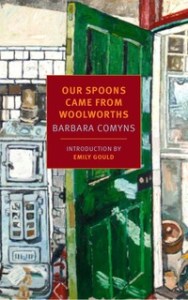
Our Spoons come from WoolworthsThis book is narrated by Sophia Fairclough, the main character of the book and deals with her rather difficult life during the 1930’s in London.  The language is very simple and straightforward, which is so fitting for Sophia; it’s as if we are reading her diary or sitting and listening to her story over an afternoon cup of tea.

Sophia meets Charles and they instantly fall in love and decide that they want to get married.  Even though they are only twenty-one years old and his family does not approve of her at all, they decide to get married.  They settle on a “secret” and “private” marriage at the local church, but they tell so many people that on the day of the ceremony the church is full of friends, family and odd acquaintances.

The book starts out on a very humorous tone as Sophia is extremely naïve about marriage, sex and motherhood.  Charles is an artist, a bit of a delicate genius, who can’t possibly put aside his art to get a proper job to support his wife.  Sophia is the main bread winner of the family and Charles is a terrible manager of their money.  Whenever they have a few extra shillings he spends it on frivolous things like painting supplies, wine and dinners.  Sophia is too naïve about living life as an adult to ask that her husband go out and get a job.  When she becomes pregnant and is forced to quit her job Charles is annoyed at having a baby in the house and having his only source of income cut off.

The scenes in which Sophia finds out about her pregnancy are absolutely hilarious.  She is genuinely surprised that she could be having a baby at all;  she thinks that if she wills herself not to be pregnant then she won’t have a baby.  When she goes to the hospital to have the baby she is shocked by the poking and prodding and the indignity of the whole process, right down to the horrible hospital bed clothes that she is forced to wear.

It is obvious from the very first sentence of the book that Sophia and Charles’ marriage does not end well.  As their marriage becomes increasingly difficult financially, emotionally and physically, Charles stays away from their home for longer and longer periods of time.  The humor that was spread throughout the first part of the book is noticeably absent in the send half of Sophia’s tale.  She suffers a great deal as her marriage disintegrates.

But in the end, Sophia learns an important lesson about resiliency and happy endings.  Even though she has suffered many trials and tribulations with and because of Charles she never becomes jaded or bitter.  She is guarded, yes, but never bitter.

The New York Review of Books has brought another brilliant classic to our attention.  I highly recommend this book for its humor, interesting storyline, and strong female character in the form of Sophia.


About the Author:

B ComynsBarbara Comyns Carr was educated mainly by governesses until she went to art schools in Stratford-upon-Avon and London. Her father was a semi-retired managing director of a Midland chemical firm. She was one of six children and they lived in a house on the banks of the Avon in Warwickshire. She started writing fiction at the age of ten and her first novel, Sisters by a River, was published in 1947. She also worked in an advertising agency, a typewriting bureau, dealt in old cars and antique furniture, bred poodles, converted and let flats, and exhibited pictures in The London Group. She was married first in 1931, to an artist, and for the second time in 1945. With her second husband she lived in Spain for eighteen years.

11 Comments

Filed under British Literature, Classics, Literary Fiction, New York Review of Books

Review: Boredom by Alberto Moravia

This book was originally written and published in Italian in 1960 and this English translation has been done by Angus Davidson.

My Review:
BoredomThis is another selection from the New York Review of Books Classics category.  My first experience with Moravia was another NYRB Classic release of his entitled Agostino  which I thoroughly enjoyed.  One notices immediately from these books that Moravia is an author who is interested in exploring the depths of the human, male psyche.  He is not afraid to explore taboo subjects and depict flawed characters who are trying to grapple with the trappings of their own minds.
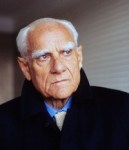
Dino has grown up in the lap of luxury due to the fact that his mother is rather wealthy.  She lives in an opulent home on the Via Appia in Italy and employs several servants, a gardener and a cook.  Dino, however, decides that he wants to be a painter and he rejects his mother’s wealth and lives on his own in a shabby apartment in Rome.  Since he is a thirty-five year old man, it should come as no surprise that he wants freedom from any type of parental control.  But his rejection of wealth does not come from an altruistic motivation to spread social and economic equality.  His basic problem, as he tells us, is that he is bored.  Dino has been bored for as long as he can remember, going all the way back to early childhood.  Even when he takes up something for which he has an initial passion, like painting, he inevitably becomes bored with it.

Dino’s long and tiresome explanation of his boredom was, indeed, boring.  He is not a sympathetic character at all and at times his boredom comes across more as depression than as boredom.  He has no interest in things around him, he alienates himself from his family, especially his mother, and he suddenly wants nothing to do with tasks that he used to have a passion for.  This sounds more to me like depression than boredom.

When Dino meets a very young woman named Cecelia he begins an intense sexual relationship with her.  She shows up at his flat every day at the same time, takes her clothes off, and they instantly make love.  But after a while, Dino finds all of this terribly mundane and he becomes bored with her.  In order to make her seem more interesting he even experiments with treating her cruelly, but he quickly comes to his senses and decides that the best thing to do is to end the relationship.  This is the point in the story where things become interesting for Dino.

Just as he is about to break the affair off with  Cecelia she starts to become detached from him and begins missing their daily meetings.  Dino is convinced that she is having an affair with someone else behind his back.  All of a sudden Dino’s boredom has turned to an obsession- an obsession to find out more about this woman, an obsession to find out what she does when she is not with him and an obsession to find out what her family is like.  At this point Dino can’t think of anything but Cecelia and he actually longs for boredom and to be rid of what he calls his love for Cecelia.  He proposes marriage to her because, in his twisted sense of logic, he feels that she will settle down and have children and then he will finally be bored of her and can finally cure himself of this love.  To use marriage in order to fall out of love and become bored with one’s spouse is Dino’s twisted, ridiculous and morally backwards plan.

The book does not have a conclusive ending, as one might expect with an existential novel such as this one.  But Dino does vow to get over Cecelia, one way or another.  But in the end, it was I who became bored with his never ending desire to attain boredom in his relationship with Cecelia.

Has anyone else read any other Moravia titles?  I have enjoyed both Boredom and Agostino.  Let me know if you have any other recommendations in the comments!

About the Author:


Alberto Moravia, born Alberto Pincherle was one of the leading Italian novelists of the twentieth century whose novels explore matters of modern sexuality, social alienation, and existentialism.


7 Comments

Filed under Literature in Translation, Literature/Fiction, New York Review of Books

Review: August by Christa Wolf

I received a review copy of this title from Seagull Books.  This book was originally published in German and this edition has been translated by Katy Derbyshire.  This is my final contribution to German Literature Month.  This has been a fantastic event with over 130 titles reviewed by bloggers.

My Review:
Layout 1The author, Christa Wolf, wrote this 74 page book in a single sitting as an anniversary gift to her husband.  It is a beautiful, heartwarming story that shows us that even in the most extreme and unfortunate circumstances love and kindness can make everything tolerable.  August and his mother were forced from their home in East Prussia at the end of World War II and as these refugees were traveling by train to escape the atrocities of war, an accident takes August’s mother.  As an orphan August is placed in a hospital, which is actually a former castle turned into a hospital that treats tubercular and consumptive patients.

August is surrounded by sickness and death and sorrow but what he remembers most about his time at the hospital is an older girl named Lilo.  Lilo is a teenager, so she is a bit older than August, but her warmth and kindness are something that August constantly wants to be around.  Her songs and stories make him forget, at least for a little while, that he is an orphan living in a hospital.  No matter how sick or close to death another patient might be, Lilo still visits and tenderly cares for many of the children at the hospital.

August is now a sixty-year-old man looking back on his life and remembering his time in the hospital after the war.  It is a testament to the resilency of the human spirit that August doesn’t remember all of the death and destruction around him, but what stands out in his mind is the compassion and generosity of Lilo.  August has lived a full and happy life and he is able to look back on it with a warm feeling in his heart and no regrets.  August is also very thankful for the wonderful life he has shared with his wife and for his job of driving tourists back and forth from Prague to Dresden.  He is a simple man and is so grateful for what might seem to many as insignificant memories.

Written in beautiful, concise prose, Wolf is the perfect example of the fact that even a very short novella can have a powerful and far reaching impact on readers.

About the Author:
C WolfA citizen of East Germany and a committed socialist, Mrs. Wolf managed to keep a critical distance from the communist regime. Her best-known novels included “Der geteilte Himmel” (“Divided Heaven,” 1963), addressing the divisions of Germany, and “Kassandra” (“Cassandra,” 1983), which depicted the Trojan War.

She won awards in East Germany and West Germany for her work, including the Thomas Mann Prize in 2010. The jury praised her life’s work for “critically questioning the hopes and errors of her time, and portraying them with deep moral seriousness and narrative power.”

Christa Ihlenfeld was born March 18, 1929, in Landsberg an der Warthe, a part of Germany that is now in Poland. She moved to East Germany in 1945 and joined the Socialist Unity Party in 1949. She studied German literature in Jena and Leipzig and became a publisher and editor.

In 1951, she married Gerhard Wolf, an essayist. They had two children.


4 Comments

Filed under German Literature, Literature in Translation, Novella

Review: Zbinden’s Progress by Christoph Simon

This is my third contribution to German Literature Month.  This has been such a fun event with so many bloggers reviewing great German books.  To see a complete list go to the #GermanLitMonth hash tag on Twitter.  This title was originally published in German in 2010 and this version is translated into English by Donal McLaughlin.

My Review:
Zbinden's ProgressLukas Zbinden lives in a nursing home in Germany and even though he isn’t as fast as he used to be, one of his favorite activities is still taking his daily walk.  Most of the book entails Lukas taking walks with Kazim, one of the newly-hired caretakers at the home.  On their walks Lukas describes to Kazim the other inhabitants of the home, Lukas’ former life before the nursing home, and Lukas’ philosophical musings on the importance of walking.

Lukas and his deceased wife, Emilie, have one son named Markus and much of Lukas’ story deals with his son and his inability to connect with Markus even as an adult.  Markus is a chemist and when Lukas asks him about his work and his lab Markus’ answers are short and nondescript.  Lukas stretches his memory back to Markus’ childhood during which Emilie did most of the parental nurturing.  But Lukas was by no means a distant father; he oftentimes tries to get involved in his son’s life, such as the time he tries to console Markus after his first love breaks his heart.  For whatever reason, Lukas and Markus are never able to connect on a deeper, emotional level.

Lukas had a long and successful career as a teacher and his stories about his students and his various jobs are very funny.  After an episode in which his wife tells him to be quiet, she even slaps him to get her point across, Lukas decides to be completely silent in his classroom.  The situation that unfolds is at first uncomfortable as the students can’t decide what is going on with Herr Zbinden.  But as they try to take control of the learning environment themselves, chaos ensues.  Lukas has to break his silence to stop the fighting and excessive swearing of his out-of-control students.

One of the things I liked most about Lukas is his ability to talk to and make friends with anyone.  He even tries to reach out to and chat with the more reticent and crabby members of the nursing home.  He makes friends with all sorts of people on his daily walks.  There is not very much substance to the plot of this book, but instead it is one of those stories that is driven by a single, strong and heartwarming character.  It was a pleasure to accompany Herr Zbinden on his literal walk down the stairs of the nursing home and his metaphorical walk through the memories of his full and rich life.

About the Author:
Christoph-SimonChristoph Simon was born in 1972 in Emmental, Switzerland. After travels through the Middle East, Poland, South America, London and New York, he has settled in Bern. His first novel, Franz, or Why Antelopes Run in Herds (2001) has sold over 10,000 copies, while Planet Obrist (2005) was nominated for the Ingeborg Bachmann Prize. Zbinden’s Progress is his fourth novel and won the 2010 Bern Literature Prize.
German Lit Month

4 Comments

Filed under German Literature, Literature in Translation

Review: Dry Season by Gabriela Babnik

I received an advanced review copy of this title from Istros Books.  Dry Season was the winner of the European Union Prize for Literature in 2013.  This book was originally written in Slovene and this English translation has been done by Rawley Grau.

My Review:
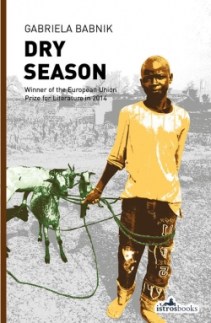
dry-season-cover_54aff6fb99d92_250x800rI have to admit that before I read this book I really knew nothing about the small West African nation of Burkina Faso.  The setting alone of this story in this small and politically volatile country taught me so many things, but the book as a whole is also a fantastic read.

From all outward appearances, the two main characters of this story could not be more different.  Anna is a 62-year-old white woman from Slovenia who has had a successful career as a textile artist.  Ismael is a 27-year-old black man from Burkina Faso who has grown up on the streets and has never had any real job or career.  It is surprising, even shocking that Anna and Ismael become lovers, but the author weaves their tales together so perfectly that in the end we are convinced that this relationship has had a powerful impact on both of them.

The narrative alternates between the point of view of both main characters.  We learn that Anna was rescued from an orphanage by her parents who, in a last ditch effort to save their marriage, agree to adopt a child since they cannot have one of their own.  But her parent’s strained relationship takes an emotional toll on her as a little girl as she is mostly left to be raised by a housekeeper.  Anna’s father is busy with his multitude of extramarital affairs and Anna’s mother remains aloof from her daughter while she constantly works at her sewing machine making women’s lingerie.  Anna eventually falls into an unhappy marriage with a man whom her mother chose for her and her only son from this marriage ends up in a mental institution.  Anna abandons her home, her family and her past to find some peace and quiet in Africa.

Ismael, when he was very young, lived in a remote African village with his mother who was an outcast.  Ismael never knew who his father was and he is constantly witnessing his mother being abused by fellow villagers as she is tied to the “shaming pole” and spit upon.  We are never told exactly what his mother’s sin is in the eyes of the villagers, but there is reason to suspect it has something to do with Ismael’s lack of a father.  Ismael and his mother eventually migrate to the streets of Ouagadougou, the capital city of Burkina Faso, where they live in cardboard boxes under a bridge.  When Ismael’s mother is killed and he is left alone in a city full of dangerous people, he is taken in by strangers who never really fulfill the role of a family for him.  He stays with an “ebony” woman and her husband for a while who have lost their own son and are trying to keep Ismael as their surrogate child.  Ismael also stays with a man named Baba who has been the only positive male role model in his life.  But Ismael gets pulled into the illegal and dangerous activities of Baba’s son Malik.

Even though they are born on different continents and decades apart there are some important ties that bind Anna and Ismael together.   They both feel abandoned and isolated, neither of them knows their real father and both of their mothers are emotionally distant. Anna and Ismael have separate and distinct stories told in alternating chapters, but the way in which the author gradually weaves together their stories is brilliant.  At first appearance it would seem that Anna and Ismael are using their sexual relationship to suppress their feelings of abandonment and isolation.  But as they share their stories with one another a deeper, emotional bond is forged.

Set against the backdrop of the harmattan, the dry season in West Africa, this novel  is a must read for anyone who enjoys brilliant literary writing with strong and intense characters.  I kept asking myself throughout the novel why, of all places on earth, Anna would pick this obscure West African country to flee to.  The dry season is one of extremes: extreme amounts of dust, extreme changes in temperatures, extreme fog and eventually extreme downpours of rain when the season ends.  This is the perfect setting for two characters who are, much like the dry season itself, both going through the extremes experiences of human existence.

This is my first title from Istros Books, an Independent British publisher that specializes in translating books from Eastern Europe into English,  and I am very excited to see what else they have in their catalogue.

About the Author:
gabriela-babnik_54d0fce19b0a4_250x800rGabriela Babnik was born in 1979 in Göppingen, Germany. After finishing her studies at Ljubljana University, she spent some time in Nigeria before working on a master’s degree on the modern Nigerian novel. Since 2002, she has regularly contributed articles to all major daily and weekly publications in Slovenia. In 2005, Babnik graduated in Comparative Literature and Literary Theory at the University of Ljubljana.

Her first novel Koža iz bombaža (Cotton Skin) was published in 2007 and was awarded the Best Debut Novel by the Union of Slovenian Publishers at the Slovenian Book Fair. In 2009, her second novel V visoki travi (In the Tall Grass) was published, which was shortlisted for the Kresnik Award in 2010.

Babnik lives with her family in Ljubljana.

13 Comments

Filed under Literary Fiction, Literature in Translation