Author Archives: Melissa Beck

Melissa Beck's avatar

About Melissa Beck

My reading choices are rather eclectic. I enjoy reading a wide range of books especially classics, literature in translation, history, philosophy, travel writing and poetry. I especially like to support small, literary presses.

Review: The Brother by Rein Raud

I received a review copy of this title from Open Letter  Books via Edelweiss.  The book was first published in the original Estonian in 2008 and this English version has been translated by Adam Cullen.

My Review:
the-brotherKarma, comeuppance, what comes around goes around.  There are many terms and phrases for the universal of idea of cause and affect.  The Brother is a fast-paced, hard-hitting, short book that uses the plot structure of a western as an allegory for demonstrating the balance of good and evil in the world.   The author himself has described the book as “a spaghetti western told in poetic prose, simultaneously paying tribute to both Clint Eastwood and Alessandro Baricco.”  The plot of this book is a clever structure for the philosophical and existential ideas that the author explores.  When a mysterious man, simply known as Brother, arrives in the unnamed town it is a dark and stormy day and the weather reflects the turmoil that three shady and crooked men have caused for the townspeople.

Brother finds Laila, his long-lost sister and explains why they have never met.  Brother simply states that his sudden appearance is caused by his desire to fulfill the dying wish of their father by helping Laila out of a tough time.  How Brother became privy to this information no one knows but the men who have swindled Laila out of her home and her inheritance are very nervous at Brother’s mysterious presence.  Brother’s imposing figure, with his large boots and long, black overcoat certainly cause these three men a fair amount of consternation, but it is also evident that their own guilty consciences are driving their actions.

Laila appears, at first, to be a sad and lonely woman whose entire life has revolved around an ancient family villa where she lived with her mother.  She describes her childhood as one in which she spend trying to be invisible.  At school she realized very quickly that she was much smarter than the other students but feigned stupidity so that she would not stand out among the others.  She felt that being an honors student and winning awards would draw negative attention to her in the form of jealousy so she maintained average grades and a low profile.  Laila seems to have been the perfect victim of the notary, the banker and the lawyer.

But Laila doesn’t act the part of a downtrodden victim; she enjoys her new life working in an antique shop and losing the villa allows her to break free and escape from her past.  As Laila’s life gets better and becomes happier with a newfound brother, a new job and eventually a new place to live, the three crooks in town experience a significant decline in their own fortunes.  These three men all blame Brother for their streak of bad luck even though Brother has in no way tried to exact any vengeance for the crimes against Laila.  Brother becomes the symbol for the forces in the universe that divvy out proper fate and just punishments.

But just like in life, people are not always so easily placed in a good guy or bad guy category and there is some gray area.  Willem, the banker’s assistant, is tasked with finding out who Brother is and if, in fact, he is Laila’s biological brother.  All of the evil characters in the story are known simply by their profession, such as the notary, the banker and the lawyer.  The good people or the victims, like Laila, are given real names.  It appears that Willem, as the banker’s henchman would fit into the evil category.  But in the end he does have more of a conscience than the other villains and finds some redemption.  In westerns the bad guys wear black hats and the good guys wear white hats and I think Raud’s use of names or occupations in place of names is a subtle way of using the same type of imagery to point us to the heroes and the villains.

And the title “Brother” is neither a true name or an occupation but, to me, it seemed more of a term of endearment.  Raud doesn’t even use an article and write “The Brother” but simply calls his hero “Brother.”  My twin nephews who are eight years-old oftentimes call each other or refer to each other as “Brother”;  I have always found it so sweet because they especially use it when they are helping each other or are being protective of one another.  Similarly, Raud’s uses “Brother” as a title to set the same tone of kind helper and hero for Laila’s long-lost sibling.

This appears to be the first book of Raud’s translated into English and I was so thoroughly impressed with his language, imagery and characters.  I hope more of his works will be translated into English and published in the U.S.

About the Author:
r-raudRein Raud is the author of four books of poetry, six novels, and several collections of short fiction. He’s also a scholar in Japanese studies and has translated several works of Japanese into Estonian. One of his short pieces appeared in Best European Fiction 2015.

13 Comments

Filed under Literature in Translation, Novella

Review: Girlfriends, Ghosts and Other Stories by Robert Walser

I received an advanced review copy of this title from The New York Review of Books.  Please visit their website for a fantastic selection of titles, including more of Walser’s books in translation.  This collection has been translated by from the German by Tom Whalen, Nicole Kongeter and Annette Wiesner.

My Review:
girlfriends-and-ghostsThis collections defies classification as far as genre is concerned.  The introduction to the book calls the writings a collection of eighty-one “brief texts” that were written throughout the course of Walser’s life.  Some of the writings appear to be fictional short stories but others have a distinctly autobiographical feel to them.  Walser even writes a few short dialogues and a book review.  In addition, he has a wide range of topics and themes and writes about anything from nature, to fashion, to death and dying.  This is a collection best absorbed a few pieces at a time so one can savor his pithy and didactic collection.
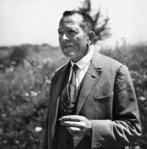
Walser makes mundane things seem fascinating.  My favorite piece that falls into this category is entitled, “A Morning” in which he describes a Monday morning in a bookkeeping office as the minutes painfully tick by.   The central figure is man named Helbling who unapologetically walks into work almost thirty minutes late.  Walser’s description of the interaction between Helbling and his boss makes us laugh and cringe:

Totally be-Mondayed, his face pale and bewildered, he shoots in a jiffy to his place and position.  Really, he could have apologized.  Up in Hasler’s pond, I mean head, the following thought pops up like a tree frog: “Now that’s just about enough.”  Quietly he walks over to Helbling and, positioning himself behind him, asks why he, Helbling, can’t, like the others, show up on time.  He, Hasler, is, after all, really starting to wonder.  Helbling doesn’t utter a word in response, for some time now he’s made a habit of simply leaving the questions of his superior unanswered.

Walser makes ordinary events like suffering from a toothache, wearing a fashionable overcoat,  having afternoon tea and observing a beautiful woman absolutely riveting.

Another common and enjoyable theme that occurs frequently in his writing is that of nature.  There are pieces dedicated to the description of a peaceful morning and a walk on a beautiful autumn afternoon.One of my favorite pieces, entitled “Poetry” reads more like poetry than prose.  In this brief and reflective writing we get the sense that Walser is constantly fighting against a deep melancholia and he uses the occasion of a winter day as the inspiration for expressing his emotions. He writes:

I never wrote poems in summer.  The blossoming and resplendence were too sensuous for me.  In summer I was melancholy.  In autumn a melody came over the world.  I was in love with the fog, with the first beginnings of darkness, with the cold.  I found the snow divine, but perhaps even more beautiful, more divine, seemed the dark wild warm storms of early spring.

It is not surprising that Walser fought a deep depression and anxiety for which in 1929 he was voluntarily hospitalized in Waldau, a psychiatric clinic outside Bern.  By the early 1940’s he was permanently confined to the hospital and declared that his writing career was over.  There are hints in this collection that even as early as 1917 Walser is fighting some powerful demons.  In the story entitled “The Forsaken One,” written during that year, Walser pictures himself as a lonely, hopeless vagabond who is wandering around on a gloomy night.  He finds a house that is terrifying but he feels compelled to step inside and wander around until he finds an angelic female figure whom he calls a “celestial outcast.”  He feels an affinity toward her and is relieved that he has found someone that is just a lonely and isolated as himself.

It is truly impossible to cover the scope of this collection unless I were to make my review several pages long.  I have tried to sum up the writings that have made the greatest impression on me.  But I am confident that everyone can find something in this collection that he or she loves.  Thanks to the New York Review of Books for bringing us this brilliant classic in translation.

About the Author:
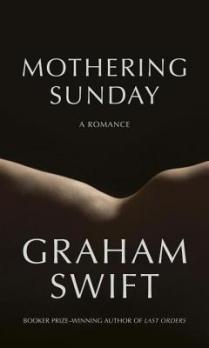
walserRobert Walser (1878–1956) was born into a German-speaking family in Biel, Switzerland. He left school at fourteen and led a wandering, precarious existence while writing his poems, novels, and vast numbers of the “prose pieces” that became his hallmark. In 1933 he was confined to a sanatorium, which marked the end of his writing career. Among Walser’s works available in English are Jakob von Gunten and Berlin Stories (available as NYRB Classics), The Tanners, Microscripts, The Assistant, The Robber, Masquerade and Other Stories, and Speaking to the Rose: Writings, 1912–1932.
10 Comments

Filed under Classics, German Literature, Literature in Translation, New York Review of Books

Review: Mothering Sunday by Graham Swift

Today is the first Sunday in the U.S. for 2016 American football season.  In case you haven’t read my bio., I am a life-long fan of the New York Football Giants and every Sunday in the fall I can be found glued to the scores rolling in throughout the day.  I am also in a fantasy football league with the guys at work so this gives every Sunday some added excitement.  Graham Swift, in his latest work of fiction, also uses the tradition of Sunday being a special day in England at the time when large estates employed servants.

My Review:
mothering-sundayThe most important decisions and in our lives can oftentimes be traced to the events of a single day.  Jane Fairchild is a writer in her nineties and decided that this would be her career on one preternaturally warm spring day in March of 1924.  Jane was a maid at the Beechwoods estate for the Niven family and she was having a secret affair with the upper class son who lived on the neighboring estate and on this day in March her lover summons her to his room for an afternoon of sensual pleasure.

The annual Lenten tradition of giving the staff a day off, called “Mothering Sunday,” was carried on in Britain during the era of large estates which employed servants.  The maids, cooks, butlers and other servants were allowed the day off on this special Sunday and many of them made it a habit to visit their mothers.  But Jane Fairchild is an orphan and, in fact, she is a foundling so she has no idea what her real name is, if she was ever given one, or what her actual date of birth is.  The orphanage named her Jane and assigned her May 1st as a birthday.  But Jane is never bitter or upset about her fate as an orphan.  She believes that if it were not for her humble and unknown beginnings then she never would have experienced that special Sunday in 1924 and might not have ever become a successful writer.

Jane came into service at Beechwoods as a young girl of sixteen and not long after that she meets and begins a passionate affair with Paul Sheringham.  Paul is the confidant and spoiled son of the neighboring Upleigh estate.  He had two brothers who were both killed in The Great War so the fact that he is still alive is a miracle and as the only surviving male heir no one ever questions his actions or choices.   When Paul and Jane begin their affair Paul pays Jane for their little trysts but as the relationship between them develops and becomes more mature they both find themselves invested in their time spent together and they carry on like this for seven years.

Paul is engaged to a woman named Emma Hobday and when the Sheringhams, Hobdays and Nivens are all meeting for lunch on a warm Sunday in March in 1924 Paul immediately summons Jane to his bedroom so that they can take advantage of her day off in the Sheringham’s empty house.  Jane and Paul usually meet in places between the two houses, like the garden path, so this Sunday is very special for Jane.  Paul even greets her at the front door, a place where a common maid would never enter the lavish home.

The first part of the book is a description of Jane’s invitation to Paul’s room and what happens once she gets there.  Swift’s writing is detailed, sensual and mesmorizing.  Jane describes what she sees in Paul’s room since she is visiting it for the first time, she describes how their encounter begins and she describes how Paul gets dressed when they are finished.  There is a focus on their nakedness and the sheer revelry of doing what they want in a place that is normally forbidden to them.  I was captivated by Swift’s writing and the suspense he creates in the story through Jane’s narrative of what happens on this special Sunday.  Jane and Paul never talk about the future or his impending marriage, but Jane assumes that this will be their last encounter and they will never find the time again for these secret and passionate trysts.

My only complaint about the book is the ending.  The last part of the narrative becomes solely about Jane and her feelings about being an author.  By this time she is a ninety-year-old woman who has had a long and successful career and she becomes philosophical about her progress as a writer.  The eroticism and mystique of the first part are lost by the end.   Overall,  this is definitely a book worth going back and starting from the beginning many times over.

About the Author:
graham-swiftGraham Colin Swift FRSL (born May 4, 1949) is a British author. He was born in London, England and educated at Dulwich College, London, Queens’ College, Cambridge, and later the University of York. He was a friend of Ted Hughes.

Some of his works have been made into films, including Last Orders, which starred Michael Caine and Bob Hoskins and Waterland which starred Jeremy Irons. Last Orders was a joint winner of the 1996 James Tait Black Memorial Prize for fiction and a mildly controversial winner of the Booker Prize in 1996, owing to the superficial similarities in plot to William Faulkner’s As I Lay Dying. Waterland was set in The Fens; it is a novel of landscape, history and family, and is often cited as one of the outstanding post-war British novels and has been a set text on the English Literature syllabus in British schools.


10 Comments

Filed under British Literature, Literary Fiction

Review-Moonstone: The Boy Who Never Was by Sjón

I received an advanced review copy of this title from Farrar, Straus and Giroux via Netgalley.  The original novella was published in Icelandic in 2013 and this English version has been translated by Victoria Cribb.

My Review:
moonstoneMáni Steinn lives on the fringes of society in 1918 in the city of Reykjavik; he has no family except for a great aunt who has taken him in, he has no friends and he is homosexual.  It is very dangerous for him to be gay and if he is caught in any type of sexual act with another man he could be arrested and severely punished.
It is mentioned in passing in the story that the fighting in Europe has recently ended and Iceland has been largely spared the destruction that ravaged Europe.  The Spanish Influenza, however, quickly spreads through and devastates this small island nation.  One of the ways that Máni passes his time is by seeing films that are shown in the two movie theaters in the city.  When the flu hits Iceland it is speculated that public places like this were responsible for its rapid spread and the theaters are shut down for months.

Máni himself is also struck down by the flu and in the state of mental delirium caused by his fever he has vivid and gruesome nightmares.  Through these scenes Sjon showcases his diverse talents as a writer.  He also copies at poignant moments throughout the text newspaper articles that were published in Reykjavik at the time.  In sum, Sjon perfectly captures s a realistic snapshot of this short timespan in Icelandic history when people are not only suffering from this horrible pandemic, but are also watching the local volcano erupt, reading the papers for news of war in Europe and dealing with their own shortages of necessities like coal.

I was captivated by the character of Máni who doesn’t seem bitter or resentful that at the age of sixteen his only living relative is a great aunt whom he calls “the old lady.”  She is just as surprised as he is when Máni is dropped off at her front door.  She is kind to him and provides him food and shelter, but she does not offer the kind of guidance and discipline that a sixteen-year-old boy ought to have.   Máni has regular men around the city with whom he engages in sex for money.  He doesn’t seem to have a particular fondness for any of these men but he does get a certain amount of enjoyment out of these furtive and illicit sexual encounters.  The person that Máni shows an interest in is, rather surprisingly, a teenage girl named Sola.  Sola drives around on her Indian motorcycle, makes her own clothing, and lives in a nice home with her family.  Mani’s fascination with her is never fully explained and the author leaves us to speculate whether or not Mani’s attraction is sexual or just an innocent curiosity.

The only complaint that I have about this book is that it left me wanting to know more about the rest of Máni’s life.  At a very slim 160 pages I read the book in a couple of hours and was disappointed when Mani’s story came to an end.  I don’t want to give away the plot but it is Máni’s “aberrant” behavior as a homosexual that ironically is the catalyst for his escape out of the city and away from his lonely life.  I wanted to know more about Mani’s thoughts in retrospect as an adult and how his time in Iceland helped to shape the rest of his life.

About the Author:
sjonSjón (Sigurjón B. Sigurðsson) was born in Reykjavik on the 27th of August, 1962. He started his writing career early, publishing his first book of poetry, Sýnir (Visions), in 1978. Sjón was a founding member of the surrealist group, Medúsa, and soon became significant in Reykjavik’s cultural landscape.

10 Comments

Filed under Literature in Translation, Novella

Review: Little Jewel by Patrick Modiano

I received a review copy of this title from Yale University Press  via NetGalley.  This book was published in 2001 in the original French and this English version has been translated by Penny Hueston.

My Review:
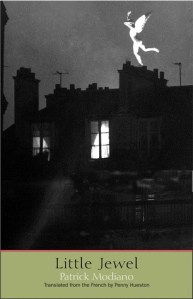
Little JewelThérèse  thought she had put her horrible childhood behind her until one day when she is on the metro in Paris she sees a woman with a faded yellow coat whom she thinks might be her long lost mother.  The brief narrative which is written from the point-of-view of this nineteen-year-old woman has multiple layers of imagery and themes which showcase Modiano’s great talent as a writer.

As we gradually get to know Thérèse through her own thoughts and words, we learn that she is alone in the world and is trying to figure out what she wants to do with her life.  She takes on temporary jobs such as babysitting and she lives in a tiny room in an apartment building that used to be a hotel.  When she sees the woman on the metro who resembles her mother she wanders around the streets of Paris looking for this woman again.  As she wanders through the city she replays her unhappy childhood memories in her mind and she is overwhelmed by emotions that she thought she had left in the past.

Thérèse’s mother had the intention of coming to Paris and being a prima ballerina but an injury to her ankle ended her career very early on.  Thérèse’s birth seems to have been a mistake or a surprise for her mother who never showed any affection, kindness or maternal love for her daughter.  Even the nickname she gives her daughter, “Little Jewel,” is meant as a stage name for the television appearance she forces upon her daughter.

Thérèse has no idea who her father is and the only family member she meets is a man who watches her once a week and is told that he is her uncle.  At the age of five Thérèse is left alone for days on end as her mother suffers episodes of depression and locks herself away in her bedroom.  Her mother abandons the poor child for good by putting her on a train bound for the suburbs where Thérèse comes to live with one of her mother’s friends.   After a few years pass Thérèse is told that her mother died in Morocco but she is not given any details as to how she died or why she was in Morocco.

This sense of abandonment never leaves Thérèse as she continues to have very few emotional connections into her young adulthood.  The past weighs on her so heavily that she cannot move forward and make a fulfilling life for herself that is distinct from her early years.  She does manage three important connections with other people throughout the course of the story and it is this tenuous and fragile contact with other humans that saves her in the end.

Modiano is a master of imagery and he does not disappoint even in this short narrative.  Images of light keep appearing to  Thérèse and Modiano hints in the text that his character will see the proverbial light at the end of the tunnel after the events of this story have concluded.  The little girl whom she babysits for always keeps a light on in her bedroom so she won’t be afraid in the dark.  One night when Thérèse is wandering around Paris in the dark and is at her wits end, she sees a solitary light from a pharmacy and the pharmacist provides physical and emotional support.  Finally, the most brilliant and subtle imagery of light in the story is connected with a man whom Thérèse also meets by chance on the streets of Paris.  This man is a translator of radio programs from around the world; he brings Thérèse back to his apartment and when his radio is on a green light appears which makes Thérèse feel calm and connected to a world of voices that she can hear but cannot see.

Readers seem to have a love or hate reaction to Modiano’s writing and I would most definitely put myself in the former category.  I also reviewed his collection of short stories entitled  Suspended Sentences which was also published by Yale University Press.  I would love to hear what other Modiano books that others have enjoyed.

Review: Suspended Sentences by Patrick Modiano

About the Author:
Patrick Modiano is the winner of the 2014 Nobel Prize for literature and an internationally beloved novelist. He has been honored with an array of prizes, including the 2010 Prix mondial Cino Del Duca by the Institut de France for lifetime achievement and the 2012 Austrian State Prize for European Literature. He lives in Paris.

15 Comments

Filed under France, Literature in Translation