Monthly Archives: November 2015

Review: Montaigne by Stefan Zweig

I received an advanced review copy of this title from Pushkin Press through Edelweiss.  Montaigne was originally written in German in 1941 and this English translation is done by Will Stone. This is my second contribution to German Literature Month, hosted by Lizzy’s Literary Life and Beauty is a Sleeping Cat.  Please visit their blogs for more great German Literature in translation and to see the full list of blogs that are participating.

My Review:
MontaigneStefan Zweig was forced to flee his home in Austria as the Nazis were taking control of his motherland.  For years he wandered around Europe as a nomad with no real place to call home.  As Europe is ravaged by war, he finds his way to the German community of Petropolis in Brazil and in 1941 he decides to write this brief biography of Michel de Montaigne with whose life he identifies on many levels.

Montaigne comes from a long line of hardworking ancestors.   His father’s family were fishermen and made their fortune by eventually owning their own fleet of ships.  His mother’s family were Jewish bankers from Spain who fled that county to avoid the Inquisition.  Montaigne’s grandfather buys a chateau and a vast estate in Bordeaux and intends to further the family’s aristocratic status through his purchase of land and a title.

Montaigne is brought up in the lap of luxury and it was very important to his father that his eldest son receive the best education possible.  As a result it was mandatory that Montaigne be fluent in Latin, for which purpose his father hired a German tutor when Montaigne was only four years old.  Montaigne was only allowed to speak in Latin and even the rest of the family and the household servants were required to learn some basic Latin phrases in order to communicate with the young boy.  As a result of this immersion in the language Montaigne is said to have been more comfortable speaking and writing in Latin than in his native French.  As a classicist I couldn’t help but simile at and appreciate this part of Montaigne’s story.  If only it were possible to educate all of my students in this way!

When Montaigne’s father dies he takes over as the head of household..  This foists a large responsibility on a man who sees his familial and civic responsibilities as mundane and tiresome occupations.  Zweig highlights Montaigne’s detachment from his family whom he even seems to view at times as a burden.  He never has fond words for his wife or the institution of marriage and at one point Zweig says that Montaigne is not even really sure how many children he has that are still alive.  Montaigne’s isolation from his family is further deepended when, at the age of thirty-eight, he decides that he wants to retire from his life, lock himself in the study in his tower, and read the precious books with which he has surrounded himself.

Montaigne’s view of books and reading is also noteworthy in Zweig’s account of his life.  Montaigne wants to absorb as much information and knowledge as possible and he scribbles notes in his books as various thoughts occur to him.  Montaigne states about his collection: “Books are my kingdom.  And here I seek to reign as absolute lord.”  It is during this time of self-imposed retreat and isolation that Montaigne tries to attain individual freedom and seeks to know himself as a man and as a human being on a deeper level.  His intentions, like other philosophers, is not to give his readers a specific ideology to follow.  Instead his thoughts and writings are introspective and intensely personal.

Ten years later, at the age of forty-eight, Zweig decides that he has had enough of his retirement and so decides to travel across Europe.  This journey becomes very painful for him since he suffers debilitating pain from kidney stones.  While he is away on his journey, the citizens of Bordeaux elect him in absentia as their mayor so at this point he decides to go back and serve his people.  Zweig reminds us, though, that Montaigne is no hero and his selfish habits come to the forefront once again when the plague breaks out in Bordeaux and he abandons his people to find for themselves.

Whether or not one is familiar with Montaigne, Zweig’s account of him is definitely worth a read.  Zweig was at a critical point in his life where he saw the world erupt in violence because of fascism and communism.  He commiserated with Montaigne who also saw his world torn apart by religious wars and fanaticism.  Zweig commits suicide in 1942 and this was one of the last things that he wrote.  Many believe that Zweig took Montaigne’s advice as far as death is concerned and decided to die on his own terms instead of living through a miserable exile imposed on him by outside forces.

About The Author:
Stefan Zweig was one of the world’s most famous writers during the 1920s and 1930s, especially in the U.S., South America and Europe. He produced novels, plays, biographies and journalist pieces. Among his most famous works are Beware of Pity, Letter from and Unknown Woman and Mary, Queen of Scotland and the Isles. He and his second wife committed suicide in 1942.

Zweig studied in Austria, France, and Germany before settling in Salzburg in 1913. In 1934, driven into exile by the Nazis, he emigrated to England and then, in 1940, to Brazil by way of New York. Finding only growing loneliness and disillusionment in their new surroundings, he and his second wife committed suicide.

Zweig’s interest in psychology and the teachings of Sigmund Freud led to his most characteristic work, the subtle portrayal of character. Zweig’s essays include studies of Honoré de Balzac, Charles Dickens, and Fyodor Dostoyevsky (Drei Meister, 1920; Three Masters) and of Friedrich Hlderlin, Heinrich von Kleist, and Friedrich Nietzsche (Der Kampf mit dem Dmon, 1925; Master Builders). He achieved popularity with Sternstunden der Menschheit (1928; The Tide of Fortune), five historical portraits in miniature. He wrote full-scale, intuitive rather than objective, biographies of the French statesman Joseph Fouché (1929), Mary Stuart (1935), and others. His stories include those in Verwirrung der Gefhle (1925; Conflicts). He also wrote a psychological novel, Ungeduld des Herzens (1938; Beware of Pity), and translated works of Charles Baudelaire, Paul Verlaine, and mile Verhaeren.

Most recently, his works provided inspiration for the 2014 film ‘The Grand Budapest Hotel’.

German Lit Month

9 Comments

Filed under German Literature, Literature in Translation, Nonfiction

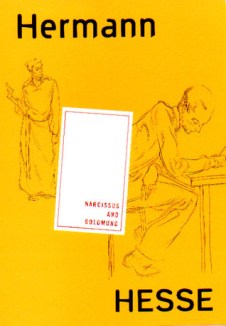
Review: Narcissus and Goldmund by Hermann Hesse

This is my first contribution to German Literature Month, hosted by Lizzy’s Literary Life and Beauty is a Sleeping Cat.  Please visit their blogs for more great German Literature in translation and to see the full list of blogs that are participating.

My Review:
Narcissus and GoldmundThis is one of those classic books that is very difficult to review and do it justice because there are so many ideas contained within the book.  It is a coming-of-age story, a commentary on existential philosophy and a beautiful description of a life long friendship.  Narcissus is a teacher’s assistant in the cloister of Mariabronn and fully intends to take his vows as a monk.  Narcissus is a very talented scholar and it is evident that he will one day serve the church and even become the Abbot of the cloister.  He is a cerebral man who values the intellect but his emphasis on the rational also prevents him from having any real friendships or meaningful love in his life.  But this all changes when a young boy by the name of Goldmund is dropped off at the cloister by his father.

Goldmund has been raised solely by his father and his father has done everything in his power to erase Goldmund’s memories of his gypsy mother.  Goldmund’s father drops him off at the cloister with the intention of Goldmund being a pupil and eventually taking a vow to become a monk.  Goldmund’s father tells him that he must dedicate his life to God in order to make up for his mother’s sins.  But Goldmund does not possess the intellectual detachment of Narcissus and love and art and seduction are things which he cannot deny himself in order to become a monk.  Narcissus helps Goldmund realize that cloister life is not for him and when Goldmund learns the pleasures of sex from a gypsy woman he knows that Narcissus is right and he immediately flees the cloister.

Most of the book is a description of Goldmund’s restless journey as a wanderer.  Wherever he stays, whether it be in a modest farmhouse, the castle of a knight or a large city, he manages to satisfy his sexual desires by seducing countless women.  Goldmund is kind and loving and handsome so oftentimes a single look or a caress is enough for a woman to fall in bed with him.  But he never stays in one place long enough to have a lasting and deep friendship like the one he had with Narcissus.  The longest he stays at any place is the Bishop’s city where he becomes an apprentice to a master artist named Niklaus.  Niklaus teaches Goldmund the finer points of sculpting and Goldmund’s greatest masterpiece is a sculpture of St. John that is done in the likeness of his greatest friend Narcissus.  Even though Narcissus and Goldmund are very far apart for many years, their friendship still has a great influence on Goldmund’s life.

Narcissus does come back into Goldmund’s life at a critical point in the book when Goldmund is most in need of help.  Goldmund eventually goes back to live in the cloister as the artist in residence and he works on many sculptures with which to grace the beloved halls of his boyhood home.  Goldmund has had many hardships while on his travels and he puts all of his experiences into his artwork.  There is a heavy emphasis in the book on the close relationship between ecstasy and suffering.  When we give our heart to someone, whether it be a friend, a lover or a relative, we always run the risk of being harmed.  Goldmund had a deep fondness with his mother whom he barely remembers and throughout the book he is looking for that mother-relationship again that made him feel so safe during his very early years.    His culminating sculpture at the monastery, one that he wants to keep to himself and not share, is a mother figure done in the likeness of one of his most influential lovers named Lydia.

Narcissus and Goldmund is a classic novel that I will reach for again and again on my bookshelf.  It is a novel with so many layers that I a sure that each time I reread it I will have new insights and thoughts about this plot.  I look forward to reading another Hesse novel for German Literature month.  What German Literature have you read that you would highly recommend?

German Lit Month


About The Author:
HesseHermann Hesse was a German-Swiss poet, novelist, and painter. In 1946, he received the Nobel Prize in Literature. His best known works include Steppenwolf, Siddhartha, and The Glass Bead Game (also known as Magister Ludi) which explore an individual’s search for spirituality outside society.

In his time, Hesse was a popular and influential author in the German-speaking world; worldwide fame only came later. Hesse’s first great novel, “Peter Camenzind”, was received enthusiastically by young Germans desiring a different and more “natural” way of life at the time of great economic and technological progress in the country.

Throughout Germany, many schools are named after him. In 1964, the Calwer Hermann-Hesse-Preis was founded, which is awarded every two years, alternately to a German-language literary journal or to the translator of Hesse’s work to a foreign language. There is also a Hermann Hesse prize associated with the city of Karlsruhe,Germany.

28 Comments

Filed under Classics, German Literature

Review: Stoner 50th Anniversary Edition by John Williams

I received an advance review copy of this title from New York Review of Books.

My Review:
Stoner 50thFor those of you that are not new to my blog, you might have noticed that this book has a place in my “favorites” section. In this book we are introduced to William Stoner who is born at the turn of the century into a very poor farm family in rural Missouri.   Stoner would have also become a farmer like his father and when he is given a scholarship to the state university, he fully intends to study agriculture.  But through the influence of a tough but inspiring English professor, Stoner changes his major to English and he himself becomes a University English professor.

One of the aspects that I enjoyed most about the book is Stoner’s contemplation about what it means to be a good teacher. He also doesn’t always play the university politics game and his career suffers for it.  He is forced to teach Freshman English courses over and over again and he does so in a stoic manner without protest.  Whether he is in a graduate seminar class or a beginning Freshman English class he always gives his best teaching to his students.

Stoner meets a charming young woman at the home of his professor and he immediately decides that he wants to marry her.  He courts Edith for about two weeks and they have a modest wedding ceremony at her parent’s house.  But Edith soon reveals her mental instability and Stoner realizes very quickly that his marriage is a miserable failure.   But Stoner never even contemplates leaving Edith and instead he endures a miserable life at home with a wife who is crazy and unpredictable. I was glad to see that at one point in the book, though, he does find real love and intimacy, which I think is what he craves all along.

The prose in this book is exceptionally elegant. This is one of those books that my thoughts keep wandering to over and over. It makes one contemplate so many different ideas: career, family, love, marriage, and even death.  The 50th anniversary edition issued by the New York Review of Boks is a hardcover book with an introduction by John McGahern.  Even if you have already read Stoner on the Kindle or in the original paperback, this beautiful hardcover edition is very special and worth having on one’s bookshelf.

About The Author:
John WilliamsJohn Edward Williams was born on August 29, 1922, in Clarksville, Texas, near the Red River east of Paris, Texas and brought up in Texas. His grandparents were farmers; his stepfather was a janitor in a post office. After flunking out of junior college and holding various positions with newspapers and radio stations in the Southwest, Williams enlisted in the USAAF early in 1942, spending two and a half years as a sergeant in India and Burma. Several years after the war, Williams enrolled in the University of Denver, where he received his B.A. in 1949 and an M.A. in 1950. During this period, his first novel, Nothing But the Night, was published (1948), and his first volume of poems, The Broken Landscape, appeared the following year. In the fall of 1950, Williams went to the University of Missouri, where he taught and received a Ph.D. in 1954. In the fall of 1955, Williams took over the directorship of the creative writing program at the University of Denver, where he taught for more than 30 years. Williams’s second novel, Butcher’s Crossing, was published by Macmillan in 1960, followed by English Renaissance Poetry, an anthology published in 1963 by Doubleday which he edited and for which he wrote the introduction. His second book of poems, The Necessary Lie, appeared in 1965 and was published by Verb Publications. In 1965 he became editor of University of Denver Quarterly (later Denver Quarterly) until 1970. In 1965, Williams’s third novel, Stoner, was published by Viking Press. It has been recently been re-issued by The New York Review of Books. His fourth novel, Augustus, was published by Viking Press in 1973 and won the prestigious National Book Award in 1973 and remains in print.

The critic Morris Dickstein has noted that, while Butcher’s Crossing, Stoner, and Augustus are “strikingly different in subject,” they “show a similar narrative arc: a young man’s initiation, vicious male rivalries, subtler tensions between men and women, fathers and daughters, and finally a bleak sense of disappointment, even futility.” Dickstein called Stoner, in particular, “something rarer than a great novel — it is a perfect novel, so well told and beautifully written, so deeply moving, it takes your breath away.”

After retiring from the University of Denver in 1986, Williams moved with his wife, Nancy, to Fayetteville, Arkansas, where he resided until he died of respiratory failure on March 3, 1994. A fifth novel, The Sleep of Reason, was left unfinished at the time of his death

8 Comments

Filed under Classics, Favorites, New York Review of Books

Review: Colonel Fitzwilliam and The Countess of Sainte Toulours

I received an advanced review copy of this title from the author.

My Review:
Colonel Fitzwilliam and the Countess of Sainte Toulours - Stanley Michael HurdHistorical fiction, mystery, espionage and romance are all part of Stanley Hurd’s new novel that centers around the character of Colonel Fitzwilliam.  Hurd takes Austen’s beloved character from Pride and Prejudice and creates a story just for the Colonel.  When the story opens Fitzwilliam is working in the War Department trying to figure out Napoleon’s next move.  A peace has been declared and French ports are starting to open back up to British trade, but no one in the British government trusts Boney to keep his word.  So the government decides to send Fitzwilliam undercover as a spy to see whether or not Napoleon is sincere about peace or if he is using this time to build more ships and gear up for war.

Before he is shipped off to France for his mission, Fitzwilliam is invited to his cousin Darcy’s house for a social dinner.  At this gathering he meets a lovely young woman named Emily for whom he instantly develops romantic feelings.  Love and romance spring up very quickly between Fitzwilliam and Emily and just as they are getting to know each other Fitzwilliam has to go off on his spy mission in France.  One of the best aspects of the writing of this book are the heartfelt letters that Fitzwilliam sends to Emily.  Since their acquaintance is new he doesn’t want to be overbearing or inappropriate towards her; his letters contain just the perfect amount of amorous sentiments and a description of his time spent spying on the French.

While he is in France, Fitzwilliam meets up with his spying partner, a feisty and charismatic man named Esparaza.  The situation gets especially interesting when they rescue an upper class French woman who claims she is a Countess.  They bring the Countess back to England where she reveals to them that the French have captured her mother and are holding her ransom until the Countess provides them intelligence about the English war plans.  Fitzwilliam and Esparaza have quite a mission on their hands at this point; they need to somehow rescue the Countess’ mother from a French jail and keep her safe from French spies watching her in England.

The entire novel comes to a rather exciting and unexpected conclusion.  A duel, a stint in a French prison and a rescue all play a part in Fitzwilliam’s adventure.  I like the fact that Hurd is not trying to change or rewrite the Colonel’s story as it is handed down to us by Austen.  He gives us a truly unique and exciting story that is in line with Austen’s original character.

About The Author:
HurdStan Hurd is a Ph.D. neurochemist who currently occupies himself writing, teaching fencing and Karate, and polishing samurai sword blades. He was introduced to Jane Austen’s works late in life, but became immediately captivated by the unlabored beauty of her prose. Having read one of the many adaptations written to extend the story of “Pride and Prejudice”, while he was delighted to be back in that world, he found the exclusively female perspective of the author was at times intrusive; since he could not let himself complain if he did not attempt it himself, he set out to write “Darcy’s Tale”.

Many of his friends are amazed that he should be writing a Regency romance; he takes a particular delight in that fact.


Giveaway:
The author is generously giving away two e-book copies of his novel.  This giveaway is open internationally as long as you can accept a Mobi version of the book for Kindle.  Just leave a comment letting me know you want to win.  I will pick a winner on Friday.

6 Comments

Filed under Historical Fiction

Review: Nagasaki by Éric Faye

I received an advanced review copy of this title from Gallic Books through NetGalley. This book was originally published in French and this English translation is done by Emily Boyce.  This is also my first post for Novella November hosted by Poppy Peacock Pens.  Please visit her site for more great reviews of novellas throughout the month.

My Review:
NagasakiShimura Kobo leads a very quiet and regimented life in the suburbs of Nagasaki.  He is a meteorologist who avoids the company of his coworkers and every night returns to his neat, orderly and lonely apartment.  When food starts to disappear from his refrigerator and items appear out of place in his apartment he takes notice and is really bothered by this disruption in his organized life.  At first he thinks that he is just going crazy but in order to verify his missing items he starts cataloguing the contents of his refrigerator and measuring the liquid in his juice containers.  He finally decides to buy a webcam which is linked to his laptop so he can spy on his visitor while he is at work.

Shimura eagerly watches his laptop at work waiting for the intruder to appear on his screen.  He has to wait several days but he finally glimpses a woman standing in his kitchen, enjoying the sunlight and making herself a cup of tea.  He immediately calls the police who go over to his apartment to catch the suspected intruder.  But when the police arrive, there are no signs of a break in.  The doors and windows are locked and the police are about to give up their search when they discover a woman hiding in the closet in Shimura’s spare bedroom.

The woman, as it turns out, had lost her job in the economic recession and had to give up her apartment.  She was living on the streets of Nagasaki until one day she noticed Shimura leave for work.  She also noticed that he left the door to his house unlocked and so she let herself in, just intending to have a warm and dry place to stay for a few hours.  But when she discovers Shimura’s extra bedroom which is rarely used, she basically lives with him unnoticed for the better part of a year.

The most fascinating part of the story is the lasting psychological impacts that their inadvertent cohabitation has on both of them.  Shimura is forced to contemplate his lonely and solitary existence and he never feels comfortable again living in his apartment.   The woman does a short stint in jail and writes Shimura a very detailed letter about why she chose his house to stay in.  But she too is changed from her sojourn at Shimura’s home.  Their individual isolation and loneliness is cast into sharp relief when they each see how the other one lives.

This is a quick yet powerful read that I highly recommend. My only complaint is that I didn’t want the book to end; I wanted to know more about the fate of Shimura and his secret roommate.   This is a fantastic choice to kick off Novella November!

About The Author:
Eric FayeBorn in Limoges, Éric Faye is a journalist and the prize-winning author of more than twenty books, including novels and travel memoirs. He was awarded the Académie Française Grand Prix du Roman in 2010 for Nagasaki.


13 Comments

Filed under Literature in Translation, Novella