
I am so excited to be participating in Spanish Lit Month again this year hosted by Stu at Winston’s Dad and Richard at Caravana de Recuerdos. My first contribution this year is a fantastic read from And Other Stories.
My Review:
 This book is set in an apartment building in Mexico City in which a group of elderly retirees live. The residents of the building engage in various activities together in order to fend off boredom, including the most popular activity which is the daily gathering and discussion at the literary salon. Francesca, the building president and leader, is also the head of this salon. As each new member moves into the building, he or she is given a warm welcome and an invitation to the salon. The only person who has ever dared to turn down an invitation to the salon is our witty, clever and crabby narrator, a man who goes by the name of Teo.
When Teo moves into the building hilarity ensues because he is not quite so willing to conform to all of the rules set forth by Francesca and her fellow tenants. Teo also drinks too much and has some interesting visitors over to his apartment, including a Mormon missionary who is constantly trying to preach the Word of the Lord to Teo. Teo’s days also include frequent visits to the local pub for several beers and visits to the greengrocer where he discusses life and politics over more beers with Juliet the proprietor. He also spends quite a bit of time recording his thoughts in a notebook and because of this the salon thinks that he is writing a novel. They seem to know everything that he writes in his journal and he can’t figure out how they are reading his personal thoughts.
The story also flashes back to Teo’s earlier days and we get some background on this roguish, alcoholic, funny old man. Teo mostly grew up with his mother and his sister and lived with them until he was in his fifties. Important events in his younger years were oftentimes brought about by the dog his mother happened to dragged home at the time. The original family dog caused the unraveling of his parents’ marriage and his father moving out. Like his father before him, Teo fancied himself an artist and when he was younger he attended art school for a year to try and cultivate his talents. But this all came to an end when the family dog was diagnosed with marijuana poisoning which resulted in his mother finding out what he was really doing with his fellow students.
After his mother forces him to give up attending art school, Teo gets a job with his uncle at his local taco stand which is a very lucrative business. It is also due to dogs that Teo becomes a local legend with his “Gringo Tacos.” I did find the story lines with the family dogs rather funny but those who are sensitive might need a warning that the fate of dogs in this book is never good. All sorts of local politicians and arts patronize his taco stand and have intriguing discussions about art with this astute taco seller. Teo’s favorite book is Adorno’s Aesthetic Theory and later in the retirement home he uses his cherished copy of this book to fend off the cockroaches.
The fight between Teo and the members of the literary salon reach a fever pitch when they get their hands on and hide his cherished copy of Aesthetic Theory and he, in turn, steals their copies of In Search of Lost Time. This is no small feat for Teo because Proust’s masterpiece weighs a ton. In the end Francesca has to blackmail Teo into returning the salon’s books and the scandalous information that she has on him involves, of course, a dog.
This is one of the funniest books I have read so far this year. It is cleverly written and has characters that manage to be silly but endearing at the same time. I look forward to reading more of Villalobos’ books. What is everyone else reading for Spanish Lit Month?
About the Author:
 Juan Pablo Villalobos was born in Guadalajara, Mexico, in 1973. His first novel, Down the Rabbit Hole, was the first translation to be shortlisted for the Guardian First Book Award (in 2011). He writes regularly for publications including Granta and translated Rodrigo de Souza Leão’s novel All Dogs are Blue (also published by And Other Stories) into Spanish. His work has been translated into fifteen languages. He lives in Barcelona and has two children.
 Max Costa is a scoundrel and a thief but you wouldn’t know it from his refined manner and elegant clothes. We first meet him in 1928 on board the Cap Polonio, a transatlantic luxury liner bound for Buenos Aires. Max is a professional ballroom dancer on the ship and he entertains the unaccompanied young women with his tangos and fox trots. But his work as a ballroom dancer is just a cover for his real profession which his stealing from his rich dance partners. The narrative takes place between 1928 and 1966 and alternates between three distinct periods of time during which Max meets a woman whom he cannot forget.
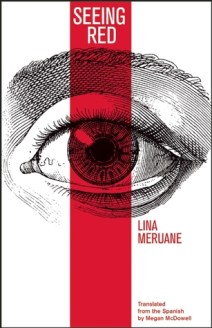 Our senses are our most precious natural gifts because it is through them that we are able to experience the world. At one point we have all probably wondered what it would be like to lose our hearing or our sight or our sense of smell. In Seeing Red, we are given a vivid understanding, through the character of Lina, of what it is like to lose one’s sight. Lina, a young woman attending graduate school in Manhattan and living with her boyfriend Ignacio, suddenly loses her vision. She has been a diabetic all of her life and from what we are told about her medical history in the book, the blood vessels in her eyes have burst and have caused her blindness. She knows that this is coming and the opening of the book is the moment at which her nightmare comes true.
 Lina Meruane is one of the most prominent and influential female voices in Chilean contemporary literature. A novelist, essayist, and cultural journalist, she is the author of a host of short stories that have appeared in various anthologies and magazines in Spanish, English, German and French. She has also published a collection of short stories, Las Infantas (Chile 1998, Argentina 2010), as well as three novels: Póstuma (2000), Cercada (2000), and Fruta Podrida (2007). The latter won the Best Unpublished Novel Prize awarded by Chile’s National Council of the Culture and the Arts in 2006. She won the Anna Seghers Prize, awarded to her by the Akademie der Künste, in Berlin, Germany in 2011 for her entire body of written work. Meruane received the prestigious Mexican Sor Juana Inés de la Cruz Prize in 2012 for Seeing Red. Meruane has received writing grants from the Arts Development Fund of Chile (1997), the Guggenheim Foundation (2004), and National Endowment for the Arts (2010). She received her PhD in Latin American Literature from New York University, where she currently serves as professor of World and Latin American Literature and Creative Writing. She also serves as editor of Brutas Editoras, an independent publishing house located in New York City, where she lives between trips back to Chile.
 This is a difficult title to review because it is impossible to describe the beautiful and philosophical language which permeates the book. When the narrative begins Felipe Díaz Carrión is returning to his home in a small village in Spain, but returning from where we do not yet know. When he reaches his native village he takes great comfort in the familiar surroundings in which he grew up; the trees, the road, the nest of Egyptian vultures, the bronze doorknocker on his house and a cross which is the grave marker for his own father are all soothing to him. As a person who likes her routine and is comforted by old, familiar things, I was mezmorised by the first few pages of this story as Felipe slips back into his peaceful and calm surroundings.




 The Book Binder's Daughter