Tag Archives: Literature in Translation

Review: None So Blind by José Ángel González Sainz

I received a review copy of this title from Hispabooks via Edelweiss.  The original book was published in Spanish and this translation has been done by Harold Augenbraum.

My Review:
None So BlindThis is a difficult title to review because it is impossible to describe the beautiful and philosophical language which permeates the book.  When the narrative begins Felipe Díaz Carrión  is returning to his home in a small village in Spain, but returning from where we do not yet know.  When he reaches his native village he takes great comfort in the familiar surroundings in which he grew up; the trees, the road, the nest of Egyptian vultures, the bronze doorknocker on his house and a cross which is the grave marker for his own father are all soothing to him.  As a person who likes her routine and is comforted by old, familiar things, I was mezmorised by the first few pages of this story as Felipe slips back into his peaceful and calm surroundings.

We are told that Felipe not only grew up in this small village, but he also met his wife, married her and started a family here.  When his son is about ten years old Felipe loses his job as a typesetter and he decides to move his family to a city in order to find work.  While in the city Felipe takes a job at a chemical factory and he settles into a new pattern where he walks the same road every day to work.  But the road in the city is greatly contrasted to his favorite road in the small village.  Whereas the small village dirt road is full of nature, is serene and peaceful, his road to work in the city is crowded, polluted and noisy.  But Felipe happily makes this transition for the good of his family, or so he thinks.

While his family is living in the city, his wife Asuncion gives birth to their second son.  Felipe is thrilled to have another son and he is proud to give his second son his own name.  Felipe’s relationship with the younger Felipe is tender and one built on respect and mutual interests.  But during this time trouble with his firstborn son also arises.  His eldest son spends less and less time at home and develops an attitude of disdain for his father.  It appears that his son has become radicalized through contact with his friends and acquaintanes in the city.  Felipe’s wife also becomes distant from him and she develops a newfound confidence and outspokenness about her.  She starts to attend political meetings at her friends’ homes and she even arranges her hair and clothing differently.  For twenty years Felipe calmly watches as his wife and oldest son grow farther and farther apart from him and their comments about his pacifism become increasingly abusive.

The biggest question facing the reader in the book is why Felipe turns a blind eye to his son’s and his wife’s radicalization, even when it is apparent they are breaking the law.  There is a lot of imagery, as one can imagine from the title, that revolves around blindness.  Felipe is shunned by his neighbors and beaten badly; his youngest son comes home with a black eye and his eldest son disappears for months on end.  During all of this Felipe doesn’t see or even try to see what is going on.  There are clues that he has suspicions about his son’s behavior, but he never confesses that he truly sees what is going on.  The significance of eyesight and blindness is further enhanced by the prolonged descriptions of the Egyptian vultures who nest around his home village.  They eat the softer parts of their prey like the tongue and eyes.

When Felipe is given an early retirement package from the chemical plant he realizes that there is nothing left for him in the city and so he moves back to his beloved village by himself.  He lives there peacefully for about year when he younger son shows up to deliver the awful news that his oldest son is accused of some horrific crimes.  Felipe is devastated and keeps wondering how much he is to blame for his son’s actions.  Felipe then takes us on a journey through the memories of his own father’s murder which he witnessed as a young boy.  It is no wonder that Felipe has become passive and almost numb to the things around him.  But does the fact that Felipe  turned a blind eye to his son’s behavior mean that Felipe is partly responsible for his son’s horrible crimes?  At which point in his son’s upbringing should Felipe have intervened?  And, finally, if he did speak up and intervene, would his son have listened to his father’s advice?

This is my first experience with a publication from Hispabooks.  I am so impressed with the beauty of the language and philosophical questions this book raises.  I can’t wait to see what else is in the Hispabooks catalog.

About the Author:
J.Á. González Sainz is a Spanish fiction writer and translator and co-founder of the Centro Internacional Antonio Machado, a Spanish language learning center for foreign students based in Soria, his hometown in Spain. He won the Premio de las Letras de Castilla y León in 2006, a prestigious Spanish literary fiction award.
7 Comments

Filed under Literature in Translation, Spanish Literature

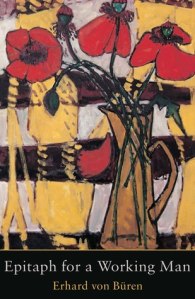
Review: Epitaph for a Working Man by Erhard von Büren

I received a review copy of this book from the translator, Helen Wallimann.  The book was published in the original German in 1990 in Switzerland and this English version was released in 2015.  I invite you to read my review and scroll down to the end of the post to win your own copy of Epitaph for a Working Man.

My Review:
EpitaphHaller resides in a nursing home in Switzerland where he still participates in a very full and active life.  He visits the local pub, he continues doing some work as a stone mason and he entertains his roommates with his quick, sarcastic wit.  This book is the story of the last year of his life as told by his only child, his son.

When the story begins, Haller’s son, who is never given a name, is picking up his father’s belongings from the nursing home at which he had resided for the last twelve years of his life.  His father’s only earthly possessions are contained in two small boxes.  His son slowly begins to recount his father’s illness which began as an odd mole on his back that at first only caused him some minor discomfort.  We guess from the description of this growth that Haller has melanoma and as the story progresses this diagnosis is confirmed.

Haller has to make three trips a week to the hospital in order to undergo radiotherapy treatments for his back.  At first the prognosis seems quite good and the doctor is optimistic that the treatments will take care of the growth on the old man’s back.  Haller’s son meets him at the hospital for all of his father’s appointments and waits for him while he receives his treatments.  Haller and his wife divorced when their child was very young so Haller and his son have never been very close.  It is Haller’s illness and his time at the hospital that bring the father and son together into a closer relationship and connection.

Haller’s son has lost his job as a typesetter and has been living on unemployment for many months now.  He has lost his sense of purpose and his only task during that day is that of “house husband.”  He makes meals for his wife, picks up around the house and does laundry while his wife is at work all day.  He takes the news that his wife is having an affair with her boss in a rather emotionally detached way.  He wonders where they meet to have their trysts and he also wonders if he should leave her.  He doesn’t seem to be all that upset about this development in their marriage so we are left to speculate if he wasn’t all that emotionally attached to the relationship in the first place, or if he is just numb with shock and depression.

The last few days of his life, which are very painful for Haller, are related to us in some detail.  Haller’s son never shares with his father when the cancer reaches his organs.  He struggles with his decision not to be honest with his father about his diagnosis.  He also struggles with how to make his father the most comfortable in his final days.  The strength of this story lies in its subtle commentary on how we struggle as human beings to deal with our final days.  Helen’s translation beautifully renders the heartwarming relationship between father and son into English for us.

About the Author and Translator:
Erhard von Büren was born near Solothurn, Switzerland, in 1940. After a PhD in Psychology and German philology from Zurich University (Zur Bedeutung der Psychologie im Werk Robert Musils. Atlantis, Zürich) and study stays in France he worked as a teacher in advanced teacher training. He lives in Solothurn, Switzerland.     He has had three novels published in Switzerland: Abdankung. Ein Bericht (Zytglogge Verlag, Bern 1989), Wespenzeit (Rotpunktverlag, Zürich 2000), Ein langer blauer Montag (verlag die brotsuppe, Biel/Bienne 2013).     Erhard von Büren has won various literary awards including the Canton of Solothurn Prize for Literature in 2007.     Homepage: http://www.erhard-von-bueren.ch

Helen Wallimann was born in 1941 and grew up in Cheltenham. She received her MA from Edinburgh University in 1963.She has worked in publishing in Munich, Paris and London. From 1973 to 2001 she was a teacher of French and English at the Kantonsschule Solothurn.  Her literary translations in book form include Legends from the Swiss Alps. MCCM Creations, Hong Kong 2009 (translated from German); Leung Ping-kwan, The Visible and the Invisible. Poems. MCCM Creations, Hong Kong 2012 (translated from Chinese).

Giveaway:
The translator put together a fun little multiple choice quiz about Switzerland for my readers.  Whoever gets the most answers correct will win a paperback copy of the book.  If there is a tie I will randomly choose a winner.  The quiz will be open until Friday, Feb. 19th.  This giveaway is open internationally.  Good luck!


8 Comments

Filed under German Literature, Literature in Translation

Review: My Marriage by Jakob Wassermann

I received an advanced review copy of this title from The New York Review of Books.  The original novel was published in German in 1934 and this English translation has been done by Michael Hofmann

My Review:
My MarriageWassermann presents us with the story of Alexander Herzog and his disastrous marriage to a woman from a middle-class German family named Ganna.  Alexander begins his tale with a history of Ganna’s childhood which seems to have a profound effect on her mental stability as an adult.  Ganna is one of six daughters, fifth in line, and is described as a duckling among swans.  She is not as pretty, graceful or demure as her sisters.  Her disobedience and lying often result in brutal beatings from her father.  No one ever thinks that Ganna could attract a man to marry; but Alexander, a young and up-and-coming writer, enters the scene and Ganna is smitten with him.

The beginning of the story has a light and funny tone as Alexander tells us about Ganna’s devotion to him and his writing.  She follows him around like a puppy and adores anything and everything he writes.  During this time Alexander is not able to make a successful living from the sales of his books so he is often in debt and wondering where his next meal will come from.  It starts to wound his pride when he is forced to rely heavily on the charity and pity of his friends.  Ganna suggests marriage to him because her rather sizeable dowry would mean the end of his financial woes.  Alexander dismisses Ganna’s suggestion of marriage as ridiculous, first and foremost because is not the one- woman, settling-down type of man.  But Ganna is relentless and finally wears him down, even threating to jump off a balcony if Alexander doesn’t agree to marry her.

Alexander lets Ganna and her world wash over him and he accepts his fate as her husband and a member of her extended family.  But Alexander’s passivity is his greatest flaw and he ignores the many warning signs of his impending misery and doom.  I kept reading the book and cringing because of all the gloomy foreshadowing.  The marriage starts to unravel rather quickly because it is evident that Ganna is mentally unstable, volatile, paranoid, and quite possibly psychotic.  She yells at the servants and then plays the part of the victim; she makes quick and intimate friends with various people in society and just as quickly makes them her mortal enemy.  Ganna and Alexander fight constantly and all the while Alexander keeps believing that he can change Ganna, calm her down, make her see reason.

After about ten years of marriage Alexander has many affairs which Ganna accepts as something that Alexander needs to do;  she is content with the fact that she is the lawful wife and that he will always come home to her.  But when Alexander meets and falls in love with a woman named Bettina, all of this changes.  Bettina is kind and patient and happy and Alexander, possibly for the first time in his life, falls deeply in love with her.  After carrying on their affair for several years, Alexander finally decides that he must ask Ganna for a divorce.  This divorce pushes Ganna over the edge to the point at which she is completely obsessed with making Alexander’s life miserable.  She employs one lawyer after another to ring more  and more money out of him and to drag out the divorce for years.  At one point it is estimated that she has a team of forty lawyers working to make Alexander’s  life miserable.  The last third of the book goes on for pages about the awful mess that Ganna makes out of everyone’s life and the horrible stress she causes to Alexander and Bettina.

I really should not have finished reading this book before bed because I laid awake for quite awhile thinking about it.  The combination of Alexander’s passivity and Ganna’s mental instability causes a perfect storm of misery for both of them.  The book is also an interesting commentary on mental illness and the far-reaching effects it has on a family.  How does one deal with a person who is so completely irrational, paranoid and volatile?  I think if Ganna were written about in the 21st century should would probably be diagnosed with a personality disorder or a psychosis.

The New York Review of Books has reissued another great classic from the German Language which I highly recommend if you enjoy books that explore marriage, psychological issues and unforgetable characters.


About the Author:
J WassermannBorn in Fürth, Wassermann was the son of a shopkeeper and lost his mother at an early age. He showed literary interest early and published various pieces in small newspapers. Because his father was reluctant to support his literary ambitions, he began a short-lived apprenticeship with a businessman in Vienna after graduation.

He completed his military service in Nuremberg. Afterward, he stayed in southern Germany and in Switzerland. In 1894 he moved to Munich. Here he worked as a secretary and later as a copy editor at the paper Simplicissimus. Around this time he also became acquainted with other writers Rainer Maria Rilke, Hugo von Hofmannsthal, and Thomas Mann.

In 1896 he released his first novel, Melusine. Interestingly, his last name (Wassermann) means “water-man” in German; a “Melusine” (or “Melusina”) is a figure of European legends and folklore, a feminine spirit of fresh waters in sacred springs and rivers.
From 1898 he was a theater critic in Vienna. In 1901 he married Julie Speyer, whom he divorced in 1915. Three years later he was married again to Marta Karlweis.

After 1906, he lived alternatively in Vienna or at Altaussee in der Steiermark where he died in 1934 after a severe illness.
In 1926, he was elected to the Prussian Academy of Art. He resigned in 1933, narrowly avoiding an expulsion by the Nazis. In the same year, his books were banned in Germany owing to his Jewish ancestry.

Wassermann’s work includes poetry, essays, novels, and short stories. His most important works are considered the novel Der Fall Maurizius (1928) and the autobiography, My Life as German and Jew (Mein Weg als Deutscher und Jude) (1921), in which he discussed the tense relationship between his German and Jewish identities.

12 Comments

Filed under Classics, German Literature, Literature in Translation, New York Review of Books

Review: Against Nature by Tomas Espedal

I receive a review copy of this title from Seagull Books.  This book was published in the original Norwegian in 2011 and this English version has been translated by James Anderson.

My Review:
Against NatureWhen the book opens the main character, Tomas, is at a party where he meets a girl that is twenty years his junior; despite their age difference they appear to have an instant connection.  Tomas reflects on the famous literary couple of Abelard and Heloise who have a passionate and scandalous love affair despite their age gap.  But things did not turn out very well for Abelard and Heloise, so is this Tomas’ way of foreshadowing what will happen with his own relationship?

The book then flashes back to Tomas’ teenage years during which he spends the summer working in the same textile factory where his father is employed.  He wakes up every day at the crack of dawn to do a physically difficult and monotonous job of fixing and oiling looms at the factory.  The only bright spot in his day is when he is able to ride his bicycle over to his girlfriend’s house where he has dinner with her family. After dinner, without any protest or interference from her parents,  he retires to the family guestroom with his girlfriend where he engages in what he calls his “adult education.”  Tomas’ swears that he is madly in love with his girlfriend and wants nothing more than to marry her.  He does stay with her for quite a few years into his early adulthood, but the only clue he gives us about the disintegration of this relationship is that when they tried to live together it “didn’t work out.”

The girl that Tomas ends up marrying is an actress from his home town whom he has run into from time to time when they were younger.  Agnete is home for a visit while promoting a play that she is doing in Rome and it is on this trip home that she connects with Tomas.  Tomas, at this point, has decided that he wants to be an author; when he meets Agnete he is the quintessential lonely writer who lives in a sparse bachelor pad and can barely make ends meet.  And he is attracted to Agnete because, like any lonely writer, when he gives up his loneliness it must be for a relationship that is as unpredictable and volatile as possible.  When they fight Agnete throws objects at Tomas and even gives him a black eye and some broken ribs.  It is obvious that this tumultuous relationship cannot be sustained forever, and it does last for much longer than one would think.  When it is finally over Tomas seems more relieved than anything else.

At the end of the book we are brought back to Tomas’s relationship with the younger woman whose name we are told is Janne.  When she moves into his house he feels that for the first time in his life he is happy and content.  Mundane things like reading in bed, cooking dinner and sitting on the couch make him happy.  He goes on for quite a few pages about what happiness is and how he has finally achieved a level of happiness in his own life.  But when Janne decides that the gap in their age is too much to handle she moves out and Tomas’ happiness is utterly shattered.  The last forty pages of the book are a transcription of his notebooks or journals which he keeps during the time of his break-up.  To call his notebooks sad or depressing would be a serious understatement; he wallows in his sorrow and at times his descent into loneliness, excessive drinking and inertia were very difficult to read.  Tomas’ notebooks reminded me of the Roman poet Catullus, who writes his own depressing break-up poems after he has an affair with a married woman; there is also a significant age gap in this relationship between Catullus and this woman.  I would highly recommend that Espedal read Catullus’ poems if he isn’t already familiar with them.

Finally, I have to mention the title, “Against Nature” and this theme that is constantly present in the book.  Tomas always seems to be straining against what is considered “natural” or at least society’s perception of what is natural.  It isn’t natural for a man in his mid-forties to have a relationship with a woman twenty years his junior.  It isn’t natural that Tomas should stay in a tumultuous relationship with his wife long after all love is lost between them.  Tomas and Agnete live in a farmhouse surrounded by nature and he never feels comfortable there; it is more natural for him to be in a city, away from nature.  The book is an interesting reflection on the things we accept as natural; who decides what is natural and what is not?  If we go against nature, does that make us unnatural or some type of an outcast?

Against Nature is a thought-provoking and poetic read.  This book has made me excited to explore additional titles in the Seagull books catalogue.

About the Author:
T EspedalTomas Espedal debuted as a writer in 1988. In 1991, he won awards in the P2/Bokklubbens rome competition for She and I. Founder of the Bergen International Poetry Festival, Espedal’s later works explore the relationship between the novel and other genres such as essays, letters, diaries, autobiography and travelogue. Espedal’s Go. Or the Art of Living a Wild and Poetic Life (2006) and Nearly Art (2009) have been nominated for the Nordic Council Literature Prize.


2 Comments

Filed under Literature in Translation, Literature/Fiction

Review: Boredom by Alberto Moravia

This book was originally written and published in Italian in 1960 and this English translation has been done by Angus Davidson.

My Review:
BoredomThis is another selection from the New York Review of Books Classics category.  My first experience with Moravia was another NYRB Classic release of his entitled Agostino  which I thoroughly enjoyed.  One notices immediately from these books that Moravia is an author who is interested in exploring the depths of the human, male psyche.  He is not afraid to explore taboo subjects and depict flawed characters who are trying to grapple with the trappings of their own minds.
Dino has grown up in the lap of luxury due to the fact that his mother is rather wealthy.  She lives in an opulent home on the Via Appia in Italy and employs several servants, a gardener and a cook.  Dino, however, decides that he wants to be a painter and he rejects his mother’s wealth and lives on his own in a shabby apartment in Rome.  Since he is a thirty-five year old man, it should come as no surprise that he wants freedom from any type of parental control.  But his rejection of wealth does not come from an altruistic motivation to spread social and economic equality.  His basic problem, as he tells us, is that he is bored.  Dino has been bored for as long as he can remember, going all the way back to early childhood.  Even when he takes up something for which he has an initial passion, like painting, he inevitably becomes bored with it.

Dino’s long and tiresome explanation of his boredom was, indeed, boring.  He is not a sympathetic character at all and at times his boredom comes across more as depression than as boredom.  He has no interest in things around him, he alienates himself from his family, especially his mother, and he suddenly wants nothing to do with tasks that he used to have a passion for.  This sounds more to me like depression than boredom.

When Dino meets a very young woman named Cecelia he begins an intense sexual relationship with her.  She shows up at his flat every day at the same time, takes her clothes off, and they instantly make love.  But after a while, Dino finds all of this terribly mundane and he becomes bored with her.  In order to make her seem more interesting he even experiments with treating her cruelly, but he quickly comes to his senses and decides that the best thing to do is to end the relationship.  This is the point in the story where things become interesting for Dino.

Just as he is about to break the affair off with  Cecelia she starts to become detached from him and begins missing their daily meetings.  Dino is convinced that she is having an affair with someone else behind his back.  All of a sudden Dino’s boredom has turned to an obsession- an obsession to find out more about this woman, an obsession to find out what she does when she is not with him and an obsession to find out what her family is like.  At this point Dino can’t think of anything but Cecelia and he actually longs for boredom and to be rid of what he calls his love for Cecelia.  He proposes marriage to her because, in his twisted sense of logic, he feels that she will settle down and have children and then he will finally be bored of her and can finally cure himself of this love.  To use marriage in order to fall out of love and become bored with one’s spouse is Dino’s twisted, ridiculous and morally backwards plan.

The book does not have a conclusive ending, as one might expect with an existential novel such as this one.  But Dino does vow to get over Cecelia, one way or another.  But in the end, it was I who became bored with his never ending desire to attain boredom in his relationship with Cecelia.

Has anyone else read any other Moravia titles?  I have enjoyed both Boredom and Agostino.  Let me know if you have any other recommendations in the comments!

About the Author:


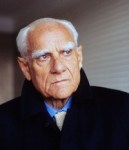
Alberto Moravia, born Alberto Pincherle was one of the leading Italian novelists of the twentieth century whose novels explore matters of modern sexuality, social alienation, and existentialism.


7 Comments

Filed under Literature in Translation, Literature/Fiction, New York Review of Books
