

Achilles and Patroclus. By Philippe Auguste Hennequin. 1784-1789.
Grief, I have learned, any type of grief, is a test—albeit a cruel, harsh, and unfair one—of the people around us, those whom we lean on and consider our support system. Grief strips away any pretensions, facades, masks, and posturing and challenges all types of relationships in a way that no other human emotion can. People deal with a grieving loved one in with such a vast range of emotions and reactions—some rise to the occasion to offer support, love, kindness and others back away, withdraw, remain silent.
I’m not making any kind of a judgment here. People are who they are. There is no changing that—for a variety of reasons some are wired to avoid any type of emotions whatsoever, especially the difficult ones. But on the other end of the spectrum there are those who have a special presence, know just the right things to say, and show unconditional love and kindness. I keep thinking about grief-as-test in the last few weeks as I’ve made my way through Louise Glück’s Poems 1962-2012; her insights on loss, grief, pain, heartache, and the everyday difficulties that life throws at us have struck a cord with me. Glück writes about growing up and watching her mother grieve over a lost child and the effects it had on Glück and her sister. Grief as a test of the family, especially the surviving children:
It was something I was good at: sitting still, not moving.
I did it to be good, to please my mother, to distract her from the child that died.
I wanted to be child enough, I’m still the same,
like a toy that can stop and go, but not change direction.
Glück also processes through her poems the death of her father with whom she had a difficult relationship. She writes: “I thought that pain meant I was not loved/it meant I loved.” And her struggles with grief suffered in various romantic relationships, including marriage, are raw, honest and astute. “Seated Figure” has particularly been on my mind, I’ve thought about this poem every day for weeks:
It was as though you were a man in a wheelchair,
your legs cut off at the knee.
But I wanted you to walk. I wanted us to walk like lovers,
arm in arm in the summer evening,
and believed so powerfully in that projection
that I had to speak, I had to press you to stand.
Why did you let me speak?
I took your silence as I took the anguish in your face,
as part of the effort to move—
It seemed I stood forever,
holding out my hand.
And all that time, you could no more heal yourself
than I could accept what I saw.
Although it’s not specifically about grief, I do see it through that lens. Glück wants this man to stand and be in a relationship with her; oftentimes because of grief, pain, heartache we ask someone to stand for us—for support, kindness, patience, love, understanding—and are faced with silence. As Glück says we believe so powerfully in the projection we have of a person that we refuse to accept the reality of who they are and what they are capable of giving us.
Finally, I need to mention Glück’s use of Greek mythology as examples of grief-as-test. She has a series of poems written from the perspective of Penelope, Telemachus, and Circe and how they deal with the grief caused by Odysseus’s absence. Her best poem involves one of the most heart-wrenching examples of grief in ancient literature, Achilles’s reaction to the death of his best friend and fellow warrior, Patroclus:
In the story of Patroclus no one survives,
not even Achilles who was nearly a god.
Patroclus resembles him, they wore the same armor.
Always in these friendships one serves the other,
one is less than the other: the hierarchy is always apparent,
though the legends cannot be trusted— their source is the survivor,
the one who has been abandoned.
What were the Greek ships on fire compared to this loss?
In his tent, Achilles grieved with his whole being
and the gods saw he was already dead,
a victim of the part that loved, the part that was mortal.
Achilles’s grief tests his mortality, his emotions, his fellow soldiers, and an entire Trojan army. The end of the Iliad and Greek’s return home show us the various ways that men on both sides handle that test, for good and bad.
Grief has certainly cast in a new light every relationship that I have now or will have in the future.
Grief as a test.
Of myself.
Of those around me.
Who stands up and who is incapable of standing up?
I’ve even learned that sometimes I’m the one who needs to stand up.
And maybe even walk away…
 I’m convinced that in life we are either moving forward or backward, and that rarely are we standing still or static. Even when we think we are stuck, we are being dragged downwards and backwards by a variety of thoughts, circumstances, people, etc. I was talking to a friend who astutely pointed out that Covid and the sudden change in circumstances for many people have exposed now more than ever the tendencies of individuals to move forward or backward. Those who can adapt quickly to a loss or a lack, and who think about things from different aspects, are more likely to take risks and move forward despite what appear to be insurmountable obstacles.
 On August 27th, 1956 William Gaddis sent a registered letter to himself in order to protect his idea for his novel JR against any possible copyright infringement. The idea for JR, he states in the letter, first came to him in the winter of 1956 and he remarks about its plot and themes: “This book is projected as essentially a satire on business and money matters as they occur and are handled here in America today; and on the people who handle them; it is also a morality study of a straightforward boy reared in our culture, of a man with an artist’s conscience, and of the figures who surround them in such a competetive (sic) and material economy as ours.”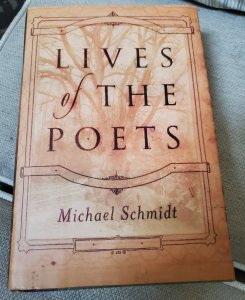
 I started reading the wonderful poetry of Laura Riding after I discovered her in Michael Schimidt’s book Lives of the Poets. And I realized that I had two of her prose books published by Ugly Duckling Presse sitting on my bookshelves. Convalescent Conversations was first published in 1936 by Seizin Press, which she ran with Robert Graves, under her pseudonym Madeleine Vara. It is a short novel with two central characters, Eleanor and Adam, recovering from unspecified illnesses, in the same nursing home. They are both in their 30’s, single, and from the same social class. When their nurse wheels them both out onto the same veranda every day for some fresh air, they find lots of things to talk about.


 The Book Binder's Daughter