Category Archives: Short Stories

Review: The Edith Wharton Dover Reader

Dover publications has a fantastic list of books that are anthologies of famous authors.  I love this series because it allows us to get the various works of an author all in one, cost-friendly volume.  This particular book of Edith Wharton’s writings contains short stories, poems, two novels and a work of non-fiction.  Since it is poetry month I have decided to review and comment on the poems that are contained in the collection.

My Review:
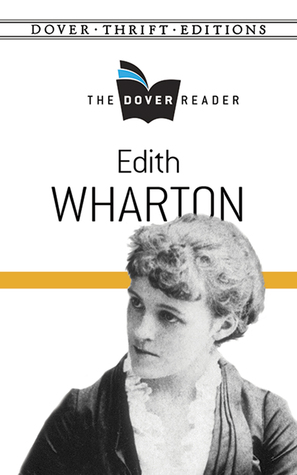
Edith WhartonThe first aspect of Edith Wharton’s poetry that I noticed are the vivid descriptions of natural phenomenon.  Nine of her poems are included in this anthology.  One of her most famous and recognizable, “An Autumn Sunset” is a commentary on the yearly cycle of nature but she also extends the metaphor and applies it to all life.  As the sun sets on the outposts of the earth, she questions whether or not she, too, will be carried to some distance shore where all things, good and bad, in life are forgotten.

The second poem in the collection, entitled “Life” picks up on this idea of the soul being carried to another world that is reminiscent of the Underworld in Greek and Roman mythology.  She seems to be standing on the banks of the river Lethe, the river of “forgetfulness, from which souls drink before they come back to life.  Life if breathed back into her in the form of music and she is transported across a vibrant world of birds, insects, meadows and storms.

One of the poems that surprised me the most is the poem about marriage.  Edith Wharton was trapped in what seemed like a loveless marriage with her husband Teddy Wharton.  When she finally dissolved the marriage it was due to his philandering and extramarital activities.  Yet, Edith Wharton did have high hopes and high praise for the institution of marriage in the poem included in this collection.  “The Last Giustiniani” was written in 1889, three years after her marriage to Teddy, so perhaps she still was still happy in her own domestic situation.  In the poem, a soon-to-be-ordained monk is summoned by the abbot to tell him that he is the last of the House of Giustiniani so he cannot take a vow of chastity, but instead must be married so that he can extend his family lineage.  The former monk’s sense of freedom at this news is unbridled euphoria.  He takes his new vows of marriage very seriously and is proud and blissful as he is standing at the altar with his bride.  The poems ends on a lovely and hopeful note:

Without a prayer to keep our
Lips apart
I turned about and kissed
You where you stood,
And gathering all the
gladness of my life
Into a new-found word, I
Called you “wife!”

The Edith Wharton Dover reader is wonderful collection of her best works.  I hope you enjoyed learning about some of her poetry.  If you pick up this book you will also be treated to her well-known novels Ethan Frome and The Age of Innocence.  There is a work of non-fiction she wrote about how to decorate a home which I found fascinating.  Thanks to Dover Publications for bringing us another great collection of classics at a very affordable price.

About The Author:

Edith Newbold Jones was born into such wealth and privilege that her family inspired the phrase “keeping up with the Joneses.” The youngest of three children, Edith spent her early years touring Europe with her parents and, upon the family’s return to the United States, enjoyed a privileged childhood in New York and Newport, Rhode Island. Edith’s creativity and talent soon became obvious: By the age of eighteen she had written a novella, (as well as witty reviews of it) and published poetry in the Atlantic Monthly.

After a failed engagement, Edith married a wealthy sportsman, Edward Wharton. Despite similar backgrounds and a shared taste for travel, the marriage was not a success. Many of Wharton’s novels chronicle unhappy marriages, in which the demands of love and vocation often conflict with the expectations of society. Wharton’s first major novel, The House of Mirth, published in 1905, enjoyed considerable literary success. Ethan Frome appeared six years later, solidifying Wharton’s reputation as an important novelist. Often in the company of her close friend, Henry James, Wharton mingled with some of the most famous writers and artists of the day, including F. Scott Fitzgerald, André Gide, Sinclair Lewis, Jean Cocteau, and Jack London.

In 1913 Edith divorced Edward. She lived mostly in France for the remainder of her life. When World War I broke out, she organized hostels for refugees, worked as a fund-raiser, and wrote for American publications from battlefield frontlines. She was awarded the French Legion of Honor for her courage and distinguished work.

The Age of Innocence, a novel about New York in the 1870s, earned Wharton the Pulitzer Prize for fiction in 1921 — the first time the award had been bestowed upon a woman. Wharton traveled throughout Europe to encourage young authors. She also continued to write, lying in her bed every morning, as she had always done, dropping each newly penned page on the floor to be collected and arranged when she was finished. Wharton suffered a stroke and died on August 11, 1937. She is buried in the American Cemetery in Versailles, France.
– Barnesandnoble.com

3 Comments

Filed under Classics, Literature/Fiction, Poetry, Short Stories

Review: Black Vodka by Deborah Levy

This is a collection of stories first published by And Other Stories in the U.K. and later published by Bloomsbury in the U.S.

My Review:
Black VodkaThe stories in this collection are full of outcasts, lonely people who linger on the fringes of society: a hunchback, an orphan, a mentally ill drunk and refugees.  The characters, despite the fact that they occupy a small space in these brief narratives, demand an emotional and empathetic reaction from the reader.

The first page of the title story, “Black Vodka”, poignantly captures the feelings of someone who is bullied, made to feel like an outsider and a misfit for his entire life.  The narrator, who has a hump on his back between his shoulder blades says, “I was instructed in the act of Not Belonging from a very tender age. Deformed. Different. Strange.”  He is now a successful ad executive working on a campaign for Black Vodka.  We cheer him on when a woman named Lisa, an archaeologist by trade, takes a keen interest in him and wants to “excavate” the eccentricities of his body in a way that does not degrade or humiliate him.

“Cave Girl” is an interesting commentary on personal identity and the fact that many people desire to be someone else, literally to be in someone else’s body.  Cass declares to her brother that she wants a sex change.  But she does not want to become a male, she wants to stay as a female but wants to become a different type of female.  Cass wants to be “light-hearted” and “airy” and she also wants to change her physical features so that she has blue eyes.  When Cass shows up looking and acting like a completely different person.  Her brother and all of the males in the neighborhood fall over themselves to give her attention and shower her with gifts.  But is Cass really better off as this seemly happy, yet shallow and “airy” new person who is always smiling but never has any real opinions?

It is amazing that so many issues, which as human beings we are forced to encounter every day, are raised in BLACK VODKA: relationship struggles, identity crises, loneliness, and isolation are all explored; I highly recommend this small yet thought-provoking book.

About The Author:
D LevyDeborah Levy trained at Dartington College of Arts leaving in 1981 to write a number of plays, highly acclaimed for their “intellectual rigour, poetic fantasy and visual imagination”, including PAX, HERESIES for the Royal Shakespeare Company, CLAM, CALL BLUE JANE, SHINY NYLON, HONEY BABY MIDDLE ENGLAND, PUSHING THE PRINCE INTO DENMARK and MACBETH-FALSE MEMORIES, some of which are published in LEVY: PLAYS 1 (Methuen)

Deborah wrote and published her first novel BEAUTIFUL MUTANTS (Vintage), when she was 27 years old. The experience of not having to give her words to a director, actors and designer to interpret, was so exhilarating, she wrote a few more. These include, SWALLOWING GEOGRAPHY, THE UNLOVED (Vintage) and BILLY and GIRL (Bloomsbury). She has always written across a number of art forms (see Bookworks and Collaborations with visual artists) and was Fellow in Creative Arts at Trinity College, Cambridge from 1989-1991.

2 Comments

Filed under Short Stories

Review: Young Skins by Colin Barrett

In I received an advanced review copy of this collection of short stories from Grove Press through Edelweiss.

My Review:

Young SkinsThis collection of stories is a bold glimpse into the daily struggles of young people trying to carve out some type of existence in their small Irish town.  The rural Irish town of Glanbeigh is short on opportunities but has plenty of pubs and nightclubs in which the local population can get into lots of trouble.  The opening lines of the collection perfectly capture the setting and the mood of each story:

My town is nowhere you have been, but you know its ilk. A roundabout off a national road, an industrial estate, a five-screen Cineplex, a century of pubs packed inside the square mile of the town’s limits.  The Atlantic is near; the gnarled jawbone of the coastline with its gull-infested promontories is near. Summer evenings, and in the manure-scented pastures of the satellite parishes the Zen bovines life their heads to contemplate the V8 howls of the boy racers tearing through the back lanes.

I am young, and the young do not number many here, but it is fair to say we have the run of the place.

In the first story, “The Clancy Kid,” Jimmy is sitting in a pub nursing a hangover from the previous night’s festivities by sipping a beer.  In his state of intoxication the night before,  Jimmy has also had a tryst with his ex-lover, Marlene.  We learn later in the story that his feelings for her run deeper than he is willing to admit.  Jimmy’s friend Tug, the town bully, helps him get the lady’s attention in a most unusual way.

“Calm with Horses,” is more of a novella than a short story that is included in the collection.  Arm and Dympna are making a living in this small town by dealing drugs and Arm is the “muscle” of the operation.  Even though he makes a living through the use of violence, Arm does have a softer, more understanding side which comes through when he is taking care of his autistic son.  At several times throughout the story he tries to help other people out of their miserable situations; but it is this unwavering and even naïve support of his friend that leads to Arm’s own downfall

In “Diamonds,” the main character tries to move away from his small town but he finds nothing but work in a pub which exacerbates his status as an alcoholic.  The details in these stories, which are oftentimes omitted in the brevity of short stories, makes the tales brilliant.  For example, it’s not the loss of his job, relationships or health that drives this character to straighten out his life.  It is the death of his beloved cat Ruckles, who accidentally ingests some of the narrators drugs, that forces him to reexamine his life.  And we are deftly reminded of Ruckles former existence throughout the story.

The principal at his former high school offers the narrator a job as a groundskeeper which position comes with housing and a small stipend.  The principal is cleverly called “The Sentimental Authoritarian” because he has a romantic nostalgia for the past but also demands that the main character do his job properly and stay sober.  But, ironically enough, after he meets a woman at an AA meeting, his tenuous grasp on sobriety immediately goes out the window.

The prose, the flawed characters and the ugly, yet realistic setting are all characteristics which make Barrett’s writing intense and vivid.   YOUNG SKINS is a must-read for those who love short stories and contemporary Irish Literature.

About The Author:
Barrett, Colin (c) Lucy Perrem 2013Colin Barrett was born in 1982 and grew up in County Mayo. In 2009 he completed his MA in Creative Writing at University College Dublin and was awarded the Penguin Ireland Prize. His work has been published in The Stinging Fly magazine and in the anthologies, Sharp Sticks, Driven Nails (Stinging Fly Press, 2010) and Town and Country (Faber and Faber, 2013).

1 Comment

Filed under Short Stories

Review: The Settling Earth by Rebecca Burns

I received an advanced review copy of this collection of short stories from the author.

My Review:
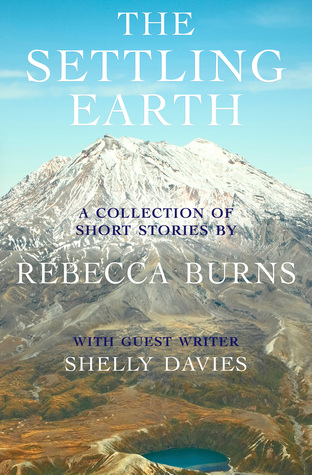
The Settling EarthAll of the characters in these short stories are connected by their sense of alienation and misery while living an emigrant’s life in the hot, dusty colony of New Zealand in the 19th century.  The book begins with Sarah, whose parents have given her away to an older man named William Sanderson who drags her off to live on his isolated farm in New Zealand.  Sarah is lonely, homesick and stuck in an unhappy marriage.  She seems to be wandering around her home in a daze, either not fully aware of her surrounding or in denial of her situation.

William himself is also the focus of one of the stories in the book and he doesn’t seem to want to live in New Zealand any more than his wife does.  In order to relieve his stress and find an outlet for his frustrations, he likes to visit a brothel in Christchurch.  William is also a bigot and has a severe dislike for the Maori natives.

Several characters from the brothel also have their own stories.  The owner of the brothel, having left England and started her business, tries to look after her “girls” as best she can.  But, despite the fact that precautions are taken,  several of them still manage to get pregnant.  The women in the brothel are just as sad as Sarah and trapped in a lonely and demeaning life.

The saddest, and most heart-rending story in the collection, is that of Mrs. Gray who takes in the babies of unwed mothers.  These fallen women and their children are judged harshly and shunned by the colony.  It is ironic that many of these women have come to the colony for a fresh start but the colony also rejects them because of their perceived sins.  Mrs. Gray believes that she is helping these women and her babies, but the help that she is giving these women is not what they are expecting.

THE SETTLING EARTH is a well-written group of stories, full of downcast and moving characters.  My only complaint about the book, if indeed it can be called a “complaint,” is that just when I became fully invested in a character the story would end. This collection could easily have been made into one, continuous, thought-provoking book;   I would love to see what a talented author like Rebecca Burns could do with a full-length novel.

About The Author:

Rebecca Burns is an award-winning writer of short stories, over thirty of which have been published online or in print. She was nominated for a Pushcart Prize in 2011, winner of the Fowey Festival of Words and Music Short Story Competition in 2013 (and runner-up in 2014), and has been profiled as part of the University of Leicester’s “Grassroutes Project”—a project that showcases the 50 best transcultural writers in the county. In November 2014 she won the Black Pear Press short story competition with her story, “Seaglass”. Her piece is the title story in the Black Pear Press anthology, “Seaglass and Other Stories” – available from December 2014 at http://blackpear.net/2014/12/28/wonde…

Rebecca’s debut collection of short stories, “Catching the Barramundi”, was published by Odyssey Books in November 2012 and is available to order from Amazon at http://www.amazon.com/Catching-Barram…. In March 2013 it was longlisted for the Edge Hill Short Story Award.

The Settling Earth is Rebecca’s second collection of short stories.

2 Comments

Filed under Historical Fiction, Short Stories

Review: The Prank-The Best of Young Chekhov by Anton Chekhov

I received an advanced review copy of these stories from The New York Review of Books.

My Review:
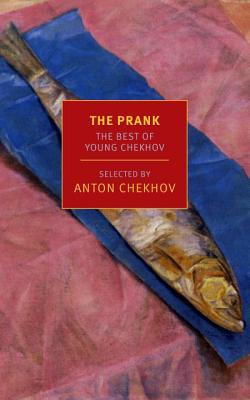
The PrankThese short stories have been collected and published in one volume for the first time and this collection also features two stories that have never before been translated into English.  The book includes an index in which the original publication is mentioned for each story as well as any changes that Chekhov made to each narrative before final publication.

The collection is a humorous and sarcastic commentary on Russian life in the 19th century; Chekhov particularly likes to poke fun at relationships and marriage.  In “The Artist’s Wives,” various types of creative men are featured, including a painter, a novelist and a sculptor, all of whom have trouble controlling their pesky spouses.

Secret lovers, dark humor and narcissism all play a role in the marriages that Chekhov describes.  In “Before the Wedding,” a mother is giving her newly engaged daughter advice about marriage.  She has a long list of complaints about her own husband and tells her daughter, “Marriage is something only single girls like but there’s nothing good about it.”

My favorite story is the one entitled “A Confession” in which a man is writing a letter to his friend to explain why, after 39 years, he is still a bachelor.  He has a few interesting stories about various engagements to women that are foiled because of ridiculous reasons which include a biting gosling, bad writing and hiccups.

The New York Review of books Classics has given us another brilliant and funny collection of translated short stories.  If you are interested in trying to read Russian literature, THE PRANK is a great work with which to start.

About The Author:
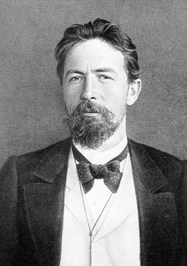
ChekhovAnton Chekhov was born in the small seaport of Taganrog, southern Russia, the son of a grocer. Chekhov’s grandfather was a serf, who had bought his own freedom and that of his three sons in 1841. He also taught himself to read and write. Yevgenia Morozova, Chekhov’s mother, was the daughter of a cloth merchant.

“When I think back on my childhood,” Chekhov recalled, “it all seems quite gloomy to me.” His early years were shadowed by his father’s tyranny, religious fanaticism, and long nights in the store, which was open from five in the morning till midnight. He attended a school for Greek boys in Taganrog (1867-68) and Taganrog grammar school (1868-79). The family was forced to move to Moscow following his father’s bankruptcy. At the age of 16, Chekhov became independent and remained for some time alone in his native town, supporting himself through private tutoring.

In 1879 Chekhov entered the Moscow University Medical School. While in the school, he began to publish hundreds of comic short stories to support himself and his mother, sisters and brothers. His publisher at this period was Nicholas Leikin, owner of the St. Petersburg journal Oskolki (splinters). His subjects were silly social situations, marital problems, farcical encounters between husbands, wives, mistresses, and lovers, whims of young women, of whom Chekhov had not much knowledge – the author was was shy with women even after his marriage. His works appeared in St. Petersburg daily papers, Peterburskaia gazeta from 1885, and Novoe vremia from 1886.


2 Comments

Filed under Classics, Humor, New York Review of Books, Russian Literature, Short Stories