Category Archives: Short Stories

Review: Henri Duchemin and His Shadows by Emmauel Bove

I received an advanced review copy of this collection of short stories from The New York Review of Books.  The stories were written in 1928 in French and this English version has been translated into English by Alyson Waters

My Review:
Henri DucheminThis collection of short stories all feature men who are unhappy and looking for someone or something with which to identify.  In the first story entitled “Night Crime,”  Henri Duchemin, a forty-year-old man,  is alone on Christmas Eve in a pub lamenting over his poverty and loneliness and the last thing he wants to do is to go back to his cold, empty flat.  He wanders around the streets in the rain until he really has no choice but to go home.  But before he goes home, a woman whome he meets on the streets notices his sadness and abrasively suggests that he kill himself.  As he drifts off to sleep, thoughts of suicide and murder haunt his restless dreams.

My favorite story in the collection is written in the epistolary style.  “What I saw” is a letter written by Jean to an unnamed friend; Jean desperately wants his friend’s opinion about something that he saw involving his girlfriend that disturbed him greatly.  Jean’s letter begins with a description of his girlfriend, Henrietta, and her devotion to Jean.  One thinks she is the model woman until, one day, Jean sees her sitting in a taxi and kissing another man.

When Jean confronts Henrietta about the liaison, Henrietta adamantly denies ever being with another man.  Henrietta and Jean’s other friends try to convince Jean that he must have been mistaken and only saw someone who resembled Henrietta.  Jean wants so much to continue his relationship with Henrietta and as he finishes his tale he begs the recipient of the letter to tell Jean his true opinion about Henrietta’s alleged indiscretion.  Jean, like the other characters in the story, has a tenuous grasp on an important relationship in his life and he is eager and even desperate not to lose it.

Another story worth mentioning is “The Story of a Madman.”  Fernand, the narrator, makes it a point at the beginning of his tale to address the reader and inform him or her that he is not, in fact, crazy or out of his mind.  He goes on for a few pages giving us some background about his activities and frame of  mind so that when he carries out his plan, the reader will think he is perfectly sane in doing so.

Fernand then proceeds to have a meeting with his father and tells his parent that he never wants to see him again.  Fernand then makes his way to his girlfriend, Monique’s apartment;  He assures us that he is deeply in love with Monique and they have a fantastic relationship, but he informs her that he never wants to see her again either.  The next stop on Fernand’s list is his best friend, with whom he also breaks off all contact.

Fernand’s final stop on his break-up tour is with his sister and brother-in-law.  After a friendly conversation, he also informs them that he never wants to see them again.  So, we are left wondering why Fernand would alienate all of the people in his life that he loves.  There are hints throughout the story that Fernand is exercising his willpower and that he is attempting to make a plan and adhere to it no matter what others may think.  But the last few sentences of the story leave us with a haunting suggestion that maybe his motives for leaving are a bit more depressing and sinister.

This is a small yet powerful collection of stories that will leave you thinking about these men and their feelings of alienation and unhappiness.  Bove’s language is sometimes curt and sometimes poetic.  He weaves these small tales in such a way that we are never sure where they will end.  I highly recommend this brilliant collection of writing brought to us by The New York Review of Books classics collection.
About The Author:
E BoveEmmanuel Bove, born in Paris as Emmanuel Bobovnikoff, died in his native city on Friday 13 July 1945, the night on which all of France prepared for the large-scale celebration of the first ‘quatorze juillet’ since World War II. He would probably have taken no part in the festivities. Bove was known as a man of few words, a shy and discreet observer. His novels and novellas were populated by awkward figures, ‘losers’ who were always penniless. In their banal environments, they were resigned to their hopeless fate. Bove’s airy style and the humorous observations made sure that his distressing tales were modernist besides being depressing: not the style, but the themes matched the post-war atmosphere precisely.

9 Comments

Filed under France, Literature in Translation, New York Review of Books, Short Stories

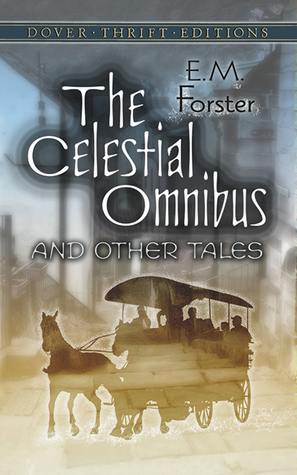
Review: The Celestial Omnibus and Other Tales by E.M. Forster

I received an advanced review copy of this title from Dover Publications through NetGalley.

My Review:
Celestial OmnibusThis brief collection of stories show the true depth of Forster’s literary talent and his ability to infuse fantasy and imagination into his writing.  My favorite stories were two in the collection into which Forster incorporates many classical references.

In the “Celestial Omnibus”, a boy discovers a sign for an omnibus in the lane across from his house.  The alley is a very odd place for an omnibus to pass through so the boy gets up very early one morning to investigate it.  When the sun rises a carriage does appear out of the fog and the driver picks the boy up.  The boy goes on a journey of a lifetime through the clouds and he meets nymphs and great writers and heroes from famous books.  The omnibus driver is Sir Thomas Browne, the famous essayist, but the boy doesn’t recognize or understand any of the famous people he meets; he just knows that he has had a wonderful time and has seen amazing things.  The story is full of literary allusions and classical references but I won’t give any of them away here so as not to spoil them for other readers.

When the boy comes home after having disappeared all day, his father canes him for telling lies about his supposed journey to heaven.  The boy’s neighbor, Mr. Bons, which happens to cleverly be “snob” spelled backwards, decides he will bring the boy back to the allow and show him that no such omnibus could possibly exist.  But when the omnibus shows up in the alley and picks up Mr. Bons and the boy, Mr. Bons does not have the same magical experience on his journey as the boy; for Mr. Bons’ imagination is not as carefree and vast as the boy and he does not witness the same remarkable landscape as the boy does.  It is no wonder in the end that Mr. Bons meets a horrible fate.

My other favorite in the collection is a story entitled “Other Kingdom.” In this story, an upper class aristocrat named Mr. Worters has taken a fiancé from Ireland, Evelyn Beaumont, who is much below his social status.  In order to better educate his new fiancé, Mr. Worters hires a classics teacher, Mr. Inskip, to teach her Latin.  It is evident from the beginning that Miss Beaumont does not have the intellectual capacity to learn ancient languages, but she does have a whimsical imagination and a carefree spirit.

Mr. Worters decides to buy his fiancé a wood, named Old Kingdom, for a wedding present.  When Worters decides that the wood needs fences and paths and bridges, Miss Beaumont gets very upset that he is trying to organize and tame the natural wood.  Through several allusions, the reader, or at least this reader, is quickly reminded of Ovid’s story of Daphne and Apollo in the Metamorphoses in which Apollo attempts to capture and tame Daphne the wood nymph.  Similar to Apollo, Worters learns the harsh lesson that he cannot tame nature or the spirit of this woman.  Miss Beaumont has a metamorphosis of her own but it is not the type that Worters had hoped for.

This is a collection of stories that I will reach for and reread over and over again and every time I read them I will discover something new and different.  I highly recommend THE CELESTICAL OMNIBUS AND OTHER TALES from Dover Publications.

About The Author:
ForsterEdward Morgan Forster, generally published as E.M. Forster, was an novelist, essayist, and short story writer. He is known best for his ironic and well-plotted novels examining class difference and hypocrisy in early 20th-century British society. His humanistic impulse toward understanding and sympathy may be aptly summed up in the epigraph to his 1910 novel Howards End: “Only connect”.

He had five novels published in his lifetime, achieving his greatest success with A Passage to India (1924) which takes as its subject the relationship between East and West, seen through the lens of India in the later days of the British Raj.

Forster’s views as a secular humanist are at the heart of his work, which often depicts the pursuit of personal connections in spite of the restrictions of contemporary society. He is noted for his use of symbolism as a technique in his novels, and he has been criticised for his attachment to mysticism. His other works include Where Angels Fear to Tread (1905), The Longest Journey (1907), A Room with a View (1908) and Maurice (1971), his posthumously published novel which tells of the coming of age of an explicitly gay male character.

4 Comments

Filed under British Literature, Classics, Short Stories

Review: Please Talk to Me-Selected Stories by Liliana Heker

I received an advanced review copy of this title from Yale University Press through NetGalley.  This edition has been translated by Alberto Manguel and Miranda France.

My Review:
Please Talk To MeHeker shows us in these short stories her ability to successfully write about a wide range of topics: from the relationship of servant and master, to the Oedipus Complex, to the toll that mental illness takes on an entire family.  The stories follow a stream-of-consciousness style, oftentimes involving abrupt and confusing transitions, that weaves us through the minds of many different types of characters.

The most clever story in the collection is “Strategies Against Sleeping.”  Señora Eloisa is being driven by a chauffer on a long ride during which she is very tired; she wants nothing more than to close her eyes and take a good long nap.  But the driver starts talking to her about how he could not sleep a wink on the previous night.  As a result he is very tired and wants her to talk to him so that he stays awake while he is driving.

We feel the pain and discomfort of the woman and the driver who are both fighting to stay awake for different reasons.  At one point during her forced conversations the woman becomes desperate for any kind of relief:  “For a very brief moment she had to suppress a desire to open the door and throw herself onto the road.”  In her delirium,  Señora Eloisa lets slip a very dark and personal family story that horrifies the driver and will definitely serve to keep him awake.

The story “Early Beginnings or Ars Poetica” includes the most extreme examples of the author’s abrupt transitions; this story reads like a dream sequence.  The narrator begins the story by imagining that a lion or a horse is present in his apartment when he goes to sleep .  The narrator then transitions to a philosophical musings about God and the beginnings of the earth.  Then the narrator transitions to imagining that he is four years old and is sitting in from of four cups of chocolate and a yellow plastic tablecloth on his birthday.  The story continues on in this fashion until the ending which is equally jarring.

This is my first taste of Argentinian literature and I will definitely look for more authors from this country.  I highly recommend PLEASE TALK TO MY as a quirky and symbolic collection of stories from Liliana Heker.


About The Author:
Liliana HekerLiliana Heker began her literary career at age 17, mentored by Argentine writer Abelardo Castillo. She was a collaborator in Argentina literary magazine “The Paper Cricket” and founded, along with Castillo, The Golden Bug and The Platypus. She has published several short story books which have been collected in “Cuentos” (Alfaguara). She has also written two novels, “El fin de la historia” and “Zona de clivaje”, and a collection of essays called “Las hermanas de Shakespeare”.

2 Comments

Filed under Literature in Translation, Short Stories

Review: Don’t Try This at Home by Angela Readman

I received an advanced review copy of this title from And Other Stories.  They are a small not-for-profit literary press with am impressive selection of books.  Please visit their website for a complete list of great titles: andotherstories.org

My Review:
Dont-Try-This-at-Home-_-cover_-FINAL1-300x460This is a quirky, bizarre collection of tales that also deal with serious social topics.  Child custody, divorce, and gender issues are all explored with an accompanying twist of magic or fantasy.  In one story a mum who works at a chip shop is tired of her mundane life; it is only when she transforms herself into a hip-shaking Elvis that she feels happy and fulfilled.  This story is an interesting commentary on gender identity and the ways in which we suppress our true selves when we try to conform and fit in.

Some of the stories seem downright absurd.  In the title story, “Don’t Try this at Home ”  a woman wants to spend more time with her husband, so she chops him in half.  When the couple needs more money, she chops him in quarters and eighths so he can work more at various jobs.  When one of his other halves has an affair the woman has mixed feelings about her decision to chop up her husband into so many different persons.

I particularly enjoyed the last three stories.  They featured individuals that are misunderstood by their family, friends and neighbors.  In “Keeper of the Jackalopes,” a man lives in a run down trailer with his six-year-old daughter and taxidermies animals for a living.  Business has been very slow so they rely on food tossed into dumpsters behind grocery stores for their meals.  The loyalty that the little girls shows towards her father is very touching and it is this little girl’s advice at the end of the story that helps him deal with some sad issues in his life.

DON’T TRY THIS AT HOME is a fantastic and entertaining group of stories with memorable characters.  I highly recommend that you add this collection to your summer reading list.

About The Author:
Angela-Readman-_Photo-by-Kevin-Howard-460x250Angela Readman’s stories have appeared in a number of anthologies and magazines, winning awards such as the Inkspill Magazine Short Story Competition and the National Flash Fiction Competition. In 2012 she was shortlisted for the Costa Short Story Award for ‘Don’t Try This at Home’ – an award she would go on to win in 2013 with the story ‘The Keeper of the Jackalopes’. Readman is also a published poet.


5 Comments

Filed under Art, Humor, Literary Fiction, Short Stories

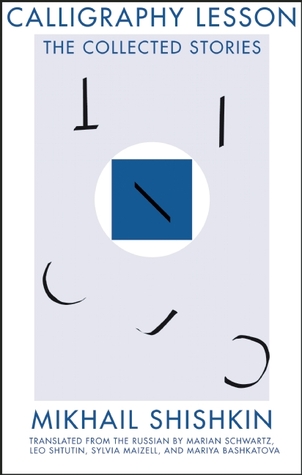
Review: Calligraphy Lesson-Collected Stories by Mikhail Shishkin

I received an advanced review copy of this title from Deep Vellum Publishing.  This is the first English-language collection of short stories by Russia’s greatest contemporary author, Mikhail Shishkin, the only author to win all three of Russia’s most prestigious literary awards.

My Review:

Calligraphy LessonThe theme that pervades all of these stories is the tragic oppression and enslavement of Russia’s people by its Soviet government.  Shishkin offers stories about himself and various members of his family and the devastating impact of Soviet rule had on their lives for generations.

My favorite story in the collection is the first one entitled “The Half-Belt Overcoat” in which the author describes the hardships of his mother who serves as a school headmistress.  On the one hand she is expected to inculcate the students into the ideals of the Soviet, communist state.  On the other hand she must teach the children to think yet not express any of their ideas that would defy the communist rulers.

When the author is a teenager he has an argument with his mother over a girl with whom he has fallen in love.  He mother does not approve so he doesn’t speak to his mother for over a year.  Later in life when his mother is dying of cancer, he feels deep regret for punishing her with silence.  But he can never find the words to express his sorrow and his appreciation for her struggle before she dies

The story “Of Saucepans and Star Showers,” presents us with the struggles of the author’s father as they relate to living under the Soviet regime.  His father was in the Russian navy and served on a submarine.  He is proud of his service to his country and dons his uniform every year to show his national pride.  But when the Soviet government starts doling out food rations that come from Germany, his father begins to think that his sacrifices to defeat the enemy during World War II were all in vain.  He lives out the rest of his sad, pathetic days alone and drowning his sorrows in bottles of vodka.

The final story that must be mentioned is entitled “The Bell Tower of San Marco.”  Lydia is a Russian who is studying in Zurich to become a doctor.  While in medical school she meets, falls in love with and marries a Swiss doctor named Fritz.  Lydia’s greatest ambition in life is to take a position as a doctor in the poorest parts of Russia and help the masses realize that they are being enslaved by the tsarist regime.  Lydia is a fervent socialist and wants to create an uprising of the masses which, she believes, will result in a complete revolution.

Lydia moves back to Russia and leaves Fritz in Zurich to practice medicine.  Their married life consists mainly of letters and when they are together they seem unhappy and dissatisfied.  Lydia eventually realizes that the poor do not want a revolution and the socialist values which she represents are meaningless to them.  At 40 she becomes an old, depressed, woman who feels that her entire life has been wasted on useless ideals.  Perhaps when the bell tower of the famous church of San Marco collapsed during their honeymoon to Venice, she should have taken that as a sign or an omen of the tragedy that was to become her life.

I highly recommend CALLIGRAHPY LESSONS for the beautiful language, moving stories and the emotional characters.  This collection of short stories has made me want to delve into Shishkin’s longer works.

About The Author:

M ShishkinMikhail Shishkin was born in Moscow in 1961. He won the 2000 Booker Prize for his The Taking of Izmail and the 2005 National Bestseller Prize and the 2006 National “Big Book” Prize for his Maidenhair (Open Letter, 2012). He lives in Switzerland.

6 Comments

Filed under Literature in Translation, Russian Literature, Short Stories