Category Archives: New York Review of Books

Review: Alien Hearts by Guy de Maupassant

The New York Review of books had a fantastic winter sale and I bought several books, including this one, at a fantastic discount.  This book was originally written and published in French in 1890.  This English version has been translated by Richard Howard.

My Review:
Alien HeartsAndré Mariolle is wealthy enough to pursue various arts without having to make a living from them.  He dabbles in a little bit of everything from playing music to writing.  He is content with mediocrity in his life and he is happy to surround himself with other artists and move in the creative and intellectual circles in Paris.  One day he is invited to the salon of Madame du Burne and his quiet, unassuming life is changed forever.

Madame du Burne survived an abusive, although brief, marriage and when her husband dies and leaves her a widow at the age of 30, she puts all of her wealth and energy into entertaining the most creative minds in 19th Century Paris.  Novelists, sculptors, musicians and singers all attend her salon and an invitation from her is the most coveted one in town.  But we learn that Madame du Burne has some deep-seated psychological issues as far as relationships with men are concerned.  She is an unrelenting coquette who makes men fall in love with her and she collects men like she collects art.  She toys with their emotions, but once they fall in love with her she never returns their feelings.

When Madame du Burne meets Mariolle he seems to have a different affect on her; she favors him more than the other men in her “collection,” but is she really capable of truly loving someone in return?  Mariolle falls hopelessly in love with her and writes her beautiful love letters and tries to be around her as much as possible.  Despite her sad experience with marriage, it is hard to feel sorry for Madame du Burne.  She appears to appreciate artists and intellectuals but it becomes obvious throughout the novel that she is just using them for her own selfish and vain ends.

Maupassant’s language, especially when he is describing the process of falling in love, is poetic and melodic.  His metaphors aptly capture the burning ardor of Mariolle’s feelings as well as the torment he feels when his love is not returned.  I was reminded several times throughout the novel of similar sentiments expressed by the Latin poets Catullus and Ovid who are also pulled in various emotional directions by romantic love.

The ending of this book is abrupt, unexpected and puzzling.  ALIEN HEARTS is a short read full of passion, love and frustration and I highly recommend this emotionally charged novel.


About The Author:
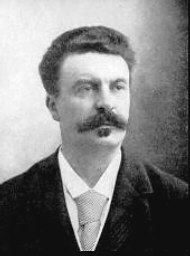
Guy de m.Henri René Albert Guy de Maupassant was a popular 19th-century French writer. He is one of the fathers of the modern short story. A protege of Flaubert, Maupassant’s short stories are characterized by their economy of style and their efficient effortless dénouement. He also wrote six short novels. A number of his stories often denote the futility of war and the innocent civilians who get crushed in it – many are set during the Franco-Prussian War of the 1870s.

Leave a comment

Filed under Classics, France, Literature in Translation, New York Review of Books

Review: A Legacy by Sybille Bedford

I received an advanced review copy of this novel from the publisher through Edelweiss.

My Review:
A LegacyThis is the satirical yet poignant story of two wealthy European families living in Pre-World War I Germany.  The first cast of characters that are described are from the Merz family, who are of Jewish descent and live together in an opulent home in Berlin.  In addition to the matriarch and patriarch of the family, sons, daughters, uncles and in-laws all live under the same roof.  Their youngest daughter, Melanie, marries an older man named Julius who is originally from the countryside and whose family is Catholic.  As one can image, many comical discussions about religion and family matters involving religion, take place as a result of this Jewish-Catholic marriage.

Julius’ family, the Feldens, are the other family described at length in A LEGACY.  The Feldens are landed gentry living in the South and their Catholic roots go back for generations; there are a total of four sons in the family including Julius.  A lot of the story about the Feldens involves a description of Johannes, the youngest brother, who, at the age of 15, is sent off to a brutally abusive German military camp for young boys.  Johannes escapes and a political battle ensues between the Felden family and the German government.  When Johannes is threated with being returned to the military camp he loses his mind and is never right for the rest of this life.

There are many themes and plots in the book that Bedford describes which readers from any time or place can appreciate.  Even though these families believe that they are vastly different because of their religions, they are actually very similar in how they view family, wealth and society.  Although both families claim they are staunch believers in their respective religions, none of them actually ever sets foot in a church or a synagogue.  The sons, especially the eldest in each family, expect to have vast amounts of income with which to gamble and engage in their eccentric hobbies; but each man has no intention, whatsoever, of working for a living.

The language of the book is very different and might not be what many readers are used to as far as dialogue is concerned.  Oftentimes characters launch into a dialogue and neither speaker is specifically identified until well into the conversation.  It is as if we are sitting at the dinner table with the Merzes, or any large family, and conversations are happening all at the same time around us.  It might take us a while to catch up with the various dialogues going on simultaneously in the room, but we try to catch bits and pieces of discussions as best we can.

When there is a death, a marriage or a birth, all of which inevitably entail a consideration of religious practices, some type of an argument arises among the Felden and Merz families.  A sister-in-law, who is on the fringe of this family dynamic describes the situations she witnesses among these families best when she says that there is a “Theological dead-lock between non-practicing members of two religions.”

A LEGACY is an entertaining novel, especially for those readers who understand the intricate workings and dynamics of an extended family.  It also made me a little sad to think that this time period that is described is the last of its kind for such families as these in Germany before that country is ravaged by two world wars.  In the end, Bedford makes us ask ourselves if any of the petty differences that exists among families really matter?  What kind of a legacy will we leave for posterity?  What does fighting over religion or money or property really leave us in the end?

Thanks so much to the New York Review of Books Classics series for bringing another great novel to our attention.

About The Author:
Sybille Bedford, (16 March 1911 – 17 February 2006) was a German-born English writer. Many of her works are partly autobiographical. Julia Neuberger proclaimed her “the finest woman writer of the 20th century” while Bruce Chatwin saw her as “one of the most dazzling practitioners of modern English prose.


1 Comment

Filed under Classics, Historical Fiction, Literary Fiction, New York Review of Books

Review: The Prank-The Best of Young Chekhov by Anton Chekhov

I received an advanced review copy of these stories from The New York Review of Books.

My Review:
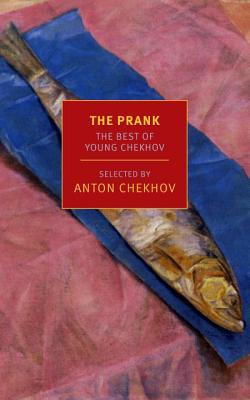
The PrankThese short stories have been collected and published in one volume for the first time and this collection also features two stories that have never before been translated into English.  The book includes an index in which the original publication is mentioned for each story as well as any changes that Chekhov made to each narrative before final publication.

The collection is a humorous and sarcastic commentary on Russian life in the 19th century; Chekhov particularly likes to poke fun at relationships and marriage.  In “The Artist’s Wives,” various types of creative men are featured, including a painter, a novelist and a sculptor, all of whom have trouble controlling their pesky spouses.

Secret lovers, dark humor and narcissism all play a role in the marriages that Chekhov describes.  In “Before the Wedding,” a mother is giving her newly engaged daughter advice about marriage.  She has a long list of complaints about her own husband and tells her daughter, “Marriage is something only single girls like but there’s nothing good about it.”

My favorite story is the one entitled “A Confession” in which a man is writing a letter to his friend to explain why, after 39 years, he is still a bachelor.  He has a few interesting stories about various engagements to women that are foiled because of ridiculous reasons which include a biting gosling, bad writing and hiccups.

The New York Review of books Classics has given us another brilliant and funny collection of translated short stories.  If you are interested in trying to read Russian literature, THE PRANK is a great work with which to start.

About The Author:
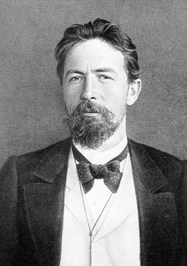
ChekhovAnton Chekhov was born in the small seaport of Taganrog, southern Russia, the son of a grocer. Chekhov’s grandfather was a serf, who had bought his own freedom and that of his three sons in 1841. He also taught himself to read and write. Yevgenia Morozova, Chekhov’s mother, was the daughter of a cloth merchant.

“When I think back on my childhood,” Chekhov recalled, “it all seems quite gloomy to me.” His early years were shadowed by his father’s tyranny, religious fanaticism, and long nights in the store, which was open from five in the morning till midnight. He attended a school for Greek boys in Taganrog (1867-68) and Taganrog grammar school (1868-79). The family was forced to move to Moscow following his father’s bankruptcy. At the age of 16, Chekhov became independent and remained for some time alone in his native town, supporting himself through private tutoring.

In 1879 Chekhov entered the Moscow University Medical School. While in the school, he began to publish hundreds of comic short stories to support himself and his mother, sisters and brothers. His publisher at this period was Nicholas Leikin, owner of the St. Petersburg journal Oskolki (splinters). His subjects were silly social situations, marital problems, farcical encounters between husbands, wives, mistresses, and lovers, whims of young women, of whom Chekhov had not much knowledge – the author was was shy with women even after his marriage. His works appeared in St. Petersburg daily papers, Peterburskaia gazeta from 1885, and Novoe vremia from 1886.


2 Comments

Filed under Classics, Humor, New York Review of Books, Russian Literature, Short Stories

Review: The Door by Magda Szabo

The Door was originally published in 1987 in the original Hungarian. The New York Review of Books has released this edition which has been translated by Len Rix.

My Review:
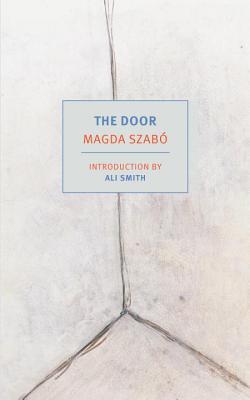
The DoorEmerence was the sole inhabitant of her empire-of-one, more absolute than the Pope in Rome.”

The Door is about the unlikely relationship forged between two very different women.  Magda is a writer and an intellect and the pressures of her schedule force her to seek out a cleaning lady who will keep her home in order while she pursues her career.  Emerence, an old woman who lives in their neighborhood in Budapest, is well-known for her intense work ethic as well as her singular personality.

As the book progresses, one wonders why Magda puts up with some of Emerence’s eccentricities.  Magda at several points suffers from extremely harsh words and criticism when she argues with Emerence.  The housekeeper actually mocks Magda’s faith and religion to the point where Magda sneaks off to Church on Sunday so she will not have to endure Emerence’s verbal attacks.  As time goes on it is evident that, although they fight and argue, Magda and Emerence cannot live without each other; their lives are entangled together to the point that they cannot stand to be apart.

Emerence has a plethora of eccentricities, all of which are gradually explained throughout the book.  She has an intense fear of thunderstorms, she will only sleep in a loveseat, and she completely objects to religion or faith of any kind.  Emerence has also made a lot of money which she is saving up to buy an elaborate crypt in which to be buried.  But the most mysterious quirk of hers is the fact that she will not allow anyone, under any circumstances to enter her home.  Her door is permanently barred to her family, her close friends and her employer of 20 years.

Throughout the novel, Magda comes to truly care for the old woman and she tries to figure out what is behind the door to Emerence’s apartment.  Magda also attempts to get behind the figurative doors that Emerence has put up in order to emotionally protect herself from other people.  Can Magda ever truly break down these barriers and obtain the close and tender relationship with Emerence that she so desires?  Or will Magda’s attempts to break down these literal and figurative doors end up destroying this woman whom she has come to love as family?

THE DOOR is a unique and intense novel about relationships, loyalty, and love which I highly recommend.  Thanks to the New York Review of Books for bringing this brilliant Hungarian author to our attention.

About The Author:
Magda Szabó was a Hungarian writer, arguably Hungary’s foremost woman novelist. She also wrote dramas, essays, studies, memories and poetry.

Born in Debrecen, Szabó graduated at the University of Debrecen as a teacher of Latin and of Hungarian. She started working as a teacher in a Calvinist all-girl school in Debrecen and Hódmezővásárhely. Between 1945 and 1949 she was working in the Ministry of Religion and Education. She married the writer and translator Tibor Szobotka in 1947.

She began her writing career as a poet, publishing her first book Bárány (“Lamb”) in 1947, which was followed by Vissza az emberig (“Back to the Human”) in 1949. In 1949 she was awarded the Baumgarten Prize, which was – for political reasons – withdrawn from her on the very day it was given. She was dismissed from the Ministry in the same year.

During the establishment of Stalinist rule from 1949 to 1956, the government did not allow her works to be published. Since her unemployed husband was also stigmatized by the communist regime, she was forced to teach in an elementary school within this period.

Her first novel, Freskó (“Fresco”), written in these years was published in 1958 and achieved overwhelming success among readers. Her most widely read novel Abigél (“Abigail”, 1970) is an adventure story about a schoolgirl boarding in eastern Hungary during the war.

She received several prizes in Hungary and her works have been published in 42 countries. In 2003 she was the winner of the French literary prize Prix Femina Étranger for the best foreign novel.


5 Comments

Filed under Classics, Literature in Translation, New York Review of Books

Review: The Woman Who Borrowed Memories by Tova Jannson

I am very excited whenever I have the opportunity to receive an advanced reader’s copy of a book from the New York Review of Books Classics collection.  All of these stories were originally written in Swedish and this collection of short stories is the first English edition of Tova Jannson’s stories.

My Review:

The Woman Who Borrowed MemoriesThis collection of short stories is divided into four sections, the first of which is entitled “The Listener” and was originally published in 1971.  I found the stories in this part of the collection to have a dream-like, almost surreal quality to them.  In the story that is the title to the collection, “The Listener”, a woman who is called Aunt Gerda has always been a great listener to her family.  She listens intently to all of their stories and woes and when she is about fifty-five years old her personality starts to change.  She seems to forget names and people and starts to spend a lot of time by herself.

Continue reading

8 Comments

Filed under Classics, New York Review of Books, Short Stories, Uncategorized