Category Archives: New York Review of Books

Review: Boredom by Alberto Moravia

This book was originally written and published in Italian in 1960 and this English translation has been done by Angus Davidson.

My Review:
BoredomThis is another selection from the New York Review of Books Classics category.  My first experience with Moravia was another NYRB Classic release of his entitled Agostino  which I thoroughly enjoyed.  One notices immediately from these books that Moravia is an author who is interested in exploring the depths of the human, male psyche.  He is not afraid to explore taboo subjects and depict flawed characters who are trying to grapple with the trappings of their own minds.

Dino has grown up in the lap of luxury due to the fact that his mother is rather wealthy.  She lives in an opulent home on the Via Appia in Italy and employs several servants, a gardener and a cook.  Dino, however, decides that he wants to be a painter and he rejects his mother’s wealth and lives on his own in a shabby apartment in Rome.  Since he is a thirty-five year old man, it should come as no surprise that he wants freedom from any type of parental control.  But his rejection of wealth does not come from an altruistic motivation to spread social and economic equality.  His basic problem, as he tells us, is that he is bored.  Dino has been bored for as long as he can remember, going all the way back to early childhood.  Even when he takes up something for which he has an initial passion, like painting, he inevitably becomes bored with it.

Dino’s long and tiresome explanation of his boredom was, indeed, boring.  He is not a sympathetic character at all and at times his boredom comes across more as depression than as boredom.  He has no interest in things around him, he alienates himself from his family, especially his mother, and he suddenly wants nothing to do with tasks that he used to have a passion for.  This sounds more to me like depression than boredom.

When Dino meets a very young woman named Cecelia he begins an intense sexual relationship with her.  She shows up at his flat every day at the same time, takes her clothes off, and they instantly make love.  But after a while, Dino finds all of this terribly mundane and he becomes bored with her.  In order to make her seem more interesting he even experiments with treating her cruelly, but he quickly comes to his senses and decides that the best thing to do is to end the relationship.  This is the point in the story where things become interesting for Dino.

Just as he is about to break the affair off with  Cecelia she starts to become detached from him and begins missing their daily meetings.  Dino is convinced that she is having an affair with someone else behind his back.  All of a sudden Dino’s boredom has turned to an obsession- an obsession to find out more about this woman, an obsession to find out what she does when she is not with him and an obsession to find out what her family is like.  At this point Dino can’t think of anything but Cecelia and he actually longs for boredom and to be rid of what he calls his love for Cecelia.  He proposes marriage to her because, in his twisted sense of logic, he feels that she will settle down and have children and then he will finally be bored of her and can finally cure himself of this love.  To use marriage in order to fall out of love and become bored with one’s spouse is Dino’s twisted, ridiculous and morally backwards plan.

The book does not have a conclusive ending, as one might expect with an existential novel such as this one.  But Dino does vow to get over Cecelia, one way or another.  But in the end, it was I who became bored with his never ending desire to attain boredom in his relationship with Cecelia.

Has anyone else read any other Moravia titles?  I have enjoyed both Boredom and Agostino.  Let me know if you have any other recommendations in the comments!

About the Author:
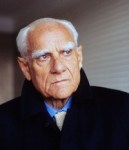

Alberto Moravia, born Alberto Pincherle was one of the leading Italian novelists of the twentieth century whose novels explore matters of modern sexuality, social alienation, and existentialism.


7 Comments

Filed under Literature in Translation, Literature/Fiction, New York Review of Books

Review: Stoner 50th Anniversary Edition by John Williams

I received an advance review copy of this title from New York Review of Books.

My Review:
Stoner 50thFor those of you that are not new to my blog, you might have noticed that this book has a place in my “favorites” section. In this book we are introduced to William Stoner who is born at the turn of the century into a very poor farm family in rural Missouri.   Stoner would have also become a farmer like his father and when he is given a scholarship to the state university, he fully intends to study agriculture.  But through the influence of a tough but inspiring English professor, Stoner changes his major to English and he himself becomes a University English professor.

One of the aspects that I enjoyed most about the book is Stoner’s contemplation about what it means to be a good teacher. He also doesn’t always play the university politics game and his career suffers for it.  He is forced to teach Freshman English courses over and over again and he does so in a stoic manner without protest.  Whether he is in a graduate seminar class or a beginning Freshman English class he always gives his best teaching to his students.

Stoner meets a charming young woman at the home of his professor and he immediately decides that he wants to marry her.  He courts Edith for about two weeks and they have a modest wedding ceremony at her parent’s house.  But Edith soon reveals her mental instability and Stoner realizes very quickly that his marriage is a miserable failure.   But Stoner never even contemplates leaving Edith and instead he endures a miserable life at home with a wife who is crazy and unpredictable. I was glad to see that at one point in the book, though, he does find real love and intimacy, which I think is what he craves all along.

The prose in this book is exceptionally elegant. This is one of those books that my thoughts keep wandering to over and over. It makes one contemplate so many different ideas: career, family, love, marriage, and even death.  The 50th anniversary edition issued by the New York Review of Boks is a hardcover book with an introduction by John McGahern.  Even if you have already read Stoner on the Kindle or in the original paperback, this beautiful hardcover edition is very special and worth having on one’s bookshelf.

About The Author:
John WilliamsJohn Edward Williams was born on August 29, 1922, in Clarksville, Texas, near the Red River east of Paris, Texas and brought up in Texas. His grandparents were farmers; his stepfather was a janitor in a post office. After flunking out of junior college and holding various positions with newspapers and radio stations in the Southwest, Williams enlisted in the USAAF early in 1942, spending two and a half years as a sergeant in India and Burma. Several years after the war, Williams enrolled in the University of Denver, where he received his B.A. in 1949 and an M.A. in 1950. During this period, his first novel, Nothing But the Night, was published (1948), and his first volume of poems, The Broken Landscape, appeared the following year. In the fall of 1950, Williams went to the University of Missouri, where he taught and received a Ph.D. in 1954. In the fall of 1955, Williams took over the directorship of the creative writing program at the University of Denver, where he taught for more than 30 years. Williams’s second novel, Butcher’s Crossing, was published by Macmillan in 1960, followed by English Renaissance Poetry, an anthology published in 1963 by Doubleday which he edited and for which he wrote the introduction. His second book of poems, The Necessary Lie, appeared in 1965 and was published by Verb Publications. In 1965 he became editor of University of Denver Quarterly (later Denver Quarterly) until 1970. In 1965, Williams’s third novel, Stoner, was published by Viking Press. It has been recently been re-issued by The New York Review of Books. His fourth novel, Augustus, was published by Viking Press in 1973 and won the prestigious National Book Award in 1973 and remains in print.

The critic Morris Dickstein has noted that, while Butcher’s Crossing, Stoner, and Augustus are “strikingly different in subject,” they “show a similar narrative arc: a young man’s initiation, vicious male rivalries, subtler tensions between men and women, fathers and daughters, and finally a bleak sense of disappointment, even futility.” Dickstein called Stoner, in particular, “something rarer than a great novel — it is a perfect novel, so well told and beautifully written, so deeply moving, it takes your breath away.”

After retiring from the University of Denver in 1986, Williams moved with his wife, Nancy, to Fayetteville, Arkansas, where he resided until he died of respiratory failure on March 3, 1994. A fifth novel, The Sleep of Reason, was left unfinished at the time of his death

8 Comments

Filed under Classics, Favorites, New York Review of Books

Review- Akenfield: Portrait of an English Village by Ronald Blythe

I received and advanced review copy of this title from the New York Review of Books.

My Review:
AkenfieldThis book is a history of the British village of Akenfield in Suffolk, England as told through the stories and narratives of its own citizens.  Blythe interviewed 49 different people from all types of social backgrounds and occupations and recorded their words for this social history.   In 1967, the year in which the villagers are interviewed, the way of life in this small village is changing from one of manual labor to mechanization. Each person from Akenfield that is interviewed by the author highlights different aspects of his or her life in a forthright, honest and stream-of-consciousness narrative.  Blythe groups the book into twenty different sections of the people, some of which include “God,” “The Craftsmen,” “The School,” and “The Law.”

One group in the book that made a particular impression on me were the craftsmen such as the wheelwright, the  blacksmith and the thatcher.  It would seem that with the invention of cars that there would no longer be a need for such talents because of the shrinking reliance on horses and wagons for transportation.  It was inspiring that these hardworking men decide to change with the times and find other uses for their crafts.  The blacksmith, Francis Lambert age twenty-five, is a very talented craftsman and now that there are no longer horses to shoe in order to sustain his business he has diversified by making weather-vanes, gates and fire-screens.  Francis is so talented that he is even sent to Germany to represent England at an international craft festival.  Francis loves his job which is evident by the fact that he usually puts in sixty hours of work per week and he takes a great deal of pride in his masterpieces.

As one would expect, hopes of escaping the village are expressed from some of the residents, but for the most part they seem content to stay in their small part of England.  Several of them mention that their families have resided within the boundaries of Akenfield for generations.  But there are also a fair number of voices we hear from people who, even though that have lived in Akenfield for many years, will always be considered “outsiders” because they were born elsewhere.  Hugh Hambling age thirty who is a schoolmaster tells us that he was born on Norfolk.  He and his wife move to Akenfield when he was twenty because he found a charming cottage that the newly married couple could afford.  Hugh feels that the villagers are very private people and although he tries to engage them in discussions, he only ever is able to talk to them about cursory things like football or the weather.

In the section on the school, Blythe includes the administrative records from the teachers and headmasters which date back to 1875.  One problem, in particular, that teachers have to deal with is poor attendance by the children of farm owners.  There are certain times of the year when even the young ones are needed to be out in the fields helping with the crop and later when a truancy law is passed these guidelines for school attendance are still not enforced.  Outbreaks of health issues such as ringworm, diphtheria and scarlet fever are also recorded and must have certainly worsened the poor attendance issues.

Many of the details that the residents of Akenfield provide are like no other that one would find in any ordinary history book.  The orchard worker, for instance, gives us a detailed accounts of different apples that are best grown in the English climate and what the prime picking time is for each breed.  The thatcher provides a lengthy description of the best way to thatch a roof and which are the best materials to use.  I found the section on the bell-ringers particularly fascinating; these young men are in a way considered talented musicians and go around to village and neighborhood churches in order to practice their craft of bell-ringing.  I had no idea before reading this history that there is such a fine art form to the ringing of church bells.

This is a charming, interesting, candid glimpse into the pulse and essence of an English village in the middle of the 20th century.  If you have any interest in British history, oral history or social history then this latest edition to the New York Review of Books classic titles is a must read.

About The Author:
Ronald Blythe is an English writer, essayist and editor, best known for his work Akenfield: Portrait of an English Village (1969), an account of agricultural life in Suffolk from the turn of the century to the 1960s. He writes a long-running and considerably praised weekly column in the Church Times entitled Word from Wormingford.


10 Comments

Filed under British Literature, Classics, New York Review of Books, Nonfiction

Review: Confusion by Stefan Zweig

I have not been very active on the blog this week, but I have a great excuse.  Classes have started again so that means I am back in the classroom.  I have a record number of students who have signed up for Latin this year.  So when someone makes the comment that Latin is a “dead language” I reference my robust numbers of enthusiastic students.  Confusion is the perfect book to review for back-to-school since it highlights a rather unusual relationship between a student and teacher.  This book was originally published in the German in 1929 and this English translation is done by Anthea Bell.

My Review:
ConfusionWhen the novella opens, Roland is celebrating his sixtieth birthday and his thirtieth anniversary of teaching in the Department of Languages and Literature.  His colleagues and students have presented him with a book that is a complete biography of his academic career.  The only thing missing is an account of how he was inspired to begin his career in academics.  The rest of the story is an account of Roland’s youth and his experience with the teacher that inspired his career.

Roland first attends university in Berlin where he is bored and uninspired and as a result he does not take his studies seriously.  He spends months lounging around in coffee-houses and sleeping with many women and not tending to his studies at all.  One day his father shows up unannounced and this incident makes for a very funny and awkward scene in the book.  Roland is so embarrassed by his behavior that he agrees to leave Berlin and attend university in a small provincial town in central Germany.  This is where he encounters the teacher that will change his life and infuse in him a lifelong passion for literature.

When he first arrives at his new university, Roland stumbles into a lecture on Shakespeare which is being given by a passionate and well-spoken professor.  All of the students listening are captivated by this teacher and Roland is instantly inspired as well.  He finds the professor and enlists his help in mapping out a plan for his academic future.  Roland lives in the same building as the teacher and his wife so he quickly becomes very close with the couple.  Roland eats meals with the couple, spends evenings in the teacher’s study, and even goes on various social outings separately with the wife.

From the beginning it becomes clear that the teacher and his wife have a very strange marriage.  They never display an affection for each other and seem to be more roommates than husband and wife.  As Roland spends time with the wife, she drops hints here and there that they are not happily married and that the teacher is rather a difficult person to live with.  But the true details about the non-traditional relationship between husband and wife are not revealed until the very end of the book.

Throughout his time with the teacher, Roland is plagued by the constant mood swings of his mentor.  Sometimes his teacher is encouraging and kind and then all of a sudden he is insulting, distant and cold.  Roland works hard at his studies to impress his teacher, even to the detriment of his mental and physical health.  Roland feels like he is walking on eggshells because he never knows if his teacher will be kind or cruel.  The teacher’s feelings and reasons for his changeable behavior are not revealed until the end of the book.

As a teacher this book was interesting to read because it reminded me that we oftentimes never know what kind of an impact we can have on students’ lives and careers.  Roland has this one man to thank for his long and successful career but he never gets to tell the teacher about his inspiration.  It is significant that the teacher is never given a name; he remains a nameless entity even though he has such an amazing impact on Roland’s fate.   Furthermore, there could not be a more apt title for this book than the word “confusion.”  Roland is confused about his relationship to his teacher, and he is also confused about the relationship between the teacher and his wife.  And until the very end, the reader is confused about what, exactly, is going on with the teacher.

This is a touching, powerful and short read that I highly recommend.  I look forward to reading more of Zweig’s works.  Thanks to the New York Review of Books for reviving another fantastic classic work in translation.

About The Author:
Stefan Zweig was one of the world’s most famous writers during the 1920s and 1930s, especially in the U.S., South America and Europe. He produced novels, plays, biographies and journalist pieces. Among his most famous works are Beware of Pity, Letter from and Unknown Woman and Mary, Queen of Scotland and the Isles. He and his second wife committed suicide in 1942.

Zweig studied in Austria, France, and Germany before settling in Salzburg in 1913. In 1934, driven into exile by the Nazis, he emigrated to England and then, in 1940, to Brazil by way of New York. Finding only growing loneliness and disillusionment in their new surroundings, he and his second wife committed suicide.

Zweig’s interest in psychology and the teachings of Sigmund Freud led to his most characteristic work, the subtle portrayal of character. Zweig’s essays include studies of Honoré de Balzac, Charles Dickens, and Fyodor Dostoyevsky (Drei Meister, 1920; Three Masters) and of Friedrich Hlderlin, Heinrich von Kleist, and Friedrich Nietzsche (Der Kampf mit dem Dmon, 1925; Master Builders). He achieved popularity with Sternstunden der Menschheit (1928; The Tide of Fortune), five historical portraits in miniature. He wrote full-scale, intuitive rather than objective, biographies of the French statesman Joseph Fouché (1929), Mary Stuart (1935), and others. His stories include those in Verwirrung der Gefhle (1925; Conflicts). He also wrote a psychological novel, Ungeduld des Herzens (1938; Beware of Pity), and translated works of Charles Baudelaire, Paul Verlaine, and mile Verhaeren.

Most recently, his works provided inspiration for the 2014 film ‘The Grand Budapest Hotel’

12 Comments

Filed under Classics, German Literature, Literature in Translation, New York Review of Books, Novella

Review: Henri Duchemin and His Shadows by Emmauel Bove

I received an advanced review copy of this collection of short stories from The New York Review of Books.  The stories were written in 1928 in French and this English version has been translated into English by Alyson Waters

My Review:
Henri DucheminThis collection of short stories all feature men who are unhappy and looking for someone or something with which to identify.  In the first story entitled “Night Crime,”  Henri Duchemin, a forty-year-old man,  is alone on Christmas Eve in a pub lamenting over his poverty and loneliness and the last thing he wants to do is to go back to his cold, empty flat.  He wanders around the streets in the rain until he really has no choice but to go home.  But before he goes home, a woman whome he meets on the streets notices his sadness and abrasively suggests that he kill himself.  As he drifts off to sleep, thoughts of suicide and murder haunt his restless dreams.

My favorite story in the collection is written in the epistolary style.  “What I saw” is a letter written by Jean to an unnamed friend; Jean desperately wants his friend’s opinion about something that he saw involving his girlfriend that disturbed him greatly.  Jean’s letter begins with a description of his girlfriend, Henrietta, and her devotion to Jean.  One thinks she is the model woman until, one day, Jean sees her sitting in a taxi and kissing another man.

When Jean confronts Henrietta about the liaison, Henrietta adamantly denies ever being with another man.  Henrietta and Jean’s other friends try to convince Jean that he must have been mistaken and only saw someone who resembled Henrietta.  Jean wants so much to continue his relationship with Henrietta and as he finishes his tale he begs the recipient of the letter to tell Jean his true opinion about Henrietta’s alleged indiscretion.  Jean, like the other characters in the story, has a tenuous grasp on an important relationship in his life and he is eager and even desperate not to lose it.

Another story worth mentioning is “The Story of a Madman.”  Fernand, the narrator, makes it a point at the beginning of his tale to address the reader and inform him or her that he is not, in fact, crazy or out of his mind.  He goes on for a few pages giving us some background about his activities and frame of  mind so that when he carries out his plan, the reader will think he is perfectly sane in doing so.

Fernand then proceeds to have a meeting with his father and tells his parent that he never wants to see him again.  Fernand then makes his way to his girlfriend, Monique’s apartment;  He assures us that he is deeply in love with Monique and they have a fantastic relationship, but he informs her that he never wants to see her again either.  The next stop on Fernand’s list is his best friend, with whom he also breaks off all contact.

Fernand’s final stop on his break-up tour is with his sister and brother-in-law.  After a friendly conversation, he also informs them that he never wants to see them again.  So, we are left wondering why Fernand would alienate all of the people in his life that he loves.  There are hints throughout the story that Fernand is exercising his willpower and that he is attempting to make a plan and adhere to it no matter what others may think.  But the last few sentences of the story leave us with a haunting suggestion that maybe his motives for leaving are a bit more depressing and sinister.

This is a small yet powerful collection of stories that will leave you thinking about these men and their feelings of alienation and unhappiness.  Bove’s language is sometimes curt and sometimes poetic.  He weaves these small tales in such a way that we are never sure where they will end.  I highly recommend this brilliant collection of writing brought to us by The New York Review of Books classics collection.
About The Author:
E BoveEmmanuel Bove, born in Paris as Emmanuel Bobovnikoff, died in his native city on Friday 13 July 1945, the night on which all of France prepared for the large-scale celebration of the first ‘quatorze juillet’ since World War II. He would probably have taken no part in the festivities. Bove was known as a man of few words, a shy and discreet observer. His novels and novellas were populated by awkward figures, ‘losers’ who were always penniless. In their banal environments, they were resigned to their hopeless fate. Bove’s airy style and the humorous observations made sure that his distressing tales were modernist besides being depressing: not the style, but the themes matched the post-war atmosphere precisely.

9 Comments

Filed under France, Literature in Translation, New York Review of Books, Short Stories
