Category Archives: Literature in Translation

Review: Rendezvous in Venice by Philippe Beaussant

I received an advanced review copy of this title from Pushkin Press through NetGalley.  This title was originally written and published in French and the translators of this English version are Paul Buck and Catherine Petit.

My Review:
Rendezvous in VenicePierre has been an assistant to his uncle for fifteen years, learning about art and the world’s famous masterpieces.  His uncle Charles is very meticulous about his work as an art history professor as he catalogues and studies the portraits of famous artists from all over Europe.  Pierre is Charles’ only surviving relative and, as far as Pierre is concerned, Charles never had much of a personal life or any significant romantic relationships.  Pierre’s knowledge about the life of his uncle all changes when his uncle dies and Pierre finds a very personal diary among his uncle’s private papers.  This diary includes the intimate details of Charles’ affair when he was a middle-aged man with a woman named Judith; one of the highlights of their relationship is a trip to Venice where they have intricate discussions about Italian art.

The elegant writing of the book really drew me in and I read over half of it in the first sitting.  The first part of the book alternates between Charles’ diary and Pierre’s thoughts about his uncle’s secret love affair.  Beaupassant makes us contemplate how well we really know those who are supposed to be closest to us.  Pierre worked side by side with his uncle for years and never knew about such an important aspect of his life.  Pierre wonders how long they were together for and why his uncle never mentioned what must have been a heartbreaking love affair. While Pierre is still contemplating his uncle’s secret, he meets Judith at an art history conference.

It is clear from Pierre’s memories of his uncle and from Charles’ own diary that Charles chose to reject love and lead a solitary life and dedicate himself to his work.  Pierre seems to be moving in the same direction of loneliness until he meets Judith and her daughter, Sarah.  Will Pierre, unlike his uncle, choose love and contentment and happiness or will he continue on as a bachelor for the rest of his life?

I must mention that there are several detailed discussions about painting, and portraiture in particular, that gave me a better appreciation for some famous masterpieces; I enjoyed their descriptions so much that I actually looked up the ones that are mentioned in the book (I won’t mention them here to keep potential readers in suspense). Discussions of art, a venetian setting, and a hidden love affair all combine to make this a lovely French novella that I thoroughly enjoyed and highly recommend.

About The Author:
Philippe Beaussant is a prominent and award-winning French musicologist and writer. Born in 1930, he is a founder of the Centre for Baroque Music at Versailles and a Member of the Académie Française. Beaussant has written numerous books on the history of Baroque art and music, as well as several novels. He has won many awards, including the Grand prix du roman de l’Académie française for his novel Heloise.
6 Comments

Filed under France, Literature in Translation, Novella

Review: Behind The Station by Arno Camenisch

I received an advanced review copy of this title from Dalkey Archive Press through NetGalley.  This is the second book in the Alps Trilogy but this book can be read as a stand alone.  It was written in German and first published in 2010; this English version has been translated by Donal McLaughlin

My Review:
Behind the StationThis story takes place about thirty-five years ago in a small Romansh-speaking Alpine village.  The unnamed child narrator and his brother are allowed to roam the village without any intense supervision or over-programming; this is free range parenting at its finest.  The boy treats us to all of the pleasures, innocence and adventures of childhood.  We are told about the variety of interesting characters that inhabit this small village, from Giascep the seller of nails, to Alexei the hairdresser, to the boy’s aunt who runs the local restaurant.

The prose is very simple with short sentences that form paragraphs that each read like a small story or a vignette.  The narrative is basically a series of stories from a year in the boy’s life; it seemed to me that the boy is about 8 or 9 years old, but he never gives his exact age.  The boy tells us a few stories, for example, about his pet rabbits and his eager anticipation of the doe having baby rabbits.  When the doe finally produces twelve babies, the boys can’t help but touch the babies and hold them.  When they babies disappear they are told, much to their horror, that the mother ate the babies because she caught the scent of the boys on her babies.  From that point on the boy is afraid to touch any baby, whether it be bunny or human for fear that the mother might consume its offspring.

One of the aspects that I liked most about the book is the close-knit relationship between the boys and their family.  The boys roam around the village day after day and cause all sorts of ruckus, but they always stick together and never fight with each other.  They are also very close to their grandparents, “Nonno” and “Nonna”;  Nonno makes rakes for a living and only has 7.5 fingers because the others got caught in his band saw.  One of the funniest scenes in the book is when the boy unexpectedly visits his grandmother and finds her standing naked in her kitchen–it’s quite an awkward moment for them both and although he knows he should look away he just can’t.

The other aspect of the book that is humorous yet demonstrates the purity and innocence of childhood is the boy’s observations about religion.  Although Nonno and Nonna are devout Catholics who go to church every week, the boys’ parents do not make them go to mass every Sunday.  This horrifies Nonno who is afraid that they boys will turn into heathens.  The boy isn’t really sure what goes on at Mass or what it means, but he is hoping that if he puts some holy water into his old dog’s water bowl that he will live a little longer.  When the boy does once make it to mass he has some interesting observations about the ritual.  He calls the communion wafer a “cookie” and the wine “schnapps” and is pretty sure that the priest’s incense burner is used for holding lit cigarettes.

Camenish has written a delightful and humorous novella which captures the innocence, fun and simplicity of childhood and of village life that can be universally appreciated.


1 Comment

Filed under Literature in Translation, Novella

Review: The One Before by Juan José Saer

July is Spanish literature month and Stu over at Winstonsdad’s Blog and Robert at Carvana de recuerdos are co-hosting this fantastic event.  Visit their sites to see which bloggers are participating and to read lots of great reviews of books by Spanish authors.  I chose as my first book The One Before by Juan Jose Saer, an Argentine author; this copy was given to my by Open Letters Press via Edelweiss and is translated by Roanne Kantor.

My Review:
The One BeforeThis collection of stories do not necessarily have a plot or read like traditional stories.  They are more like intense philosophical observations made about various aspects of life by the author.  The book is divided into three sections, the first of which is called “Arguments.”  The “Arguments” are short pieces that range from one to three pages and include the author’s thoughts on a variety of topics such as insomnia, geography, dreams, existence and memory.

A few of the “Arguments” were exceptionally well-written and astute, especially the one that deals with insomnia.  The author’s struggle with sleeplessness appears in several of the pieces, but the story which describes it most vividly is “A Historian’s Insomnia.”  He works as late as he can and when there are finally no more excuses he forces himself into his pajamas and into bed next to his already sleeping wife.  He writes:

The procession begins immediately, the mute creaking of insomnia, interwoven with changing forms that assault me and never leave until daybreak. Almost always, it ends with increasingly wild disintegration, whose final phase I forget most of the time, or perhaps I’m already asleep, or perhaps I believe that I’m already asleep, or perhaps I’m absorbed in a thought of which I’m not conscious, but that nevertheless I believe I understand.

Even if we don’t have chronic insomnia like the author, everyone at one point in life experiences a sleepless night or two.  The meandering, almost frantic, prose of this story relates perfectly the panic we feel when we cannot sleep and toss and turn and wonder if sweet drowsiness will ever come to us.

The last two sections of the book are longer stories entitled “The One Before”  and “Half-Erased.”  In the latter story, Pidgeon Garay is packing up and saying his final goodbyes as he is preparing to leave Argentina for Paris.  I found this particular plot interesting because the author himself spent much of his life in a self-imposed exile in Paris in order to avoid the oppressive political regime in his native country.  Pidgeon is clearly struggling with leaving his native home; he goes into great detail describing and taking in all of the sights, sounds, smells and scenery of his home in what, I perceived,  as his attempt to store as many memories as possible before his departure.  Memory and how we remember and what we remember is a common theme in this story as well as in the “Arguments.”

Also, as Pidgeon is trying to leave Argentia, there is a rising flood that keeps threatening to overtake his home town.  The army is desperately trying to do what they can to save the city and the suspension bridge that connects the city to other parts of Argentina, but the flood shows no signs of stopping.  I wondered if this flood is a metaphor for the political regime that swallowed up Saer’s native land, so much so that Saer never felt like he could return and died in exile in Paris.

Pidgeon also seems to have a crisis of identity due to the fact that he has an identical twin named Cat.  People are always mistaking him for Cat and we can’t help but wonder if part of his reason for fleeing to Europe is to try and discover his own identity and become his own man.  At one point his visits Cat at his home but Cat is not there.  Cat’s roommate, a man name Washington talks to Pidgeon but the entire time Pidgeon keeps wondering if Washington realizes the difference between the identical twins.

These stories are stream of consciousness writing, sometimes rambling, and oftentimes profound.  Saer’s prose is abundantly descriptive and he is fond of the long sentences which use little or no punctuation.  This is a short book at only 130 pages, but it took me a few days to read it at a slow pace so that I could understand and absorb Saer’s thoughts and ideas.  I highly recommend giving Saer a try if you are interested in Argentine literature.


About The Author and Translator:
SaerJuan José Saer was one of the most important Argentine novelists of the last fifty years.  Born to Syrian immigrants in Serodino, a small town in the Santa Fe Province, he studied law and philosophy at the National University of the Littoral, where he taught History of Cinematography. Thanks to a scholarship, he moved to Paris in 1968. He had recently retired from his position as a lecturer at the University of Rennes, and had almost finished his final novel, La Grande(2005), which has since been published posthumously, along with a series of critical articles on Latin American and European writers, Trabajos (2006).

Saer’s novels frequently thematize the situation of the self-exiled writer through the figures of two twin brothers, one of whom remained in Argentina during the dictatorship, while the other, like Saer himself, moved to Paris; several of his novels trace their separate and intertwining fates, along with those of a host of other characters who alternate between foreground and background from work to work. Like several of his contemporaries (Ricardo Piglia, César Aira, Roberto Bolaño), Saer’s work often builds on particular and highly codified genres, such as detective fiction (The Investigation), colonial encounters (The Witness), travelogues (El rio sin orillas), or canonical modern writers (e.g. Proust, in La mayor, or Joyce, in Sombras sobre vidrio esmerilado).

His novel La ocasión won the Nadal Prize in 1987. He developed lung cancer, and died in Paris in 2005, at age 67.

Roanne Kantor is a doctoral student in comparative literature at the University of Texas at Austin. Her translation of The One Before won the 2009 Susan Sontag Prize for Translation. Her translations from Spanish have appeared in Little Star magazine, Two Lines, and Palabras Errantes.

15 Comments

Filed under Literature in Translation, Spanish Literature

Review: Eugene Onegin by Alexander Pushkin

I have become very interested in reading Russian Literature lately and I decided that I have neglected this classic for too long.  The English translation I got was the one offered for free on Kindle and translated by Henry Spalding.

My Review:

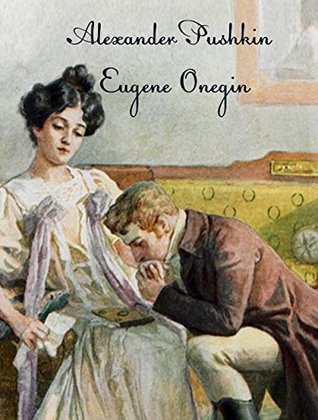
OneginThis is a beautiful poem that contains so many layers of meaning and allusions that I am sure each time I read it I will discover something new.  This poem, more than anything else I have read, makes me want to learn Russian so I can experience the poem in its original language.  The entire poem is made up of 389 stanzas of iambic tetrameter.

At the heart of the story is the eponymous hero, Eugene Onegin, who is a spoiled, upper class, Russian youth who spends his time attending balls, drinking and flirting with pretty girls.  He has no ambitions in life except to satisfy his own pleasures.  When, one day, his uncle dies and leaves him an estate in the country, Eugene decides that he is tired of his vapid lifestyle and decides to retire to the country.  While in the county he becomes withdrawn and takes on a cynical view of society; his only close friend is an emotional, young poet named Vladimir Lensky.

Lensky is engaged to a woman named Olga who is a vain and shameless flirt.  Her sister, Tatiana, who is sensitive, intelligent and kind, is a sharp contrast to Olga.  When Tatiana meets Eugene she falls hopelessly in love with him and cannot stop thinking about him.  She writes Eugene a beautiful love letter that declares her undying love.  When Eugene receives it he treats her with cold indifference and even mocks poor Tatiana for not being able to keep her emotions in check.

Through a series of unfortunate circumstances, Eugene kills his friend Lensky in a dual and as a result Eugene flees from his home in horror and remorse.  When he finally returns to St. Petersburg years later, he meets a beautiful woman who is the wife of an elderly count.  He realizes that this confidant and enchanting princess who has captivated him is none other than the once naïve woman, Tatiana, whom he had met years earlier while living in the country.  This time their roles are greatly reversed–Eugene cannot get Tatiana out of his mind and he sends her several desperate letters declaring his love.  But how will Tatiana receive Eugene’s advances?  Will she bestow him an answer with the grace and kindness he lacked when he rejected her years earlier?  You will have to read this beautiful poem to find out for yourself.

Some other interesting aspects of the poem deserve mention. Pushkin oftentimes inserts his own voice into the narrative and cleverly addresses his audience and writes about his intentions for the story.  The author was also adept at literary allusions and jokes which he inserts throughout the narrative.  This particular translation I read had fantastic notes, without which I would not have understood the depth or cleverness of the allusions.  The themes that Pushkin weaves throughout his narrative are timeless, a few of which include pride and selfishness and the ultimate consequences of such vices, the cruelty of the world and fate and our lack of appreciation for someone until it is too late.

I am eager to reread this poem and to read different translations of it.  If you want to explore more Russian Literature in translation but do not want to tackle something as monstrous as War and Peace or Crime and Punishment, then I highly recommend beginning with Pushkin’s brilliant poem.

About The Author:
PushkinAlexander Sergeevich Pushkin was a Russian Romantic author who is considered to be the greatest Russian poet and the founder of modern Russian literature Pushkin pioneered the use of vernacular speech in his poems and plays, creating a style of storytelling—mixing drama, romance, and satire—associated with Russian literature ever since and greatly influencing later Russian writers.

Born in Moscow, Pushkin published his first poem at the age of fifteen, and was widely recognized by the literary establishment by the time of his graduation from the Imperial Lyceum in Tsarskoe Selo. Pushkin gradually became committed to social reform and emerged as a spokesman for literary radicals; in the early 1820s he clashed with the government, which sent him into exile in southern Russia. While under the strict surveillance of government censors and unable to travel or publish at will, he wrote his most famous play, the drama Boris Godunov, but could not publish it until years later. His novel in verse, Eugene Onegin, was published serially from 1825 to 1832.

Pushkin and his wife Natalya Goncharova, whom he married in 1831, later became regulars of court society. In 1837, while falling into greater and greater debt amidst rumors that his wife had started conducting a scandalous affair, Pushkin challenged her alleged lover, Georges d’Anthès, to a duel. Pushkin was mortally wounded and died two days later.

Because of his liberal political views and influence on generations of Russian rebels, Pushkin was portrayed by Bolsheviks as an opponent to bourgeois literature and culture and a predecessor of Soviet literature and poetry. Tsarskoe Selo was renamed after him


14 Comments

Filed under Classics, Literature in Translation, Russian Literature

Review: George’s Grand Tour by Caroline Vermalle

I received an advanced review copy of this title from Gallic Books.

My Review:
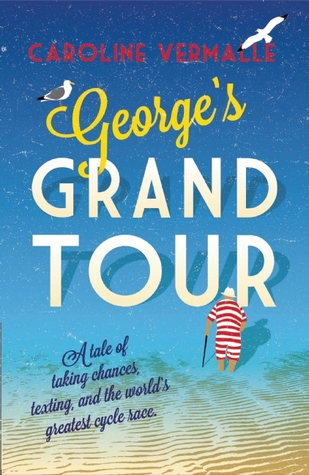
George's Grand TourGeorge is an eighty-three year old gentleman living a quiet life in the French countryside.  He has been a widower for a few years now and his daughter keeps careful watch over his life.  George does not alter his daily routine of watching television, visiting with his neighbor Charles or napping so it is shocking when George decides that he is going to take a three thousand kilometer road trip.

When George’s overprotective daughter decides to take a two month trip and leave him alone, he makes plans with his neighbor Charles to embark on a trip of a lifetime.  These two elderly men prove that one is never too old, too tired or too feeble to have an adventure.  As George and Charles’ route follows the same stops as that of the Tour de France, the places they visit and the cast of characters which they meet on the way are interesting and delightful.

George’s granddaughter, Adele, decides that she has not seen her grandfather in over ten years and out of the blue wants to renew her relationship with him.  Adele begins texting George as he makes his way on his tour and the scenes in which George figures out how to use his phone and the language of texting are hilarious.  George learns that technology is not necessarily such a bad thing and the daily messages between himself and his granddaughter serve to rekindle their heartwarming relationship.

I must say that there were a few plot twists in this book that really surprised me.  George and Charles have very different reasons for embarking on their trip which are slowly revealed to us throughout the book.  Adele also has some of her own issues as a young woman who is trying to figure out her own place in the world.  There is also an interesting attraction between George and Charles’ single sister whom they stop and visit along the way.

No matter where George goes on his trip, he has a gentle way of winning people over and making friends.  He certainly won me over and I highly recommend giving GEORGE’S GRAND TOUR a try while you are sitting on the beach or anywhere else on vacation this summer.

About The Author:
C VermalleCaroline Vermalle was born in France in 1973 to a family whose French roots go back at least as far as the 16th century. Yet, she is a vegetarian who can’t cook, doesn’t drink, finds berets itchy and unpractical and would rather eat yesterday’s snails than jump a queue.

After graduating from film school in Paris, she became a television documentary producer for the BBC in London and travelled the world, at speed and off the beaten tracks, in search of good stories. In 2008, then on maternity leave, she penned her first novel « George’s Grand Tour », whose international success allowed her to quit her job and indulge in her three passions : books, interior design and travel – slowly this time.

After writing 7 novels in different genres and different languages, going on a world tour with her family and building a wooden house in a forest, Caroline now lives between a small seaside town in Vendée (France) and a small seaside town in the Eastern Cape (South Africa) with her son, a black cat and her husband, South African architect-turned-author Ryan von Ruben.


7 Comments

Filed under France, Literature in Translation, Summer Reading