Category Archives: Literature in Translation

Review: Henri Duchemin and His Shadows by Emmauel Bove

I received an advanced review copy of this collection of short stories from The New York Review of Books.  The stories were written in 1928 in French and this English version has been translated into English by Alyson Waters

My Review:
Henri DucheminThis collection of short stories all feature men who are unhappy and looking for someone or something with which to identify.  In the first story entitled “Night Crime,”  Henri Duchemin, a forty-year-old man,  is alone on Christmas Eve in a pub lamenting over his poverty and loneliness and the last thing he wants to do is to go back to his cold, empty flat.  He wanders around the streets in the rain until he really has no choice but to go home.  But before he goes home, a woman whome he meets on the streets notices his sadness and abrasively suggests that he kill himself.  As he drifts off to sleep, thoughts of suicide and murder haunt his restless dreams.

My favorite story in the collection is written in the epistolary style.  “What I saw” is a letter written by Jean to an unnamed friend; Jean desperately wants his friend’s opinion about something that he saw involving his girlfriend that disturbed him greatly.  Jean’s letter begins with a description of his girlfriend, Henrietta, and her devotion to Jean.  One thinks she is the model woman until, one day, Jean sees her sitting in a taxi and kissing another man.

When Jean confronts Henrietta about the liaison, Henrietta adamantly denies ever being with another man.  Henrietta and Jean’s other friends try to convince Jean that he must have been mistaken and only saw someone who resembled Henrietta.  Jean wants so much to continue his relationship with Henrietta and as he finishes his tale he begs the recipient of the letter to tell Jean his true opinion about Henrietta’s alleged indiscretion.  Jean, like the other characters in the story, has a tenuous grasp on an important relationship in his life and he is eager and even desperate not to lose it.

Another story worth mentioning is “The Story of a Madman.”  Fernand, the narrator, makes it a point at the beginning of his tale to address the reader and inform him or her that he is not, in fact, crazy or out of his mind.  He goes on for a few pages giving us some background about his activities and frame of  mind so that when he carries out his plan, the reader will think he is perfectly sane in doing so.

Fernand then proceeds to have a meeting with his father and tells his parent that he never wants to see him again.  Fernand then makes his way to his girlfriend, Monique’s apartment;  He assures us that he is deeply in love with Monique and they have a fantastic relationship, but he informs her that he never wants to see her again either.  The next stop on Fernand’s list is his best friend, with whom he also breaks off all contact.

Fernand’s final stop on his break-up tour is with his sister and brother-in-law.  After a friendly conversation, he also informs them that he never wants to see them again.  So, we are left wondering why Fernand would alienate all of the people in his life that he loves.  There are hints throughout the story that Fernand is exercising his willpower and that he is attempting to make a plan and adhere to it no matter what others may think.  But the last few sentences of the story leave us with a haunting suggestion that maybe his motives for leaving are a bit more depressing and sinister.

This is a small yet powerful collection of stories that will leave you thinking about these men and their feelings of alienation and unhappiness.  Bove’s language is sometimes curt and sometimes poetic.  He weaves these small tales in such a way that we are never sure where they will end.  I highly recommend this brilliant collection of writing brought to us by The New York Review of Books classics collection.
About The Author:
E BoveEmmanuel Bove, born in Paris as Emmanuel Bobovnikoff, died in his native city on Friday 13 July 1945, the night on which all of France prepared for the large-scale celebration of the first ‘quatorze juillet’ since World War II. He would probably have taken no part in the festivities. Bove was known as a man of few words, a shy and discreet observer. His novels and novellas were populated by awkward figures, ‘losers’ who were always penniless. In their banal environments, they were resigned to their hopeless fate. Bove’s airy style and the humorous observations made sure that his distressing tales were modernist besides being depressing: not the style, but the themes matched the post-war atmosphere precisely.

9 Comments

Filed under France, Literature in Translation, New York Review of Books, Short Stories

Review: Killing Auntie by Andrzej Bursa

I received an advanced review copy of this title from New Vessel Press.  This book was originally written in Polish in 1959 and this English version is translated by Wiesiek Powaga.

My Review:
Killing AuntieJurek is a twenty-year-old college student who lives with his aunt. She is very doting on him and works hard to provide well for him.  So it is rather puzzling when one day she asks him to hang a mirror in their apartment and he turns the hammer he was using for this task on her head.  In two quick and hard whacks to the head auntie is now a corpse.

Jurek’s life, leading up with to this point, is rather mundane and dreary.  He goes to lectures at the university, hangs out with friends, and eats dinners cooked by auntie; there is no real challenge in his life until he is faced with the disposal of auntie’s corpse which is now decomposing in his bathtub.  The humor of the book is very dark, but done brilliant, especially as Jurek tries and fails many times to chop up and hide body parts.

He first takes off a thumb and starts small.  When he tries to flush the finger down the toilet it keeps floating to the surface so he has to fish it out of the commode and try another plan.  He then hacks off a foot and shoves it into the coal stove in his apartment.  All of a sudden there is a massive amount of smoke in his kitchen and an awful stench that draws the attention of his neighbors.  He finally decides to wrap up different body parts and mail them to random people around the city.

Jurek is intent on not getting caught and the anticipation of whether or not his crime will be found out makes this an intriguing read.  Jurek gets very drunk with a group of friends and is picked up by the police on the way home.  He thinks they have found out about his crime and he is ready to confess everything only to learn that they put him in jail for public intoxication.  Jurek also falls in love with a woman he meets on the train and when the relationship with her becomes intimate he confesses everything to her.  For a minute we think that she will tell the police but she suddenly decides to help him dispose of the corpse.  Finally, when another aunt and his grandmother visit they discover the corpse and mistake it for animal meat and bite a chunk out of it.

KILLING AUNTIE is humorous, intense, and in the end, surreal and nightmarish.  The ending is somewhat bizarre but a fantastic and unexpected surprise.  New Vessel Press has given us another brilliant novella in translation that I highly recommend.


About The Author:
A BorsaAndrzej Bursa (March 21, 1932 – November 15, 1957) was a Polish poet and writer. Born in Kraków, he studied journalism, then Bulgarian at Jagiellonian University in Kraków.

Bursa published his first poem in 1954. A prolific writer, he published 37 poems and a short story in different magazines during his lifetime. He died of a heart attack in 1957. Shortly thereafter, his first poetry collection was published, an important event in Polish poetry. Presently, there is a poetry prize named after Bursa which many living Polish poets have won (e.g. Ewa Lipska and Stanisław Barańczak).

5 Comments

Filed under Humor, Literature in Translation

Review: The Exchange of Princesses by Chantal Thomas

I received an advanced review copy of this title from the publisher, Other Press.  This was originally written and published in French and this English translation is by John Cullen

My Review:
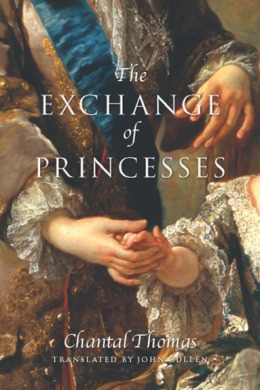
Exchange of PrincessesIn 1721, the regent of France, Philip D’Orleans, decides that the best alliance that the eleven-year-old King Louis XV can make with Spain is through marriage.  The regent proposes that Louis XV marry the princess of Spain, who is only four-years-old at the time of their betrothal.  The regent will also give his own daughter, Louise Elizabeth, a moody 11- year-old girl, to the Prince of Spain, also just a boy of 12,  as a show of good faith.  If you are already confused about names and ages then please don’t let that discourage from reading the book; I was confused in the beginning as well but the author does a good job of repeating the names and making the characters clear and distinct.  In 1722, both princesses set out on a long and arduous trek on the unpaved and rough roads between France and Spain.  The princesses are exchanged on the middle of the journey and each one proceeds to her new home and position.

My favorite part of the book is reading about the four-year-old Spanish princess;  like any little girl she loves her dolls, playing games, and being lavished with attention.  She is talkative and precocious and all of France and the French court becomes smitten with this charming little girl.  The author describes the very adult tasks that she must endure such as receiving ambassadors from foreign countries and attending balls in her honor.  At one such ceremony the little infanta is described as sucking on her thumb and clutching her favorite doll while a group of academics from the University of Paris pay their respects to her.  The only one who is not taken in by the charms of the princess is her own husband, King Louis XV.

Things do not go quite as smoothly as Philip D’Orleans had expected as far as these arranged marriages are concerned.  But, what did the regent expect when he decided to base political alliances on the lives of children?  Even though the little princess, Marianna Victoria, is a delightful four-year-old, her future husband, the king, is a jealous and petty eleven-year-old boy who is very upset that his nanny is now taking care of his future bride.  As he grows up he has no interest, whatsoever in spending any time with her or getting to know her.  The infanta, on the other hand, worships the king and is so thrilled whenever he is around her.

Meanwhile, in Spain the roles are reversed as Louise Elizabeth, the future Queen of Spain, wants nothing to do with her husband Don Luis.  The future King of Spain is so thrilled to have a pretty wife and he wants nothing more than to consummate their marriage.  But Louise Elizabeth does everything she can to keep the Prince away from her.  I don’t want to give too much away, but nothing works out in the end as the regent had intended.

The Exchange of Princesses actually reads more like a non-fiction history book than an historical fiction.  The author uses real letters from the characters involved as well as newspaper articles from the time period.  There are great details about ceremonies, details of palaces and descriptions of costumes.  If you are looking for a fast-paced, exciting historical fiction novel then this is not the book to read.  However, if you want to learn something about the political situation between France and Spain during the 18th century and the players involved then this well-researched novel is the perfect choice.


About The Author:
Chantal Thomas (born 1945 in Lyon) is a French writer and historian. Her 2002 book, Farewell, My Queen, won the Prix Femina and was adapted into a 2012 film starring Diane Kruger and Léa Seydoux.

Thomas was born in Lyon in 1945, and was raised in Arcachon, Bordeaux, and Paris. Her life has included teaching jobs at American and French universities (such as Yale and Princeton) as well as a publishing career. She has published nineteen works, including essays on the Marquis de Sade, Casanova, and Marie Antoinette.

In 2002, Thomas published Les adieux à la reine (Farewell, My Queen). The novel gave a fictional account of the final days of Marie Antoinette in power through the perspective of one of her servants. It won the Prix Femina in 2002, and was later adapted into the 2012 film Farewell, My Queen. The film stars Diane Kruger as the titular queen and Léa Seydoux as her servant Sidonie Laborde. Thomas co-wrote the screenplay,and it opened the 62nd Berlin International Film Festival. Helen Falconer of The Guardian called the work “a well written slice of history” with “evocative, observant prose,” but criticized it for creating a narrator who “merely provides us with a pair of eyes to see through rather than capturing our interest in her own right.” While disagreeing in its classification as a novel, Falconer did however add that Farewell, My Queen “generates in the reader a real sense of being a fly on the wall, eavesdropping on the affairs of the great and the not so good.”

Thomas is currently the director of research at the French National Centre for Scientific Research.


3 Comments

Filed under France, Historical Fiction, Literature in Translation, Spain

Review: Two Novellas from Flaubert and Dostoevsky

I recently stumbled across a sale that Melville House Publishers was having on their novella series.  They have released 56 novellas from famous authors across the world.  I chose two titles, A Simple Heart by Gustave Flaubert and The Eternal Husband by Fodor Dostoevsky to review here.  Please check out all of the great titles in their selection.  You can even buy a subscription to the novella series and have novellas show up on your doorstep every month: http://www.mhpbooks.com/series/the-art-of-the-novella/

A Simple Heart by Gustave Flaubert:
A simple heartThis novella introduces us to a simple servant woman who is cast out of her own home as an orphan at an early age and searches for intimacy and love for the rest of her life.  Felicite falls in love with a young man who ends up rejecting her so that he can marry a rich, old widow and avoid conscription.  After this disappointing heartache, Felicite never finds another man that she can trust her heart to.  When she comes into the service of Madame Aubain, a young widow with two small children, she is the most faithful and loyal servant anyone could ask for.  Felicite bestows love on the two children who eventually leave home for school and meet a sorrowful end due to illness.  Felicite is also given a parrot which she lavishes with love and attention.  But, like everyone else in her life that she has loved, he dies and leaves her.  This is not a tale with a happy ending but gives us a realistic view of life, love and loss.


The Eternal Husband by Fodor Dostoevsky:
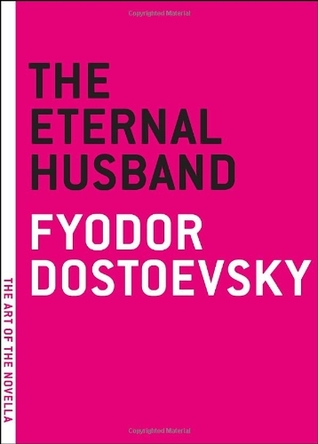
The eternal husbandThe story opens with Velchaninov living in St. Petersburg in an apartment flat by himself trying to iron out the details of a lawsuit.  He has become increasingly depressed and melancholy and has eventually cut himself off from all of his friends and acquaintances.  One day an old friend, whom he has not seen for nine years, shows up on Velchaninov’s doorstep.  He is stunned to see his friend after so many years and further shocked when Trusotsky announces that his wife has died of consumption.  Velchaninov had an affair with Trusotsky’s wife and that is the main reason he hadn’t visited the couple for nine years.  When Trusotsky’s wife broke the affair off, Velchaninov vowed never to see either of the again.

Velchaninov describes Trusotsky as “an eternal husband,” which to him means a man that is subservient to a domineering wife.  Nowadays we might call Trusotsky “henpecked” or “whipped.”  Trusotsky descends into a depression that is fueled by excessive drinking; he turns out to be a man who cannot live without a wife, who cannot operate in the world without the confines of a marriage.  In typical Dostoevsky fashion, we get a glimpse into the male psyche and an interesting and ironic storyline.  I thoroughly enjoyed this story as much as his longer works.

According to the Melville House website, novellas are oftentimes ignored by academics and publishers.  I would love to hear about other readers’ favorite choices as far as this overlooked style of writing.  Do you like novellas and, if so, what are some of your favorites?


18 Comments

Filed under Classics, France, Literature in Translation, Novella, Russian Literature

Review: Life Embitters by Joseph Pla

I received an advanced review copy of this title from Archipelago Books through NetGalley.  This is my second contribution to Spanish Literature month host by Richard at http://caravanaderecuerdos.blogspot.com/ and Stu at https://winstonsdad.wordpress.com/.

My Review:
Life EmbittersThis is an interesting book to categorize as far as literary genre is concerned. At first glance these narratives are really a set of short stories and each have their own plot and can be read individually.  However, they also remind me of the popularity nowadays of fictional autobiography: the works of Karl Ove Knausgard, Elena Ferrante and George Gospodinov all come to mind.  Pla relates to us different experiences in his life with some creative embellishments or inventions of conversations for which he was not present.  Pla takes us across Europe, from his native home in Barcelona to Paris to Rome he describes interesting characters and beautiful settings.

The 600 pages of this book take quite a while to get through and such a long book makes it difficult to write a focused review.  But I want to highlight a few patterns and themes that I noticed are weaved throughout the stories.  What struck me most about Pla’s narrative is that one is never really sure where he is going next with his tales.  We follow him on this meandering path of sentences and all of a sudden a new character is introduced, or a character dies, or a story abruptly ends.

Pla is never a permanent resident at any one place for a long time; as a result of his extensive travels, one of Pla’s favorite settings is the boarding house, many of which he resides at in various cities.  His story entitled, “A Death in Barcelona ” is a great example of the unexpected twists that appear in the narrative and is also set in one such boarding house in Barcelona.  The male boarders fight and bicker with each other and there seems to be a division along the lines of those who pay and those who live off of the others for free.  They all seem to be secretly in love with the mistress of the boarding house, Sra Paradis.  The story takes an unexpected turn when one day, a Swiss boarder living in the house dies and the story revolves around arrangements for the funeral of the Swiss man.  All of the boarders dress up and attend the funeral and on the way back a fight breaks out among the boarders.  Their petty complaints and annoying habits bubble to the surface as the funeral procession is winding its way home.  The story ends when two of the residents decide to leave but have no real prospects of where to go next.

Another patten of  Pla’s is that he likes to tell stories about his friends.  We are introduced to many friends and acquaintances who have interesting life experiences.  One of my favorite of his “friend” stories is about a fellow Catalan named Mascarell who, at age thirty-four, is engaged to a woman fourteen years his junior.  He is embarrassed and depressed when she breaks off their engagement.  Pla goes through a long and interesting story about why the young woman broke off with Mascarell.  Apparently the young woman’s father all of a sudden decides that he does not approve of his daughter marrying an old bachelor.  What really pushes her father over the edge is when she adopts a kitten and names it after her fiancé; the father is horrified that she does such an impulsive thing and demands that she break off the engagement.

At this point Mascarell disappears to Paris where he will not run into anyone he knows.  He meets a woman named Fanny that he is attracted to and with whom he has many interesting conversations.  But Mascarell’s old melancholy keeps creeping up on him and one day at dinner she calls him an “un homme fatal.”  This upsets Mascarell greatly and, in typical Pla fashion, the story takes an unexpected turn when Mascarell consults his Neopolitan barber, Sr. Giacomo, about Fanny’s comments.  The narrative at this point includes a long description of the barber, his clientele, and his relationship with Mascarell.  The barber is finally direct with Mascarell and tells him that being an ” un homme fatal” means that one is a “moron.”  Mascarell is so upset by the barber’s answer that he immediately decides to leave Paris and with Mascarell’s departure from this city the story ends.  We are left wondering what happened to Mascarell and if he was ever able to get over being a “homme fatal.”

I am so glad to have come across Pla’s stories in time for Spanish Literature month.  I highly recommend giving these stories a try–the book can be read all at once or the stories can be read individually over an extended period of time.

About The Author:
Joseph PlaJosep Pla i Casadevall (known as José Pla in Spanish) (March 8, 1897, Palafrugell, Girona – April 23, 1981, Llofriu, Girona) was a Catalan journalist and a popular author. As a journalist he worked in France, Italy, England, Germany and Russia, from where he wrote political and cultural chronicles in Catalan.

The most important characteristics of the “planian” style are simplicity, irony, and clarity. His works show a subjective and colloquial view, “anti-literary”, in which he stresses, nevertheless, an enormous stylistic effort by calling things by their names and “coming up with the precise adjective”, one of his most persistent literary obsessions.

Pla lived completely dedicated to writing. The extent of his Obres Completes – Complete Works (46 volumes and nearly 40,000 pages), which is a collection of all his journals, reports, articles, essays, biographies and both long and short novels.

His liberal-conservative thought, skeptic and uncompromising, filled with irony and common sense, keeps sounding contemporary, completely current, even though it seems to contradict the current cultural establishment same as it did with its completely opposed antecessor. His books remain in print and both Spanish and Catalan critics have unanimously recognized him as one of the greatest writers of the 20th century.

5 Comments

Filed under Literature in Translation, Spanish Literature