Category Archives: France

Review: Rendezvous in Venice by Philippe Beaussant

I received an advanced review copy of this title from Pushkin Press through NetGalley.  This title was originally written and published in French and the translators of this English version are Paul Buck and Catherine Petit.

My Review:
Rendezvous in VenicePierre has been an assistant to his uncle for fifteen years, learning about art and the world’s famous masterpieces.  His uncle Charles is very meticulous about his work as an art history professor as he catalogues and studies the portraits of famous artists from all over Europe.  Pierre is Charles’ only surviving relative and, as far as Pierre is concerned, Charles never had much of a personal life or any significant romantic relationships.  Pierre’s knowledge about the life of his uncle all changes when his uncle dies and Pierre finds a very personal diary among his uncle’s private papers.  This diary includes the intimate details of Charles’ affair when he was a middle-aged man with a woman named Judith; one of the highlights of their relationship is a trip to Venice where they have intricate discussions about Italian art.

The elegant writing of the book really drew me in and I read over half of it in the first sitting.  The first part of the book alternates between Charles’ diary and Pierre’s thoughts about his uncle’s secret love affair.  Beaupassant makes us contemplate how well we really know those who are supposed to be closest to us.  Pierre worked side by side with his uncle for years and never knew about such an important aspect of his life.  Pierre wonders how long they were together for and why his uncle never mentioned what must have been a heartbreaking love affair. While Pierre is still contemplating his uncle’s secret, he meets Judith at an art history conference.

It is clear from Pierre’s memories of his uncle and from Charles’ own diary that Charles chose to reject love and lead a solitary life and dedicate himself to his work.  Pierre seems to be moving in the same direction of loneliness until he meets Judith and her daughter, Sarah.  Will Pierre, unlike his uncle, choose love and contentment and happiness or will he continue on as a bachelor for the rest of his life?

I must mention that there are several detailed discussions about painting, and portraiture in particular, that gave me a better appreciation for some famous masterpieces; I enjoyed their descriptions so much that I actually looked up the ones that are mentioned in the book (I won’t mention them here to keep potential readers in suspense). Discussions of art, a venetian setting, and a hidden love affair all combine to make this a lovely French novella that I thoroughly enjoyed and highly recommend.

About The Author:
Philippe Beaussant is a prominent and award-winning French musicologist and writer. Born in 1930, he is a founder of the Centre for Baroque Music at Versailles and a Member of the Académie Française. Beaussant has written numerous books on the history of Baroque art and music, as well as several novels. He has won many awards, including the Grand prix du roman de l’Académie française for his novel Heloise.

6 Comments

Filed under France, Literature in Translation, Novella

Review: George’s Grand Tour by Caroline Vermalle

I received an advanced review copy of this title from Gallic Books.

My Review:
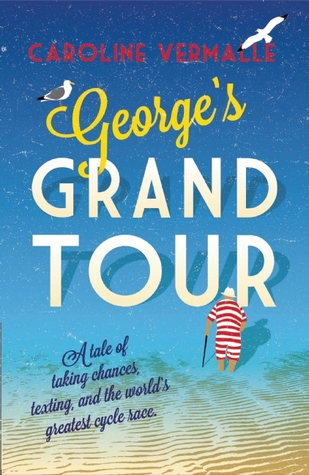
George's Grand TourGeorge is an eighty-three year old gentleman living a quiet life in the French countryside.  He has been a widower for a few years now and his daughter keeps careful watch over his life.  George does not alter his daily routine of watching television, visiting with his neighbor Charles or napping so it is shocking when George decides that he is going to take a three thousand kilometer road trip.

When George’s overprotective daughter decides to take a two month trip and leave him alone, he makes plans with his neighbor Charles to embark on a trip of a lifetime.  These two elderly men prove that one is never too old, too tired or too feeble to have an adventure.  As George and Charles’ route follows the same stops as that of the Tour de France, the places they visit and the cast of characters which they meet on the way are interesting and delightful.

George’s granddaughter, Adele, decides that she has not seen her grandfather in over ten years and out of the blue wants to renew her relationship with him.  Adele begins texting George as he makes his way on his tour and the scenes in which George figures out how to use his phone and the language of texting are hilarious.  George learns that technology is not necessarily such a bad thing and the daily messages between himself and his granddaughter serve to rekindle their heartwarming relationship.

I must say that there were a few plot twists in this book that really surprised me.  George and Charles have very different reasons for embarking on their trip which are slowly revealed to us throughout the book.  Adele also has some of her own issues as a young woman who is trying to figure out her own place in the world.  There is also an interesting attraction between George and Charles’ single sister whom they stop and visit along the way.

No matter where George goes on his trip, he has a gentle way of winning people over and making friends.  He certainly won me over and I highly recommend giving GEORGE’S GRAND TOUR a try while you are sitting on the beach or anywhere else on vacation this summer.

About The Author:
C VermalleCaroline Vermalle was born in France in 1973 to a family whose French roots go back at least as far as the 16th century. Yet, she is a vegetarian who can’t cook, doesn’t drink, finds berets itchy and unpractical and would rather eat yesterday’s snails than jump a queue.

After graduating from film school in Paris, she became a television documentary producer for the BBC in London and travelled the world, at speed and off the beaten tracks, in search of good stories. In 2008, then on maternity leave, she penned her first novel « George’s Grand Tour », whose international success allowed her to quit her job and indulge in her three passions : books, interior design and travel – slowly this time.

After writing 7 novels in different genres and different languages, going on a world tour with her family and building a wooden house in a forest, Caroline now lives between a small seaside town in Vendée (France) and a small seaside town in the Eastern Cape (South Africa) with her son, a black cat and her husband, South African architect-turned-author Ryan von Ruben.


7 Comments

Filed under France, Literature in Translation, Summer Reading

Review: Reader for Hire by Raymond Jean

I received an advanced review copy of this title from Peirene Press.  This novella was first published in French in 1986 as La Lectrice and has been translated into this English version by Adriana Hunter.

My Review:
Reader for HireMarie-Constance is looking for some kind of occupation to fill her time; even though she never finished her university degree, she loves literature and decides she will hire herself out to strangers for reading sessions.  When she puts an ad in the local newspaper offering her services, the editor is skeptical and warns her that people might get other ideas about what she is offering.

The novella almost reads like a series of short stories as Marie-Constance meets and reads to a very different and interesting cast of characters.  Her first client is a disabled teenager who goes into an epileptic fit when Marie reads him Maupassant’s short story The Hand.  After this traumatic experience, she decides that poetry might be a better choice for him and as she reads to him he seems to be emotionally and physically moved not only by her reading choices but also by her voice.

Marie-Constance also takes on an old woman who is a Hungarian countess that was married to a former French general.  The countess still staunchly clings to her communist roots and has Marie read to her from the tomes of Marx.  The old woman also tries to participate in the local unions attempts at a rally by waving her communist flag out her bedroom window.

The men who hire Marie for her services are the most interesting characters in the book.  On the surface, they all want to better themselves by learning more about literature.  But as Marie’s voice lulls them into feelings of peace and tranquility, their other manly senses seems to kick in as well.  The final scene in the book is hilarious and Marie learns that the editor at the newspaper might have been right after all about what her listeners are expecting from her services.

This is a clever, funny, unique and interesting novella from Peirene Press.  This is the perfect title to bring with you to the beach for a quick, delightful read.

About The Author and Translator:
Raymond Jean (1925–2012) wrote more than 40 books during his lifetime – novels, short-story collections and essays. He was awarded the Prix Goncourt de la nouvelle in 1983. His novella La Lectrice (Reader for Hire) became a cinema hit starring Miou-Miou. The film won the César Award for Best Supporting Actor and was named the best feature at the 1988 Montreal World Film Festival.

Adriana Hunter has translated over 50 books from French, including works by Agnès Desarthe, Véronique Ovalde and Hervé Le Tellier. She has already translated for Peirene, Beside the Sea by Véronique Olmi, for which she won the 2011 Scott Moncrieff Prize, and Under The Tripoli Sky by Kamal Ben Hameda. Adriana has been short-listed twice for the Independent Foreign Fiction Prize.

7 Comments

Filed under France, Humor, Literature in Translation, Novella

Review: The Red Notebook by Antoine Laurain

I received an advanced review copy of this title from Gallic Books.  It has been translated from the French by Jane Aitken and Emily Boyce.

My Review:
The Red NotebookIf you found a purse in the street with no identification in it what would you do with it?  Would you take it to the police? Would you throw it away?  When Laurent finds an expensive woman’s purse in the street that contains no wallet, all of these questions run through his mind.  He finally decides to take the purse to his apartment and see if he can find any information about its owner.  His decision to not throw the purse away and try to find it’s rightful owner says quite a bit about Laurent as an honest and sentimental character.

What Laurent does find inside the purse are very intimate details about a stranger’s life.  This unknown woman has placed pictures, a keychain with hieroglyphic script, and special rocks in her satchel.  Most importantly Laurent finds a red notebook in which this woman was recording her most private thoughts.  Laurent decides he must find this woman because he feels that, through his perusal of her mementos, he has gotten to know her and has developed a fondness for her.

The purse belongs to Laure who, at the very beginning of the story, has been hit on the head and mugged.  The thief takes her purse, removes everything of value from it and dumps it on the street in Paris.  Due to the trauma to her head Laure spends two weeks in the hospital in a coma.  When she wakes up and remembers the theft of her purse, it is the loss of her personal items that bothers her the most.

The book is suspenseful because we never know if Laurent can manage to put enough clues together to find Laure.  It is actually his teenage daughter, who at first appears to be a selfish little brat, that helps her father find Laure.  We know from the details given throughout the novel that Laurent and Laure are lonely and have been for quite some time.  They both also have a love of books.  So if they do manage to find each other they are obviously a perfect match.

THE RED NOTEBOOK is uplifting, heart-warming with the just the right amount of drama. I recommend it as the perfect novel to enjoy while you are sitting outside on a sunny spring day.

About The Author:
antoine_laurain150x200Antoine Laurain was born in Paris and is a journalist, antiques collector and the author of five novels. The President’s Hat, a charming fable set in the Mitterrand years, was awarded the Prix Landerneau Découvertes and the Prix Relay in 2012 and is published in English by Gallic. It was a Waterstones Book Club book and ABA Indies Introduce pick in 2013. Antoine was chosen to represent France at European Literature Night 2014.

4 Comments

Filed under France, Literature in Translation

Review: Alien Hearts by Guy de Maupassant

The New York Review of books had a fantastic winter sale and I bought several books, including this one, at a fantastic discount.  This book was originally written and published in French in 1890.  This English version has been translated by Richard Howard.

My Review:
Alien HeartsAndré Mariolle is wealthy enough to pursue various arts without having to make a living from them.  He dabbles in a little bit of everything from playing music to writing.  He is content with mediocrity in his life and he is happy to surround himself with other artists and move in the creative and intellectual circles in Paris.  One day he is invited to the salon of Madame du Burne and his quiet, unassuming life is changed forever.

Madame du Burne survived an abusive, although brief, marriage and when her husband dies and leaves her a widow at the age of 30, she puts all of her wealth and energy into entertaining the most creative minds in 19th Century Paris.  Novelists, sculptors, musicians and singers all attend her salon and an invitation from her is the most coveted one in town.  But we learn that Madame du Burne has some deep-seated psychological issues as far as relationships with men are concerned.  She is an unrelenting coquette who makes men fall in love with her and she collects men like she collects art.  She toys with their emotions, but once they fall in love with her she never returns their feelings.

When Madame du Burne meets Mariolle he seems to have a different affect on her; she favors him more than the other men in her “collection,” but is she really capable of truly loving someone in return?  Mariolle falls hopelessly in love with her and writes her beautiful love letters and tries to be around her as much as possible.  Despite her sad experience with marriage, it is hard to feel sorry for Madame du Burne.  She appears to appreciate artists and intellectuals but it becomes obvious throughout the novel that she is just using them for her own selfish and vain ends.

Maupassant’s language, especially when he is describing the process of falling in love, is poetic and melodic.  His metaphors aptly capture the burning ardor of Mariolle’s feelings as well as the torment he feels when his love is not returned.  I was reminded several times throughout the novel of similar sentiments expressed by the Latin poets Catullus and Ovid who are also pulled in various emotional directions by romantic love.

The ending of this book is abrupt, unexpected and puzzling.  ALIEN HEARTS is a short read full of passion, love and frustration and I highly recommend this emotionally charged novel.


About The Author:
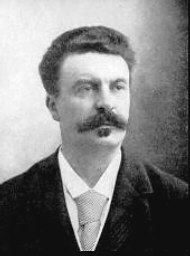
Guy de m.Henri René Albert Guy de Maupassant was a popular 19th-century French writer. He is one of the fathers of the modern short story. A protege of Flaubert, Maupassant’s short stories are characterized by their economy of style and their efficient effortless dénouement. He also wrote six short novels. A number of his stories often denote the futility of war and the innocent civilians who get crushed in it – many are set during the Franco-Prussian War of the 1870s.

Leave a comment

Filed under Classics, France, Literature in Translation, New York Review of Books