Category Archives: Classics

Review: Talk by Linda Rosenkrantz

I received an advanced review copy of this title from The New York Review of Books through Edelweiss.

My Review:
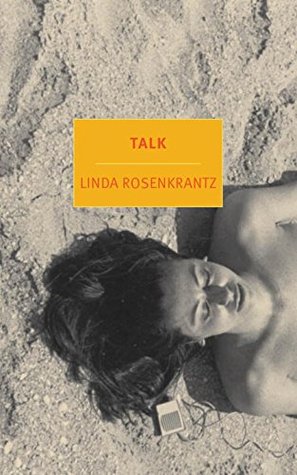
TalkThis is one of those books that is difficult to classify in a specific genre.  It is biographical, but it is does not take the form of a traditional narrative like most biographies.  The author taped the conversations of three people, Marsha, Vincent and Emily, during the summer of 1965 while they vacationed on the beaches of East Hampton and transcribed their dialogue into this book form.  The result is a straightforward, raw and, at times, shocking series of conversations on which we are “eavesdropping.”

There are several topics and themes that keep cropping up in the conversations of these three friends.  First and foremost is their many failed relationships.  None of them can sustain a long-term love interest and they all seem to have different reasons for being unlucky in love.  Emily is still hung up on an old boyfriend with whom she lived in France, Vincent is gay and can’t quite seem to find someone to confide in like he does with Marsha, and Marsha seems to be in love with her gay best friend Vincent.  All three of them are in psychotherapy trying to iron out their problems and they like to sit around an analyze their therapy sessions.

Another topic that keeps bubbling to the surface is their childhoods.  Marsha and Emily, in particular, like to share stories about their younger years and their parents.  Emily tells a particularly horrifying yet funny story about a neighbor’s doll which she covets and then ends up destroying so she doesn’t have to give it back.  There seems to be a contest among them as to whom has had the most twisted and ridiculous stories from their younger years.

The most common, and shocking topic among the three is sex.  They talk about anything and everything.  They talk about who they are attracted to, who they will and won’t sleep with; no aspect of sex is off the table–ménage, S&M, orgies, abortion, masturbation are all covered.  Marsha goes into great detail describing a boyfriend who like to tie her up, hang her on a wall, and whip her.  TALK can be considered the original 50 Shades of Grey, only Marsha is smart enough to realize that this is not a healthy relationship and she quickly moves on.  I had to keep reminding myself that this book was written fifty years ago because their conversations could have just as easily have taken place today.  All three friends are 30 years old and have come to a crossroads in their lives; will they ever find the right one and get married and settle down?  Is marriage really something that they could or should even consider?  Rosenkrantz was progressive and brave not to filter any of the talk among these friends.

The New York Review of Books Classics imprints are my favorites to read.  They have provided us with another fascinating, relevant and interesting book.  You will definitely want to grab this one for the beach.

About The Author:
Linda Rosenkrantz is the author of several books of fiction and nonfiction, including Telegram, a history of the telegraphic communication, and her memoir, My Life as a List: 207 Things About My (Bronx) Childhood, and the co-author of Gone Hollywood: The Movie Colony in the Golden Age. She was also the founding editor of Auction magazine, a long-time syndicated columnist, and a founder of the popular baby-naming site Nameberry.com. She currently resides in Los Angeles.

4 Comments

Filed under Classics, Literary Fiction, New York Review of Books

Review: A Room with a View by E.M. Forster

After I read and enjoyed Forster’s collection of short stories I decided to try one of his longer works.  I enjoyed this book so much that it will definitely be among my favorites.

My  Review:
A Room With A ViewLucy is a naïve young English woman visiting Italy for the first time with her cousin Charlotte.  Lucy quickly learns that not all people, and in fact  not even all English people, are as reserved and mannered as she is.  On their first night in Florence, Lucy and Charlotte are complaining that they paid for a room with a view, but the rooms that they were given did not, in fact, have a view.  An elderly British gentlemen, Mr. Emerson, overhears the conversation and offers the women his room and his son George’s room.  Mr. Emerson claims that men do not appreciate a view as much as women and he and his son are happy to change rooms to accommodate the women.  Lucy, and especially her cousin Charlotte, are aghast at Mr. Emerson’s offer and they question the manners of a man who would be so forward and direct with them.

One of the most pleasurable aspects of the story is Lucy’s growing and maturing as she learns to break free from her old-maid, stodgy cousin and her mother.  Lucy eventually forms her own opinions about people and this includes Mr. Emerson and his son George.  While others at the English pension ostracize the Emersons because of their outspoken manner, Lucy looks beyond the façade to see that they are kind, generous men who have been misjudged by their peers.  Fate throws Lucy in the way of young George twice while they are in Florence; it is so disappointing when Charlotte hurries Lucy off to Rome in order to avoid any romantic entanglement between Lucy and George.

Forster is adept at skipping between different settings and timeframes.  The story begins and ends in Florence with a stop in the English countryside in between.  Part Two opens with Lucy back in England with her mother and her brother Freddy and she has accepted a third proposal from a Mr. Cecil Vyse.  We learn that Cecil and Lucy met while in Rome and Cecil views Lucy as a lovely painting, much like a Leonardo he says, that he can view and admire.  Cecil likes to read books and talk about art and he has every intention of molding Lucy into just the type of wife he needs for his aristocratic lifestyle.  When George and his father move into the neighborhood, things become muddled for Lucy.  Will she eventually see Cecil’s faults and choose the man who is so much more obviously suited to her?

There are a few things that not only drew me to this book but also caused me to put in on my “favorites” shelf.  First, the descriptions of Florence, and the little town of Fiesole, are beautiful and accurate.  Florence is my favorite place to visit in Italy and Fiesole is a gem of a spot from which to view the stunning landscapes of the countryside.  Forster also inserts his sense of humor into the narrative, especially when he is poking fun at strict British rules of manners.  The contrast between the stiff British and the carefree Italians is perfect.  Finally, Forster provides us with just the right amount of tense in the plot to make this book a page turner.

If you want to read more classics but don’t want to commit to Dickens or Bronte or something quite so long, then give A ROOM WITH A VIEW a try first.  The writing, the humor, the characters will all leave you wanting more Forster and more British classics.

About The Author:
ForsterEdward Morgan Forster, generally published as E.M. Forster, was an novelist, essayist, and short story writer. He is known best for his ironic and well-plotted novels examining class difference and hypocrisy in early 20th-century British society. His humanistic impulse toward understanding and sympathy may be aptly summed up in the epigraph to his 1910 novel Howards End: “Only connect”.

He had five novels published in his lifetime, achieving his greatest success with A Passage to India (1924) which takes as its subject the relationship between East and West, seen through the lens of India in the later days of the British Raj.

Forster’s views as a secular humanist are at the heart of his work, which often depicts the pursuit of personal connections in spite of the restrictions of contemporary society. He is noted for his use of symbolism as a technique in his novels, and he has been criticised for his attachment to mysticism. His other works include Where Angels Fear to Tread (1905), The Longest Journey (1907), A Room with a View (1908) and Maurice (1971), his posthumously published novel which tells of the coming of age of an explicitly gay male character.


15 Comments

Filed under British Literature, Classics, Favorites

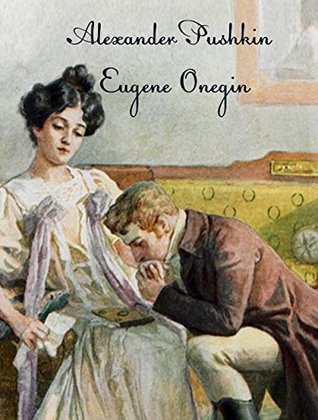
Review: Eugene Onegin by Alexander Pushkin

I have become very interested in reading Russian Literature lately and I decided that I have neglected this classic for too long.  The English translation I got was the one offered for free on Kindle and translated by Henry Spalding.

My Review:

OneginThis is a beautiful poem that contains so many layers of meaning and allusions that I am sure each time I read it I will discover something new.  This poem, more than anything else I have read, makes me want to learn Russian so I can experience the poem in its original language.  The entire poem is made up of 389 stanzas of iambic tetrameter.

At the heart of the story is the eponymous hero, Eugene Onegin, who is a spoiled, upper class, Russian youth who spends his time attending balls, drinking and flirting with pretty girls.  He has no ambitions in life except to satisfy his own pleasures.  When, one day, his uncle dies and leaves him an estate in the country, Eugene decides that he is tired of his vapid lifestyle and decides to retire to the country.  While in the county he becomes withdrawn and takes on a cynical view of society; his only close friend is an emotional, young poet named Vladimir Lensky.

Lensky is engaged to a woman named Olga who is a vain and shameless flirt.  Her sister, Tatiana, who is sensitive, intelligent and kind, is a sharp contrast to Olga.  When Tatiana meets Eugene she falls hopelessly in love with him and cannot stop thinking about him.  She writes Eugene a beautiful love letter that declares her undying love.  When Eugene receives it he treats her with cold indifference and even mocks poor Tatiana for not being able to keep her emotions in check.

Through a series of unfortunate circumstances, Eugene kills his friend Lensky in a dual and as a result Eugene flees from his home in horror and remorse.  When he finally returns to St. Petersburg years later, he meets a beautiful woman who is the wife of an elderly count.  He realizes that this confidant and enchanting princess who has captivated him is none other than the once naïve woman, Tatiana, whom he had met years earlier while living in the country.  This time their roles are greatly reversed–Eugene cannot get Tatiana out of his mind and he sends her several desperate letters declaring his love.  But how will Tatiana receive Eugene’s advances?  Will she bestow him an answer with the grace and kindness he lacked when he rejected her years earlier?  You will have to read this beautiful poem to find out for yourself.

Some other interesting aspects of the poem deserve mention. Pushkin oftentimes inserts his own voice into the narrative and cleverly addresses his audience and writes about his intentions for the story.  The author was also adept at literary allusions and jokes which he inserts throughout the narrative.  This particular translation I read had fantastic notes, without which I would not have understood the depth or cleverness of the allusions.  The themes that Pushkin weaves throughout his narrative are timeless, a few of which include pride and selfishness and the ultimate consequences of such vices, the cruelty of the world and fate and our lack of appreciation for someone until it is too late.

I am eager to reread this poem and to read different translations of it.  If you want to explore more Russian Literature in translation but do not want to tackle something as monstrous as War and Peace or Crime and Punishment, then I highly recommend beginning with Pushkin’s brilliant poem.

About The Author:
PushkinAlexander Sergeevich Pushkin was a Russian Romantic author who is considered to be the greatest Russian poet and the founder of modern Russian literature Pushkin pioneered the use of vernacular speech in his poems and plays, creating a style of storytelling—mixing drama, romance, and satire—associated with Russian literature ever since and greatly influencing later Russian writers.

Born in Moscow, Pushkin published his first poem at the age of fifteen, and was widely recognized by the literary establishment by the time of his graduation from the Imperial Lyceum in Tsarskoe Selo. Pushkin gradually became committed to social reform and emerged as a spokesman for literary radicals; in the early 1820s he clashed with the government, which sent him into exile in southern Russia. While under the strict surveillance of government censors and unable to travel or publish at will, he wrote his most famous play, the drama Boris Godunov, but could not publish it until years later. His novel in verse, Eugene Onegin, was published serially from 1825 to 1832.

Pushkin and his wife Natalya Goncharova, whom he married in 1831, later became regulars of court society. In 1837, while falling into greater and greater debt amidst rumors that his wife had started conducting a scandalous affair, Pushkin challenged her alleged lover, Georges d’Anthès, to a duel. Pushkin was mortally wounded and died two days later.

Because of his liberal political views and influence on generations of Russian rebels, Pushkin was portrayed by Bolsheviks as an opponent to bourgeois literature and culture and a predecessor of Soviet literature and poetry. Tsarskoe Selo was renamed after him


14 Comments

Filed under Classics, Literature in Translation, Russian Literature

Review: The Diary of a Provincial Lady by E.M. Delafield

My Review:
Diary_of_a_Prov_Lady_for_website_1This is another great classic brought to us by the small British publisher, Persephone Books.  The book is a detailed daily journal of a woman who is trying to the best wife, mother, neighbor and friend as possible.  She has two young children, Robin and Vicky, whom despite her best efforts to the contrary she tends to spoil. One of the funniest scenes in the book is that in which Robin talks her into playing the piano, the gramophone, a music box and letting the clock chime all at once; in the midst of this walks an uninvited guest, the aloof and snobby Lady B.  The trials placed on our provincial lady will resonate with all mothers struggling on a daily basis to raise kind and polite children.

There are a plethora of interesting characters that the lady tells us about.  Lady B., her aristocratic and aloof friend is always dropping in on the lady at the most inopportune times and giving the lady ridiculous and useless advice.  Lady B. does not have the same financial restraints or familial duties as the author of the diary, so humorous quips about Lady B. are sprinkled throughout the diary.  The Vicar’s wife is also a frequent visitor; she is one of those people who claims that they are only stopping by for a minute but are still hanging around three hours later.

The lady’s diary also tells the reader of her monosyllabic, disinterested and rather ill-natured husband, Robert.  Robert has very little to do with the children, expect to complain when they are too loud or too messy.  His favorite pastime is to fall asleep while reading the paper.  This edition of the book contains drawings of different characters in the book and there is a great illustration of Robert asleep in his favorite chair.

The diary has several recurring themes which the lady must constantly struggle against: unruly servants, insufficient money, negative remarks about her personal appearance and constant pressure to keep up with the latest trends.  The lady deals with all of these things with remarkable calm and manages to keep any rude or deprecating comments to her diary.

I highly recommend THE DIARY OF A PROVINCIAL LADY as another humorous and entertaining read from Persephone Books.

About The Author:
Edmée Elizabeth Monica Dashwood, née de la Pasture (9 June 1890 – 2 December 1943), commonly known as E. M. Delafield,was a prolific English author who is best-known for her largely autobiographical Diary of a Provincial Lady, which took the form of a journal of the life of an upper-middle class Englishwoman living mostly in a Devon village of the 1930s, and its sequels in which the Provincial Lady buys a flat in London and travels to America. Other sequels of note are her experiences looking for war-work during the Phoney War in 1939, and her experiences as a tourist in the Soviet Union.


7 Comments

Filed under British Literature, Classics, Humor, Persephone Books

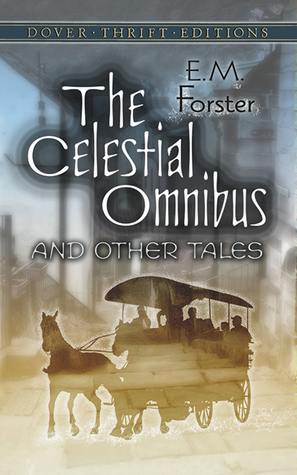
Review: The Celestial Omnibus and Other Tales by E.M. Forster

I received an advanced review copy of this title from Dover Publications through NetGalley.

My Review:
Celestial OmnibusThis brief collection of stories show the true depth of Forster’s literary talent and his ability to infuse fantasy and imagination into his writing.  My favorite stories were two in the collection into which Forster incorporates many classical references.

In the “Celestial Omnibus”, a boy discovers a sign for an omnibus in the lane across from his house.  The alley is a very odd place for an omnibus to pass through so the boy gets up very early one morning to investigate it.  When the sun rises a carriage does appear out of the fog and the driver picks the boy up.  The boy goes on a journey of a lifetime through the clouds and he meets nymphs and great writers and heroes from famous books.  The omnibus driver is Sir Thomas Browne, the famous essayist, but the boy doesn’t recognize or understand any of the famous people he meets; he just knows that he has had a wonderful time and has seen amazing things.  The story is full of literary allusions and classical references but I won’t give any of them away here so as not to spoil them for other readers.

When the boy comes home after having disappeared all day, his father canes him for telling lies about his supposed journey to heaven.  The boy’s neighbor, Mr. Bons, which happens to cleverly be “snob” spelled backwards, decides he will bring the boy back to the allow and show him that no such omnibus could possibly exist.  But when the omnibus shows up in the alley and picks up Mr. Bons and the boy, Mr. Bons does not have the same magical experience on his journey as the boy; for Mr. Bons’ imagination is not as carefree and vast as the boy and he does not witness the same remarkable landscape as the boy does.  It is no wonder in the end that Mr. Bons meets a horrible fate.

My other favorite in the collection is a story entitled “Other Kingdom.” In this story, an upper class aristocrat named Mr. Worters has taken a fiancé from Ireland, Evelyn Beaumont, who is much below his social status.  In order to better educate his new fiancé, Mr. Worters hires a classics teacher, Mr. Inskip, to teach her Latin.  It is evident from the beginning that Miss Beaumont does not have the intellectual capacity to learn ancient languages, but she does have a whimsical imagination and a carefree spirit.

Mr. Worters decides to buy his fiancé a wood, named Old Kingdom, for a wedding present.  When Worters decides that the wood needs fences and paths and bridges, Miss Beaumont gets very upset that he is trying to organize and tame the natural wood.  Through several allusions, the reader, or at least this reader, is quickly reminded of Ovid’s story of Daphne and Apollo in the Metamorphoses in which Apollo attempts to capture and tame Daphne the wood nymph.  Similar to Apollo, Worters learns the harsh lesson that he cannot tame nature or the spirit of this woman.  Miss Beaumont has a metamorphosis of her own but it is not the type that Worters had hoped for.

This is a collection of stories that I will reach for and reread over and over again and every time I read them I will discover something new and different.  I highly recommend THE CELESTICAL OMNIBUS AND OTHER TALES from Dover Publications.

About The Author:
ForsterEdward Morgan Forster, generally published as E.M. Forster, was an novelist, essayist, and short story writer. He is known best for his ironic and well-plotted novels examining class difference and hypocrisy in early 20th-century British society. His humanistic impulse toward understanding and sympathy may be aptly summed up in the epigraph to his 1910 novel Howards End: “Only connect”.

He had five novels published in his lifetime, achieving his greatest success with A Passage to India (1924) which takes as its subject the relationship between East and West, seen through the lens of India in the later days of the British Raj.

Forster’s views as a secular humanist are at the heart of his work, which often depicts the pursuit of personal connections in spite of the restrictions of contemporary society. He is noted for his use of symbolism as a technique in his novels, and he has been criticised for his attachment to mysticism. His other works include Where Angels Fear to Tread (1905), The Longest Journey (1907), A Room with a View (1908) and Maurice (1971), his posthumously published novel which tells of the coming of age of an explicitly gay male character.

4 Comments

Filed under British Literature, Classics, Short Stories