Category Archives: Classics

Review: Green Mansions by William Henry Hudson

My Review:
Green MansionsLast week I was in one of those moods where I just couldn’t decide what I wanted to read.  I tried a couple of books that just weren’t working for me and then I finally settled onto this oftentimes neglected classic by William Henry Hudson.

Hudson was not only an author, but he was also a naturalist and wrote extensively about the flora and fauna of his homeland in Argentina.  So it is no wonder that the most striking aspects of this novel are the descriptions of the lush landscapes in which the main characters live.

The contrast between the “savages” and civilized man is an interesting topic that Hudson explores.   Abel is escaping from his civilized country in which his government is constantly being threatened by coups and rebels.  He takes refuge in the lush, tropical forests of south-western Venezuela which are inhabited by unorganized tribes of Indians.  Abel finds that life among the Indians is much simpler than life in the city; the focus of these people is gathering food, building shelters and protecting themselves from their enemies.  Abel describes the lavish rainforests in which he lives among these people as his “green mansions.”

Abel learns that even among these tribes superstitions, prejudices and hatred exist.  The Indians with which he settles put him through a series of tests to see if Abel can be trusted and accepted into their community.  Abel is eventually given his own hammock on which to sleep in one of their huts and he is invited to take his share from the communal eating pot.  But Abel is restless sitting in his hammock all day, so he explores in a local wooded area where he meets a mysterious woman named Rima.

When he first explores this forest, Abel hears what he thinks are warbling bird sounds.  The sounds seem to follow him no matter where he goes in the woods.  Eventually he stumbles across a woman who looks and acts like no other native he has encountered.  She is at peace with nature and lives among the animals in harmony; the animals and insects seem to obey and respect her and even a poisonous snake which bites Abel wraps itself around Rima as her protector.  Abel gradually falls in love with Rima and wants nothing more than to act like lovers do with embraces and kisses and sharing and conversation.  But Rima is elusive and even though she is around Abel she doesn’t let him see her or touch her very often.  It appears that she is also in love with Abel, but she doesn’t understand the concept of love and so she is afraid of her feelings and shrinks from Abel’s advances.

In the end Abel must find a way to teach Rima what love is and show her how to express it.  Abel must also protect Rima from the other natives of the forest who view Rima, because of her difference in appearance, as a threat to them.  And although the book ends on a tragic note, the descriptive passages of the fertile rainforest, the ideas about love and Abel’s enduring will to live all make this a great classic.

About The Author:
WH HudsonWilliam Henry Hudson was an author, naturalist and ornithologist. He was born in the Quilmes Partido in Buenos Aires Province, Argentina, where he is considered to belong to the national literature as Guillermo Enrique Hudson, the Spanish version of his name. He spent his youth studying the local flora and fauna and observing both natural and human dramas on what was then a lawless frontier, publishing his ornithological work in Proceedings of the Royal Zoological Society, initially in an English mingled with Spanish idioms. He settled in England during 1869. He produced a series of ornithological studies, including Argentine Ornithology (1888-1899) and British Birds (1895), and later achieved fame with his books on the English countryside, including Hampshire Days (1903), Afoot in England (1909) and A Shepherd’s Life (1910). His best known novel is Green Mansions (1904), and his best known non-fiction is Far Away and Long Ago (1918). His other works include: The Purple Land (That England Lost) (1885), A Crystal Age (1887), The Naturalist in La Plata (1892), A Little Boy Lost (1905), Birds in Town and Village (1919), Dead Man’s Plack and an Old Thorn (1920), and A Traveller in Little Things (1921).


6 Comments

Filed under British Literature, Classics

Review: Seven for a Secret by Mary Webb

I read what is probably Mary Webb’s most famous novel, Precious Bane, a few months back.  So when a friend and follow bibliophile offered me his extra copy of this novel I was thrilled at the prospect of reading another of Webb’s books.

My Review:
Seven for a SecretGillian is the only child of a very wealthy farmer, so whomever she marries will not only be lucky to have a pretty bride, but will also have the added benefit of inheriting a large fortune.  Gillian is nineteen when the novel opens and she is a starry-eyed romantic who wants to flirt with men so that they will fall in love with her.  Gillian, in many ways, still acts like a child and she is is selfish, narcissistic and silly towards others in her life.  The kind and simple shepherd named Robert who is employed by her father is oftentimes the target of her coquetry.  But Gillian keeps telling herself that she can never fall in love with Robert because she doesn’t want a simple farm hand for a husband;  she wants excitement, passion and a man who can ride a horse bareback.  Webb beautifully foreshadows the suffering that Gillian will have to endure before she can have her happily ever after.

Robert is the only son of Mrs. Makepeace who lost her husband when Robert was a very young boy.  Mrs. Makepeace has remarried a man named Jonathan who, despite being so clumsy, is a great husband and stepfather.  Mrs. Makepeace knows her son Robert well, so she senses it when Robert begins to fall in love with Gillian.  Robert is the main farm hand and does the lion’s share of the work for Gillian’s father; he has grown up with Gillian and as they both mature he sees her in a very different light and begins to develop deep romantic feelings for her.  It is sweet that since he cannot express his love to her directly, he composes penillion verses about her and his love for her.   He is a gifted poet but he never writes his poetry down or shares it with anyone, especially not Gillian.

When another sheep farmer comes to town and buys the local inn, Robert is very suspicions of this mysterious man from the beginning.  Ralph Elmer is not married, or so he says, and lives with his servants Fringal and Rwth.  Rwth is mute and Robert treats her very badly.  Both Robert and Gillian take pity on Rwth and treat Rwth with kindness and compassion;  Gillian’s kind treatment of Rwth, for me, was the beginning of her transformation into a mature and less selfish woman.

Unfortunately, Gillian is smitten with Ralph Elmer and despite the warnings from Robert, she continues to spend a lot of time with Ralph.  Ralph makes physical advances toward Gillian that show us he is not a gentlemen.  But Gillian is too silly and young to make the distinction between passion and physical lust and true love.  While she is allowing Mr. Elmer to court and kiss her and do other things to her, she is really thinking about Robert and wishing it was the shepherd-poet who was paying her so much attention.

In the end, Gillian does have to suffer in order to become a better human being; she becomes someone with whom we can sympathize and someone who is finally worthy of Robert’s love.  I am so glad I had the opportunity to read another of Webb’s novels and I would like to read even more of her works.

About The Author:
Mary WebbMary Webb (1881-1927) was an English romantic novelist of the early 20th century, whose novels were set chiefly in the Shropshire countryside and among Shropshire characters and people which she knew and loved well. Although she was acclaimed by John Buchan and by Rebecca West, who hailed her as a genius, and won the Prix Femina of La Vie Heureuse for Precious Bane (1924), she won little respect from the general public. It was only after her death that the Prime Minister, Stanley Baldwin, earned her posthumous success through his approbation, referring to her as a neglected genius at a Literary Fund dinner in 1928. Her writing is notable for its descriptions of nature, and of the human heart. She had a deep sympathy for all her characters and was able to see good and truth in all of them. Among her most famous works are: The Golden Arrow (1916), Gone to Earth (1917), and Seven for a Secret (1922).


4 Comments

Filed under British Literature, Classics

Review- Akenfield: Portrait of an English Village by Ronald Blythe

I received and advanced review copy of this title from the New York Review of Books.

My Review:
AkenfieldThis book is a history of the British village of Akenfield in Suffolk, England as told through the stories and narratives of its own citizens.  Blythe interviewed 49 different people from all types of social backgrounds and occupations and recorded their words for this social history.   In 1967, the year in which the villagers are interviewed, the way of life in this small village is changing from one of manual labor to mechanization. Each person from Akenfield that is interviewed by the author highlights different aspects of his or her life in a forthright, honest and stream-of-consciousness narrative.  Blythe groups the book into twenty different sections of the people, some of which include “God,” “The Craftsmen,” “The School,” and “The Law.”

One group in the book that made a particular impression on me were the craftsmen such as the wheelwright, the  blacksmith and the thatcher.  It would seem that with the invention of cars that there would no longer be a need for such talents because of the shrinking reliance on horses and wagons for transportation.  It was inspiring that these hardworking men decide to change with the times and find other uses for their crafts.  The blacksmith, Francis Lambert age twenty-five, is a very talented craftsman and now that there are no longer horses to shoe in order to sustain his business he has diversified by making weather-vanes, gates and fire-screens.  Francis is so talented that he is even sent to Germany to represent England at an international craft festival.  Francis loves his job which is evident by the fact that he usually puts in sixty hours of work per week and he takes a great deal of pride in his masterpieces.

As one would expect, hopes of escaping the village are expressed from some of the residents, but for the most part they seem content to stay in their small part of England.  Several of them mention that their families have resided within the boundaries of Akenfield for generations.  But there are also a fair number of voices we hear from people who, even though that have lived in Akenfield for many years, will always be considered “outsiders” because they were born elsewhere.  Hugh Hambling age thirty who is a schoolmaster tells us that he was born on Norfolk.  He and his wife move to Akenfield when he was twenty because he found a charming cottage that the newly married couple could afford.  Hugh feels that the villagers are very private people and although he tries to engage them in discussions, he only ever is able to talk to them about cursory things like football or the weather.

In the section on the school, Blythe includes the administrative records from the teachers and headmasters which date back to 1875.  One problem, in particular, that teachers have to deal with is poor attendance by the children of farm owners.  There are certain times of the year when even the young ones are needed to be out in the fields helping with the crop and later when a truancy law is passed these guidelines for school attendance are still not enforced.  Outbreaks of health issues such as ringworm, diphtheria and scarlet fever are also recorded and must have certainly worsened the poor attendance issues.

Many of the details that the residents of Akenfield provide are like no other that one would find in any ordinary history book.  The orchard worker, for instance, gives us a detailed accounts of different apples that are best grown in the English climate and what the prime picking time is for each breed.  The thatcher provides a lengthy description of the best way to thatch a roof and which are the best materials to use.  I found the section on the bell-ringers particularly fascinating; these young men are in a way considered talented musicians and go around to village and neighborhood churches in order to practice their craft of bell-ringing.  I had no idea before reading this history that there is such a fine art form to the ringing of church bells.

This is a charming, interesting, candid glimpse into the pulse and essence of an English village in the middle of the 20th century.  If you have any interest in British history, oral history or social history then this latest edition to the New York Review of Books classic titles is a must read.

About The Author:
Ronald Blythe is an English writer, essayist and editor, best known for his work Akenfield: Portrait of an English Village (1969), an account of agricultural life in Suffolk from the turn of the century to the 1960s. He writes a long-running and considerably praised weekly column in the Church Times entitled Word from Wormingford.


10 Comments

Filed under British Literature, Classics, New York Review of Books, Nonfiction

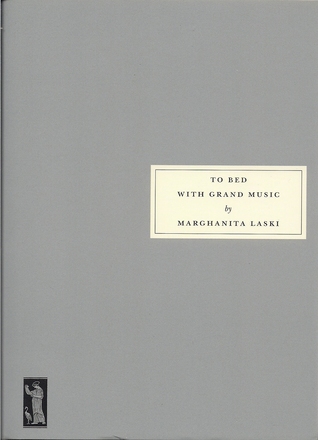
Review: To Bed with Grand Music by Marghanita Laski

I am so delighted that it is finally fall and the temperatures are getting cooler and the NFL season has begun here in the U.S.  I am a huge New York Giants fan and I am hoping for a stellar year.  Speaking of sports, this is another interesting Persephone title, the plot of which involves a woman using sex as a game while her husband is away at war.

My Review:
To BedI thought that the first scene in this book was quite shocking, but as it turns out the subject matter of the entire book is rather bold.  Deborah is in bed with her husband, Graham, who is about to leave for the middle east where he will be stationed during World War II.  Graham informs her that there is no way he can be expected to be faithful to her for the duration of the war.  Graham also gives Deborah permission to have a dalliance of her own since he will be away for so long.  I couldn’t decide what was more shocking: his declaration of intended unfaithfulness or his suggestion that his wife have an affair as well.

Deborah is the type of woman who needs a man to complete her identity.  When she is left alone with her three-year-old son and her housekeeper she thinks she will go crazy from the boredom and the monotony.  Deborah’s mother suggests that she get a job to help pass the time until the war is over.  Deborah eventually finds a job in London as a clerk and it is also in London that she has her first indiscretion with a man.  The first one night stand disgusts her and she runs off in shame, but she quickly changes her mind and her attitude towards having extramarital affairs.

Deborah eventually comes to the conclusion that it is acceptable to have lovers while her husband is gone so that she isn’t lonely.  The first prolonged affair that she has is with an officer named Joe who lavishes attention on Deborah and even gets along well with her son.  When Joe is sent to the frontlines Deborah takes on yet another lover.

The rest of the novel is an account of Deborah’s string of lovers.  Some of the book is very funny, especially when she finds ridiculous reasons to dump one man and move on to the next.  One of her lovers gets along very well with Deborah’s mother and Deborah is extremely irked by this.  So she casts him off and moves on to the next soldier.  Many of Deborah’s lovers provide her with lavish gifts, jewelry, expense differs and clothes.  Deborah is not a sympathetic characters since she is taking advantage of the situation of war to have a series of affairs which are all to her emotional and material benefit.

One part of the book that I found particularly sad is the fact that Deborah cannot bring herself to move back home and take care of her son.  The little boy craves his mother’s attention and the scenes in which she leaves him to go off to London with one of her many lovers is pathetic.  The boy becomes more and more attached to his nanny and we wonder whether or not his mother’s abandonment will have a lasting effect on his life.

This is a very interesting book to compare to Laski’s other World War II title, Little Boy Lost.  Both books bring up a very different side of the war that are somewhat controversial.  And children do not fair well in the lives of adults in either book.  If I found the subject matter of this book bold then I wonder what the reaction to it was in 1946 when it was originally published.

About The Author:
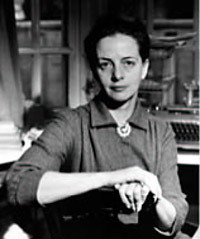
M LaskiEnglish journalist, radio panelist, and novelist: she also wrote literary biography, plays, and short stories.

Lanksi was to a prominent family of Jewish intellectuals: Neville Laski was her father, Moses Gaster her grandfather, and socialist thinker Harold Laski her uncle. She was educated at Lady Barn House School and St Paul’s Girls’ School in Hammersmith. After a stint in fashion, she read English at Oxford, then married publisher John Howard, and worked in journalism. She began writing once her son and daughter were born.

A well-known critic as well as a novelist, she wrote books on Jane Austen and George Eliot. Ecstasy (1962) explored intense experiences, and Everyday Ecstasy (1974) their social effects. Her distinctive voice was often heard on the radio on The Brains Trust and The Critics; and she submitted a large number of illustrative quotations to the Oxford English Dictionary.

An avowed atheist, she was also a keen supporter of the Campaign for Nuclear Disarmament. Her play, The Offshore Island, is about nuclear warfare.


6 Comments

Filed under British Literature, Classics, Historical Fiction, Persephone Books

Review: The Man in a Hurry by Paul Morand

I received an advanced review copy of this title from Pushkin Press through Edelweiss.  This book was originally written and published in French in 1941 and this English translation has been done by Euan Cameron.

My Review:
The Man In A HurryPierre has been in a hurry for all of his life.  He does multiple tasks at a time in order to speed up his life.  He shaves, gets dressed and brushes his teeth simultaneously; he drives too fast and he takes stairs three and four at a time.  There is no task for which Pierre will slow down.  The parts of the book that describe his lightening fast lifestyle are humorous.  For example, there is an incident in which his car breaks down after an accident and instead of waiting for help, Pierre abandons the car with his friend in it and proceeds to his destination on foot.

But Pierre’s fast life has not allowed him to slow down and forge any true or lasting relationships.  His closest friend and partner, the one whom he abandons with his care, decides he has had enough and severs their business relationship.  His manservant who has worked for Pierre for many years is tired of being yelled at and almost run over by Pierre so he quits.  Pierre is essentially alone in his life until he meets Hedwige.

Hedwige, her two sisters and her mother are the opposite of Pierre.  Their favorite activity is lounging around on their mother’s bed; they are never in a hurry for anyone or anything.  When they meet Pierre they are amused by this quirky man and his swiftness.  Pierre is immediately attracted to Hedwige and proposes marriage.  But can the love of a good woman really slow Pierre down and make him appreciate his life?

When Hedwige marries Pierre, the most beautiful gift that he decides he can give her is to delay the conjugal relations on their wedding night.  Pierre arranges for separate bedrooms in their apartment and decides to wait six weeks to get to know Hedwige before he has sex with her.  What better gift can he possibly give her than his patience, especially when it comes to putting off one of the most basic human drives.

When Hedwige becomes pregnant, the old pull of always being in a hurry starts to draw Pierre back in.  How can he possibly wait for nine months to see his child?  Hedwige begins to find comfort again in her mother’s bedroom with her other sisters and she slowly shuts Pierre out.  The matter comes to an ugly head when Pierre wants Hedwige to induce labor when she is only seven months pregnant.

This book has a humorous side as we read all of the ridiculous things Pierre does to hurry up.  But there is also an important social commentary about appreciating what we have and living in the moment.  If we are always in a hurry and worrying about what is happening next then we don’t appreciate those who are most important to us.

About The Author:
Paul MorandPaul Morand was a French diplomat, novelist, playwright and poet, considered an early Modernist.

He was a graduate of the Paris Institute of Political Studies (better known as Sciences Po). During the pre-war period, he wrote many short books which are noted for their elegance of style, erudition, narrative concision, and for the author’s observation of the countries he visited combined with his middle-class views.

Morand’s reputation has been marred by his stance during the Second World War, when he collaborated with the Vichy regime and was a vocal anti-Semite. When the Second World War ended, Morand served as an ambassador in Bern, but his position was revoked and he lived in exile in Switzerland.

Post-war, he was a patron of the Hussards literary movement, which opposed Existentialism. Morand went on to become a member of the Académie française; his candidature was initially rejected by Charles de Gaulle, the only instance of a President ever exercising his right to veto electees to the academy. Morand was finally elected ten years later, though he still had to forgo the official investiture).

Paul Morand was a friend of Marcel Proust and has left valuable observations about him.

11 Comments

Filed under Classics, France, Literature in Translation, Literature/Fiction