Category Archives: British Literature

Video Meliora Proboque, Deteriora Sequor: The Wise Virgins by Leonard Woolf

I have to admit that I was drawn to this book because of its autobiographical aspect.  Having just lately read quite a bit of Virginia Woolf’s extensive and varied forms of writing, I was curious to get a glimpse into her personal life with her husband.  Published in 1914, Woolf began to compose this biting satire of English life in the early 20th century on his honeymoon.  Harry Davis, the male protagonist in the novel who thinks he is very different from the other young people that live in his London suburb, is a harsher and more cantankerous version of Woolf himself. Harry has just  moved outside of London to Richstead with his parents and his younger sister Hetty.  Upon their arrival the Davis family is invited over by their new neighbors, The Garlands—four unmarried, virgin young women and their widowed mother.  Harry hates everything about their ordered and conventional life and these women view Harry as a discontented man whose behavior is strange and sullen.

Harry is restless and the last thing he wants to do is settle down with one of the virgins he meets in the suburbs and live a boring, formulaic life as a husband, father and businessman.  He reads deep, philosophical novels, he paints and he prefers to spend his time with other interesting people.  His painting at a local studio causes him to come in contact with a woman named Camilla Lawrence who is believed to be based on Virginia Woolf.  Camilla, unlike the Garlands, is urbane, sophisticated, educated and aloof.  Harry visits Camilla, her sister Katharine and their father and engages in witty conversation with people whom he feels are his equals.   Harry’s interactions with her make him contemplate the meaning of love and how one falls into it.  Camilla’s lack of  mutual desire or interest in Harry is, at times, a harsh portrayal of Leonard and Virginia Woolf’s own courtship.  Harry’s thoughts about love are depressing and confused:

It seemed ridiculous that one human being could affect another human being like this.  Love? Was it all imagination, a fantastic dream of this absurd little animal, man?  It was impossible at moments to believe that he felt anything for Camilla at all.  After all, what had he asked of her? To say: ‘I love you.’ Would that have thrown him into ecstasies—for twelve hours, or at most, to judge from what seemed best among others, for a few hours spread over twelve months.

Even though he has fallen in love, Harry continues to mock people like the Garlands and when Gwen, the youngest daughter, asks to borrow one of Harry’s books he has some harsh opinions of her and the other virgins in Richstead:

Harry did not forget to send Dostoevsky’s Idiot to Gwen, and he laughed to himself not unkindly as he handed it to the Garlands’ maid.  He was putting strong wine into the mouth of a babe with a vengeance.  He hoped it would not completely upset her digestion, yet he had not much compunction if it should make her feel a little uncomfortable, because, after all, that was what in his opinion these virgins of Richstead really needed—something to show them that life was not all Richstead, virginity and vicars, needlework and teas.  And when he had said ‘For Miss Gwen, please,’ he did not give very much thought to her or The Idiot.

In the end, however, Harry’s arrogance causes him to be hoisted with his own petard.   A comment that Mr. Lawrence makes to Harry is rather fitting for his tragic fate in the novel: Video meliora proboque, deteriora sequor (I see better things and approve of them, but I follow worse things–Ovid, Met. 7.20)  The ending was quite a surprise for me and I won’t give it away but I will say that the title of Woolf’s novel is both ironic and sarcastic.  I highly recommend this book to those who are interested in taking a peek at Woolf’s mindset while he was on his honeymoon with Virginia.


6 Comments

Filed under British Literature, Classics

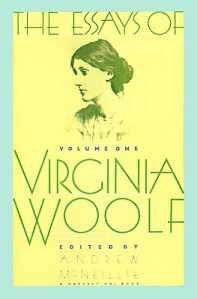
The Early Essays of Virginia Woolf

I am making my way through the first volume of Virginia Woolf’s essays that she composed between the years 1904 and 1912.  In “The Decay of Essay Writing” (1904) she gives us some insight into her motivations behind writing her personal essays.  She teaches us how to read her essays with a bit of a rant about the way in which writers in her day have approached the personal essay:

But though it seems thus easy enough to write of one’s self, it is, as we know, a feat but seldom accomplished.  Of the multitude of autobiographies that are written, one or two alone are what they pretend to be.  Confronted with the terrible spectre of themselves, the bravest are inclined to run away or shade their eyes.  And thus, instead of the honest truth which we should all respect, we are given timid side-glances in the shape of essays, which, for the most part, fail in the cardinal virtue of sincerity.

I wonder what Woolf would think of the personal essays written  in the 21st century?  In the age of the Internet and social media, have we gone too far the other way with oversharing?

Much of the first volume is taken up with reviews of books that Woolf did for the Guardian and the TLS in order to earn some money.   I am in awe of the wide range of books that she read.  Just as a sample, for the year 1905 she read:

Fiction: The Golden Bowl by Henry James; Arrows of Fortune by Algernon Gissing; A Dark Lantern by Elizabeth Robins.

Non-fiction: The Women of America by Elizabeth McCracken; The Thackeray Country by Lewis Melville; The Dickens Country by F.G. Kitton.

Even when her reviews are not flattering, she still makes me want to read a book.  I want to read what she read and replicate her literary experience.  Her review of James, for example, is not positive but she still inspires me to take another look at his novels:

‘She rubbed with her palm the polished mahogany of the balustrade, which was mounted on fine iron-work, eighteenth-century English.’ These are trivial instance of detail which, perpetually insisted on, fatigues without adding to the picture.  Genius would have dissolved them, and whole chapters of the same kind, into a single word.  Genius,  however, is precisely what we do not find; and it is for this reason that we do not count Mr. James’s characters among the creatures of our brains, no can we read his books easily and without conscious effort.  But when we have made this reservation our praise must be unstinted.  There is no living novelist whose standard is higher, or whose achievement is so consistently great.

12 Comments

Filed under British Literature, Classics, Nonfiction, Virginia Woolf

Luxury and Death: Mrs. Dalloway by Virginia Woolf

The Satyricon, written by the emperor Nero’s arbiter elegentiae (judge of style), Petronius, in the first century B.C.E., is one of the most interesting pieces of realistic fiction that has survived from antiquity.  The work, estimated to be the size of a modest modern novel, is highly fragmentary so that the plot as a whole can only be loosely reconstructed.  The narrator, an amoral yet educated man named Encolpius, has done something to offend the Roman god of sexuality and fertility, Priapus, and as a result has been stricken with a horrible case of impotence.  He travels around Italy with his companion and young lover Giton looking for a cure, for the Roman equivalent of Viagra.  The work has been described as a satire, as a mock epic, and a picaresque novel; it is lewd, it is bawdy and it is funny.

The Satyricon, however, also has an underlying moral message and a serious side for which William Arrowsmith argues in his seminal paper entitled, “Luxury and Death in the Satyricon.”  The central episode of the novel, which is also the most extant part of the work that has survived, is the Cena Trimalchionis—The Dinner of Trimalchio; Encolpius and Giton, along with a third friend they picked up somewhere along the way named Ascyltus, are invited to an elaborate dinner at the home of a ridiculously wealthy freedman named Trimalchio.  The themes of luxury and death are meticulously and deftly blended together in the dinner party scene during which Trimalchio’s ostentatious wealth is fully on display along side his obsession with his own mortality.  He is rich enough, for instance, to hire a trumpeter that does nothing all day but sound his horn on the hour.  He has a water clock in his dining room, a very expensive and rare item for a Roman, which also marks time for him.  And the symbol, for me, that best displays the juxtaposition of the wealth and death themes is Trimalchio’s elaborate fresco that depicts the fates measuring and cutting the thread of his life—Trimalchio’s thread, of course, is painted in gold.

As I was reading Mrs. Dalloway, the famous first lines of Arrowsmith’s article kept coming to my mind: “The Satyricon is a book obsessed with luxury (luxuria, that is) and death, and Trimalchio, the central character of the central episode, is a man with wealth and death very much on his mind.”  Arrowsmith’s words, I think, can be slightly amended to fit rather well with Virginia Woolf and her characters: Mrs. Dalloway is a book obsessed with luxury (luxuria, that is) and death, and Clarissa Dalloway, the central character of the central episode, is a woman with wealth and death very much on her mind.

Clarissa Dalloway, the fifty-two-year-old wife of a British politician, is busy planning one of her famous dinner parties for her usual group of upper class British friends and acquaintances.  She spends the day buying and arranging flowers, ordering around her maids and cooks, and laying out expensive silverware.  In the first few pages of the novel as she is bustling about her home and then about London, Big Ben lingers in the background, reminding her of every hour that has slipped by, thus reminding her of her mortality.  In the midst of her wealthy home and the luxuries she is setting out for her party, the clock faithfully strikes the hour:
For having lived in Westminster—how many years now? over twenty,—one feels even in the midst of the traffic, or waking at night, Clarissa was positive, a particular hush, or solemnity; an indescribable pause; a suspense (but that might be her heart, affected they said, by influenza) before Big Ben strikes.  There! Out it boomed.  First a warning, musical; then the hour, irrevocable.

In the afternoon just before her party, an old flame visits Clarissa and he makes fun of her planning.  This, combined with her husband’s comments about her elaborate parties, causes her to examine why she fusses over these displays of ostentation and wealth for her upper class friends.  Thoughts of death and mortality are oftentimes mixed in her mind with thoughts of wealth and luxury which, to her, mean standing in society, social class, importance.  Social status brings meaning to Clarissa’s life, it is what keeps her going.  But the more she clings to these luxuries, the more she realizes their worthlessness and the more she thinks about life and death:

They thought, or Peter at any rate, thought, that she enjoyed imposing herself; like to have famous people about her; great names; was simply a snob in short.  Well, Peter might think so.  Richard merely thought it foolish of her to like excitement when she knew it was bad for her heart.  It was childish, he thought.  And both were quite wrong.  What she liked was simply life.

“That’s what I do it for,” she said, speaking aloud, to life.

The other, seemingly disparate plot, that runs parallel to Clarissa’s story is that of Septimus, a traumatized veteran of The Great War who feels utterly lost and hopeless as he tries to integrate himself back into civilian life.  His wife, Rezia, anguishes over trying to get him help before he harms himself as Septimus’ delusions become more frequent and more alarming to her.  He is a man obsessed with death and wonders if there is any meaning or point to life: “It might be possible, Septimus thought, looking at England from the train window, as they left Newhaven; it might be possible that the world itself is without meaning.”  Septimus’ thoughts and actions mimic the pattern of Clarissa’s own existential crisis.  They are both consumed with thoughts of death.

Similar to Petronius, it is during Clarissa’s party that the themes of luxury and death culminate in the text.  As she is greeting her guests, which include the Prime Minister, death intrudes on her upper class world.  She is numb, going through the motions of greeting her guests, when she is shocked out of her wealthy surroundings by the rumor of a suicide: “She felt, somehow very like him—the young man who killed himself.  She felt glad that he had done it; thrown it away.  The clock was striking.  The leaden circles dissolved in the air.  He made her feel the beauty; made her feel the fun.  But she must go back.  She must assemble.”  I will end with another quote from Arrowsmith that I think applies equally well to Trimalcho and to Clarissa Dalloway: “Like hybris, luxuria affects a man so that he eventually loses his sense of specific function, his virtus or arête.*  He surpasses himself, luxuriating into other things and forms.”  For just a moment, it is death that brings Clarissa out of her surroundings, but then she comfortably goes back to her party.

*Virtus in Latin means courage, virtue or strength.  Arete in Ancient Greek means excellence.

I have yet to read Woolf’s letters or diaries.  I was wondering if anyone has come across a reference to Petronius in any of her writings?  I don’t think it is too far fetched that Woolf would have been familiar with Petronius.  It interesting that F. Scott Fitzgerald, writing about the same time as Woolf,  was greatly influenced by the Satyricon in composing The Great Gatsby —another novel obsessed with luxury and death—and even considered the alternative title Trimalchio’s Dinner for his novel.

11 Comments

Filed under British Literature, Classics, Virginia Woolf

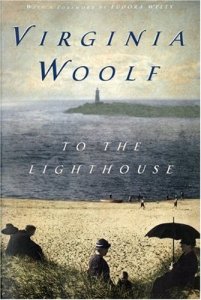
How we Perished, Each Alone: To the Lighthouse by Virginia Woolf

I realize that entire academic careers and volumes of dissertations and articles are dedicated to studying the influences of Vergil on Virginia Woolf.  I have not looked at any of the scholarship nor do I wish to.  My writing here, I am sure, will not be new or unusual but it is simply my own interaction with the texts of Vergil and Virginia Woolf.  (Also, a bit of a warning that I do have a spoiler in my writing about the second part of the books.)

As I made my way through the three parts of To the Lighthouse, Vergil’s lines from Georgics 1.199-203 kept coming to mind.  The Roman poet is giving advice about scattering seeds for a successful harvest and concludes with a universal maxim (translation is my own):

sic omnia fatis
in peius ruere ac retro sublapsa referri,
non aliter quam qui aduerso uix flumine lembum
remigiis subigit, si bracchia forte remisit,
atque illum in praeceps prono rapit alveus amni.

Thus all things are fated to quickly hasten towards something
worse and to slide backwards, similar to when a man is hardly
able to steer his boat with his oars against the opposing
stream, and if, by chance, he should remove his arms, then he
and his skiff would be swept away by the swiftly moving river.

Part one of To the Lighthouse, “The Window,” captures a day in the life of the Ramsay family—mother, father, eight children and a few house guests—at their summer rental home in the Hebrides. At the center of the family is Mrs. Ramsay, middle-aged yet still beautiful, whose role as loving mother, wife and hostess is the unifying and joyful force behind their blissful, summer days. It is her care and understanding and warmth that steers her children towards a good and happy life. She reassures her youngest son, James, that he will make his greatly anticipated trip out to the lighthouse on the following day; despite his repeated refusals, she offers their crabby and aloof  houseguest, Mr. Carmichael, comforts like newspapers and tobacco; with a simple look she is able to calm her husband whose irrational anger flares up when a guest is taking too long eating his soup at dinner. Mrs. Ramsay shelters the children from their father’s stern presence which wavers between indifference and irritation. The dinner scene sympathetically describes Mrs. Ramsay at the center of it all:

And the whole of the effort of merging and flowing and creating rested on her. Again she felt, as a fact without hostility, the sterility of men, for if she did not do it nobody would do it, and so, giving herself the little shake that one gives a watch that has stopped, the old familiar pulse began beating, as the watch begins ticking—one, two, three, one, two, three. And so on and so on, she repeated, listening to it, sheltering and fostering the still feeble pulse as one might guard a weak flame with a newspaper.

It is Mrs. Ramsay’s arms, her effort, that steer the family ship upstream, against the harsh tides of reality. In chapter two, “Time Passes,” the summer house is described as empty, desolate, lonely because the family has not visited it in the ten years since the untimely death of Mrs. Ramsay. The house in ruins, overtaken by nature, foreshadows the lack of joy and unity in the family without their wife and mother:

Only the lighthouse beam entered the rooms for a moment, sent its sudden stare over bed and wall in the darkness of winter, looked with equanimity at the thistle and the swallow, the rat and the straw. Nothing now withstood them; nothing said no to them. Let the wind blow; let the poppy seed itself and the carnation mate with the cabbage. Let the swallow build in the drawing-room, and the thistle thrust aside the tiles, and the butterfly sun itself on the faded chintz of the arm-chairs. Let the broken glass and china lie out on the lawn and be tangled over with grass and wild berries.

The second chapter is the most poetic—its repetitive lines and sections are akin to songs and melodies—and it includes many Vergilian allusions to the fourth Georgic. The most striking and pathetic of which is the Orpheus and Eurydice image when Mr. Ramsay is “stumbling along a passage one dark morning” and reaches for Mrs. Ramsay but his arms “remained empty” because she died suddenly the night before.

In the final chapter, ten years have passed and the family has decided to visit their summer home but there is a marked change in their mood and interactions with one another. Without Mrs. Ramsay they cannot recapture the joy of the last summer in the house. Mr. Ramsay, whose irritability and tyranny is no longer subdued by his wife, scares his children and makes his guests uncomfortable.  He has, mostly definitely, hastened towards something worse in the absence of his wife.  He decides to take James and Cam, now teenagers, on a boat trip out to the lighthouse to make up, somehow, for the trip that was never taken ten summers prior. Their tense and miserable journey out to the lighthouse is laden with water and sailing imagery that is, for me, especially reminiscent of the Georgics passage which I translated above:

The sea was more important now than the shore. Waves were all round them, tossing and sinking, with a log wallowing down one wave; a gull riding on another. About here, she thought, dabbling her fingers in the water, a ship had sunk, and she murmured dreamily half asleep, how we perished, each alone.


16 Comments

Filed under British Literature, Classics

They Spill from your Shelves, They Sprawl by your Bed: Worlds from the Word’s End by Joanna Walsh

I’ve been feeling so restless and scattered lately with my reading (and maybe my life?)  Nothing seems to hold my attention for very long.   After I finished Effi Briest, which book I loved, I ordered more Fontane and while I was waiting for those books to arrive in the mail, I started a few others (well, more than a few).  Since it is the centenary of the Russian Revolution in October, I pulled off of my shelves several books of Russian history and literature that I had every intention of reading this month.  I managed to get about 60 pages into Gulag Letters by Arsenii Formakov and 20 pages into China Mievelle’s book October.  I also set aside 1917: Stories and Poems from the Russian Revolution and Russian Émigré Short Stories, which have yet to make it off of my coffee table.

But I was craving more fiction so I read two short books, The Year of the Drought by Roland Buti which I enjoyed, but didn’t take much time to read, and Annie Ernaux’s A Man’s Place which I thought was interesting but not fantastic.  (I’ve ordered a few more of her books to see if any other of her titles resonate more with me than this first one I read.)  After staring at the three stacks of books sitting on my coffee table, wandering into the book room and staring at my shelves, flipping through the books on my bedside table, and consulting literary Twitter, I thought Joanna Walsh’s new collection of short fiction might be just the thing for me.  And I was right, sort of…

Walsh’s second story in Worlds from the Word’s End entitled “Bookshelves” begins by describing a bibliophile’s collection of books.  I felt right at home in her story, among her books:

They spill from your shelves.  They sprawl by your bed, luxurious, splayed sometimes and discarded at an early page,  broken by your attentions.  On your shelf more books you would like to read are waiting, books you have ordered, their white bodies fat with potential.

But the author acknowledges that sometimes being surrounded by this number of books is overwhelming, one can’t possibly read all of them because “there are just so many to conquer.”  Walsh then asks us to open our minds and imagine, “Something you never thought might happen”:   A being who crawls out of your bookshelf who has read all of your neglected books!  Imagine stumbling upon this being sitting at your table, smoking a cigarette and drinking a cup of coffee.  This being has actually read all of your discarded, half-read books, anything that was sitting in a bag for the charity shop, including “ill-judged gifts from well-meaning relatives” and “gardening manuals” and even the  “memoirs of politicians.”  I began to feel better about the stacks of books sitting neglected on my own shelves and a little less guilty about the dozens of books I’ve sent to the charity shop.  I especially like the ending when the narrator realizes that this poor being has read some really lousy books and she feels grateful and even superior for her own literary discretion.

It is fitting that I didn’t actually finish all of the stories in Walsh’s collection, abandoning the book just before I made it through the last few stories.  My attention was diverted by the arrival of Thomas Bernhard’s Collected Poems and Music & Literature No. 8.   So I was hoping that one night, very late, when I can’t sleep that I will stumble into my kitchen and encounter one of my cats, sitting at the table, with a cigarette in one paw, a book in the other, and a glass of wine/whiskey in front of him, who will describe to me the rest of Walsh’s book.

Meanwhile, my other Fontane books arrived in the post and I’ve started Irretrievable.  So I guess I will stick with German Lit. for a while, but then again…

17 Comments

Filed under British Literature