Tag Archives: New Vessel Press

Subscription Plans: A Great Way to Support Small Presses

In this post I will highlight some of my favorite small and indie presses that offer its readers subscription plans.  By offering subscriptions a press is able to fund upcoming publications and readers get a fantastic discount on books.  These are a few of my favorites and this is by no means an exhaustive list.   I have included links to all presses for those who want more information on each plan.  Please add any additional suggestions in the comments:
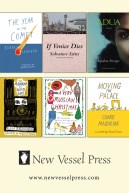
new-vessel-subscription-planNew Vessel Press: A subscription of New Vessel books includes all six of their books for the publication year.  Subscribers also get to choose one book from their backlist.  The cost is $80 which amounts to about 25% off of the cover prices.  I haven’t read a book from New Vessel yet that I haven’t enjoyed.  This year’s titles include If Venice Dies and A Very Russian Christmas so this subscription is definitely worth it.  New Vessel Subscription Page.

Two Lines Press:  I embarrassed myself with a gushing review of Two Lines 25, a collection of international writing for which the Two Lines editors have scoured the world.   A copy of Two Lines 25 is included with a subscription and to me that alone is worth the price of admission.  Two Lines is also one of my favorite subscriptions because every year they send some sort of book related gift to their subscribers.  This year is was a package of postcards which all contained quotes from their latest books.  A subscription for 2016 is only $40 ($80 International) and you get four fabulous books.  Two Lines Press Subscription Page

Deep Vellum: This non-profit press offers subscriptions of five or ten books and they also provide a few options with each subscriptions.  Readers can choose both paperback and ebook versions of their books for $60 or the ebook versions alone for $50.  International subscriptions are a bit more pricey at $150.  But Deep Vellum also puts out a large variety of fantastic books that are translated from languages around the world. Deep Vellum Subscription Page.

Archipelago Books: Archipelago is also a non-profit press dedicated to publishing contemporary and classic world literature.  A one-year subscription of print books which archipelago-subscriptionincludes twelve of their titles is $170.  A full-year of ebooks is $70 and a half year subscription for six books is also $70. They provide a lot of choices depending on one’s budget.  Subscribers who are really passionate about their books and want to spend some money up front can also purchase two or three year subscriptions. Archipelago Books Subscription Page

And Other Stories: This is one of my favorite book subscriptions because they offer a recurring subscription.  I don’t have to worry about there being a gap in the books I receive because I’ve forgotten to renew.  I wish that other publishers would follow suit and also do an auto renewal option.  I was very impressed that And Other Stories sent out a lengthy survey recently to its subscribers asking for ways in which they could improve their service.  They also offer a range of options to fit different budgets: 6 books a year for £50 in UK/Europe/USA/Canada (approx $80 US), 4 books a year for £35 in UK/Europe/USA/Canada (approx $55 US), 2 books a year for £20 in UK/Europe/USA/Canada (approx $32 US).  And Other Stories also prints the names of subscribers in their books since it is the funds from these readers that have helped to publish their books. And Other Stories Subscription Page

Open Letter: This small press also specializes in world literature in English translation (notice a theme here.)  One of my favorite books this year,  The Brother by Rein Raud, has been translated from the Estonian and published by Open Letter.  They offer a six month subscription for $60 or a twelve month subscription for $100.  Shipping is free within the U.S. for both subscriptions.  I love that each new release comes with a letter from the publisher which explains the book and how they came to publish it.  Open Letter Subscription Page

Persephone Books: Persephone specializes in reprinting neglected fiction and non-fiction by (mostly) female twentieth century writers.  A friend who has impeccable taste in books sent me a copy of Greenery Street and I have been hooked on their titles ever since!  They offer a six month subscription for £60 or a twelve month subscription for £120.  For an additional fee they will also gift wrap the books.  Subscribers get to choose which books they would like to receive from their catalog of 120 titles.  My husband bought me a Persephone twelve month subscription for my birthday last year and it was delightful to receive a new Persephone title each month.  It’s the gift that keeps on giving.  Persephone Books Subscription Page

nyrbplustpr-450pxThe New York Review of Books:  This press also specializes in reissuing lost classics from different countries around the world.  They call their product a “book club” but it is essentially a subscription service.   For $140 members receive a book every month for 12 months and the membership automatically renews.  For a limited time NYRB is also offering a four issue subscription to The Paris Review when readers purchase a membership.  I can’t get enough of the books from NYRB classics and I might have to buy a storage unit to house all of my books from their catalog.  I will pretty much read anything they publish and $140 is a pretty good bargain for a year’s worth of their books.  NYRB Book Club Page

Melville House: This indie press based in New York publishes a series called “The Art of the Novella.”  They have published classic novellas written by Chekov, Tolstoy, Melville and Woolfe just to name a few.  Subscribers can choose a hard copy book for $12.99 per month, an ebook for $6.99 per month or both for $17.99 per month.  Subscribers are automatically billed monthly until they choose to opt out of the service.  This is a great option for someone who wants to try a subscription and not spend a lot of money.  Melville House Novella Subscription Page

Peirene Press: Peirene specializes in contemporary European novellas and short novels in English translation. All of their books are best-sellers and/or award-winners in their own countries. They only publish books of less than 200 pages that can be read in the same time it takes to watch a DVD. As an added bonus, their books are beautifully designed paperback editions, using only the best paper from sustainable British sources.  A one-year Peirene subscription is £35.00 and members receive a book every four months.  There is also the option to sign up for automatic renewal (UK only). Peirene Press Subscription Page   Peirene has also decided to crowd fund Peirene Now! No. 2 on kickstarter. For a pledge of only £12 supporters will receive a copy of the book which looks like another fantastic and thought-provoking read.  Peirene Now! 2 Kickstarter Page

Pushkin Press: A one year subscription to Pushkin Press is £95.00 and subscribers receive one book each month from the Pushkin Collection, a %25 discount on all purchases from the pushkin-collectionPushkin online bookshop, and a free copy of Stefan Zweig’s novella Confusion.   The Pushkin Collection is a series of paperbacks typeset in Monotype Baskerville, based on the transitional English serif typeface designed in the mid-eighteenth century by John Baskerville. It was litho-printed on Munken Premium White Paper and notch-bound by the independently owned printer TJ International in Padstow, Cornwall.  The cover, with French flaps, was printed on Colorplan Pristine White paper. Pushkin Press Subscription Page
Vibrant Margins:  Ben Winston has started this fantastic subscription service that delivers to its subscribers a variety of books from several different small presses.  According to the website, “Great novels from small presses are out there. Let us find them and deliver them to your doorstep.”  For their debut season they have chosen titles from Dzanc Books, Restless Books, Lanternfish Press, Unthank Books, The Heart and the Hand Press, and New Door Books. Subscribers receive a new book every month and can choose two, three or six books for as low as $15.33 per book.  This is a great way to try a variety of small press books.  I will be reviewing two of the titles from their debut season later in the month and doing a giveaway.  So stay tuned!  Vibrant Margins Bookstore Page

For my next post maybe I will dare to dive into the world of literary magazines!


25 Comments

Filed under Opinion Posts

Review: Oblivion by Sergei Lebedev

The first book that I read from New Vessel Press was Guys Like Me and ever since then I have sought out their books again and again.  I received an advanced review copy of this title through Edelweiss.  This title was published in the original Russian in 2015 and this English version has been translated by Antonina W. Buois.

My Review:
Oblivion I have been captivated by the plethora of post-Soviet literature that has been published just in the last year alone.  The theme that is the most haunting to me is the one of waste: all of those wasted lives, all of that wasted time, and for what purpose?  I remember the attitude towards the Soviets in the 1980’s with the “us”, the free American democracy, versus “them”, the oppressive Soviet totalitarian regime, propaganda.  It seemed that the Soviet Union wanted everyone to believe that, not only was their system the best in the world, but their people were happy and thrived under that system.  But recent post-Soviet books, like Oblivion, have proven that this ideal that their leaders put forth could not be further from the truth.

When Oblivion opens, the narrator is middle-aged and living in Greece.  He is reminiscing about his childhood back in a dacha in the Soviet Union.  The one character from his childhood that looms over and dominates every memory he has is a man he calls Grandfather II.  He begins with an ominous sentence that states it was Grandfather II who decided his fate and the course of his entire life.  Grandfather II was an old, blind man who moved into the dacha and about whom no one asked any questions.

There are hints in the text that Grandfather II has a shady past that somehow involved the horrible gulag system.  He is adopted by his neighbors, especially the narrator’s family, as a sort of kindly and innocuous grandfather figure, and thus his nickname.  But the narrator has a very different view and opinion of this man which is chilling and frightening.  There is nothing that Grandfather II specifically does that is cruel to the boy or his family.  But Grandfather II has a presence and a demeanor that evokes feelings of fear and dread.

The narrator is further haunted by Grandfather II when, as a boy of about nine, he is attacked by a wild dog and Grandfather II comes to his rescue by crushing the dog’s spine.  The narrator is brought to the hospital on the brink of death because he has lost so much blood.  Grandfather II, despite being an old man, insists that he give his own blood to save the boy’s life.  Grandfather II’s heroic act saves the boy but in the end his own life is sacrificed because he was too old and weak to give up his blood.

The narrator is haunted for the rest of his like that he has this old man’s blood pulsing through his veins.  He decides that he must go on a quest to find out more about his mysterious man’s past and this leads him to a mining town near the Arctic Circle.  The mining town is a pathetic waste and shell of a town that was once home to a prison camp where its inhabitants worked in the mine.  When the narrator arrives in this northern town the prisoners are long gone, but the remains of the camp are still an eerie reminder of this wretched and miserable part of Soviet history.  The narrator confirms that Grandfather II was a founder of this mining town and in charge of the prison camps.  The most disturbing part of this this journey, however, is when the narrator realizes what a cruel and inhuman person Grandfather II really was.  The saddest part of the narrative, for me, was learning about Grandfather II’s seven year-old son was also subjected to this man’s insistence on dominating and controlling everyone and everything in his life.

Finally, I have to say a few words about the densely poetic language that the author uses for his tale.  It took me longer than it normally would to read a 300-page book because the sentences were so masterfully created that I oftentimes found myself reading entire sections more than once.  There is a dream sequence in the middle of the book during which the narrator has a series of three dreams just before he is about to embark on his journey to the north.  This section could almost stand on its own as a poetic and metaphorical reconstruction of the oppression and unjust treatment that so many suffered under this totalitarian regime.

Oblivion is a haunting, intense, descriptive literary Odyssey that you will not soon forgot.  The language that Lebedev employs and the detailed stories he tells ensures that the experiences of life under Soviet rule will indeed not fade into Oblivion.

About the Author:
S LebedevSergei Lebedev was born in Moscow in 1981 and worked for seven years on geological expeditions in northern Russia and Central Asia. Lebedev is a poet, essayist and journalist. Oblivion, his first novel, has been translated into many languages. Lebedev’s second novel, Year of the Comet, is coming out from New Vessel Press in 2017.
11 Comments

Filed under Literature in Translation, Russian Literature

Review: The 6:41 to Paris by Jean-Philippe Blondel

Today I welcome France Book Tours back to the blog with an intriguing literary novel from New Vessel Press.  This novel was originally written and published in French and this English translation has been done by Alison Anderson. Scroll down to the end of the review to enter to win your own copy and to look at all of the stops on the book tour.

My Review:
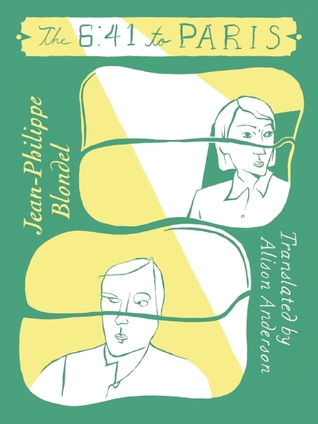
641 to ParisCécile is a stylish and confident forty-seven year old entrepreneur who owns a successful cosmetics company, has been married for twenty years and has a teenage daughter.  When the book opens, she has just visited her elderly parents for the weekend and is about to take the 6:41 a.m. train back to her home in Paris.  As her parents age, her weekend visits to their home are becoming harder for her and more depressing.  The only thing that Cécile wants to do on the train is to relax and have a few hours of peace and quiet.  But when she realizes who sits down next to her on the train, her commute back home is anything but restful.

Philippe Leduc is also forty-seven but time has not been as kind to his physique as it has to Cécile.  Philippe is divorced and his teenage children pretty much want nothing to do with him and he has a monotonous job selling televisions in a big box chain store.  He is also on the 6:41 a.m. train to Paris but for a very different reason than Cécile.  Philippe’s childhood friend is dying of cancer and Philippe is on his way to the hospital in Paris to say his final goodbyes.  Philippe also assumes that his train ride will be quiet, until he realize that the only seat left on the train is the one next to his ex-girlfriend, Cécile.

Philippe and Cécile had a four month relationship when they were in their early twenties.  They were both very different people at the time: Philippe was the most popular boy in school, handsome, and very popular; Cécile was plain looking, shy and did not have many friends.  They immediately recognize one another on the train, but neither one of them has the courage to speak up and acknowledge one other’s presence.  They each sit in silence and contemplate the disaster that was their short-lived romantic relationship that ended more than twenty years ago.

While they were dating, the relationship, for the most part, seemed fine but Cécile always had the feeling that Philippe was better than her and that he would inevitably dump her for someone better.  They go on a trip to London together which ends up being an awful memory for both of them because it is on this very trip that Philippe decides to end the relationship in the worst possible way.  What is interesting about the end of their affair is the effect it has on each of them.  Cécile decides she will never again be made to feel inferior and will not be treated so badly by anyone.  Philippe, on the other hand, knows that he has behaved in a very mean and churlish way towards Cécile and this eats away as his pride and confidence.  He is never able to recover from the guilt of this bad breakup and never has a successful relationship after his time with Cécile.

The ending to this book is very interesting as the author builds up to the conclusion.  We are left wondering if Cécile and Philippe will ever speak with each other; and if they do have a conversation will it be amicable?  New Vessel Press has provided us with another entertaining translation of a charming French book.

About The Author/Translator:

Jean-Philippe Blondel was born in 1964 in Troyes, France where he lives as an author and English teacher.  His novel The 6:41 to Paris has been a bestseller in both France and Germany.

Alison Anderson is a novelist and translator of literature from French. Among the authors she has translated are JMG Le Clézio, Christian Bobin, Muriel Barbery and Amélie Nothomb. She has lived in Northern California and currently lives in a village in Switzerland.

Follow New Vessel Press on Twitter | on Facebook Sign up to receive their latest news and deals.

Giveaway:

You can enter the global giveaway here or on any other book blogs participating in this tour. Be sure to follow each participant on Twitter/Facebook, they are listed in the entry form below. This giveaway is open to US residents only. Five participants will each win an ARC print copy of this book.

Enter here

CLICK ON THE BANNER TO READ OTHER REVIEWS AND AN EXCERPT

641 to Paris_Banner


11 Comments

Filed under France, Literature in Translation

Review: Killing Auntie by Andrzej Bursa

I received an advanced review copy of this title from New Vessel Press.  This book was originally written in Polish in 1959 and this English version is translated by Wiesiek Powaga.

My Review:
Killing AuntieJurek is a twenty-year-old college student who lives with his aunt. She is very doting on him and works hard to provide well for him.  So it is rather puzzling when one day she asks him to hang a mirror in their apartment and he turns the hammer he was using for this task on her head.  In two quick and hard whacks to the head auntie is now a corpse.

Jurek’s life, leading up with to this point, is rather mundane and dreary.  He goes to lectures at the university, hangs out with friends, and eats dinners cooked by auntie; there is no real challenge in his life until he is faced with the disposal of auntie’s corpse which is now decomposing in his bathtub.  The humor of the book is very dark, but done brilliant, especially as Jurek tries and fails many times to chop up and hide body parts.

He first takes off a thumb and starts small.  When he tries to flush the finger down the toilet it keeps floating to the surface so he has to fish it out of the commode and try another plan.  He then hacks off a foot and shoves it into the coal stove in his apartment.  All of a sudden there is a massive amount of smoke in his kitchen and an awful stench that draws the attention of his neighbors.  He finally decides to wrap up different body parts and mail them to random people around the city.

Jurek is intent on not getting caught and the anticipation of whether or not his crime will be found out makes this an intriguing read.  Jurek gets very drunk with a group of friends and is picked up by the police on the way home.  He thinks they have found out about his crime and he is ready to confess everything only to learn that they put him in jail for public intoxication.  Jurek also falls in love with a woman he meets on the train and when the relationship with her becomes intimate he confesses everything to her.  For a minute we think that she will tell the police but she suddenly decides to help him dispose of the corpse.  Finally, when another aunt and his grandmother visit they discover the corpse and mistake it for animal meat and bite a chunk out of it.

KILLING AUNTIE is humorous, intense, and in the end, surreal and nightmarish.  The ending is somewhat bizarre but a fantastic and unexpected surprise.  New Vessel Press has given us another brilliant novella in translation that I highly recommend.


About The Author:
A BorsaAndrzej Bursa (March 21, 1932 – November 15, 1957) was a Polish poet and writer. Born in Kraków, he studied journalism, then Bulgarian at Jagiellonian University in Kraków.

Bursa published his first poem in 1954. A prolific writer, he published 37 poems and a short story in different magazines during his lifetime. He died of a heart attack in 1957. Shortly thereafter, his first poetry collection was published, an important event in Polish poetry. Presently, there is a poetry prize named after Bursa which many living Polish poets have won (e.g. Ewa Lipska and Stanisław Barańczak).

5 Comments

Filed under Humor, Literature in Translation

Review: I Called Him Necktie by Milena Michiko Flasar

I received an review copy of this book from New Vessel Press.  This book was originally written and published in German in 2012.  The English version has been translated by Shelia Dickie.

My Review:
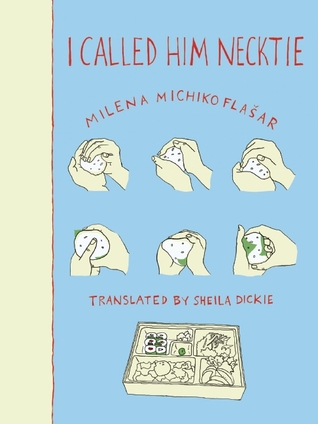
NecktieHikikomori is the Japanese term for youths who shut themselves into a room in their parent’s home and have very little contact with their family. According to Flasar, these young people may lock themselves away from society for up to fifteen years because they are overwhelmed by the expectations to conform and achieve in school and in their careers. Since being a hikikomori is an embarrassment to a family, no one knows the exact number of them that exist.

Flasar captures the loneliness, isolation and sadness that is felt by a hikikomori through the character of Taguchi Hiro in I CALLED HIM NECKTIE.  Taguchi has not come out of his bedroom in his parent’s home for two years and he even eats the meals that his mother leaves at his door in isolation.  One day Taguchi remembers the pleasantness of childhood when his mother would bring him to the park, so he ventures outdoors and sits in the same park.  He has waves of anxiety and nausea as he is trying to fight through his agoraphobia and the one thing that calms him down is a man who, dressed in a suit and tie, sits on a bench near him and meticulously eats the lunch from his bento box.

Taguchi and the man he calls “Necktie” show up at the park every weekday and eventually they strike up a conversation.  Taguchi’s family, neighbors, and teachers at school all put a tremendous amount of pressure on him to succeed and to fit in.  His conformity leads to what he believes are tragic consequences that involve two of his fellow classmates.  When the pressure to conform becomes too much, he closes himself off from his family, declares, “I can no longer” and he does not speak for two years.  The first person to whom Taguchi speaks after those two years is “Necktie” from the park and once Taguchi starts talking he does not stop.

“Necktie,” whose real name is Ohara Tetsu, comes to the park everyday because he has lost his job and cannot bring himself to admit this fact to his wife.  He adheres to his normal routine of waking up everyday at 6 a.m., dressing for work, taking the bento box that his wife has prepared, and riding the commuter train.  Ohara is the result of what happens to the youth in society who do conform: he is tired and worn out and thoroughly embarrassed when his career is taken away.

Ohara and Taguchi spend hours confiding in each other and through their conversation we learn of their struggles, heartaches, losses and phobias.  They both needed human interaction and human contact and fate brought them together at just the right time.  It is worth noting that they rarely have a dialogue in the book.  Either one of them is talking at length or the other.  They each longed for someone to truly listen without judgment and that is the gift that they give to one another.

The writing of the book is terse and curt with no quotations marks.  This is fitting for Taguchi and Ohara as their stories spill out from their mouths, sometimes in fragments and sometimes in philosophical reflections;  it seems as though they are desperate to share their lives with each other and make a connection as urgently as possible.

I CALLED HIM NECKTIE is an uplifting story about two people who feel isolated and abandoned by their society but find comfort in the attentive ear of one another.  I highly recommend this short, yet inspiring tale.


About The Author:
FlasarMilena Michiko Flašar (St. Pölten, 1980) studied comparative literature, Germanic and Roman languages at the University of Vienna, and taught German to non-native speakers. After several successful publications in a variety of literary magazines, she made her debut in 2008 with the collection Ich bin (I am). This volume includes three short stories about love and parting. The short story Okaasan – Meine unbekannte Mutter (Okaasan – My unfamiliar Mother) appeared in 2010, telling the story of her dying demented mother. She has received several prizes and scholarships for her work. Meanwhile she has started writing full-time. In feburary 2012 her new book Ich nannte ihn Krawatte was published.

Visit New Vessel Press for their fantastic selection of titles.  You can also download a translation from their site of the Chekhov short story “The House Call.”


5 Comments

Filed under Literary Fiction, Literature in Translation