Tag Archives: Literature in Translation

Review: Running Through Beijing by Xu Zechen

Oftentimes small literary presses will have an option for readers to buy a subscription for their books. When I discovered Two Lines Press I decided that buying one of their yearly subscriptions would be a great option for me and would also allow me to support this small press which publishes literature in translation. I bought the 2014 subscription and for $30 and I received three books as well as a copy of their journal.  For more information on their subscriptions, including the one for 2015, please visit their website: http://twolinespress.com/subscribe/.

My Review:
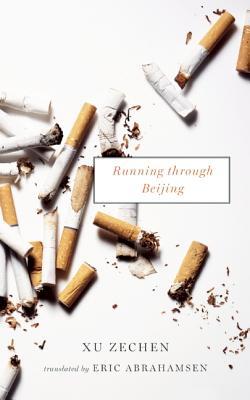
BeijingWhen the book opens, Dunhuang has just gotten out of prison after a three month sentence for selling fake I.D.’s.  Dunhuang, like many young people without a college degree or a vocation, has left his small town and is hoping to make some money in Beijing.  The streets of Beijing are rife with itinerant youth peddling anything from fake I.D.’s to fake college diplomas to pirated DVD’s.

This book opened my eyes to life in a city like Beijing with its cramped living quarters, awful dust storms and illegal trade.  When Dunhuang gets out of jail he has no where to go but he meets a woman named Xiaorong who sells pirated DVD’s.  He spends his first night at her apartment where he learns that she is terribly unhappy living in Beijing; she has just broken up with her boyfriend and is sad and lonely.  Dunhuang and Xiaorong rely on each other for physical and emotional comfort and eventually they become business partners by selling pirated DVD’s together. One gets the feeling that Dunhuang has a connection with Xiaorong that runs deeper than he is willing to admit.

Dunhuang is a natural salesman and immediately becomes successful peddling his DVD’s.  He has regular customers and he even buys books on cinema so that he can read up on different films that his customers might enjoy.  Two Lines Press also has a fantastic link on their website with information about many of the DVD titles that are mentioned in the book: http://twolinespress.com/a-dvd-playlist-for-running-through-beijing/.

The book is very fast-paced and mimics the ever moving and changing lifestyle of people like Dunhuang who live from moment to moment selling illegal contraband.  These street urchins never know when they might be chased by the police,  victims of theft, or thrown out of their living quarters.  The book only spans a few months and Dunhuang makes and spends several small fortunes and lives in no fewer than four different places.  I was surprised at the very tight living quarters that are allowed in a modern city.  At one point Dunhuang rents not even a room, but a bunk bed in a room that is shared with three other men.  He also rents a tiny room that fits a bed and a washbasin that is basically a tin shack.

The ending of the book is rather abrupt and not conclusive.  I found this fitting for Dunhuang and the lifestyle he has chosen for himself on the streets of Beijing.  One gets the feeling that youth like Dunhuang never really break this cycle of a roaming around a large city with no real goals for the future.

This is my first foray into Chinese literature and I am so glad that I came across Two Lines Press and RUNNING THROUGH BEIJING.  I enjoyed the book and found an interesting amount of information about what it is like to live in a large, modern city like Beijing.  I highly recommended this title and I am looking forward to the other two books in translation that I received with my subscription.

About The Author and Translator:
Xu Zechen is the author of the novels Midnight’s Door, Night Train, and Heaven on Earth. He was selected by People’s Literature as one of the “Future 20″ best Chinese writers under 41. The recipient of numerous awards and honors, he lives in Beijing.

Eric Abrahamsen is the recipient of translation grants from PEN and the NEA and has written for The New York Times, among others. In 2012 Penguin published his translation of The Civil Servant’s Notebook by Wang Xiaofang. He lives in Beijing where he hosts the acclaimed website on Chinese literature Paper Republic.


 

5 Comments

Filed under Literature in Translation

Review: Please Talk to Me-Selected Stories by Liliana Heker

I received an advanced review copy of this title from Yale University Press through NetGalley.  This edition has been translated by Alberto Manguel and Miranda France.

My Review:
Please Talk To MeHeker shows us in these short stories her ability to successfully write about a wide range of topics: from the relationship of servant and master, to the Oedipus Complex, to the toll that mental illness takes on an entire family.  The stories follow a stream-of-consciousness style, oftentimes involving abrupt and confusing transitions, that weaves us through the minds of many different types of characters.

The most clever story in the collection is “Strategies Against Sleeping.”  Señora Eloisa is being driven by a chauffer on a long ride during which she is very tired; she wants nothing more than to close her eyes and take a good long nap.  But the driver starts talking to her about how he could not sleep a wink on the previous night.  As a result he is very tired and wants her to talk to him so that he stays awake while he is driving.

We feel the pain and discomfort of the woman and the driver who are both fighting to stay awake for different reasons.  At one point during her forced conversations the woman becomes desperate for any kind of relief:  “For a very brief moment she had to suppress a desire to open the door and throw herself onto the road.”  In her delirium,  Señora Eloisa lets slip a very dark and personal family story that horrifies the driver and will definitely serve to keep him awake.

The story “Early Beginnings or Ars Poetica” includes the most extreme examples of the author’s abrupt transitions; this story reads like a dream sequence.  The narrator begins the story by imagining that a lion or a horse is present in his apartment when he goes to sleep .  The narrator then transitions to a philosophical musings about God and the beginnings of the earth.  Then the narrator transitions to imagining that he is four years old and is sitting in from of four cups of chocolate and a yellow plastic tablecloth on his birthday.  The story continues on in this fashion until the ending which is equally jarring.

This is my first taste of Argentinian literature and I will definitely look for more authors from this country.  I highly recommend PLEASE TALK TO MY as a quirky and symbolic collection of stories from Liliana Heker.


About The Author:
Liliana HekerLiliana Heker began her literary career at age 17, mentored by Argentine writer Abelardo Castillo. She was a collaborator in Argentina literary magazine “The Paper Cricket” and founded, along with Castillo, The Golden Bug and The Platypus. She has published several short story books which have been collected in “Cuentos” (Alfaguara). She has also written two novels, “El fin de la historia” and “Zona de clivaje”, and a collection of essays called “Las hermanas de Shakespeare”.

2 Comments

Filed under Literature in Translation, Short Stories

Review: Red Cavalry by Isaac Babel

I received an advanced review copy of this title from Pushkin Press through NetGalley.

My Review:
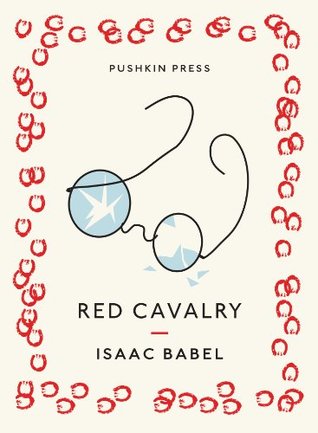
Red CavalryIsaac Babel, who was a journalist and propagandist for the Red Army in the 1920’s during the Russian war against Poland, used his diary as a source for the stories in this collection.  Babel’s narrator, like himself, is a Jewish intellectual who doesn’t quite fit in with the rest of the Cossack soldiers in the regiment to which he is assigned.  Also, his attempts at propaganda don’t quite benefit the Bolshevik cause, although they don’t really harm it either; it is surprising and sad that the Soviets had Babel killed after all.

Babel provides us with a vivid account of the scenes, horrors, sights, sounds and even the humor that comes from war.  One of my favorite stories is entitled “Pan Apolek.”  Apolek is a local artist who has been commissioned to paint the holy scenes in one of the churches that the narrator visits.  When Apolek decides to put the faces of local citizens on the most holy figures in the Bible, there is a religious uproar.  But the citizens themselves seem uplifted that their faces are captured in art in this most holy place.

The strongest parts of all of these stories are the many and varied scenes which Babel sets for us.  He describes not only churches, but towns and the everyday happenings of its citizens.  For example, as the narrator walks around a village waiting for the Sabbath he describes the various shops and shopkeepers he encounters.  Their stores seem to be closed but we are not sure if they are closed permanently because of the war.  He also describes the army on the march and the dead bodies they encounter as they make their way from one town to another.

The narrator describes cavalry leaders and infantrymen as well as some of the more unimportant or auxiliary positions.  He gives us the story of his wagon driver, for instance, and the story of a shepherd who contracted syphilis while sleeping with a prostitute bought by his own father.  There are so many different characters which the narrator encounters that it is impossible to sum them up neatly in one review.

This is not a typical story with a clearly delineated plot and developed characters.  It is a collection of meandering, stream of consciousness stories about one man’s reaction to the landscapes, sights, sounds and people he encounters during a war.   The story mimics the chaos of warfare and many of the narratives end abruptly, like the lives of the soldiers in the Red Cavalry.  Babel’s stories are an important piece of Russian history and literature which I am glad that Pushkin Press has decided to bring to our attention.

About The Author:
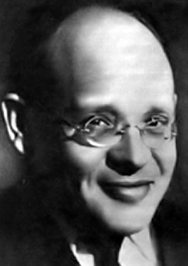
Isaac BabelIsaak Emmanuilovich Babel (Russian: Исаак Эммануилович Бабель; 1901 – 1940) was a Russian language journalist, playwright, literary translator, and short story writer. He is best known as the author of Red Cavalry, Story of My Dovecote, and Tales of Odessa, all of which are considered masterpieces of Russian literature. Babel has also been acclaimed as “the greatest prose writer of Russian Jewry.” Loyal to, but not uncritical of, the Communist Party of the Soviet Union, Isaak Babel fell victim to Joseph Stalin’s Great Purge due to his longterm affair with the wife of NKVD chief Nikolai Yezhov. Babel was arrested by the NKVD at Peredelkino on the night of May 15, 1939. After “confessing”, under torture, to being a Trotskyist terrorist and foreign spy, Babel was shot on January 27, 1940. The arrest and execution of Isaak Babel has been labeled a catastrophe for world literature.

4 Comments

Filed under Classics, Historical Fiction, Literature in Translation, Russian Literature

Review: White Hunger by Aki Ollikainen

I received an advanced review copy of this title from Peirene Press. White Hunger has been translated from the Finnish by Emily Jeremiah and Fleur Jeremiah

Peirene Press is an independent publisher based in England.  They specialize in translating and publishing the best European novellas. Please visit their site for more fantastic books in translation: Peirenepress.com.

My Review:
White HungerWhat is the color of hunger, poverty and death?  For the Finnish people living during the famine of 1867 it is white because of the prolonged winter and constant blizzards.  It is wretched enough that scores of people are dying from hunger, but when they set out from their homes begging for scraps of food the snow swallows them up before they can find any relief.

Marja and her family are victims of this horrible famine and when her husband becomes gravely ill she must leave him behind to set out in search of food.  Marja bundles up her young daughter and infant son and all three of them embark on a cold, tiresome and relentless journey.  The vivid language of this book made me shutter with sympathetic chills as time and again Marja and her family are denied succor and turned out into the cold.

Ollikainen explores the animalistic nature which extreme circumstances tend to bring out in human beings.  Marja and her young children are treated not just as beggars but something less than human.  They are abused and denied even the most basic needs like food and a warm place to sleep.  I was stunned by the lack of sympathy shown to Marja and her children all along their journey.

The story also depicts Teo and Lars, brothers who, because of their upper class status, fare a little better during the famine.  Teo is a doctor traveling the countryside to bury a friend who has been overcome by disease and hunger.  Teo is a morally ambivalent character in the book and when he encounters Marja we wonder whether or not he will make the humane choice to help her.

WHITE HUNGER is a beautiful yet haunting account of the effects of famine not just on one family but on the conscience of an entire population.  I am so thrilled to have discovered this gem from Peirene Press and I am eager to read more of their titles.

About The Author:
A OllikainenAki Ollikainen was born in 1973, has taken the Finnish literary scene by storm with his extraordinarily accomplished debut novel White Hunger, which has won the most prestigous literary prizes in Finland. A professional photographer and reporter for a local newspaper, the author lives in Kolari in northern Finland. His second novel will be published in spring 2015.


3 Comments

Filed under Literature in Translation, Novella

Review: This Life by Karel Schoeman

I received and advanced review copy of this title from Archipelago Books through NetGalley.  It has been translated from Afrikaans by Elise Silke.

My Review:

This LifeThe narrator of this story is an old woman who is lying on her death bed and trying to remember the story of her life which involves growing up in a remote part of South Africa on a farm.  Her life is sad, lonely and pathetic.  As a child she is neglected and forgotten by just about everyone in her family, including her mother.  She never marries and spends her entire life alone and living with family members who oftentimes forget that she even exists.

The narrative is very slow-moving but descriptive.  This old woman describes her parents, her siblings and the servants who all lived together in a crowded house on their farm.  Her mother had a volatile temper and never showed any true affection towards her.  Her father displayed more love for her but his life on the farm kept him very busy.  Her brothers, Pieter and Jakob, have a sibling rivalry that becomes deadly when they both fall in love with the same woman.

Many of the details in the book are vague because the old woman is trying to piece together her memories as her life is slipping away.  As a marginalized member of the family she is never told even the most basic details of their life so she can only put together bits and pieces of her past.  As further evidence of her isolated existence, the narrator’s name is only said a few times in the book and her name seems more like a nickname and not her given name.  No one takes notice of her, no one addresses her, no one acknowledges her place in the family.

Since she never marries, the narrator is dependent on her family for her entire life, being passed down from one generation to the next like some sort of family relic or heirloom.  When her parents die she lives with her nephew and his wife who seem to barely tolerate her presence in their home.  When she is left at home for long stretches of time she finally feels like she has found some independence and  no longer has to follow everyone else’s commands.  Every other female character in the book, from her mother to her sister-in-law, to her wife’s cousin are dependent on men and cater to the whims of their husbands.  But she is able to avoid marriage and attachment to a man for her entire life.  We are left with a sense of ambiguity as to whether or not her life is any better or worse than the other married women in the novel.

THIS LIFE is a sad tale about a woman who lives in the shadows and never finds her own identity.  One should not expect high drama with this novel; it is a disjointed reflection of a long life with much suffering and little joy.


About The Author:

K SchoemanSchoeman is one of a handful of Afrikaans authors who has achieved real greatness in his own lifetime. His prizes include the Hertzog prize for prose three times (1970, 1986, 1995), the CNA prize (1972), the Helgaard Steyn prize (1988), the W.A. Hofmeyr prize and the Old Mutual prize for literature/fiction (1984, 1991). His work investigates the existence of the Afrikaner in Africa, especially those that came from Europe.

After completing his schooling in Paarl, he went on to study a B.A. at the University of the Free State before going to a Catholic Seminary in Pretoria. In 1961 he joined the Franciscan Order in Ireland as a noviciate for priesthood, but then returned to Bloemfontein to continue studying Librarianship. Before returning to South Africa for good in 1983, he was a librarian in Amsterdam as well as a nurse in Glasgow. Back in South Africa he continued writing and working as a librarian in Cape Town. He currently lives in Trompsburg

4 Comments

Filed under Literary Fiction, Literature in Translation