
I received an advanced review copy of this title from Scribner via Netgalley.
My Review:
 This was the perfect book for me to take on my recent beach vacation to Maine. The story is set in England during a sweltering heat wave in the summer of 1976. This neighborhood in the English Midlands is so tight knit that when Mrs. Creasy goes missing, every one notices, even ten-year-old friends Tilly and Grace. Since Tilly and Grace are on summer vacation, they decide to use their time to look for clues around The Avenue in order to find out what happened to Mrs. Creasy. The first person they seek out for advice is the local pastor.
The pastor tries to reassure Tilly and Gracie who are worried about Mrs. Creasy. The girls don’t want anyone else in their neighborhood to disappear so they look to the pastor for comfort and he tells them that God is everywhere and will protect them. So in addition to finding Mrs. Creasy, the girls also set out to find where God is hiding himself on The Avenue. As they visit each house, we are given a glimpse into the quirky and oddball characters that inhabit The Avenue. Joanna Cannon has written a book that is chock full of likeable and sympathetic characters in whose lives we become emotionally invested.
Some might be hesitant to read a story from a child’s perspective, but the characters of Grace and Tilly are charming and funny. The girls have some of the most droll and amusing lines in the book. It is Grace who aptly describes the oppressive heat of the summer: “We had to share bathwater and half-fill the kettle, and we were only allowed to flush the toilet after what Mrs. Morton described as a special occasion. The only problem was, it meant that everyone knew when you’d had a special occasion, which was a bit awkward.”
As the girls visit their neighbors on The Avenue we are introduced to an engaging cast of characters. Mr. Creasy is plagued with an obsessive-compulsive disorder and is consumed with counting things. His wife, Mrs. Creasy, was the only person who could keep his anxiety at bay and now that she is gone his neurosis is back in full force. Mrs. Forbes is a nervous wreck most of the time as well and her tendency to forget things forces her to constantly make to-do lists. Mr. Lamb is a widower whose pride and joy is his lush garden. These are just a few of the interesting characters that we meet on The Avenue.
As much as I enjoyed the characters and the clever writing style of the book, the author’s greatest strength is her ability to create meaningful and compelling relationships between the characters. Grace and Tilly are best friends and it is touching how Grace is worried for Tilly because of her fragile health. Grace and Tilly have a touching relationship with Mrs. Morton, a widow who lives alone on The Avenue. Mrs. Morton takes care of the girls while their parents are having a rest and they feel just as comfortable in her home as in their own. Grace tells us, “My mother spent most of 1974 having a little lie-down, and so I was minded by Mrs. Morton quite a lot.” And Mrs. Creasy, who has a gift for listening and compassion, has a special relationship with many of her neighbors on The Avenue. We understand throughout the course of the book why everyone is so eager to have this kind woman back in their lives.
The title cleverly points out an important lesson that Tilly, Grace and the rest of The Avenue learn through the mystery of Mrs. Creasy’s disappearance. All of the neighbors are whispering about some secret that they have been keeping for quite a few years. They suspect that Mrs. Creasy must have discovered this secret and fled The Avenue. The guilt and the shame of whatever it is that they have done starts to weigh on the neighbors and they start to point fingers at one another. Tilly and Gracie attend church one Sunday and are fascinated when the pastor reads Matthew 25:31-46:
31 “When the Son of Man comes in his glory, and all the angels with him, he will sit on his glorious throne. 32 All the nations will be gathered before him, and he will separate the people one from another as a shepherd separates the sheep from the goats. 33 He will put the sheep on his right and the goats on his left.
What Grace and Tilly, and really the rest of The Avenue can’t figure out, is how do we tell who is a sheep and who is a goat? The entire Avenue has decided that their eccentric neighbor Walter Bishop is a goat and as a result they been excluded him from their community. When I was reading the sections about Walter and his mistreatment at the hands of his neighbors I kept thinking of the famous character of Boo Ridley in To Kill a Mockingbird. Walter Bishop lives alone, is very shy and quiet and has some interesting hobbies like photography. But The Avenue sees him as a threat to their peaceful cul-de-sac and blame him when anything goes wrong. But Gracie and Tilly are on a mission and they even visit Walter on their quest to find God and Mrs. Creasy. These little girls give their neighbor the respect and kindness that no one else will show him and in the process they also learn that it is not always easy to separate the goats from the sheep.
This story was funny, charming and engaging. I was surprised to find out that this is Joanna Cannon’s first novel because she has the talent of a mature and experienced author. This has been one of my favorite reads so far this summer.
For more information about Joanna Cannon visit her website: https://joannacannon.com/
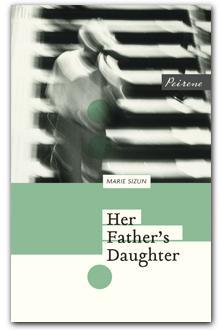 France is a four and a half year old little girl, growing up in war time France with her mother. Her father left to fight in World War II when she was an infant, so she only knows him through photographs. In fact, the very concept of a father is alien to her because there are no other examples of fathers to which she is exposed. I was immediately captivated by this short book and drawn into this small child’s recollections about the war and its lasting effects on her family.
 Marie Sizun is a prize-winning French author. She was born in 1940 and has taught literature in Paris, Germany and Belgium. She now lives in Paris. She has published seven novels and a memoir. Marie Sizun wrote her first novel, Her Father’s Daughter, at the age of 65. The book was long-listed for the Prix Femina
 Harry Kvist is an former boxer who lives in the decrepit, dirty and seedy city of Stockholm in the 1930’s. The city is full of tramps, prostitutes, and bootleggers as well as poor and destitute citizens who have been affected by the economic collapse of this decade. Kvist himself leads a hard life by serving as a collector of debts to those who have defaulted on payments. His specialty is repossessing bicycles which is easy money for him. When the novel begins Kvist is collecting on a debt from a man named Zetterberg who owes a few thousand kronor. Kvist scares Zetterberg by giving him a good beating that is not enough to kill him, but enough to leave him with a few scars as a “reminder” to pay the money he owes. When Zetterberg is found dead the next day, Kvist is the prime suspect and he is immediately picked up by the police.
 Martin Holmén is a Swedish writer based in Stockholm. He was orn in 1974. He teaches History, Swedish and History of Culture and Ideas at an upper secondary school in Stockholm two days a week. He is the author of the Harry Kvist trilogy.
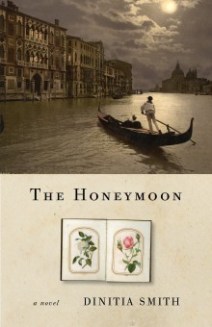 The most upsetting aspect of this fictional biography of George Eliot was the message forced upon her by her family that she was not a beautiful person and never would be. From the time she was a five-year-old girl she was told that she was physically ugly and that no man would ever marry her. Her mother favors her other two children over her; her father dotes on her but it seems that he pays her extra attention out of a sense of pity for his ugly child. It was difficult and sad to read that from an early age the emphasis on her physical appearance greatly affected every aspect of her life. Her father provided her with the best education because no man would marry her and she would have to be able to support herself.
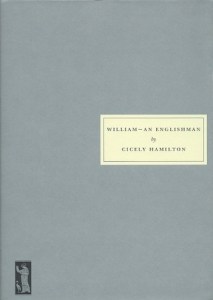 I was not surprised to find out the author composed this novel in a tent on the front lines of World War I. The novel is a gruesome, starkly honest portrayal of the horrors of war. The author, however, draws the readers in at first with a light and satirical description of its gentle, naïve and optimistic main characters, William and Griselda.



 The Book Binder's Daughter