
I received a review copy of this title from Two Lines Press. This book is also being published in the U.K. by And Other Stories. The book was written and published in the original French in 2013 and this English version has been translated by Jennifer Higgins and Sophie Lewis.
My Review:
 Trysting is one of those rare books that defy description it in any sort of a review. At its core, Pagano’s book presents us with a series of writings in various lengths that deal with the human experience of love. Her musings in this book range from short, one line epigrams to longer two page narratives that read like flash fiction. Pagano attempts to capture all of the stages that being in love and having a lover encompass—meeting someone special for the first time, spending time together, learning the habits of another person, breaking up, getting over a lover. She intersperses within these events things that lovers leave behind like feathers, rubber bands, a bicycle. Some of the vignettes are shocking, some are tender and sweet. But at their core, they all try to delineate the mysterious and illusive sensation of love. Senses—touch, site, smell, sound, taste are all described within the context of love.
The shorter pieces, which are only a line or two, read like epigrams and feel as though Pagano is trying to capture a moment in time between lovers. They read like a caption on a photograph:
“He sprays a mist of water onto his newspaper to stop the pages rustling as he reads next to me while I sleep.”
“His breathing, even during the day, even when he’s busy doing something, is like that of a person asleep. Regular and calm. I like this peace.”
“No one sees what I see when I look at her.”
“He has a serene way of being in silent moments. I was never afraid of having nothing to say to him.”
The longer pieces, which range from two to three pages in length, read like flash fiction stories and provide a frame for which the reader can fill in the rest of the picture. In one story, for instance, a couple moves from apartment to apartment, like vagabonds constantly on the move living in different places. The couple pretends to be interested in renting an apartment and gets the key from the estate agent and spends as much time as they can get away with at each rental: “The estate agents never notice a thing, nor do the landlords. We make love in their apartments, we sleep in them, we live our shared life in them and it’s as good a life as any. We change location, move to a different town, everyday.”
In another story, a musician who plays the saxophone is always annoying his upstairs neighbor even though he uses a mute for his instrument. She leaves him terse little notes and knocks on his door whenever he is practicing. The only noise he ever hears from her apartment is the dull sound of her squeaking bed when her boyfriend stays over: “They always screw to the same rhythm, and as far as I’m concerned, it’s definitely screwing, not making love, because it’s always the same dogged, dreary, binary rhythm.” The musician wants to invite the woman to his apartment and get to know her and introduce her to a whole new world of rhythm: “I’ll tell her to let herself go, be carried by my breath, by my sax, my mouth, my lips, my melody.”
One final aspect I want to mention that is integral to the writings in this collection is their sensual nature. Pagano manages to represent all the senses and put them in the context of lovers:
Touch: “It was very cold. I hadn’t put gloves on. I defrosted my fingers between my thighs before letting them touch her.”
Sound: “I met him when I called a wrong number. His voice was so lovely, saying I must have made a mistake, that I couldn’t bring myself to hang up.”
Smell: “I used to sniff her all the time. Odours are always stronger when they’re damp. Perfumers dampen thin strips of paper to sample their scents. Dampening an area, an object, or a body helps us to smell it and get to know it fully. I moistened her all over with saliva to get to know her off by heart.”
Hearing: “The things I miss most are the sounds, the sounds of our love, the noises of lovemaking and sleeping together, the noises of waking up.”
Sight: “We are getting old. I like the signs of ageing on him, the wrinkles and folds, the emergence of moles and liver spots. I wonder if these marks appear all of a sudden or little by little. I look out for signs of these blossomings. Tine is pollinating his skin with flowers, with speckles with stars.”
This book is a truly unique literary experience that can be read like a collection of poetry, slowly, a little bit at a time when one has quiet and the mood strikes.
About the Author:
 Emmanuelle Pagano has published over a dozen works of fiction, which have been translated into German, Hungarian, Italian and Spanish. She has won the EU Prize for Literature among other prizes and lives in the Ardèche region with her family.
 This book contains a series of short stories told by a group of men sitting around at café in Morocco. It appears that they have been friends for quite some time as there is a lot of teasing, interrupting, and jocularity mixed in with their stories. Their tales range from the funny to the rather serious and I found that the theme of being an outsider in a foreign land pervades the entire collection.
 Fouad Laroui (born 1958) is a Moroccan economist and writer, born in Oujda, Morocco. Over the past twenty years, Laroui has been consistently building an oeuvre centered around universally contemporary themes: identity in a globalized world, dialogue/confrontation between cultures, the individual vs. the group, etc. With ten novels and five collections of short stories written in French, plus two collections of poems written in Dutch, a play, many essays and scientific papers (written in French or English), his on-going ambitious literary output has been recognized with many awards, including: Prix Albert Camus, Prix Mediterranée, Prix Goncourt de la Nouvelle, Grande médaille de la Francophonie de l’Académie française, Prix du meilleur roman francophone, Premio Francesco Alziator (Italy), Samuel-Pallache-Prijs (The Netherlands), E. du Perron Prijs (The Netherlands)
 France is a four and a half year old little girl, growing up in war time France with her mother. Her father left to fight in World War II when she was an infant, so she only knows him through photographs. In fact, the very concept of a father is alien to her because there are no other examples of fathers to which she is exposed. I was immediately captivated by this short book and drawn into this small child’s recollections about the war and its lasting effects on her family.
 Marie Sizun is a prize-winning French author. She was born in 1940 and has taught literature in Paris, Germany and Belgium. She now lives in Paris. She has published seven novels and a memoir. Marie Sizun wrote her first novel, Her Father’s Daughter, at the age of 65. The book was long-listed for the Prix Femina
 As I first read the introduction to this volume, the piece of information that stuck out to me immediately was that Char was influenced by Heraclitus, the pre-Socratic philosopher. Char imitates Heraclitus’ style of short and puzzling works as well as his theme of strife. The pre-Socratic course I took in graduate school was one of the most challenging yet rewarding courses in my career as a student. The Ancient Greek, which is fragmentary, is difficult to put together and even more difficult to analyze when one has come up with an English version. Heraclitus acquired the nickname “The Obscure” for good reason. I had the same feelings, both of obscurity and difficulty, as I was reading Char.
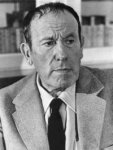 He spent his childhood in Névons, the substantial family home completed at his birth, then studied as a boarder at the school of Avignon and subsequently, in 1925, a student at L’École de Commerce de Marseille, where he read Plutarch, François Villon, Racine, the German Romantics, Alfred de Vigny, Gérard de Nerval and Charles Baudelaire.
 This collection of poems begins with a series of short pieces that have some common themes, the most striking of which is a reflection on memory. The poems appear to the reader as snippets of the poet’s memory as he is trying to reflect on pieces of his life that have passed. Sometimes the images are very clear and precise. For example, the end of one poem reads:



 The Book Binder's Daughter