Tag Archives: French Literature

Review: The Man in a Hurry by Paul Morand

I received an advanced review copy of this title from Pushkin Press through Edelweiss.  This book was originally written and published in French in 1941 and this English translation has been done by Euan Cameron.

My Review:
The Man In A HurryPierre has been in a hurry for all of his life.  He does multiple tasks at a time in order to speed up his life.  He shaves, gets dressed and brushes his teeth simultaneously; he drives too fast and he takes stairs three and four at a time.  There is no task for which Pierre will slow down.  The parts of the book that describe his lightening fast lifestyle are humorous.  For example, there is an incident in which his car breaks down after an accident and instead of waiting for help, Pierre abandons the car with his friend in it and proceeds to his destination on foot.

But Pierre’s fast life has not allowed him to slow down and forge any true or lasting relationships.  His closest friend and partner, the one whom he abandons with his care, decides he has had enough and severs their business relationship.  His manservant who has worked for Pierre for many years is tired of being yelled at and almost run over by Pierre so he quits.  Pierre is essentially alone in his life until he meets Hedwige.

Hedwige, her two sisters and her mother are the opposite of Pierre.  Their favorite activity is lounging around on their mother’s bed; they are never in a hurry for anyone or anything.  When they meet Pierre they are amused by this quirky man and his swiftness.  Pierre is immediately attracted to Hedwige and proposes marriage.  But can the love of a good woman really slow Pierre down and make him appreciate his life?

When Hedwige marries Pierre, the most beautiful gift that he decides he can give her is to delay the conjugal relations on their wedding night.  Pierre arranges for separate bedrooms in their apartment and decides to wait six weeks to get to know Hedwige before he has sex with her.  What better gift can he possibly give her than his patience, especially when it comes to putting off one of the most basic human drives.

When Hedwige becomes pregnant, the old pull of always being in a hurry starts to draw Pierre back in.  How can he possibly wait for nine months to see his child?  Hedwige begins to find comfort again in her mother’s bedroom with her other sisters and she slowly shuts Pierre out.  The matter comes to an ugly head when Pierre wants Hedwige to induce labor when she is only seven months pregnant.

This book has a humorous side as we read all of the ridiculous things Pierre does to hurry up.  But there is also an important social commentary about appreciating what we have and living in the moment.  If we are always in a hurry and worrying about what is happening next then we don’t appreciate those who are most important to us.

About The Author:
Paul MorandPaul Morand was a French diplomat, novelist, playwright and poet, considered an early Modernist.

He was a graduate of the Paris Institute of Political Studies (better known as Sciences Po). During the pre-war period, he wrote many short books which are noted for their elegance of style, erudition, narrative concision, and for the author’s observation of the countries he visited combined with his middle-class views.

Morand’s reputation has been marred by his stance during the Second World War, when he collaborated with the Vichy regime and was a vocal anti-Semite. When the Second World War ended, Morand served as an ambassador in Bern, but his position was revoked and he lived in exile in Switzerland.

Post-war, he was a patron of the Hussards literary movement, which opposed Existentialism. Morand went on to become a member of the Académie française; his candidature was initially rejected by Charles de Gaulle, the only instance of a President ever exercising his right to veto electees to the academy. Morand was finally elected ten years later, though he still had to forgo the official investiture).

Paul Morand was a friend of Marcel Proust and has left valuable observations about him.

11 Comments

Filed under Classics, France, Literature in Translation, Literature/Fiction

Review: Henri Duchemin and His Shadows by Emmauel Bove

I received an advanced review copy of this collection of short stories from The New York Review of Books.  The stories were written in 1928 in French and this English version has been translated into English by Alyson Waters

My Review:
Henri DucheminThis collection of short stories all feature men who are unhappy and looking for someone or something with which to identify.  In the first story entitled “Night Crime,”  Henri Duchemin, a forty-year-old man,  is alone on Christmas Eve in a pub lamenting over his poverty and loneliness and the last thing he wants to do is to go back to his cold, empty flat.  He wanders around the streets in the rain until he really has no choice but to go home.  But before he goes home, a woman whome he meets on the streets notices his sadness and abrasively suggests that he kill himself.  As he drifts off to sleep, thoughts of suicide and murder haunt his restless dreams.

My favorite story in the collection is written in the epistolary style.  “What I saw” is a letter written by Jean to an unnamed friend; Jean desperately wants his friend’s opinion about something that he saw involving his girlfriend that disturbed him greatly.  Jean’s letter begins with a description of his girlfriend, Henrietta, and her devotion to Jean.  One thinks she is the model woman until, one day, Jean sees her sitting in a taxi and kissing another man.

When Jean confronts Henrietta about the liaison, Henrietta adamantly denies ever being with another man.  Henrietta and Jean’s other friends try to convince Jean that he must have been mistaken and only saw someone who resembled Henrietta.  Jean wants so much to continue his relationship with Henrietta and as he finishes his tale he begs the recipient of the letter to tell Jean his true opinion about Henrietta’s alleged indiscretion.  Jean, like the other characters in the story, has a tenuous grasp on an important relationship in his life and he is eager and even desperate not to lose it.

Another story worth mentioning is “The Story of a Madman.”  Fernand, the narrator, makes it a point at the beginning of his tale to address the reader and inform him or her that he is not, in fact, crazy or out of his mind.  He goes on for a few pages giving us some background about his activities and frame of  mind so that when he carries out his plan, the reader will think he is perfectly sane in doing so.

Fernand then proceeds to have a meeting with his father and tells his parent that he never wants to see him again.  Fernand then makes his way to his girlfriend, Monique’s apartment;  He assures us that he is deeply in love with Monique and they have a fantastic relationship, but he informs her that he never wants to see her again either.  The next stop on Fernand’s list is his best friend, with whom he also breaks off all contact.

Fernand’s final stop on his break-up tour is with his sister and brother-in-law.  After a friendly conversation, he also informs them that he never wants to see them again.  So, we are left wondering why Fernand would alienate all of the people in his life that he loves.  There are hints throughout the story that Fernand is exercising his willpower and that he is attempting to make a plan and adhere to it no matter what others may think.  But the last few sentences of the story leave us with a haunting suggestion that maybe his motives for leaving are a bit more depressing and sinister.

This is a small yet powerful collection of stories that will leave you thinking about these men and their feelings of alienation and unhappiness.  Bove’s language is sometimes curt and sometimes poetic.  He weaves these small tales in such a way that we are never sure where they will end.  I highly recommend this brilliant collection of writing brought to us by The New York Review of Books classics collection.
About The Author:
E BoveEmmanuel Bove, born in Paris as Emmanuel Bobovnikoff, died in his native city on Friday 13 July 1945, the night on which all of France prepared for the large-scale celebration of the first ‘quatorze juillet’ since World War II. He would probably have taken no part in the festivities. Bove was known as a man of few words, a shy and discreet observer. His novels and novellas were populated by awkward figures, ‘losers’ who were always penniless. In their banal environments, they were resigned to their hopeless fate. Bove’s airy style and the humorous observations made sure that his distressing tales were modernist besides being depressing: not the style, but the themes matched the post-war atmosphere precisely.

9 Comments

Filed under France, Literature in Translation, New York Review of Books, Short Stories

Review: Two Novellas from Flaubert and Dostoevsky

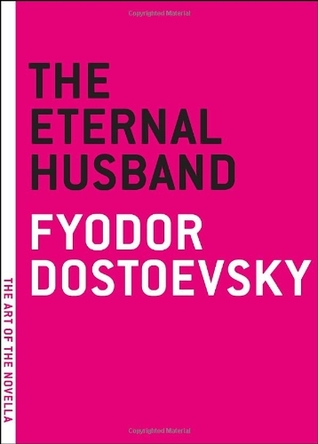
I recently stumbled across a sale that Melville House Publishers was having on their novella series.  They have released 56 novellas from famous authors across the world.  I chose two titles, A Simple Heart by Gustave Flaubert and The Eternal Husband by Fodor Dostoevsky to review here.  Please check out all of the great titles in their selection.  You can even buy a subscription to the novella series and have novellas show up on your doorstep every month: http://www.mhpbooks.com/series/the-art-of-the-novella/

A Simple Heart by Gustave Flaubert:
A simple heartThis novella introduces us to a simple servant woman who is cast out of her own home as an orphan at an early age and searches for intimacy and love for the rest of her life.  Felicite falls in love with a young man who ends up rejecting her so that he can marry a rich, old widow and avoid conscription.  After this disappointing heartache, Felicite never finds another man that she can trust her heart to.  When she comes into the service of Madame Aubain, a young widow with two small children, she is the most faithful and loyal servant anyone could ask for.  Felicite bestows love on the two children who eventually leave home for school and meet a sorrowful end due to illness.  Felicite is also given a parrot which she lavishes with love and attention.  But, like everyone else in her life that she has loved, he dies and leaves her.  This is not a tale with a happy ending but gives us a realistic view of life, love and loss.


The Eternal Husband by Fodor Dostoevsky:
The eternal husbandThe story opens with Velchaninov living in St. Petersburg in an apartment flat by himself trying to iron out the details of a lawsuit.  He has become increasingly depressed and melancholy and has eventually cut himself off from all of his friends and acquaintances.  One day an old friend, whom he has not seen for nine years, shows up on Velchaninov’s doorstep.  He is stunned to see his friend after so many years and further shocked when Trusotsky announces that his wife has died of consumption.  Velchaninov had an affair with Trusotsky’s wife and that is the main reason he hadn’t visited the couple for nine years.  When Trusotsky’s wife broke the affair off, Velchaninov vowed never to see either of the again.

Velchaninov describes Trusotsky as “an eternal husband,” which to him means a man that is subservient to a domineering wife.  Nowadays we might call Trusotsky “henpecked” or “whipped.”  Trusotsky descends into a depression that is fueled by excessive drinking; he turns out to be a man who cannot live without a wife, who cannot operate in the world without the confines of a marriage.  In typical Dostoevsky fashion, we get a glimpse into the male psyche and an interesting and ironic storyline.  I thoroughly enjoyed this story as much as his longer works.

According to the Melville House website, novellas are oftentimes ignored by academics and publishers.  I would love to hear about other readers’ favorite choices as far as this overlooked style of writing.  Do you like novellas and, if so, what are some of your favorites?


18 Comments

Filed under Classics, France, Literature in Translation, Novella, Russian Literature

Review: Rendezvous in Venice by Philippe Beaussant

I received an advanced review copy of this title from Pushkin Press through NetGalley.  This title was originally written and published in French and the translators of this English version are Paul Buck and Catherine Petit.

My Review:
Rendezvous in VenicePierre has been an assistant to his uncle for fifteen years, learning about art and the world’s famous masterpieces.  His uncle Charles is very meticulous about his work as an art history professor as he catalogues and studies the portraits of famous artists from all over Europe.  Pierre is Charles’ only surviving relative and, as far as Pierre is concerned, Charles never had much of a personal life or any significant romantic relationships.  Pierre’s knowledge about the life of his uncle all changes when his uncle dies and Pierre finds a very personal diary among his uncle’s private papers.  This diary includes the intimate details of Charles’ affair when he was a middle-aged man with a woman named Judith; one of the highlights of their relationship is a trip to Venice where they have intricate discussions about Italian art.

The elegant writing of the book really drew me in and I read over half of it in the first sitting.  The first part of the book alternates between Charles’ diary and Pierre’s thoughts about his uncle’s secret love affair.  Beaupassant makes us contemplate how well we really know those who are supposed to be closest to us.  Pierre worked side by side with his uncle for years and never knew about such an important aspect of his life.  Pierre wonders how long they were together for and why his uncle never mentioned what must have been a heartbreaking love affair. While Pierre is still contemplating his uncle’s secret, he meets Judith at an art history conference.

It is clear from Pierre’s memories of his uncle and from Charles’ own diary that Charles chose to reject love and lead a solitary life and dedicate himself to his work.  Pierre seems to be moving in the same direction of loneliness until he meets Judith and her daughter, Sarah.  Will Pierre, unlike his uncle, choose love and contentment and happiness or will he continue on as a bachelor for the rest of his life?

I must mention that there are several detailed discussions about painting, and portraiture in particular, that gave me a better appreciation for some famous masterpieces; I enjoyed their descriptions so much that I actually looked up the ones that are mentioned in the book (I won’t mention them here to keep potential readers in suspense). Discussions of art, a venetian setting, and a hidden love affair all combine to make this a lovely French novella that I thoroughly enjoyed and highly recommend.

About The Author:
Philippe Beaussant is a prominent and award-winning French musicologist and writer. Born in 1930, he is a founder of the Centre for Baroque Music at Versailles and a Member of the Académie Française. Beaussant has written numerous books on the history of Baroque art and music, as well as several novels. He has won many awards, including the Grand prix du roman de l’Académie française for his novel Heloise.

6 Comments

Filed under France, Literature in Translation, Novella