Tag Archives: Classics

Review: The Diary of a Provincial Lady by E.M. Delafield

My Review:
Diary_of_a_Prov_Lady_for_website_1This is another great classic brought to us by the small British publisher, Persephone Books.  The book is a detailed daily journal of a woman who is trying to the best wife, mother, neighbor and friend as possible.  She has two young children, Robin and Vicky, whom despite her best efforts to the contrary she tends to spoil. One of the funniest scenes in the book is that in which Robin talks her into playing the piano, the gramophone, a music box and letting the clock chime all at once; in the midst of this walks an uninvited guest, the aloof and snobby Lady B.  The trials placed on our provincial lady will resonate with all mothers struggling on a daily basis to raise kind and polite children.

There are a plethora of interesting characters that the lady tells us about.  Lady B., her aristocratic and aloof friend is always dropping in on the lady at the most inopportune times and giving the lady ridiculous and useless advice.  Lady B. does not have the same financial restraints or familial duties as the author of the diary, so humorous quips about Lady B. are sprinkled throughout the diary.  The Vicar’s wife is also a frequent visitor; she is one of those people who claims that they are only stopping by for a minute but are still hanging around three hours later.

The lady’s diary also tells the reader of her monosyllabic, disinterested and rather ill-natured husband, Robert.  Robert has very little to do with the children, expect to complain when they are too loud or too messy.  His favorite pastime is to fall asleep while reading the paper.  This edition of the book contains drawings of different characters in the book and there is a great illustration of Robert asleep in his favorite chair.

The diary has several recurring themes which the lady must constantly struggle against: unruly servants, insufficient money, negative remarks about her personal appearance and constant pressure to keep up with the latest trends.  The lady deals with all of these things with remarkable calm and manages to keep any rude or deprecating comments to her diary.

I highly recommend THE DIARY OF A PROVINCIAL LADY as another humorous and entertaining read from Persephone Books.

About The Author:
Edmée Elizabeth Monica Dashwood, née de la Pasture (9 June 1890 – 2 December 1943), commonly known as E. M. Delafield,was a prolific English author who is best-known for her largely autobiographical Diary of a Provincial Lady, which took the form of a journal of the life of an upper-middle class Englishwoman living mostly in a Devon village of the 1930s, and its sequels in which the Provincial Lady buys a flat in London and travels to America. Other sequels of note are her experiences looking for war-work during the Phoney War in 1939, and her experiences as a tourist in the Soviet Union.
 

7 Comments

Filed under British Literature, Classics, Humor, Persephone Books

Review: The Celestial Omnibus and Other Tales by E.M. Forster

I received an advanced review copy of this title from Dover Publications through NetGalley.

My Review:
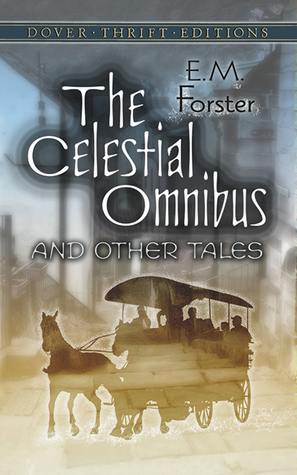
Celestial OmnibusThis brief collection of stories show the true depth of Forster’s literary talent and his ability to infuse fantasy and imagination into his writing.  My favorite stories were two in the collection into which Forster incorporates many classical references.

In the “Celestial Omnibus”, a boy discovers a sign for an omnibus in the lane across from his house.  The alley is a very odd place for an omnibus to pass through so the boy gets up very early one morning to investigate it.  When the sun rises a carriage does appear out of the fog and the driver picks the boy up.  The boy goes on a journey of a lifetime through the clouds and he meets nymphs and great writers and heroes from famous books.  The omnibus driver is Sir Thomas Browne, the famous essayist, but the boy doesn’t recognize or understand any of the famous people he meets; he just knows that he has had a wonderful time and has seen amazing things.  The story is full of literary allusions and classical references but I won’t give any of them away here so as not to spoil them for other readers.

When the boy comes home after having disappeared all day, his father canes him for telling lies about his supposed journey to heaven.  The boy’s neighbor, Mr. Bons, which happens to cleverly be “snob” spelled backwards, decides he will bring the boy back to the allow and show him that no such omnibus could possibly exist.  But when the omnibus shows up in the alley and picks up Mr. Bons and the boy, Mr. Bons does not have the same magical experience on his journey as the boy; for Mr. Bons’ imagination is not as carefree and vast as the boy and he does not witness the same remarkable landscape as the boy does.  It is no wonder in the end that Mr. Bons meets a horrible fate.

My other favorite in the collection is a story entitled “Other Kingdom.” In this story, an upper class aristocrat named Mr. Worters has taken a fiancé from Ireland, Evelyn Beaumont, who is much below his social status.  In order to better educate his new fiancé, Mr. Worters hires a classics teacher, Mr. Inskip, to teach her Latin.  It is evident from the beginning that Miss Beaumont does not have the intellectual capacity to learn ancient languages, but she does have a whimsical imagination and a carefree spirit.

Mr. Worters decides to buy his fiancé a wood, named Old Kingdom, for a wedding present.  When Worters decides that the wood needs fences and paths and bridges, Miss Beaumont gets very upset that he is trying to organize and tame the natural wood.  Through several allusions, the reader, or at least this reader, is quickly reminded of Ovid’s story of Daphne and Apollo in the Metamorphoses in which Apollo attempts to capture and tame Daphne the wood nymph.  Similar to Apollo, Worters learns the harsh lesson that he cannot tame nature or the spirit of this woman.  Miss Beaumont has a metamorphosis of her own but it is not the type that Worters had hoped for.

This is a collection of stories that I will reach for and reread over and over again and every time I read them I will discover something new and different.  I highly recommend THE CELESTICAL OMNIBUS AND OTHER TALES from Dover Publications.

About The Author:
ForsterEdward Morgan Forster, generally published as E.M. Forster, was an novelist, essayist, and short story writer. He is known best for his ironic and well-plotted novels examining class difference and hypocrisy in early 20th-century British society. His humanistic impulse toward understanding and sympathy may be aptly summed up in the epigraph to his 1910 novel Howards End: “Only connect”.

He had five novels published in his lifetime, achieving his greatest success with A Passage to India (1924) which takes as its subject the relationship between East and West, seen through the lens of India in the later days of the British Raj.

Forster’s views as a secular humanist are at the heart of his work, which often depicts the pursuit of personal connections in spite of the restrictions of contemporary society. He is noted for his use of symbolism as a technique in his novels, and he has been criticised for his attachment to mysticism. His other works include Where Angels Fear to Tread (1905), The Longest Journey (1907), A Room with a View (1908) and Maurice (1971), his posthumously published novel which tells of the coming of age of an explicitly gay male character.

4 Comments

Filed under British Literature, Classics, Short Stories

Review: The Happy Tree by Rosalind Murray

My new favorite literary obsession is the wonderful novels from Persephone Books.  Please visit their website to learn more about this small press and the fabulous books they publish: http://www.persephonebooks.co.uk

My Review:
The Happy TreeFirst, I would like to mention that each Persephone book comes with beautiful endpapers and a matching bookmark.  Each endpaper and bookmark pattern that are chosen have a history of their own.  The picture here is the endpaper from The Happy Tree and is a replica of a 1926 printed woolen plush by TF Firth & Sons.

This novel shows us the devastating effects that World War I has on ordinary people who are trying to carry on in their daily lives while chaos and death have broken out around them.  The story is told from the point of view of Helen Woodruffe, who spends her childhood with her Cousin Delia and her two sons, Guy and Hugo.  Helen’s own father has died and Helen’s mother wants nothing to do with raising a child.  So Helen’s paternal relations step in and raise her.  She spends many happy days running around the family estate at Yearsly with Guy and Hugo.  Helen is particularly close to Hugo who is about her same age; they seem to have a special understanding of one another’s sensitive personalities and they share the same interests.

As Helen and Hugo develop into teenagers, it is evident that there is a strong attraction between them.  Everyone who is close to them assumes that they will eventually marry.  But when Hugo takes interest in another girl, Helen agrees to marry a man named Walter because she thinks Hugo is lost to her forever.  Walter is a good husband and loves Helen and it is sad that she comes to the conclusion that she has married the wrong person.  Helen has three children with Walter and she does seem happy for most of her married life with Walter.

The most interesting part of the book is reading about people’s reaction to the war; Helen and her family are at a dinner party when Franz Ferdinand is assassinated and no one believes that there will be a war and any fighting that does break out they believe it will be minor.  When Great Britain is pulled into the war and all of Helen’s young friends, including Guy and Hugo, join the fighting no one believes that the war will last for very long.  As the war drags on, Helen gets notice of one friend after another who has been wounded or killed in the fighting.  In the meantime, she has to deal with food rations, long lines and fuel shortages.  This begins to wear her down and she becomes very depressed, especially when her second child is born.

One of my favorite quotes from the book is one in which Helen describes the struggle of everyday existence during the war years:

This was not life, this daily drudgery, this struggle to keep going, to get through, to exist. I was marking time, we were all marking time, waiting and waiting for the strain to relax, for the war to end; and meantime our youth was going.

THE HAPPY TREE is a realistic view of World War I as see through the eyes of Helen and the everyday British citizens whose lives were worn down by this horrible conflict.  Persephone Books has given us another great classic that should go on the “must read” list for all those interested in World War I historical fiction.

About The Author:
rosalind-murray-copy_1Rosalind Murray (1890-1967) was the daughter of the well-known classical scholar Gilbert Murray and Lady Mary Howard. Brought up in Glasgow and Oxford, she was educated by governesses and at the progressive Priors Field School. She published her first novel, The Leading Note, in 1910 when she was 20, her second, Moonseed, in 1911 and her third, Unstable Ways, in 1914; this was the year after her marriage to the historian Arnold Toynbee, with whom she had three sons between 1914 and 1922. The Happy Tree came out in 1926; it was followed by another novel, Hard Liberty, and by a children’s history book.  During the 1930s Rosalind Murray’s interests turned to theology; although brought up agnostic, she was received into the Roman Catholic Church in 1933, and published several books about faith and religion. She parted from her husband in 1942 and spent the rest of her life farming in Cumberland.


3 Comments

Filed under British Literature, Classics, Historical Fiction, Persephone Books, World War I

Review: The Making of a Marchioness Parts l and ll by Frances Hodgson Burnett

My Review:
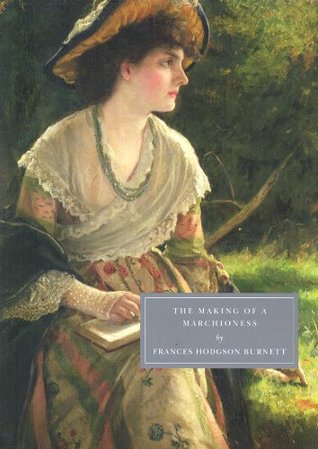
MarchionessThis is a simple yet sweet story of one woman who is saved from her dreary life by a British Lord.  Emily Fox-Seton was brought up in an aristocrat family in late 19th century England, but when both of her parents die and she is left penniless she is forced to make her own way in the world.  But Emily never, even for a minute, laments her fortune, or lack thereof, in life.  She rents a room from two kind ladies in a boarding house and she makes her living by running errands and doing odd jobs for British aristocrats.  It is an invitation from one such aristocrat, Lady Maria Bayne, that changes the course of her entire life.

At Lady Maria Bayne’s country estate, to which she is invited for a summer vacation, Emily is put to work by this selfish upper class woman.  Among Lady Maria’s guests are a plethora of silly young ladies who are each in need of a rich husband.  The most eligible bachelor present is Lord Walderhurst, a widower in his fifties whose aloof attitude leads us to believe that the last thing he wants or needs is a wife.  But the ingenuous nature of Emily catches his eye and he sweeps her off of her feet by asking her to be Lady Walderhurst.

The second part of the story deals with Emily’s adoration of her new husband and Lord Walderhurst’s growing appreciation and affection for his wife.  The marriage really seems to work for both of them and it is disappointing when Lord Walderhurst takes his leave of her for and extended business trip to India.  This part of the story is a bit ridiculous and melodramatic as the Lord’s heir, Alec Osbourn, tries to kill Emily and make it look like an accident.  Alec is a lazy drunk who, up until Lord Walderhurst’s marriage, assumes he will take over the Walderhurst title and money very soon.  He sees Emily as the only obstacle in his way of gaining an easy fortune.  Emily deals with the Osbourns in the same calm, stoic and intelligent way that she has handled all obstacles in her life.

THE MAKING OF A MARCIONESS is another delightful read from Persephone Books that I highly recommend.


About The Author:
F Hodgson BurnettFrances Eliza Hodgson was the daughter of ironmonger Edwin Hodgson, who died three years after her birth, and his wife Eliza Boond. She was educated at The Select Seminary for Young Ladies and Gentleman until the age of fifteen, at which point the family ironmongery, then being run by her mother, failed, and the family emigrated to Knoxville, Tennessee. Here Hodgson began to write, in order to supplement the family income, assuming full responsibility for the family upon the death of her mother, in 1870. In 1872 she married Dr. Swan Burnett, with whom she had two sons, Lionel and Vivian. The marriage was dissolved in 1898, and Burnett was briefly remarried, to actor Stephen Townsend. That marriage too, ended in divorce. Following her great success as a novelist, playwright, and children’s author, Burnett maintained homes in both England and America, traveling back and forth quite frequently. She died in her Long Island, New York home, in 1924.

Primarily remembered today for her trio of classic children’s novels – Little Lord Fauntleroy (1886), A Little Princess (1905), and The Secret Garden (1911) – Burnett was also a popular adult novelist, in her own day, publishing romantic stories such as The Making of a Marchioness (1901) for older readers.

4 Comments

Filed under British Literature, Classics, Persephone Books

Review: Wilfred and Eileen by Jonathan Smith

I am just in love with all of the books that I have read from Persephone Press.  This is another great classic based on a true story and deals with World War I and its affects on a loving and devoted couple.

My Review:
Wilfred and EileenThe first part of this novel deals with Wilfred Willet who is about to graduate from Trinity College, Cambridge and meets a beautiful woman named Eileen Stenhouse at a ball.  Even though they are from different social classes, they seem to hit it off right away and have lots of things to talk about.  Soon after he graduates,  Wilfred goes off to medical school and works as a resident in a hospital while Eileen sits at home with her aristocratic parents and does, well, not much of anything but wait for Wilfred to call.  In the first part of the book we are left wondering if Wilfred is as devoted to Eileen as she is to him; will Wilfred’s work at the hospital take precedence over having an engagement or eventually a marriage with Eileen?

As time goes on, Wilfred decides to defy the wishes of his parents, especially his mother, and marries Eileen in secret.  It is ironic that, although Wilfred’s family is of a lower social class, the Willets are the ones who strenuously object to the marriage.  Wilfred’s mother seems to be overly protective of her only child and I suspect that, in her eyes,  no woman would ever be good enough for him.

When World War I breaks out and Wilfred volunteers to go to the front, he decides that his secret marriage must be revealed to both families.  The author includes letters that Wilfred and Eileen write back and forth on almost a daily basis until he gets wounded.  The details he describes about the deplorable and inhumane conditions in the trenches are vivid and must have been heart-wrenching for Eileen to read.  She does manage to stay strong and put on a brave face for her husband and family and her sentiments of love and devotion in the letters are beautiful.

The real hero in the book is Eileen who travels to France in order to extract Wilfred from a makeshift army hospital and bring him back to Britain so he can receive the best medical care for his head wound.  Eileen eventually brings Wilfred back to the very hospital in which he served as an intern and his old mentor saves Wilfred’s life.  Eileen never waivers for a moment in her devotion to Wilfred despite the handicap he suffers for the rest of his life.  They make a home together in the countryside and even have two children.

If you love historical fiction set during World War I then I highly recommend giving WILFRED AND EILEEN a try.  I am completely smitten with these wonderful novels from Persephone Books.

About The Author:
Jonathan Smith was born in Wales in 1942 and went to Christ College, Brecon. He read English at Cambridge, taught at Loretto School, Edinburgh and in Melbourne, and from the late 1960s onwards at Tonbridge School, where he was head of English for 17 years. He is married and lives in Kent.


4 Comments

Filed under British Literature, Classics, Historical Fiction, Persephone Books, World War I