Tag Archives: British Literature

Review: Brat Farrar by Josephine Tey

My Review:
B FarrarThe Ashby family has maintained their estate in the south of England for many generations.  The current family members who inhabit the estate are best known for their stables of beautiful horses.  Aunt Bee, the matriarch of the family, oversees the care of her ten-year-old nieces Jane and Ruth.  Bee supervises and runs the horse estate with the help of her niece Elenor and nephew Simon who are young adults.  Although to visit them for afternoon tea, one would believe that this is a happy and well-adjusted family, the Ashby’s have suffered some terrible tragedies.

The reason Aunt Bee has had to take over as parent for her three nieces and her nephew is that their parents died in a tragic airplane crash when Jane and Ruth were only a few months old.  Soon after the parents’ death, Simon’s twin brother committed suicide by throwing himself off of a cliff.  This second tragedy particularly surprised the family because Patrick was such a sweet and well-adjusted boy whom no one suspected was on the brink of taking his own life.

One day, a man walks into their life claiming that he is Patrick, the long-lost Ashby; he says that he didn’t commit suicide but instead ran away, assumed the name of Brat Farrar and spent the last eight years in America where he worked on horse ranches.  Aunt Bee is especially eager to believe Brat’s story and the fact that he looks like an Ashby helps to convince everyone in their immediate circle that Patrick is the long-lost heir.  The only one who seems skeptical about Brat’s identity is Simon.  It is Simon who has the most to lose from Patrick’s reappearance since Simon will no longer be the Ashby heir; the family fortune will revert back to Patrick who is the eldest son.

What I found most unique about this story is that Brat is supposed to be the bad buy in this story, the imposter, the crook.  But Brat’s story is very compelling and he is really not after the Ashby fortune.  Brat grew up in an orphanage and he has never had a family of his own.  When the opportunity to become part of an middle class English family presents itself, Brat’s desire for a sense of belonging and a place to call home prove to be a stronger temptation then the lure of money.

Brat is welcomed into the Ashby home and becomes a part of their everyday lives.  He is an expert horse trainer and he gets along especially well with Elenor for whom he develops more than sisterly feelings..  As he spends quality time with the family, he discovers through various clues that Simon has a sinister and mean side to him.  Simon’s reasons for being angry go much deeper than his disinheritance from the Ashby fortune.  I don’t want to give away too much, but the mystery surrounding Patrick’s disappearance and Simon’s involvement in it were very compelling plot lines and I finished the book very quickly.  I guess this would quality Tey’s book as a page turner.

Tey’s books are written in a classics and charming British style one would expect from a 20th century author.  Her characters are interesting in the sense that they are likeable but can be morally flexible.  Finally, the plot alone is reason enough to pick up this book.

I’ve also read Tey’s The Franchise Affair and enjoyed that book as well.  Has anyone else read any of Tey’s books?  I would love to hear about them.

About the Author:

iteyjos001p1

Josephine Tey was a pseudonym of Elizabeth Mackintosh. Josephine was her mother’s first name and Tey the surname of an English Grandmother. As Josephine Tey, she wrote six mystery novels including Scotland Yard’s Inspector Alan Grant.

The first of these, ‘The Man in the Queue’ (1929) was published under the pseudonym of Gordon Daviot , whose name also appears on the title page of another of her 1929 novels, ‘Kit An Unvarnished History’. She also used the Daviot by-line for a biography of the 17th century cavalry leader John Graham, which was entitled ‘Claverhouse’ (1937).

Mackintosh also wrote plays (both one act and full length), some of which were produced during her lifetime, under the pseudonym Gordon Daviot. The district of Daviot, nea Josephine Tey was a pseudonym of Elizabeth Mackintosh. Josephine was her mother’s first name and Tey the surname of an English Grandmother. As Josephine Tey, she wrote six mystery novels including Scotland Yard’s Inspector Alan Grant.

The first of these, ‘The Man in the Queue’ (1929) was published under the pseudonym of Gordon Daviot , whose name also appears on the title page of another of her 1929 novels, ‘Kit An Unvarnished History’. She also used the Daviot by-line for a biography of the 17th century cavalry leader John Graham, which was entitled ‘Claverhouse’ (1937).

Mackintosh also wrote plays (both one act and full length), some of which were produced during her lifetime, under the pseudonym Gordon Daviot. The district of Daviot, near her home of Inverness in Scotland, was a location her family had vacationed. The name Gordon does not appear in either her family or her history.

Elizabeth Mackintosh came of age during World War I, attending Anstey Physical Training College in Birmingham, England during the years 1915-1918. Upon graduation, she became a physical training instructor for eight years. In 1926, her mother died and she returned home to Inverness to care for her invalid father. Busy with household duties, she turned to writing as a diversion, and was successful in creating a second career.

Alfred Hitchcock filmed one of her novels, ‘A Shilling for Candles’ (1936) as ‘Young and Innocent’ in 1937 and two other of her novels have been made into films, ‘The Franchise Affair’ (1948), filmed in 1950, and ‘Brat Farrar’ (1949), filmed as ‘Paranoiac’ in 1963. In addition a number of her works have been dramatised for radio.

Her novel ‘The Daughter of Time’ (1951) was voted the greatest mystery novel of all time by the Crime Writers’ Association in 1990.

Miss Mackintosh never married, and died at the age of 55, in London. A shy woman, she is reported to have been somewhat of a mystery even to her intimate friends. While her death seems to have been a surprise, there is some indication she may have known she was fatally ill for some time prior to her passing.


10 Comments

Filed under British Literature, Classics, Mystery/Thriller

Review: Cluny Brown by Margery Sharp

I received an advanced review copy of this title from Open Road Media through NetGalley.

My Review:
Cluny BrownI absolutely feel in love with the quirky, charming and free-spirited character of Cluny Brown.  We first meet her through the eyes of her Uncle Arn, who is distressed because he feels that Cluny doesn’t seem to know her proper place in life.  He tells a stranger that he meets in the park that his twenty year-old niece had the nerve to treat herself to tea at the Ritz.  Uncle Arn is simply beside himself that Cluny doesn’t understand that she is a plumber’s niece and has no business having tea at the Ritz.
Cluny is a young woman living in London in 1938; she is an orphan was raised by her Aunt Floss who has just died.  She is left to live with her Uncle Arn for whose robust plumbing business she answers the phone.  Through a series of hilarious circumstances through which Uncle Arn is further convinced that Cluny doesn’t know her place in life, Cluny is asked to leave Uncle Arn’s house.  His orderly, neat life just can’t tolerate a loose canon like Cluny Brown.  He finds a nice place for her in the countryside where she is to be employed as a parlour-maid.

Cluny lands in Devon at the estate of a country squire which is called Friars Carmel.  Cluny serves the family at Friars Carmel which consists of the squire himself, Lord Henry, his wife Lady Carmel and their son Andrew.  The family of the house has their own funny entanglements which mainly revolve around the question of Andrew’s bachelor status which threatens the legacy of Friars Carmel.

Cluny arrives at Friars Carmel at the same time as one of Andrew’s friends, a Polish writer named Adam who has apparently fled from the Nazis.  Adam is also an interesting and quirky character in his own right as he spends his days basking in the country air, taking walks with Lady Carmel and trying to get some inspiration for his latest book.  Adam thinks Cluny is one strange girl and they have some hilarious conversations in which they unsuccessfully try to understand one another.

There are many scenes in the book that are charming and funny due to Cluny’s naïve nature.  When she meets the local chemist, Mr. Wilson, and he invites her to tea she is completely smitten with his cozy living room and his elderly mother.  Cluny also has some interesting adventures when she makes friends with a neighbor’s dog and attempts to walk the beast through the English countryside.

I cannot recommend this charming book enough for its wonderful characters and delightful writing style; the end is also a bit of a surprise when Cluny finally figures out where she belongs in life.

I first heard about Margery Sharp’s books from Jane at Beyond Eden Rock.  Please visit her site for more reviews of Sharp’s books.

About the Author:
M SharpMargery Sharp was born Clara Margery Melita Sharp in Salisbury. She spent part of her childhood in Malta.

Sharp wrote 26 novels, 14 children’s stories, 4 plays, 2 mysteries and many short stories. She is best known for her series of children’s books about a little white mouse named Miss Bianca and her companion, Bernard. Two Disney films have been made based on them, called The Rescuers and The Rescuers Down Under.

In 1938, she married Major Geoffrey Castle, an aeronautical engineer.

10 Comments

Filed under British Literature, Classics

Review: William – an Englishman by Cicely Hamilton

My Review:
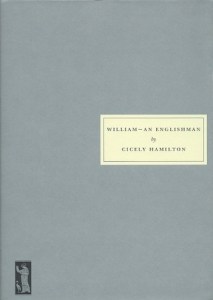
William EnglishmanI was not surprised to find out the author composed this novel in a tent on the front lines of World War I.  The novel is a gruesome, starkly honest portrayal of the horrors of war.  The author, however, draws the readers in at first with a light and satirical description of its gentle, naïve and optimistic main characters, William and Griselda.

When the story begins, William is twenty-six years old and still lives with his mother.  He has an extremely ordered and monotonous life working at a clerk’s office and handing over most of his weekly paycheck to his mother.  He doesn’t seem to have any genuine affection for his parent and when she suddenly dies he realizes that he never really loved her.  Her death means freedom for him; not only does he now have financial freedom since she left him a sizeable inheritance but he also has the freedom to make his own decisions about the course his life will take.

William asks some advice from one of his fellow clerks about what he should do with his time and money and it is through this interaction with Farraday that William becomes involved with political and social reform.  William leaves the tedious office where he has worked for many years and embarks on full-time career as a social activist who writes about, protests and goes to meetings about the suffragette movement, pacifism, and other socialist topics.

It is at these meetings that William meets Griselda, a feisty suffragette who shares the same ideals as William.  The tone in the book that describes these two is one of gentle parody as William and Griselda appear to fight for mostly vague causes.  They believe all government is evil and any attempt of a government to raise a military and train it is simply “playing” at warfare.  They love to go to meetings and hand out pamphlets and consider themselves strong and tough for fighting against social injustices.  They see themselves as the perfect couple and their courtship and devotion to each other is a sweet love story.

When William and Griselda take their honeymoon in the remote mountains of the Belgian Ardennes, they are uneasy with the slow-paced, quiet life of the village in which they are staying. But they settle in for a few weeks and enjoy each other’s company.  It is on the very last day of their vacation that things take a horrible and tragic turn for the worst.  They encounter a regiment of invading German soldiers who treat them brutally and inhumanely.  I have to say that the violence in this book shocked me and Hamilton does not gloss over or sugarcoat the atrocities of war.

William, the once naïve and optimistic Englishman who lived in his happy little bubble of bliss, now becomes the disillusioned and distraught victim of real warfare.  It is not a game or a joke when men are being blown apart and people’s lives are destroyed by gunfire and bombs.  I don’t want to give away the plot and the fate of William and Griselda.  But I will say that William’s story comes full circle and in the end his life becomes equally as monotonous and numb as it was when we first meet him living under the thumb of his mother.  What starts out as an amusing story about two naïve lovebirds becomes a harsh commentary on the gory realities of warfare.

I encourage anyone who enjoys World War I historical fiction to pick up this book.  Thanks to Persephone Press for reissuing another brilliant book from an important 20th century female author.

About the Author:
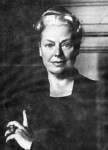
C HamiltonCicely Mary Hamilton (born Hammill), was an English author and co-founder of the Women Writers’ Suffrage League.

She is best remembered for her plays which often included feminist themes. Hamilton’s World War I novel “William – An Englishman” was reprinted by Persephone Books in 1999.

She was a friend of EM Delafield and was portrayed as Emma Hay in “A Provincial Lady Goes Further.”


6 Comments

Filed under British Literature, Classics, Historical Fiction, Persephone Books, World War I

Review: Winter by Christopher Nicholson

I received an advanced review copy of this book from the publisher, Europa Editions.

My Review:
WinterI always thought it was sad that the Roman Stoic philosopher Cicero, in his moral treatise De Senectute (On Old Age), argues that not only do old men not engage in the pleasures of a lover any longer, but they are actually relieved to be free from such sensations.  Seneca, in one of his Stoic epistles, agrees with Cicero’s sentiment by telling Lucilius that it is a relief to have tired out one’s appetites and be done with such things.

Christopher Nicholson, in his fictional autobiography about the last few years of Thomas Hardy’s life, greatly disagrees with Cicero and Seneca’s views on old age.  Nicholson gives us an example, through the life of this famous author, of an old man enjoying love and fantasizing about pleasure even though such enjoyments are not necessarily attainable.  The focus of the book is the winter of Hardy’s eighty-fourth year when he decides to become involved in an amateur production of Tess.  He has resisted turning what is his most famous novel into a staged production, but when he meets Gertrude Bulger, a local townswoman, he believes she is the only one that can do his heroine justice.

Hardy lives a very quiet life in the small town of Wessex where he was born.  He doesn’t go out and socialize very much, so it is truly remarkable when he agrees to become involved with the local theater company to stage this production of Tess.  He develops a heart-warming relationship with the lead actress, whom he affectionately refers to as “Gertie.”  He enjoys having her over for tea and talking to her about books, philosophy and life in general.  He realizes that, even though he is in the winter of his life, he still has strong feelings of love and desire for this twenty-eight year-old woman.  She inspires him to write love poems again and he produces over twenty such poems in the course of a few months.

The imagery and backdrop of winter is appropriate for Hardy’s reflections on what he feels could be the last few months, weeks or days of his life.  The cold and ice and bleak landscape reflect what he feels is going on in the natural progression of his life.  He, however, is not sad or bitter about this .  And when he has the opportunity to interact with Gertie he embraces the opportunity and does not deny himself feelings of love, pleasure and desire just become of his advanced age.  One of the sweetest moments of the book is when he finds one a piece of her hair and tucks it into one of the books in his library as a keepsake.

The other forceful character in the book is Hardy’s wife who is about forty years his junior.  Although Florence is much younger than her husband she acts like she is the octogenarian in the relationship.  She is obsessed with her health, paranoid, whiny and jealous.  When she sees that Thomas has developed feelings for Gertie she is relentless in her nagging at him and does everything she can to make sure that they do not see each other again.  I understand that Hardy could be a quiet, brooding, stubborn man and was not the easiest person to live with.  But Florence’s constant obsession about her health and the perceived wrongdoings against her made it difficult to have any sympathy for her.

The reader should be warned that the ending is not necessary a happy one.  There is, however,  a larger message in the book to be found which is that Cicero and Seneca did not quite have the correct perceptions on old age.  Human beings have the capacity to experience love, desire and pleasure right up until our final days.  Cicero and Seneca most definitely would have judged Hardy to be a bad Stoic.

About the Author:
C NicholsonChristopher Nicholson was born in London in 1956 and brought up in Surrey. He was educated at Tonbridge School in Kent, and read English at Gonville and Caius College, Cambridge. After university he worked in Cornwall for a charity encouraging community development. He then became a radio scriptwriter and producer, and made many documentaries and features mainly for the BBC World Service in London. He was married to the artist Catharine Nicholson, who died in 2011. He has two children, a son and a daughter. For the past twenty-five years he has lived in the countryside on the border between Wiltshire and Dorset.


8 Comments

Filed under British Literature, Historical Fiction

Review: Our Spoons Came from Woolworths by Barbara Comyns

My Review:
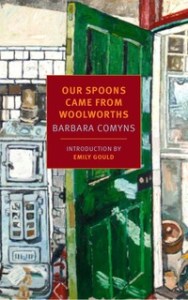
Our Spoons come from WoolworthsThis book is narrated by Sophia Fairclough, the main character of the book and deals with her rather difficult life during the 1930’s in London.  The language is very simple and straightforward, which is so fitting for Sophia; it’s as if we are reading her diary or sitting and listening to her story over an afternoon cup of tea.


Sophia meets Charles and they instantly fall in love and decide that they want to get married.  Even though they are only twenty-one years old and his family does not approve of her at all, they decide to get married.  They settle on a “secret” and “private” marriage at the local church, but they tell so many people that on the day of the ceremony the church is full of friends, family and odd acquaintances.

The book starts out on a very humorous tone as Sophia is extremely naïve about marriage, sex and motherhood.  Charles is an artist, a bit of a delicate genius, who can’t possibly put aside his art to get a proper job to support his wife.  Sophia is the main bread winner of the family and Charles is a terrible manager of their money.  Whenever they have a few extra shillings he spends it on frivolous things like painting supplies, wine and dinners.  Sophia is too naïve about living life as an adult to ask that her husband go out and get a job.  When she becomes pregnant and is forced to quit her job Charles is annoyed at having a baby in the house and having his only source of income cut off.

The scenes in which Sophia finds out about her pregnancy are absolutely hilarious.  She is genuinely surprised that she could be having a baby at all;  she thinks that if she wills herself not to be pregnant then she won’t have a baby.  When she goes to the hospital to have the baby she is shocked by the poking and prodding and the indignity of the whole process, right down to the horrible hospital bed clothes that she is forced to wear.

It is obvious from the very first sentence of the book that Sophia and Charles’ marriage does not end well.  As their marriage becomes increasingly difficult financially, emotionally and physically, Charles stays away from their home for longer and longer periods of time.  The humor that was spread throughout the first part of the book is noticeably absent in the send half of Sophia’s tale.  She suffers a great deal as her marriage disintegrates.

But in the end, Sophia learns an important lesson about resiliency and happy endings.  Even though she has suffered many trials and tribulations with and because of Charles she never becomes jaded or bitter.  She is guarded, yes, but never bitter.

The New York Review of Books has brought another brilliant classic to our attention.  I highly recommend this book for its humor, interesting storyline, and strong female character in the form of Sophia.


About the Author:
B ComynsBarbara Comyns Carr was educated mainly by governesses until she went to art schools in Stratford-upon-Avon and London. Her father was a semi-retired managing director of a Midland chemical firm. She was one of six children and they lived in a house on the banks of the Avon in Warwickshire. She started writing fiction at the age of ten and her first novel, Sisters by a River, was published in 1947. She also worked in an advertising agency, a typewriting bureau, dealt in old cars and antique furniture, bred poodles, converted and let flats, and exhibited pictures in The London Group. She was married first in 1931, to an artist, and for the second time in 1945. With her second husband she lived in Spain for eighteen years.

11 Comments

Filed under British Literature, Classics, Literary Fiction, New York Review of Books