
 What more can really be said about Kafka’s writing? I feel almost embarrassed to share my thoughts about this new volume of translations by Michael Hofmann; there will be nothing new or earthshattering here, but I am hoping that fellow Kafka lovers will at least be happy to stumble across another devotee. Please go easy on me as I offer my humble observations on this collection!
One of the descriptions about Kafka that I have found most fascinating is that of his writing schedule. Since he was an office worker at an insurance agency for most of his adult life, he was limited to writing at night and, as a result, got very little sleep. It seems he truly suffered and sacrificed in order to do the one task in the world that he loved. In a letter to Felice dated November 1, 1912, Kafka describes his daily routine which includes work, exercise, walks with his friend Max, and writing from 10:30 p.m. until 1, 2 or 3 o’clock in the morning. How can one not have the utmost admiration for the work ethic of such a man? Unfortunately for Felice, however, nothing and no one in his life would ever be as important as Kafka’s writing. In the introduction to his new translations of Kafka’s short prose, Hofmann writes about the author’s daily habits: “He devised for himself a life that was largely disagreeable, inflexible, and inescapable, and tried to make it productive.”
Many of the stories in this collection feel as if Kafka wrote for as long as could into the early hours of the morning and due to tiredness or further lack of inspiration he stopped working and never returned to finish them. Although Kafka’s short prose included in this volume are likely beginnings of stories or parts of what would have been longer pieces, the writing is creative, profound and philosophical. A few of the stories were particularly dark and melancholy and left me desperately wanting more. For instance, in “Blumfeld The Elderly Bachelor,” the story starts simply and humorously with a man returning to his flat after work, alone and wishing he had some kind of companion. He contemplates getting a dog to keep him company, but quickly decides that the fleas, dirt and other messes involved would disrupt his orderly lifestyle. The rigidity of Blumfeld’s daily routine felt as inflexible as Kafka’s description of his own bachelor lifestyle.
One evening, as Blumfeld is arriving home he hears a strange noise and upon entering his apartment he finds two bouncing balls. The balls follow him around the apartment, incessantly moving and making noise and he is uneasy to find that he suddenly has two constant, annoying companions. He comes up with a brilliant idea to give the balls away to his charwoman’s ten-year-old son, so he entrusts the boy with the keys to his apartment and requests that the child fetch them while Blumfeld is at work.
When Blumfeld feels that he has a successful plan to get rid of the balls, the scene and topics of the story change abruptly. Blumfeld forgets about the balls and arrives at work in a linen factory where he is viewed as an obstinate, crabby man who does not work well with others. He is condescending to his two interns and he doesn’t trust them to do even the most menial tasks. The story ends with Blumfeld’s intern trying to wrestle a broom from a janitor so that he can avoid doing any work for Blumfled. Kafka’s story is an interesting and sad commentary on the monotony of working in an office factory. But what about the balls from Blumfeld’s apartment? Did the boy ever successfully extract them? Or were they able to entertain Blumfeld and offer some interest and companionship to his dull, lonely life?
“Texts on the Hunter Gracchus Theme,” “Building the Great Wall of China” and “Investigations of a Dog” were my other favorite stories in this collection. They all have themes of restriction, as each person or animal is caught in a situation he feels he cannot easily escape. The Hunter Gracchus particularly stood out because the main character is caught in a state of limbo, neither fully dead nor alive. Is that how Kafka viewed his life, his office job and his routine?
What are your favorites of Kafka’s short prose?
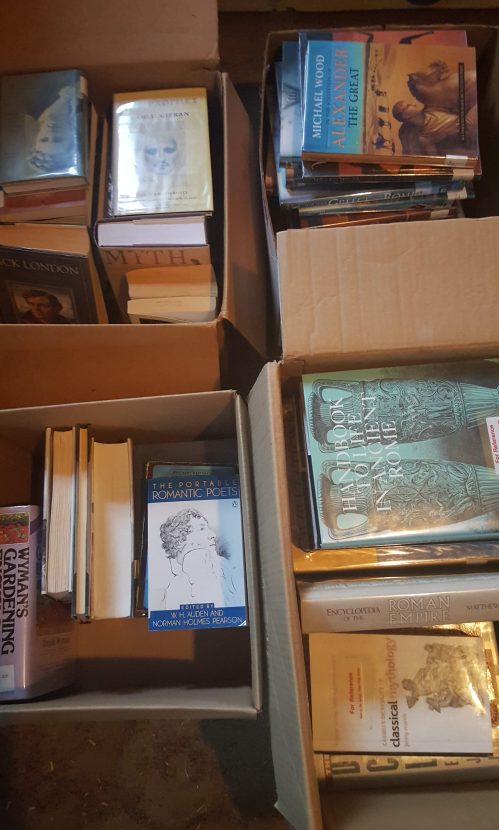
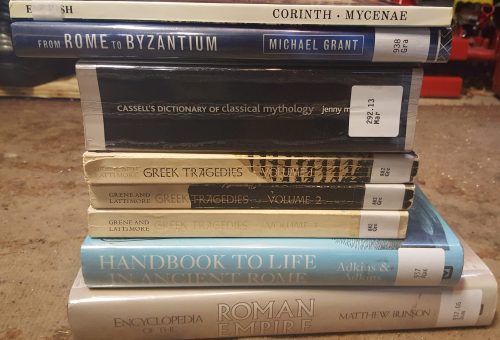
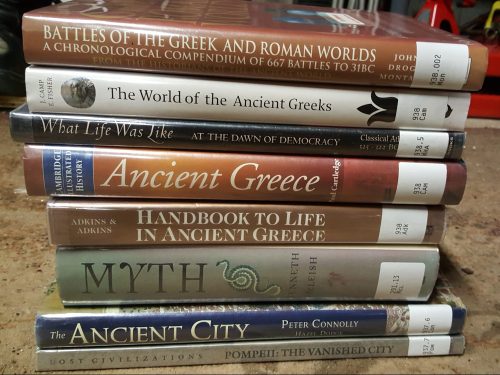
 Aeschylus’s tragedy The Suppliant Women is a unique piece of Ancient Greek theater because the poet uses the chorus, normally reserved for a secondary role, as the protagonist of his play. The Danaides, the fifty daughters of Danaus, are refugees from Egypt where they were going to be forced into marriage with their cousins. Having chosen flight from Egypt instead of mandatory betrothal, The Danaides arrive in Argos seeking asylum. As the chorus/protagonist of this tragedy, these women tell us, with one, strong, loud, simultaneous voice, about the hardships they’ve suffered and they beg, as suppliants at the altar of Zeus, for protection.

 In this new translation of Kafka’s prose published by Archipelago Books last year, Peter Wortsman has chosen a wonderful selection of shorter writings that showcases the range of the author’s brilliance. Old favorites such as “The Metamorphosis,” translated in this collection by Wortsman as “Transformed” appear in the volume with fresh, updated language for a 21st century audience. For those who are new to Kafka’s writing, the inclusion of additional classic short pieces such as “The Penal Colony” and “A Report to an Academy” make this a perfect volume with which to be introduced to his writing.
 Peter Wortsman was a Fulbright Fellow in 1973, a Thomas J. Watson Foundation Fellow in 1974, and a Holtzbrinck Fellow at the American Academy in Berlin in 2010. His writing has been honored with the 1985 Beard’s Fund Short Story Award, the 2008 Gertje Potash-Suhr Prosapreis of the Society for Contemporary American Literature in German, the 2012 Gold Grand Prize for Best Travel Story of the Year in the Solas Awards Competition, and a 2014 Independent Publishers Book Award (IPPY). His travel reflections were selected five years in a row, 2008-2012, and again in 2016, for inclusion in The Best Travel Writing. He is the author of two books of short fiction, A Modern Way to Die (1991) and Footprints in Wet Cement(forthcoming 2017), the plays The Tattooed Man Tells All (2000) and Burning Words (2006), and the travel memoir Ghost Dance in Berlin: A Rhapsody in Gray (2013), and a novel Cold Earth Wanderers (2014). Wortsman’s numerous translations from the German include Telegrams of the Soul: Selected Prose of Peter Altenberg, Travel Pictures by Heinrich Heine, Posthumous Papers of a Living Author by Robert Musil, Peter Schelmiel, The Man Who Sold His Shadow by Adelbert von Chamisso, Selected Prose of Heinrich von Kleist, and Konundrum: Selected Prose of Franz Kafka, many of which are published by Archipelago Books. He edited and translated an anthology, Tales of the German Imagination: From the Brothers Grimm to Ingeborg Bachmann, from Penguin Classics. He works as a medical and travel journalist.
 Arguably the most enigmatic of the Ancient Greek gods, Poseidon is not as revered or respected as his brother Zeus, the god of the sky, lord of the universe, nor is he as feared as his brother Hades, master of the gloomy and dark underworld. Poseidon’s realm is the sea, the ultimate middle child whose domain is the middle of the earth, the watery depths that occupy the space between sky and underworld. Peter McDonald’s new, verse translation of the Homeric Hymns, beautifully and succinctly captures the multidimensional nature of this deity:
 Cees Nooteboom (born Cornelis Johannes Jacobus Maria Nooteboom, 31 July 1933, in the Hague) is a Dutch author. He has won the Prijs der Nederlandse Letteren, the P. C. Hooft Award, the Pegasus Prize, the Ferdinand Bordewijk Prijs for Rituelen, the Austrian State Prize for European Literature and the Constantijn Huygens Prize, and has frequently been mentioned as a candidate for the Nobel Prize in literature.


 The Book Binder's Daughter