Category Archives: Literature in Translation

Review: This Life by Karel Schoeman

I received and advanced review copy of this title from Archipelago Books through NetGalley.  It has been translated from Afrikaans by Elise Silke.

My Review:

This LifeThe narrator of this story is an old woman who is lying on her death bed and trying to remember the story of her life which involves growing up in a remote part of South Africa on a farm.  Her life is sad, lonely and pathetic.  As a child she is neglected and forgotten by just about everyone in her family, including her mother.  She never marries and spends her entire life alone and living with family members who oftentimes forget that she even exists.

The narrative is very slow-moving but descriptive.  This old woman describes her parents, her siblings and the servants who all lived together in a crowded house on their farm.  Her mother had a volatile temper and never showed any true affection towards her.  Her father displayed more love for her but his life on the farm kept him very busy.  Her brothers, Pieter and Jakob, have a sibling rivalry that becomes deadly when they both fall in love with the same woman.

Many of the details in the book are vague because the old woman is trying to piece together her memories as her life is slipping away.  As a marginalized member of the family she is never told even the most basic details of their life so she can only put together bits and pieces of her past.  As further evidence of her isolated existence, the narrator’s name is only said a few times in the book and her name seems more like a nickname and not her given name.  No one takes notice of her, no one addresses her, no one acknowledges her place in the family.

Since she never marries, the narrator is dependent on her family for her entire life, being passed down from one generation to the next like some sort of family relic or heirloom.  When her parents die she lives with her nephew and his wife who seem to barely tolerate her presence in their home.  When she is left at home for long stretches of time she finally feels like she has found some independence and  no longer has to follow everyone else’s commands.  Every other female character in the book, from her mother to her sister-in-law, to her wife’s cousin are dependent on men and cater to the whims of their husbands.  But she is able to avoid marriage and attachment to a man for her entire life.  We are left with a sense of ambiguity as to whether or not her life is any better or worse than the other married women in the novel.

THIS LIFE is a sad tale about a woman who lives in the shadows and never finds her own identity.  One should not expect high drama with this novel; it is a disjointed reflection of a long life with much suffering and little joy.


About The Author:
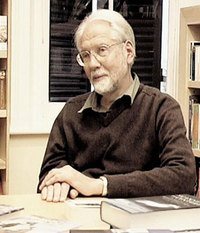
K SchoemanSchoeman is one of a handful of Afrikaans authors who has achieved real greatness in his own lifetime. His prizes include the Hertzog prize for prose three times (1970, 1986, 1995), the CNA prize (1972), the Helgaard Steyn prize (1988), the W.A. Hofmeyr prize and the Old Mutual prize for literature/fiction (1984, 1991). His work investigates the existence of the Afrikaner in Africa, especially those that came from Europe.

After completing his schooling in Paarl, he went on to study a B.A. at the University of the Free State before going to a Catholic Seminary in Pretoria. In 1961 he joined the Franciscan Order in Ireland as a noviciate for priesthood, but then returned to Bloemfontein to continue studying Librarianship. Before returning to South Africa for good in 1983, he was a librarian in Amsterdam as well as a nurse in Glasgow. Back in South Africa he continued writing and working as a librarian in Cape Town. He currently lives in Trompsburg

4 Comments

Filed under Literary Fiction, Literature in Translation

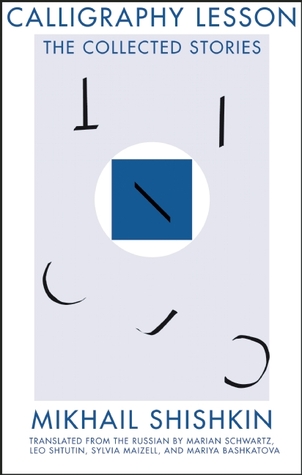
Review: Calligraphy Lesson-Collected Stories by Mikhail Shishkin

I received an advanced review copy of this title from Deep Vellum Publishing.  This is the first English-language collection of short stories by Russia’s greatest contemporary author, Mikhail Shishkin, the only author to win all three of Russia’s most prestigious literary awards.

My Review:

Calligraphy LessonThe theme that pervades all of these stories is the tragic oppression and enslavement of Russia’s people by its Soviet government.  Shishkin offers stories about himself and various members of his family and the devastating impact of Soviet rule had on their lives for generations.

My favorite story in the collection is the first one entitled “The Half-Belt Overcoat” in which the author describes the hardships of his mother who serves as a school headmistress.  On the one hand she is expected to inculcate the students into the ideals of the Soviet, communist state.  On the other hand she must teach the children to think yet not express any of their ideas that would defy the communist rulers.

When the author is a teenager he has an argument with his mother over a girl with whom he has fallen in love.  He mother does not approve so he doesn’t speak to his mother for over a year.  Later in life when his mother is dying of cancer, he feels deep regret for punishing her with silence.  But he can never find the words to express his sorrow and his appreciation for her struggle before she dies

The story “Of Saucepans and Star Showers,” presents us with the struggles of the author’s father as they relate to living under the Soviet regime.  His father was in the Russian navy and served on a submarine.  He is proud of his service to his country and dons his uniform every year to show his national pride.  But when the Soviet government starts doling out food rations that come from Germany, his father begins to think that his sacrifices to defeat the enemy during World War II were all in vain.  He lives out the rest of his sad, pathetic days alone and drowning his sorrows in bottles of vodka.

The final story that must be mentioned is entitled “The Bell Tower of San Marco.”  Lydia is a Russian who is studying in Zurich to become a doctor.  While in medical school she meets, falls in love with and marries a Swiss doctor named Fritz.  Lydia’s greatest ambition in life is to take a position as a doctor in the poorest parts of Russia and help the masses realize that they are being enslaved by the tsarist regime.  Lydia is a fervent socialist and wants to create an uprising of the masses which, she believes, will result in a complete revolution.

Lydia moves back to Russia and leaves Fritz in Zurich to practice medicine.  Their married life consists mainly of letters and when they are together they seem unhappy and dissatisfied.  Lydia eventually realizes that the poor do not want a revolution and the socialist values which she represents are meaningless to them.  At 40 she becomes an old, depressed, woman who feels that her entire life has been wasted on useless ideals.  Perhaps when the bell tower of the famous church of San Marco collapsed during their honeymoon to Venice, she should have taken that as a sign or an omen of the tragedy that was to become her life.

I highly recommend CALLIGRAHPY LESSONS for the beautiful language, moving stories and the emotional characters.  This collection of short stories has made me want to delve into Shishkin’s longer works.

About The Author:

M ShishkinMikhail Shishkin was born in Moscow in 1961. He won the 2000 Booker Prize for his The Taking of Izmail and the 2005 National Bestseller Prize and the 2006 National “Big Book” Prize for his Maidenhair (Open Letter, 2012). He lives in Switzerland.

6 Comments

Filed under Literature in Translation, Russian Literature, Short Stories

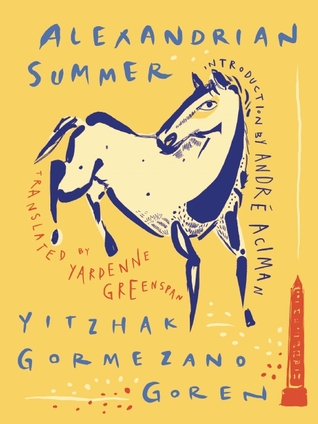
Review: Alexandrian Summer by Yitzhak Gormezano Goren

I received an advanced review copy of this title from New Vessel Press.  They have quickly become one of my favorite small presses, especially for translated fiction.  Published in Hebrew in 1978, Alexandrian Summer appears now in translation for the first time.  This edition has been translated by Yardenne Greenspan.  Please visit the publisher’s website to read about all of their wonderful titles: www.newvesselpress.com .

My Review:
Alexandrian SummerThis story takes place over the course of the summer of 1951 as Robby, a ten-year-old boy and his Jewish family share a flat in Alexandria with another Jewish family.  Egypt is an interesting place at the time as people from all over Europe, the Middle East and Africa converge on this country.  Jews, Muslims and Christians all live together side by side peaceably, but in 1951 this pleasant coexistence starts to show some cracks.

The grown-ups in the book are seen through the eyes of Robby who sometimes doesn’t quite understand what is going on with the adults.  His grandmother is constantly gossiping with her friends as they play cards and his older sister goes on dates with different men but doesn’t want to seem to settle down and get married.  At one point Robby and his friend Victor begin to explore their own sexuality and burgeoning bodies.  This part might be disturbing to some readers, but it brings up an important issue about how children learn about sex, attraction and how their bodies function.

The Hamdi-Ali family, who live in Cairo during the rest of the year, move in with Robby’s family for the summer.  The language of the book perfectly captures the atmosphere of Alexandria with its cool breezes from the ocean that  stave off the heat of the Libyan desert.  The residents of this seaside town are also captivated by the horse races that take place during this hot and dusty season.  David Hamdi-Ali is a famous jockey whose most important race during the summer is against an Arabian Muslim.

The horserace between David and the Arab becomes a metaphor for the tension that is steadily growing between Muslims and Jews in Egypt at this time.  David’s father, Joseph, is also a symbol of this religious tension as he feels guilty for abandoning Islam and converting to Judaism in order to be able to marry his Jewish wife.  When Joseph’s son loses to the Muslim, he views this as Allah’s punishment because Joseph turned his back on his faith because of his love for a woman.

This is a rather brief novel, but there are so many elements within it to think about and digest.  The author has brilliantly created an interesting cast of characters that represent all stages of life, from childhood to old age, and the very human struggles that we encounter during each of these stages.  ALEXANDRIAN SUMMER is sensual, funny, descriptive and a fabulous story that I highly recommend.

About The Author:
Y GorenYitzhak Gormezano Goren was born in Alexandria, Egypt, in 1941 and immigrated to Israel as a child. A playwright and a novelist, Gormezano Goren has an MFA in theater directing from Brooklyn College. He cofounded the Kedem Stage Theater in Tel Aviv in 1982 and directed it for 30 years. Gormezano Goren is a winner of the Ramat Gan Prize for Literature and received the Israeli Prime Minister’s Prize for Literature in 2001.


3 Comments

Filed under Classics, Literary Fiction, Literature in Translation

Review: The Librarian by Mikhail Elizarov

I received an advanced review copy of this title from publisher through NetGalley.  The original book was written and published in Russian in 2007 and this English version has been published by Pushkin Press.

My Review:
The LibrarianI recently read an article in The New York Review of Books by Ian Frazier in which he describes Russian satire and humor and the ways in which it differs from the rest of Europe and the United States.  Frazier writes, “Given the disaster Russian history has been more or less continuously for the last five centuries, its humor is of the darkest, most extreme kind. Russian humor is to ordinary humor what backwoods fundamentalist poisonous snake handling is to a petting zoo. Russian humor is slapstick, only you actually die.”  Elizarov’s The Librarian is a perfect literary example of  Frazier’s description of Russian humor.

The book opens with a description of a fictional Soviet-era writer named Gormov whose books were mass-produced but were of such poor quality that they were relegated to the bargain bin in used bookstores almost immediately.  After the fall of the Soviet Union, Gormov’s books are rediscovered and are also found to have magical effects on their readers.  The Book of Joy, for instance, puts readers into a temporary state of euphoria that is reminiscent of a drug high.  There are seven such magical books in the Gormov collection.  As groups acquire copies of these powerful books, they are called “Libraries.”  These libraries then engage in ridiculous, epic battles to fight for ownership of Gormov’s books.

The most absurd “library” of the bunch is a group of frail and senile old women living in a nursing home to whom the Book of Endurance is read.  All of a sudden their newly acquired strength turns these geriatrics into a fierce and bizarre army of warrior-like Amazons who kill people by the hundreds in order to protect their precious library.  There is an excessive amount of stabbing with knitting needles and pounding heads with hammers which ridiculous and droll scenes present us with the “slapstick” humor that Frazer describes but where characters “actually die.”

The main character of the book is a meek young man named Alexei whose only concern in life is to be an actor.  Of course, his acting career has never taken off so he finds himself divorced and living at home with his parents.  When his uncle dies he is asked to put his things in order and sell his uncle’s apartment.  The contents of the apartment contain one of Gormov’s books so naturally Alexei is drawn into the world of the libraries.  His lack of reaction as people are stabbed and killed around him in order to protect the book is ridiculous and comical.  He eventually dons his own armour, which consists of old truck tires, and launches himself headlong into the bloody fray.

The problems with Alexei’s own library and its inevitable clash with other libraries is the topic of the second half of the book.  There are many battle scenes where the rival libraries have more and more comical battles in which the clash of these book warriors resemble video games.  In the end, Alexei is saved by the brigade of geriatric warriors who lock him up and want to use him as their guinea pig to test out the effects of reading all seven books at once.  The ending has a more serious tone then the rest of the book and provides and interesting commentary on worshipping and overvaluing objects, blindly following leaders without questioning their motives and the sacrificing of one person for the safety of the whole community.  For a sampling of Russian humor and satire THE LIBRARIAN is a perfect choice, but I will warn you to be prepared for a wild ride.

3 Comments

Filed under Humor, Literature in Translation, Russian Literature

Review: Dancing in the Dark-My Struggle Book 4 by Karl Ove Knausgaard

I received an advanced review copy of this book from Archipelago Books through NetGalley. It was published in the original Norwegian in 2009 and has been translated for this English edition by Don Bartlet.  Knausgaard has published his autobiographical novel in six parts and this is the fourth installment that has been translated into English.  You do not have to read the other books in the series first as this book stands on its own.  But after you do read Book 4 you will be clamoring to pick up the first three.

My Review:
My Struggle 4Music. Sex. Drinking.  These are the three main topics on eighteen-year old Karl Ove’s mind at any given time.  He has just graduated from high school, or gymnas as it is called in Norway, and has accepted a temporary teaching position at a school in a remote fishing village in the northern part of Norway.  Karl Ove wants to get as far away from his hometown as possible and he also wants the opportunity to write since this is what he forsees as his future career.

The first third of the book deals with Karl Ove’s settling into his new home in Norway and trying to teach a variety of subjects to middle school students.  He feels a certain sense of freedom while he is living by himself and earning his own way for the first time in his life.  A lot of music is mentioned in the book as it is one of his main areas of interest.  Karl Ove writes music reviews for a local paper and begins to appear on a radio program that discusses music. If you are nostalgic for pop and rock music from the mid to late 1980’s you will appreciate the discussion of Karl Ove’s collection of albums.

A large part of the book is a flashback to Karl Ove’s last two years in high school where he slowly begins to distance himself from life as a child, an existence that is constantly reliant on his parents.  A large part of his growing up has to do with the separation of his parent’s and the dissolution of their marriage.  Karl Ove’s father is a distant, cold and harsh man who beat and scared his children when they were younger.  Now that he father has moved out of their home, Karl Ove attempts to get beyond the issues he had with his father in the past and become his own independent man.

One incident in the book, in particular, that demonstrate Karl Ove’s struggles as he is coming of age is his attempt to keep in touch with his father.  One day when he has gotten out of school and has nothing to do he pays a surprise visit to his father.  When he arrives, his father is cold and distant and scolds Karl Ove for not calling first.  As a sixteen-year-old high school student, Karl Ove still craves a relationship with his father, despite their dysfunctional past.  Reading about his father’s reject of him in such a heartless way is distressing but this incident does not deter Karl Ove from still trying to forge a relationship with this undeserving and cruel man.

One of the things that surprised me is the amount of autonomy he has throughout the book.  His mother works full-time as a teaching nurse so he comes and goes as he pleases.  He only visits his father, who has developed a rather severe drinking problem and has gotten remarried, once in a while. Karl Ove starts to smoke and drink in excess, to the point where he blacks out and loses large chunks of time.  His mother finally catches on to how serious his problem has become and she throws him out of their home.  This has the opposite effect she intended and instead causes him to go on a drinking and hash binge for days on end.   Throughout the book I worried for him, I was concerned that no one keeps a better eye on this sixteen-year-old who is really still a boy and I felt his constant, underlying sadness and loneliness

Karl Ove also wants, more than anything, to be in some sort of a relationship with a girl but the situations involving his romantic life never quite work out.  He is desperately in love with a girl named Hanne who pays Karl Ove quite a bit of attention to the point of leading him on, but she never actually intends to start a relationship with him.  It seems that all of his friends have girlfriends, or are at least having sex, and Karl Ove is very self-conscious of the fact the he is still a virgin.  Time and again in the book he has an opportunity to be with a girl, but he has a severe case of premature ejaculation.  It is tragic that he is too young and immature to understand that patience and the right woman would solve all of his problems.

The style of the book is very unusual and does not read like a traditional novel.  The experience of feels more like perusing the very detailed diary of a teenage boy; there are minute descriptions of what he eats, where he goes, and his daily activities. I did not find this boring or mundane, but instead it helped to vividly set the scene of his life for me.  The only completely developed character in the novel is Karl Ove himself.  He has interactions with countless people but what he describes is his own reactions to them and their effect on him; we never get to know other characters that show up in his life in any depth.

What I enjoyed, and even admired the most about this autobiographical novel is that the author’s experiences are raw, unfiltered and completely honest.  Knausgaard could have censored some of his feelings and most embarrassing moments.  I think that by laying it all out there for the world to see is brave and makes MY STRUGGLE BOOK 4 an absorbing and emotional read.

About The Author:
Karl OveKarl Ove Knausgaard was nominated to the 2004 Nordic Council’s Literature Prize & awarded the 2004 Norwegian Critics’ Prize. He made his literary debut in 1998 with the widely acclaimed novel OUT OF THE WORLD, which was a great critical and commercial success and won him, as the first debut novel ever, The Norwegian Critics’ Prize. He has since received several literary prizes for his books.

2 Comments

Filed under Literary Fiction, Literature in Translation