Category Archives: World War I

Review: Wilfred and Eileen by Jonathan Smith

I am just in love with all of the books that I have read from Persephone Press.  This is another great classic based on a true story and deals with World War I and its affects on a loving and devoted couple.

My Review:
Wilfred and EileenThe first part of this novel deals with Wilfred Willet who is about to graduate from Trinity College, Cambridge and meets a beautiful woman named Eileen Stenhouse at a ball.  Even though they are from different social classes, they seem to hit it off right away and have lots of things to talk about.  Soon after he graduates,  Wilfred goes off to medical school and works as a resident in a hospital while Eileen sits at home with her aristocratic parents and does, well, not much of anything but wait for Wilfred to call.  In the first part of the book we are left wondering if Wilfred is as devoted to Eileen as she is to him; will Wilfred’s work at the hospital take precedence over having an engagement or eventually a marriage with Eileen?

As time goes on, Wilfred decides to defy the wishes of his parents, especially his mother, and marries Eileen in secret.  It is ironic that, although Wilfred’s family is of a lower social class, the Willets are the ones who strenuously object to the marriage.  Wilfred’s mother seems to be overly protective of her only child and I suspect that, in her eyes,  no woman would ever be good enough for him.

When World War I breaks out and Wilfred volunteers to go to the front, he decides that his secret marriage must be revealed to both families.  The author includes letters that Wilfred and Eileen write back and forth on almost a daily basis until he gets wounded.  The details he describes about the deplorable and inhumane conditions in the trenches are vivid and must have been heart-wrenching for Eileen to read.  She does manage to stay strong and put on a brave face for her husband and family and her sentiments of love and devotion in the letters are beautiful.

The real hero in the book is Eileen who travels to France in order to extract Wilfred from a makeshift army hospital and bring him back to Britain so he can receive the best medical care for his head wound.  Eileen eventually brings Wilfred back to the very hospital in which he served as an intern and his old mentor saves Wilfred’s life.  Eileen never waivers for a moment in her devotion to Wilfred despite the handicap he suffers for the rest of his life.  They make a home together in the countryside and even have two children.

If you love historical fiction set during World War I then I highly recommend giving WILFRED AND EILEEN a try.  I am completely smitten with these wonderful novels from Persephone Books.

About The Author:
Jonathan Smith was born in Wales in 1942 and went to Christ College, Brecon. He read English at Cambridge, taught at Loretto School, Edinburgh and in Melbourne, and from the late 1960s onwards at Tonbridge School, where he was head of English for 17 years. He is married and lives in Kent.



4 Comments

Filed under British Literature, Classics, Historical Fiction, Persephone Books, World War I

Review: While The Gods Were Sleeping by Erwin Mortier

I have been reading and enjoying a raft of literature in translation lately.  I was thrilled to receive an ARC of this book that was originally written and published in Dutch in 2008.  This version has been translated into English by Paul Vincent.

My Review:
Gods Were SleepingHelena is a very old woman who has outlived all of her friends, acquaintances and relatives.  She is homebound and needs round-the-clock care which is provided by a kind young woman named Rachida.  We get the feeling that Helena is waiting for death which she feels is imminent and while she waits she writes down the memories of her life, especially those that revolve around the period of World War I.

Helena’s father is Belgian and her mother is French, so she grows up living between these two countries.  She spends the summers in her mother’s family home in France, and when World War I breaks out Helena is forced to wait out the war with her mother, brother, uncle and aunts in their French countryside home.  Helena’s father is left back in Belgium and the family suffers this long separation.

The main characters in Helena’s memoir are her mother, brother and husband.  She has an uneasy relationship with all three.  Throughout her life Helena feels that, as a young woman growing up in a European bourgeois family, she is deprived of many freedoms.  Her mother, who still wears the stiff corsets of the 19th century and is always acutely aware of the gossip from the neighbors, will not let Helena wander out of their home unaccompanied.  Helena resents her mother for keeping her prisoner under these strict, and what she views as, old-fashioned mores.

Helena loves her brother Edgar and is very close to him yet she is jealous of the freedom he is allowed.  As a stark contrast to Helena, he can walk through the city streets at his leisure, have countless affairs, and travel off to war.  When Edgar is wounded during the Great War, he is finally sent home and Helena listens in horror to his vivid details of trench warfare.  One of the aspects of this book that is most impressive is the writer’s ability to graphically describe the tragedies of the war suffered by everyone who witnessed it; sounds, colors, textures, smells, and ruined landscapes are all described in order to capture the scale and destruction of The Great War.

When Helene marries a British soldier named Matthew who has a penchant for wandering and being on the open road, she admires his sense of adventure and his freedom.  But it is his wanderlust that keeps her separated from him for long periods of time.  When they have a child together, a daughter, I was surprised that Helena’s relationship with her was just a contentious as Helena’s relationship with her own mother.

The language and prose of the book feels disintegrated, as Helena jumps from one period of time to the next.  It is almost as if we are looking through an album of old photographs with Helena and she tells us stories of her life as they pop up in her mind.  She oftentimes goes on tangents as one story will remind her of another which she will launch into.  I think some readers will find this writing style confusing and disruptive, but it is appropriate for the setting of the book.  Helena is a very old woman, reflecting back on a long life and as images and narratives randomly appear in her memory she writes them down for us to read.

I have read quite a few historical fiction novels set during World War I this past year and WHILE THE GODS WERE SLEEPING is among the best for capturing the emotions, heartache, lasting effects of this war.

About The Author:
Erwin Mortier is a Dutch-language Belgian author. Spending his youth in Hansbeke, he later moved to nearby Ghent, where he became city poet (2005-2006).He wrote as a columnist for newspapers like De Morgen and has published several novels including Marcel, My Fellow Skin, Shutter Speed, and While the Gods Were Sleeping.


1 Comment

Filed under Historical Fiction, Literature in Translation, World War I

Review: After The War Is Over by Jennifer Robson

Today I welcome TLC book tours back to the blog with an historical fiction novel set in Britain just after World War I.  In invite you to read my review and visit the other stops on the book tour.

My Review:
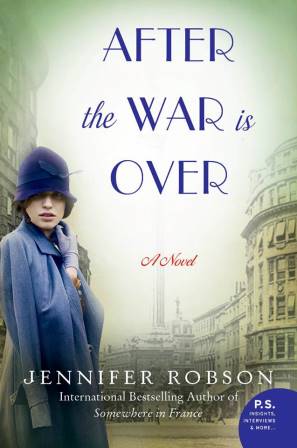
After the War is OverCharlotte works in an office in Liverpool that tries to find help for the poor and destitute.  The circumstances of many families has become dire especially since The Great War has ended.  Veterans are coming home wounded and unable to work and women are left widows with children to feed.

Jennifer Robson vividly portrays the sadness and destruction that has been left in the wake of the war; everyone in England has been affected by this deadly and costly conflict.  There are several sub plots in the book that will give the reader a better appreciation of the variety of ways in which men and women from all walks of life had their lives altered by World War I.

Charlotte served as a nurse in a hospital in London that specialized in helping veterans from shell shock; her memories of the patients she helped there always haunt her.  But when her old friend, Edward, comes home from the war a changed man, she uses her expertise as a nurse to try and help him recover from his trauma.

There is obviously a history between Charlotte and Edward and the narrative flashes back to the time they spent together before the war.  But since they are from very different social classes, Charlotte assumes that they will never be romantically involved.  The scenes in the book in which Edward and Charlotte are getting to know each other were my favorite parts of the book.  My only complaint about the book is that Robson did not include more interaction between these two characters.

Overall, AFTER THE WAR IS OVER is a fantastic read if you have an interest in historical fiction set during and after World War I.


About The Author:
Jennifer RobsonJennifer Robson first learned about the Great War from her father, acclaimed historian Stuart Robson, and later served as an official guide at the Canadian National War Memorial at Vimy Ridge, France. A former copy editor, she holds a doctorate in British economic and social history from the University of Oxford. She lives in Toronto, Canada, with her husband and young children.

Please click on the TLC tour banner below to see the additional stops on this book tour:

tlc-logo-resized


1 Comment

Filed under Historical Fiction, World War I

Review and Giveaway: Certainty by Victor Bevine

Today I welcome TLC Book Tours back to The Book Binder’s Daughter with an historical fiction novel entitled Certainty.  I invite you to read my review, learn more about the author, enter to win your own copy, and visit the other stops on the tour.

My Review:

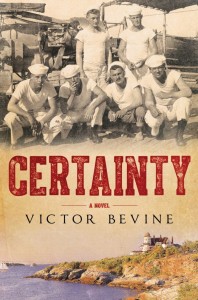
ICertainty_A-Novel_Victor-Bevine_96dpi-677x1024-198x300n honor of the centennial anniversary of World War I, I have reviewed quite a few books set during The Great War.  I have learned so much from all of the historical novels I have read about World War I, and Victor Bevine’s novel set in Newport, Rhode Island is no exception.

This story is based on real events that happened in Newport just after the war.  The navy has twenty five thousand sailors stationed at the Naval base in Rhode Island and now that the war is over the idle soldiers are looking for entertainment that includes drinking, parties and women.  Captain Arnold, one of the commanding officers, has decided to recruit some of his sailors for a secret mission that includes trapping and arresting men who are homosexual.

The references to homosexuals as “fairies” throughout the book is disturbing but also drives home the point that the navy was rabidly homophobic during this time period. Arnold and his group of recruits launch a campaign to gain the trust of gay men, catch them in sexuals act and then arrest them.  During the roundup and arrest of these gay sailors, a popular priest is also arrested and falsely charged with carrying out lewd acts. One lawyer in this small town bravely steps up, risking his family, career and reputation, to defend the kind priest. Continue reading

15 Comments

Filed under Historical Fiction, World War I

Review: The Paying Guests by Sarah Waters

I received and Advanced Reader’s Copy of this book through the Penguin First To Read site.

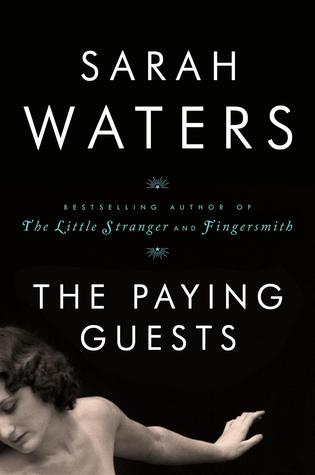
The Paying GuestsWhen I write a review I like to give a bit of a summary to allow my readers to judge whether or not they would enjoy the setting and the characters of a book.  THE PAYING GUESTS is hard to give a summary for without giving away the plot, so I will be a little more vague than I usually am with my comments.  This is a very emotional read and makes the reader think about various social issues that are still controversial in the world today.

Frances Wray and her mother live in London in the early 1920’s in a large house but are barely making ends meet.  Both of Frances’ brothers died in World War I and her father succumbed to apoplexy shortly thereafter.  As a way to bring in more income, Frances and her mother decide to rent out the second floor of their house to tenants.  This decision to open their house to a young couple, Leonard and Lillian Barber, drastically changes all of their lives forever.  Frances is ashamed that she has to rent out her house to strangers, so she calls them “paying guests” to make herself feel better about the situation.

THE PAYING GUESTS  reminds us that just because the Great War had ended, doesn’t mean that people weren’t still suffering from its far-reaching consequences.  Many families, like Frances’, had multiple men, fathers, brothers, cousins, that were lost in battle.  The women who are left behind are forced to pick up the emotional and financial pieces of their broken lives.  Many of the men who were lucky enough to return home after the war are injured physically and emotionally and have a hard time finding employment.

Some of the themes that Sarah Waters explores in this novel are bold and just as relevant and controversial in the 21st century as they were in the 20th century.  People are constantly trying to conform to what they think are acceptable norms in society.   With whom are we ever truly ourselves?  Do we put on different personas and acts for different types of relationships?  This book makes us realize that when people are not allowed to be themselves, it forces them to do things they would not under ordinary circumstances. two major issues with the book were with the third part.  The first two parts of the book we

The two major issues that I had with the book occurred in the third part.  The first two parts were page-turners and there were so many unexpected plot turns.  However, I felt that the story became much slower in the third part and the book could have been about 150 pages shorter.  The author chose such controversial themes to explore and provided us with brave and courageous female characters.  The ending, however, did not match the audacity of the rest of the novel.

Despite my issues with the last third of the book, I still think that THE PAYING GUESTS is worth a read if you like historical fiction set in the 1920’s.  Maybe others won’t mind the ending.  If you read this book let me know what you think in the comments.

add-to-goodreads-button3

6 Comments

Filed under Historical Fiction, World War I