Category Archives: Historical Fiction

Review: The Settling Earth by Rebecca Burns

I received an advanced review copy of this collection of short stories from the author.

My Review:
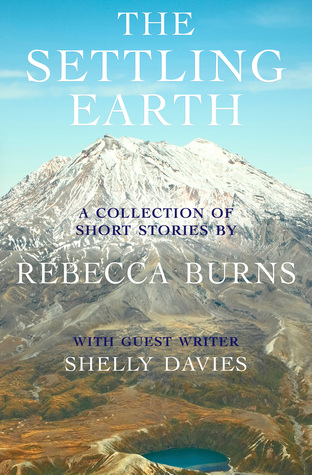
The Settling EarthAll of the characters in these short stories are connected by their sense of alienation and misery while living an emigrant’s life in the hot, dusty colony of New Zealand in the 19th century.  The book begins with Sarah, whose parents have given her away to an older man named William Sanderson who drags her off to live on his isolated farm in New Zealand.  Sarah is lonely, homesick and stuck in an unhappy marriage.  She seems to be wandering around her home in a daze, either not fully aware of her surrounding or in denial of her situation.

William himself is also the focus of one of the stories in the book and he doesn’t seem to want to live in New Zealand any more than his wife does.  In order to relieve his stress and find an outlet for his frustrations, he likes to visit a brothel in Christchurch.  William is also a bigot and has a severe dislike for the Maori natives.

Several characters from the brothel also have their own stories.  The owner of the brothel, having left England and started her business, tries to look after her “girls” as best she can.  But, despite the fact that precautions are taken,  several of them still manage to get pregnant.  The women in the brothel are just as sad as Sarah and trapped in a lonely and demeaning life.

The saddest, and most heart-rending story in the collection, is that of Mrs. Gray who takes in the babies of unwed mothers.  These fallen women and their children are judged harshly and shunned by the colony.  It is ironic that many of these women have come to the colony for a fresh start but the colony also rejects them because of their perceived sins.  Mrs. Gray believes that she is helping these women and her babies, but the help that she is giving these women is not what they are expecting.

THE SETTLING EARTH is a well-written group of stories, full of downcast and moving characters.  My only complaint about the book, if indeed it can be called a “complaint,” is that just when I became fully invested in a character the story would end. This collection could easily have been made into one, continuous, thought-provoking book;   I would love to see what a talented author like Rebecca Burns could do with a full-length novel.

About The Author:

Rebecca Burns is an award-winning writer of short stories, over thirty of which have been published online or in print. She was nominated for a Pushcart Prize in 2011, winner of the Fowey Festival of Words and Music Short Story Competition in 2013 (and runner-up in 2014), and has been profiled as part of the University of Leicester’s “Grassroutes Project”—a project that showcases the 50 best transcultural writers in the county. In November 2014 she won the Black Pear Press short story competition with her story, “Seaglass”. Her piece is the title story in the Black Pear Press anthology, “Seaglass and Other Stories” – available from December 2014 at http://blackpear.net/2014/12/28/wonde…

Rebecca’s debut collection of short stories, “Catching the Barramundi”, was published by Odyssey Books in November 2012 and is available to order from Amazon at http://www.amazon.com/Catching-Barram…. In March 2013 it was longlisted for the Edge Hill Short Story Award.

The Settling Earth is Rebecca’s second collection of short stories.

2 Comments

Filed under Historical Fiction, Short Stories

Review: A Slant of Light by Jeffrey Lent

I received an advanced review copy of this novel from the publisher through NetGalley.

My Review:

A Slant of LightOne of my favorite places to visit is The Finger Lakes region in New York so I was thrilled to find an historical fiction novel that is set in this beautiful place.  Malcolm Hopeton moves from New Hampshire with his elderly grandfather and buys a plot of land to farm near Seneca Lake.  Malcolm toils from dawn to dusk for years in order to yield a fertile bounty and he is very successful.  He hires a young boy named Amos Wheeler as farm help which will prove to be one of the biggest mistakes of his life.

Malcolm also meets Bethany and they have a brief and whirlwind romance and settle down to a blissful, married life.  When Malcolm decides to go and fight in The Civil War, and chooses to stay away for all four years of the war, his farm, his wife and all that he holds dear are taken away from him.  He commits a horrific act of violence against Amos and Bethany for which he stands trial.  As the story unfolds we learn that Malcolm is an honorable man who is driven to his breaking point.

The narrative also focuses on the character of Augustus, who I found to be the most interesting character in the novel.  Augustus is also a hardworking farmer that has suffered tragedy very early on in his life.  His pregnant wife, Narcissa, dies in childbirth and he vows to be alone for the rest of his days.  He quickly realizes that he needs someone to help take care of his house and feed him, so he hires Becca Davis and they get along very well.  But Augustus is so focused on staying faithful to his dead wife that he refuses to see what a great match he and Becca would make.

One theme that is carried throughout the novel is the abuse of women.  Bethany is treated poorly by her father and is beaten mercilessly when he perceives that she has committed a sin.  She finds solace and love with Malcolm, who turns around and abandons her to go off to war.  When Malcolm is gone she is emotionally and physically abused by Amos Wheeler.  Bethany’s life comes to a tragic end at the hands of her husband who, brought to his breaking point, kills Wheeler and in the ensuing struggle accidentally kills her as well.

Becca is treated well by Augustus but it becomes clear that she feels more for him than an employee feels for an employer.  When Augusts takes in Becca’s teenage brother the three of them live together as a pseudo-family and Becca seems especially content with her living situation.  But at two kept points in the novel Becca tries to have a serious conversation with Augustus and she is frustrated that she is still treated by him like nothing more than the hired help.

The bucolic language of the book captures the beauty and peacefulness of this region and the serene landscape stands in sharp contrast to the turmoil of the characters’ struggles.  A SLANT OF LIGHT is an intense read that comes to an abrupt and incomplete ending.  I was happy to read on Jeffrey Lent’s website that this book is the first in a two book deal with Bloomsbury.  I look forward to the next installment.

Visit the author’s website for more information about his other novels: http://www.jeffreylent.com/

1 Comment

Filed under Historical Fiction, Literary Fiction

Review: When The Doves Disappeared by Sofi Oksanen

I received an advanced review copy of this book from the publisher.  This book was originally written and published in Finnish and has been translated for this publication into English.

My Review:
Doves DisappearedThe setting of this story involves the sad history of Estonia, a country that is caught between two fascist superpowers and never allowed to be free.  The narrative moves back and forth between the period of World War II when Estonia is occupied by German forces, and the 1960’s when Estonia is under Soviet Control.

There is a patriotic group of Estonians who are trying to cast off the oppressive yoke of the Bolsheviks that has a grip on the county in the early 1940’s.   This group of revolutionaries are represented by the character of Roland.  Roland is a farm boy who has led a simple life, but he trains in Finland with a group of rebel Estonians who want to oust the Red Army and declare Estonian independence.  When the Germans cast the Red Army out of the country, Roland recognizes that one oppressive tyrant has been tragically replaced by another.  He continues his underground resistance and his goal is to cast off the Germans who are just as cruel and harsh as the Red Army.  Roland is a figure who possesses loyalty, honor and patriotism; he is true to his cause, the freedom of Estonia, no matter what happens in the story.

Edgar, Roland’s cousin, serves as a sharp contrast to the loyalty of his closest family member.  Edgar’s two driving goals in life are self-preservation and self-advancement.  When the Germans take over, he assumes a new name and attempts to make a career among the German government in Estonia by managing some of their labor camps.  When the Germans are run out of Estonia, Edgar takes on yet another new name and tries to ingratiate himself with the Soviet government by writing a book about all of the German atrocities that were committed while Hitler’s armies occupied Estonia.  Edgar does not particularly care who is in charge of the government, as long as he is seen as someone who is worthy of praise and attention.  His greatest desire in life is to be given special privileges and recognition as a result of his work for the government.

The most tragic character in the book is Juudit, Edgar’s wife.  Juddit is truly in love with Edgar when they first marry and she has such high hopes about spending a wonderful life together in wedded bliss.  However, Juddit is sorely disappointed when Edgar refuses to have any sexual relations with his wife.  It becomes apparent in the book that Edgar is homosexual and has no intentions of carrying on a physical relationship with a woman.  When Juddit meets a German officer stationed in Estonia, she has a mad, passionate love affair with him that lasts for the duration of the German occupation.  Juddit finally feels loved, wanted and fulfilled when a German officer gives her all of the attention and affection that she so desperately desired from Edgar.  Unfortunately for Juddit, when the Germans are driven out of Estonia, she is forced to go back and live with Edgar, at which point she carries on a sad and wretched life fueled by lots of alcohol and pills.

Sometimes the dual narrative that jumps between the two time periods becomes very confusing and convoluted.  It is hard to keep the names straight of which person is on which side, who is working for the Germans and who is still loyal to the Russians.  There are also certain storylines that I would like to have seen further developed.  For example, the details of Edgar and Juudit’s reunion after the Germans withdrawal from Estonia is never described.  How could these two people who despise each other end up living under the same roof again?  Also, Roland’s fiancée, Rosalie, suddenly dies in the beginning of the book and the suspicious circumstances of her death are not mentioned again until the very end.  Rosalie’s story could have been just as interesting as Juudit’s and I would like to have seen her character elaborated upon.

Overall, this is an intriguing historical fiction novel about World War II that revolves around a scarely spoken of country that was the victim of two oppressive regimes.  If you are a connoisseur of World War II historical fiction, then WHEN THE DOVES DISAPPEARED should definitely be on your “to read” list.

About The Author:
Sofi OksanenSofi Oksanen was born in Finland to a Finnish father and an Estonian mother. In 2010 she won the Nordic Council’s Literature Prize for her third novel (originally a play), Puhdistus (Purge).

3 Comments

Filed under Historical Fiction, Literature in Translation

Review and Giveaway: Mademoiselle Chanel by C.W. Gortner

Today I welcome France Book Tours back to my blog with an interesting historical fiction novel about the iconic figure Coco Chanel.  I invite you to read my review and enter to win your own copy of the book.

My Review:

mademoiselle-chanelThere are certain names in the fashion industry that are synonymous with high end, quality and timeless clothing.  Chanel is one such name.  This historical fiction novel captures the struggle that this fierce women went through at a time when it was unheard of for any woman to work for a living and own her own business.

Coco Chanel grows up as an orphan after her mother dies and her father abandons their family. Forced to live in a convent that cares for and educates orphans, Coco is always striving to make her own place in the world and not depend on anyone.

Much of the book takes places in early 20th century Paris, where Coco works tirelessly to make a name for herself amongst men who dominate the fashion industry.  What I found fascinating about this book is that it is not only a personal history of Chanel, but also a history of fashion and the dramatic changes in women’s clothing between the 19th and 20th centuries.  No more are women required to wear tight-fitting corsets and their hair tied back in buns.  Coco is heavily influenced by men’s fashions and oftentimes raids the closets of her male lovers for fabrics and old clothes to rework and make suitable for women.

Coco Chanel is a person for whom we wish the greatest success.  Despite many setbacks throughout her career, she always picks herself back up and reinvents herself.  C.W. Gortner has done a spectacular job of bringing to life the fashion icon that is Coco Chanel.

About The Author:
CW GortnerC.W. Gortner is the international bestselling author of six historical novels, translated in over twenty-five languages to date. His new novel, “Mademoiselle Chanel”, traces the tumultuous rise to fame of iconic fashion designer, Coco Chanel. In 2016, Random House will publish his eighth novel, “Vatican Princess”, about Lucrezia Borgia. Raised in Spain and a long-time resident of the Bay Area, C.W. is also dedicated to companion animal rescue from overcrowded shelters.

Visit his website. Follow him on Facebook, Twitter

Subscribe to his newsletter

Giveaway:

You can enter the giveaway here or on the book blogs participating in this tour. Be sure to follow each participant on Twitter/Facebook, they are listed in the entry form below.

Entry-Form

Visit each blogger on the tour. Tweeting about the giveaway everyday of the Tour will give you 5 extra entries each time! (Just follow the directions on the entry-form.)

There will be a total of 6 winners. Five printed copies will be given away as well as one beautiful handcrafted beaded bracelet which is inspired by Coco’s black and white signature colors and camellia design (pictured below). This giveaway is open to US residents only.

Mademoiselle Chanel bracelet
CLICK ON THE TOUR BANNER TO READ OTHER REVIEWS, EXCERPTS, GUEST-POSTS AND INTERVIEWS

Mademoiselle Chanel banner

12 Comments

Filed under France, Historical Fiction

Review: World Gone By by Dennis Lehane

Today I welcome TLC Book Tours back to the blog with a fast-paced mystery set during World War II in Florida.  I welcome you to read my review and visit the other stops on the blog tour.

My Review:
World Gone ByJoe Coughlin has been a retired mob boss for years now, but he still works on the fringes of the business by making money for the Bartolo crime family in Tampa, Florida.  Despite the fact that World War II is raging in Europe, Joe makes a lot of money for very important people, so he has no enemies, or so he thought.

When Joe hears a rumor that someone wants him dead, he has to find out who wants to kill him and why.  I would classify this book not only as historical fiction, but also as a mystery since most of the book is taken up with Joe trying to figure out who has ordered a hit on him.

Joe is the kind of character in a book that is morally ambiguous but whom you want to root for.  Even though he is involved in a dangerous, illegal business, he still thinks about what is right and wrong and goes to church on Sunday.  His relationship with his nine year old son is very touching.  Tomas is growing up without a mother and it is important to Joe that his son always feel loved, supported and never alone.

The plot of the book, which is filled with gangsters, shootouts, and witty dialogue, is fast paced and will be one that you read in a few days.  What struck me most about the characters in this book is that, although they want nothing more in life than money and power, it certainly doesn’t bring any of them happiness.  Every character in WORLD GONE BY has a sad story and a wretched life.

About The Author:
Dennis LehaneDennis Lehane is the author of ten previous novels—including the New York Times bestsellers Live by Night; Moonlight Mile; Gone, Baby, Gone; Mystic River; Shutter Island; and The Given Day—as well as Coronado, a collection of short stories and a play. He and his wife, Angie, currently live in California with their children.
Click on the TLC Tour banner below to see the full list of blogs participating in the tour.

tlc-logo-resized


2 Comments

Filed under Historical Fiction, Mystery/Thriller