Category Archives: Historical Fiction

Review: Red Cavalry by Isaac Babel

I received an advanced review copy of this title from Pushkin Press through NetGalley.

My Review:
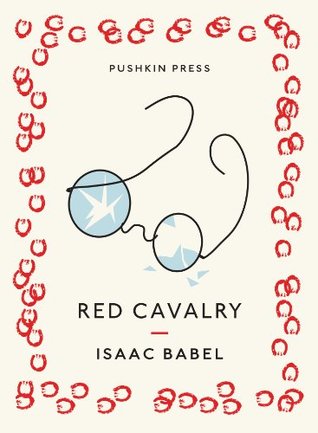
Red CavalryIsaac Babel, who was a journalist and propagandist for the Red Army in the 1920’s during the Russian war against Poland, used his diary as a source for the stories in this collection.  Babel’s narrator, like himself, is a Jewish intellectual who doesn’t quite fit in with the rest of the Cossack soldiers in the regiment to which he is assigned.  Also, his attempts at propaganda don’t quite benefit the Bolshevik cause, although they don’t really harm it either; it is surprising and sad that the Soviets had Babel killed after all.

Babel provides us with a vivid account of the scenes, horrors, sights, sounds and even the humor that comes from war.  One of my favorite stories is entitled “Pan Apolek.”  Apolek is a local artist who has been commissioned to paint the holy scenes in one of the churches that the narrator visits.  When Apolek decides to put the faces of local citizens on the most holy figures in the Bible, there is a religious uproar.  But the citizens themselves seem uplifted that their faces are captured in art in this most holy place.

The strongest parts of all of these stories are the many and varied scenes which Babel sets for us.  He describes not only churches, but towns and the everyday happenings of its citizens.  For example, as the narrator walks around a village waiting for the Sabbath he describes the various shops and shopkeepers he encounters.  Their stores seem to be closed but we are not sure if they are closed permanently because of the war.  He also describes the army on the march and the dead bodies they encounter as they make their way from one town to another.

The narrator describes cavalry leaders and infantrymen as well as some of the more unimportant or auxiliary positions.  He gives us the story of his wagon driver, for instance, and the story of a shepherd who contracted syphilis while sleeping with a prostitute bought by his own father.  There are so many different characters which the narrator encounters that it is impossible to sum them up neatly in one review.

This is not a typical story with a clearly delineated plot and developed characters.  It is a collection of meandering, stream of consciousness stories about one man’s reaction to the landscapes, sights, sounds and people he encounters during a war.   The story mimics the chaos of warfare and many of the narratives end abruptly, like the lives of the soldiers in the Red Cavalry.  Babel’s stories are an important piece of Russian history and literature which I am glad that Pushkin Press has decided to bring to our attention.

About The Author:
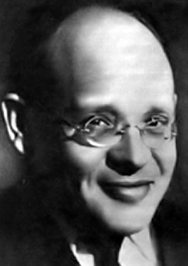
Isaac BabelIsaak Emmanuilovich Babel (Russian: Исаак Эммануилович Бабель; 1901 – 1940) was a Russian language journalist, playwright, literary translator, and short story writer. He is best known as the author of Red Cavalry, Story of My Dovecote, and Tales of Odessa, all of which are considered masterpieces of Russian literature. Babel has also been acclaimed as “the greatest prose writer of Russian Jewry.” Loyal to, but not uncritical of, the Communist Party of the Soviet Union, Isaak Babel fell victim to Joseph Stalin’s Great Purge due to his longterm affair with the wife of NKVD chief Nikolai Yezhov. Babel was arrested by the NKVD at Peredelkino on the night of May 15, 1939. After “confessing”, under torture, to being a Trotskyist terrorist and foreign spy, Babel was shot on January 27, 1940. The arrest and execution of Isaak Babel has been labeled a catastrophe for world literature.

4 Comments

Filed under Classics, Historical Fiction, Literature in Translation, Russian Literature

Review: The Sound of the Sundial by Hana Andronikova

I received a review copy of this title from the publisher. The Sound of the Sundial won the Czech Republic’s prestigious Magnesia Litera Award in the category of Best New Discovery, just a few years before its author died of cancer at the age of 44. It is making its world premiere appearance in English here from Plamen Press.

My Review:
Sound of the SundialThis is the beautiful yet devastating story of a Czech family that is torn apart by the tragedies and atrocities of World War II.  Rachael and Thomas are deeply in love and are the type of couple who perfectly compliment each other:  Rachael has a fiery temper and is very passionate and impulsive while Thomas is calm, thoughtful and contemplative.  Their relationship is traced in the book from its very beginning where they meet in Zlin when Rachael’s devoutly Jewish parents forbid her to have a relationship with Thomas who is not Jewish.

Rachael, of course, defines her parents and marries Thomas despite their objections.  Thomas is a builder for a prominent shoe manufacturer in Czechoslovakia and they send him to India in order to plan a new factory that will be set up in Calcutta.  Quite a bit of the story involves flashbacks to Thomas and Rachel’s time in India where they are also raising their young son Daniel.  The language of the book perfectly captures the sensual, beautiful and almost savage landscape of Calcutta.

Rachael and Thomas return to Czechoslovakia when Rachael’s mother is dying.  Unfortunately, this corresponds with the German invasion of Eastern Europe and the persecution of Jews.  Thomas desperately tries to get his family out of the country before his wife is sent to the Ghetto but he doesn’t manage to do this before his wife is torn from their family.  The scenes of Rachael’s removal and separation from her husband and son are heartbreaking.  Eventually Rachael is sent to Auschwitz where her emotional endurance among deplorable circumstances is beyond description.  Thomas and Daniel long to hear word about her and fight their own madness as they wonder whether or not they will ever see her again.

This is truly a beautiful story about a family and their hardships that echo through the generations.  Even though Daniel is an old man with his own grandchild the stories about his mother and father still bring him to tears.  I highly recommend THE SOUND OF THE SUNDIAL for those who enjoy historical fiction set during World War II as well as an engrossing story.

About The Author:
H. AndronkinovaHana Andronikova was a widely-published Czech writer. She received the Magnesia Litera Award in 2002 for her first novel, Zvuk slunecnich hodin [The Sound of the Sundial] (2001) and went on to author the short story collection Srdce na udici [Heart on a Hook] (2002). Her fiction has appeared in numerous journals and anthologies in Europe and the U.S., including World Literature Today


Leave a comment

Filed under Historical Fiction

Review: The Mapmaker’s Children by Sarah McCoy

I received an advanced review copy of this title from the publisher through TLC Book Tours.

My Review:
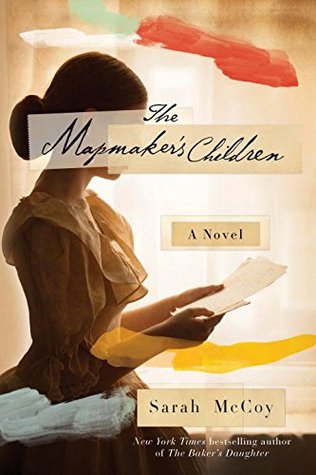
Mapmaker's ChildrenThis story is a dual narrative that traces the lives of two women: Sarah Brown is living in the 1860’s and her father is fighting to free slaves, and Eden Anderson is living in the 21st century and lays around wallowing in self-pity and thinking about her fertility issues.  The contrast between the characters of these two women and how they deal with hardships is extreme.  Sarah learns very early on that she cannot have children because of a high fever from dysentery, but she dedicates her life to her father’s cause of helping free slaves through the Underground Railroad.  Sarah draws maps so that these men and women who are desperate to escape their enslavement can make it to safety.  Even when Sarah’s father is hanged for his part in the Harper’s Ferry uprising, she bravely carries on the abolitionist cause at great personal risk.

Eden, on the other hand, is absorbed by anger and depression because she cannot have a child and she sadly takes her frustrations out on her husband.  When the story opens Eden is ready to give up on her marriage and move out.  The juxtaposition between the strength of Sarah and the weakness of Eden makes Eden an even more unlikeable character.  The eleven-year-old girl named Cleo who lives next door to Eden is a much more interesting and feisty character and both she and a dog named Cricket finally challenge Eden to stop feeling sorry for herself.

The two narratives gradually intersect as a secret door in the pantry of Eden’s house reveals the head of a doll.  With Cleo’s help Eden gets to the bottom of this mystery and she, predictably, learns some valuable lessons for her own life.

The strongest part of this novel is the story of Sarah Brown and her family as they fight for the abolition of slavery.  For me the story of Eden and her infertility were distracting and tiresome.  The events of the Harper’s Ferry Rebellion and the fight for freedom is such a powerful and interesting period of history and these events could stood on their own as the focus of an historical fiction novel.

I am interested to hear what other readers think: do you enjoy historical fiction novels with dual narratives in different time frames?

See what other bloggers are saying about the MAPMAKER’S CHILDREN book tour.  Click on the TLC banner below for a listing of all the stops on the tour.

About The Author:
McCoySARAH McCOY is the New York Times, USA Today, and international bestselling author of The Baker’s Daughter, a 2012 Goodreads Choice Award Best Historical Fiction nominee; the novella “The Branch of Hazel” in Grand Central; The Time It Snowed in Puerto Rico; and The Mapmaker’s Children (Crown, May 5, 2015).

Her work has been featured in Real Simple, The Millions, Your Health Monthly, Huffington Post and other publications. She has taught English writing at Old Dominion University and at the University of Texas at El Paso. She calls Virginia home but presently lives with her husband, an Army physician, and their dog, Gilly, in El Paso, Texas. Sarah enjoys connecting with her readers on Twitter at @SarahMMcCoy, on her Facebook Fan Page or via her website, http://www.sarahmccoy.com.

tlc-logo-resized

9 Comments

Filed under Historical Fiction

Review: Diamond Head by Cecily Wong

I received an advanced review copy of this book from Harper.

My Review:
Diamond HeadBohai is a quiet, unassuming man who, growing up in China at the beginning of the 20th century, is viewed as different even from his early childhood.  This book is a narrative of his life as seen through the eyes of the women that surround him: his mother, his wife and his daughter.  It seems that none of them truly understood or appreciated him until his early and tragic death.  Their grief forces them to look back on their own lives, their family secrets and their experiences that greatly impacted this silent, yet honorable man.

Lin Leong, Bohai’s mother, could not produce a child for her husband.  She has two stillbirths, both of which produce girls and she is so desparate to produce a boy to become his father’s heir, that she hires a concubine for her husband.  The concubine, only 14 years old at the time, gives birth to Bohai and dies shortly thereafter.  Lin and her husband dote on their only son until the age of five when they realize that he is not like other children. Instead of being active like other boys his age, he rarely speaks and he is content to sit quietly in his room and read books.  His mother doesn’t think he will ever marry and for a while she even fears Bohai is gay.  When her husband moves the family from their home in China to Hawaii, Lin is hoping that this will be a new beginning for the entire family.

Amy, Bohai’s wife comes from a very poor family of twelve.  It is evident from her narrative that she wants nothing more in life than to dig herself out of her poverty.  When she starts working for her father’s photography business, World War II has just broken out and dozens of men who are ready to be shipped out come to the studio to have their pictures taken.  This is when Amy meets a handsome engineer named Henry.  They have a whirlwind, month long romance and before Henry goes off to war in Europe, he asks Amy to wait for him.  While Henry is away, she is introduced to the Leong family and marriage is proposed between Amy and the shy Bohai.  Amy has a difficult decision, but in the end she opts for wealth and security over passion and love.

The final woman connected to Bohai is his eighteen year old daughter Theresa who is pregnant and, at such a young age, has a life fraught with hardship and difficult decisions.  When Bohai dies, Theresa is told all of the long-buried family secrets about her father and his family.  Theresa also took Bohai for granted when he was alive and now she deeply regrets that she did not build a closer relationship with her father when she had the chance.

DIAMOND HEAD is a novel that kept my attention from beginning to end. The author is adept at building the storyline of the family a bit at a time to keep the reader turning the pages. I highly recommend this interesting historical fiction novel, a triumphant first piece of writing from Cecily Wong.

About The Author:
Cecily WongCecily Wong is Chinese-Hawaiian. She was born on Oahu and raised in Oregon. Diamond Head grew from family stories told to her by her parents and grandparents. Wong graduated from Barnard College, where the first pages of this novel won the Peter S. Prescott Prize for Prose Writing. She lives in New York City.

Click on the TLC tour banner below to see the full list of stops on the blog tour:

tlc-logo-resized

11 Comments

Filed under Historical Fiction

Review: The Given World by Marian Palaia

I received a review copy of this title from Simon and Schuster through NetGalley.

My Review:
Given WorldRiley is a sad, lost, melancholy soul who has commitment issues and is not really even sure if she is capable of loving anyone.   When she is nine, her beloved older brother, Mick, goes off to fight in Vietnam where goes MIA.  The fact that her brother died is difficult enough for her to deal with, but not knowing how he dies or where he is buried compounds her grief.  When Riley is in high school she has a boyfriend named Darrell who also goes off to the war.  It is this second loss of a male in her life that really seems to push Riley over the edge.

Riley leaves Montana and takes off for the Ocean, which she longs to see and be near.  She ends up in San Francisco where her life is a tumultuous string of jobs, friends, drugs and dwellings.  She seems to be running from something, but she doesn’t know from what, and she seems to be looking for something, but she doesn’t know what that something is either.

Since it is  the Vietnam War that has so altered Riley’s life, she decides to leave San Francisco and live in Saigon for nine months.  I thought that from the descriptions of the book Riley was going to actively look for her brother there to figure out what happened to him.  But her life in Vietnam is much the same as it was in San Francisco with binge drinking, sleeping with random men and living recklessly.  I did not find this part of the book particularly interesting, although I suppose it was the author’s attempt at trying to portray the fact that Riley is running farther and farther away from her life and her problems.

In the end, an illness brings Riley back to Montana and she learns she really should not have pushed away her parents who, in dealing with their own grief over their lost son,  could have helped her get over her own.  Riley keeps saying that she wanted to leave her small town in Montana and not be trapped, when all along it is the one true place where she is accepted and loved unconditionally.   THE GIVEN WORLD is an sad coming-of-age story in which the main character learns that instead of running away, she should have dealt with the world as it was given to her.

About The Author:
Marian PalaiaMarian Palaia lives in San Francisco, California, and sometimes, when it is not winter, in Missoula, Montana. She is a graduate of the MFA program at Madison, Wisconsin, where she received the 2012 Milofsky Prize, and of the MA program in Creative Writing at San Francisco State University. She was a 2012-2013 John Steinbeck Fellow at San Jose State University and a 2014 recipient of a grant from the Elizabeth George Foundation. Her work has been published most recently in The Virginia Quarterly review (http://www.vqronline.org/fiction/cu-chi); TriQuarterly (http://www.triquarterly.org/issues/issue-144/last-place-she-stood); and Joyland (http://www.joylandmagazine.com/regions/san-francisco/hello-kitty-justice-league-selections). Two of these stories are also chapters in her forthcoming (April 14, 2015 from Simon and Schuster) novel The Given World.


1 Comment

Filed under Historical Fiction