Category Archives: France

Review: The 6:41 to Paris by Jean-Philippe Blondel

Today I welcome France Book Tours back to the blog with an intriguing literary novel from New Vessel Press.  This novel was originally written and published in French and this English translation has been done by Alison Anderson. Scroll down to the end of the review to enter to win your own copy and to look at all of the stops on the book tour.

My Review:

641 to ParisCécile is a stylish and confident forty-seven year old entrepreneur who owns a successful cosmetics company, has been married for twenty years and has a teenage daughter.  When the book opens, she has just visited her elderly parents for the weekend and is about to take the 6:41 a.m. train back to her home in Paris.  As her parents age, her weekend visits to their home are becoming harder for her and more depressing.  The only thing that Cécile wants to do on the train is to relax and have a few hours of peace and quiet.  But when she realizes who sits down next to her on the train, her commute back home is anything but restful.

Philippe Leduc is also forty-seven but time has not been as kind to his physique as it has to Cécile.  Philippe is divorced and his teenage children pretty much want nothing to do with him and he has a monotonous job selling televisions in a big box chain store.  He is also on the 6:41 a.m. train to Paris but for a very different reason than Cécile.  Philippe’s childhood friend is dying of cancer and Philippe is on his way to the hospital in Paris to say his final goodbyes.  Philippe also assumes that his train ride will be quiet, until he realize that the only seat left on the train is the one next to his ex-girlfriend, Cécile.

Philippe and Cécile had a four month relationship when they were in their early twenties.  They were both very different people at the time: Philippe was the most popular boy in school, handsome, and very popular; Cécile was plain looking, shy and did not have many friends.  They immediately recognize one another on the train, but neither one of them has the courage to speak up and acknowledge one other’s presence.  They each sit in silence and contemplate the disaster that was their short-lived romantic relationship that ended more than twenty years ago.

While they were dating, the relationship, for the most part, seemed fine but Cécile always had the feeling that Philippe was better than her and that he would inevitably dump her for someone better.  They go on a trip to London together which ends up being an awful memory for both of them because it is on this very trip that Philippe decides to end the relationship in the worst possible way.  What is interesting about the end of their affair is the effect it has on each of them.  Cécile decides she will never again be made to feel inferior and will not be treated so badly by anyone.  Philippe, on the other hand, knows that he has behaved in a very mean and churlish way towards Cécile and this eats away as his pride and confidence.  He is never able to recover from the guilt of this bad breakup and never has a successful relationship after his time with Cécile.

The ending to this book is very interesting as the author builds up to the conclusion.  We are left wondering if Cécile and Philippe will ever speak with each other; and if they do have a conversation will it be amicable?  New Vessel Press has provided us with another entertaining translation of a charming French book.

About The Author/Translator:

Jean-Philippe Blondel was born in 1964 in Troyes, France where he lives as an author and English teacher.  His novel The 6:41 to Paris has been a bestseller in both France and Germany.

Alison Anderson is a novelist and translator of literature from French. Among the authors she has translated are JMG Le Clézio, Christian Bobin, Muriel Barbery and Amélie Nothomb. She has lived in Northern California and currently lives in a village in Switzerland.

Follow New Vessel Press on Twitter | on Facebook Sign up to receive their latest news and deals.

Giveaway:

You can enter the global giveaway here or on any other book blogs participating in this tour. Be sure to follow each participant on Twitter/Facebook, they are listed in the entry form below. This giveaway is open to US residents only. Five participants will each win an ARC print copy of this book.

Enter here

CLICK ON THE BANNER TO READ OTHER REVIEWS AND AN EXCERPT

641 to Paris_Banner


11 Comments

Filed under France, Literature in Translation

Review: The Man in a Hurry by Paul Morand

I received an advanced review copy of this title from Pushkin Press through Edelweiss.  This book was originally written and published in French in 1941 and this English translation has been done by Euan Cameron.

My Review:
The Man In A HurryPierre has been in a hurry for all of his life.  He does multiple tasks at a time in order to speed up his life.  He shaves, gets dressed and brushes his teeth simultaneously; he drives too fast and he takes stairs three and four at a time.  There is no task for which Pierre will slow down.  The parts of the book that describe his lightening fast lifestyle are humorous.  For example, there is an incident in which his car breaks down after an accident and instead of waiting for help, Pierre abandons the car with his friend in it and proceeds to his destination on foot.

But Pierre’s fast life has not allowed him to slow down and forge any true or lasting relationships.  His closest friend and partner, the one whom he abandons with his care, decides he has had enough and severs their business relationship.  His manservant who has worked for Pierre for many years is tired of being yelled at and almost run over by Pierre so he quits.  Pierre is essentially alone in his life until he meets Hedwige.

Hedwige, her two sisters and her mother are the opposite of Pierre.  Their favorite activity is lounging around on their mother’s bed; they are never in a hurry for anyone or anything.  When they meet Pierre they are amused by this quirky man and his swiftness.  Pierre is immediately attracted to Hedwige and proposes marriage.  But can the love of a good woman really slow Pierre down and make him appreciate his life?

When Hedwige marries Pierre, the most beautiful gift that he decides he can give her is to delay the conjugal relations on their wedding night.  Pierre arranges for separate bedrooms in their apartment and decides to wait six weeks to get to know Hedwige before he has sex with her.  What better gift can he possibly give her than his patience, especially when it comes to putting off one of the most basic human drives.

When Hedwige becomes pregnant, the old pull of always being in a hurry starts to draw Pierre back in.  How can he possibly wait for nine months to see his child?  Hedwige begins to find comfort again in her mother’s bedroom with her other sisters and she slowly shuts Pierre out.  The matter comes to an ugly head when Pierre wants Hedwige to induce labor when she is only seven months pregnant.

This book has a humorous side as we read all of the ridiculous things Pierre does to hurry up.  But there is also an important social commentary about appreciating what we have and living in the moment.  If we are always in a hurry and worrying about what is happening next then we don’t appreciate those who are most important to us.

About The Author:
Paul MorandPaul Morand was a French diplomat, novelist, playwright and poet, considered an early Modernist.

He was a graduate of the Paris Institute of Political Studies (better known as Sciences Po). During the pre-war period, he wrote many short books which are noted for their elegance of style, erudition, narrative concision, and for the author’s observation of the countries he visited combined with his middle-class views.

Morand’s reputation has been marred by his stance during the Second World War, when he collaborated with the Vichy regime and was a vocal anti-Semite. When the Second World War ended, Morand served as an ambassador in Bern, but his position was revoked and he lived in exile in Switzerland.

Post-war, he was a patron of the Hussards literary movement, which opposed Existentialism. Morand went on to become a member of the Académie française; his candidature was initially rejected by Charles de Gaulle, the only instance of a President ever exercising his right to veto electees to the academy. Morand was finally elected ten years later, though he still had to forgo the official investiture).

Paul Morand was a friend of Marcel Proust and has left valuable observations about him.

11 Comments

Filed under Classics, France, Literature in Translation, Literature/Fiction

Review: Henri Duchemin and His Shadows by Emmauel Bove

I received an advanced review copy of this collection of short stories from The New York Review of Books.  The stories were written in 1928 in French and this English version has been translated into English by Alyson Waters

My Review:
Henri DucheminThis collection of short stories all feature men who are unhappy and looking for someone or something with which to identify.  In the first story entitled “Night Crime,”  Henri Duchemin, a forty-year-old man,  is alone on Christmas Eve in a pub lamenting over his poverty and loneliness and the last thing he wants to do is to go back to his cold, empty flat.  He wanders around the streets in the rain until he really has no choice but to go home.  But before he goes home, a woman whome he meets on the streets notices his sadness and abrasively suggests that he kill himself.  As he drifts off to sleep, thoughts of suicide and murder haunt his restless dreams.

My favorite story in the collection is written in the epistolary style.  “What I saw” is a letter written by Jean to an unnamed friend; Jean desperately wants his friend’s opinion about something that he saw involving his girlfriend that disturbed him greatly.  Jean’s letter begins with a description of his girlfriend, Henrietta, and her devotion to Jean.  One thinks she is the model woman until, one day, Jean sees her sitting in a taxi and kissing another man.

When Jean confronts Henrietta about the liaison, Henrietta adamantly denies ever being with another man.  Henrietta and Jean’s other friends try to convince Jean that he must have been mistaken and only saw someone who resembled Henrietta.  Jean wants so much to continue his relationship with Henrietta and as he finishes his tale he begs the recipient of the letter to tell Jean his true opinion about Henrietta’s alleged indiscretion.  Jean, like the other characters in the story, has a tenuous grasp on an important relationship in his life and he is eager and even desperate not to lose it.

Another story worth mentioning is “The Story of a Madman.”  Fernand, the narrator, makes it a point at the beginning of his tale to address the reader and inform him or her that he is not, in fact, crazy or out of his mind.  He goes on for a few pages giving us some background about his activities and frame of  mind so that when he carries out his plan, the reader will think he is perfectly sane in doing so.

Fernand then proceeds to have a meeting with his father and tells his parent that he never wants to see him again.  Fernand then makes his way to his girlfriend, Monique’s apartment;  He assures us that he is deeply in love with Monique and they have a fantastic relationship, but he informs her that he never wants to see her again either.  The next stop on Fernand’s list is his best friend, with whom he also breaks off all contact.

Fernand’s final stop on his break-up tour is with his sister and brother-in-law.  After a friendly conversation, he also informs them that he never wants to see them again.  So, we are left wondering why Fernand would alienate all of the people in his life that he loves.  There are hints throughout the story that Fernand is exercising his willpower and that he is attempting to make a plan and adhere to it no matter what others may think.  But the last few sentences of the story leave us with a haunting suggestion that maybe his motives for leaving are a bit more depressing and sinister.

This is a small yet powerful collection of stories that will leave you thinking about these men and their feelings of alienation and unhappiness.  Bove’s language is sometimes curt and sometimes poetic.  He weaves these small tales in such a way that we are never sure where they will end.  I highly recommend this brilliant collection of writing brought to us by The New York Review of Books classics collection.
About The Author:
E BoveEmmanuel Bove, born in Paris as Emmanuel Bobovnikoff, died in his native city on Friday 13 July 1945, the night on which all of France prepared for the large-scale celebration of the first ‘quatorze juillet’ since World War II. He would probably have taken no part in the festivities. Bove was known as a man of few words, a shy and discreet observer. His novels and novellas were populated by awkward figures, ‘losers’ who were always penniless. In their banal environments, they were resigned to their hopeless fate. Bove’s airy style and the humorous observations made sure that his distressing tales were modernist besides being depressing: not the style, but the themes matched the post-war atmosphere precisely.

9 Comments

Filed under France, Literature in Translation, New York Review of Books, Short Stories

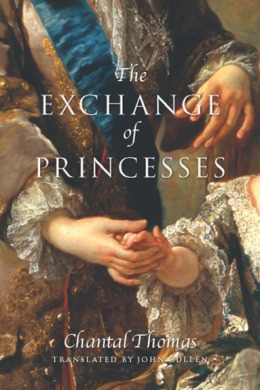
Review: The Exchange of Princesses by Chantal Thomas

I received an advanced review copy of this title from the publisher, Other Press.  This was originally written and published in French and this English translation is by John Cullen

My Review:
Exchange of PrincessesIn 1721, the regent of France, Philip D’Orleans, decides that the best alliance that the eleven-year-old King Louis XV can make with Spain is through marriage.  The regent proposes that Louis XV marry the princess of Spain, who is only four-years-old at the time of their betrothal.  The regent will also give his own daughter, Louise Elizabeth, a moody 11- year-old girl, to the Prince of Spain, also just a boy of 12,  as a show of good faith.  If you are already confused about names and ages then please don’t let that discourage from reading the book; I was confused in the beginning as well but the author does a good job of repeating the names and making the characters clear and distinct.  In 1722, both princesses set out on a long and arduous trek on the unpaved and rough roads between France and Spain.  The princesses are exchanged on the middle of the journey and each one proceeds to her new home and position.

My favorite part of the book is reading about the four-year-old Spanish princess;  like any little girl she loves her dolls, playing games, and being lavished with attention.  She is talkative and precocious and all of France and the French court becomes smitten with this charming little girl.  The author describes the very adult tasks that she must endure such as receiving ambassadors from foreign countries and attending balls in her honor.  At one such ceremony the little infanta is described as sucking on her thumb and clutching her favorite doll while a group of academics from the University of Paris pay their respects to her.  The only one who is not taken in by the charms of the princess is her own husband, King Louis XV.

Things do not go quite as smoothly as Philip D’Orleans had expected as far as these arranged marriages are concerned.  But, what did the regent expect when he decided to base political alliances on the lives of children?  Even though the little princess, Marianna Victoria, is a delightful four-year-old, her future husband, the king, is a jealous and petty eleven-year-old boy who is very upset that his nanny is now taking care of his future bride.  As he grows up he has no interest, whatsoever in spending any time with her or getting to know her.  The infanta, on the other hand, worships the king and is so thrilled whenever he is around her.

Meanwhile, in Spain the roles are reversed as Louise Elizabeth, the future Queen of Spain, wants nothing to do with her husband Don Luis.  The future King of Spain is so thrilled to have a pretty wife and he wants nothing more than to consummate their marriage.  But Louise Elizabeth does everything she can to keep the Prince away from her.  I don’t want to give too much away, but nothing works out in the end as the regent had intended.

The Exchange of Princesses actually reads more like a non-fiction history book than an historical fiction.  The author uses real letters from the characters involved as well as newspaper articles from the time period.  There are great details about ceremonies, details of palaces and descriptions of costumes.  If you are looking for a fast-paced, exciting historical fiction novel then this is not the book to read.  However, if you want to learn something about the political situation between France and Spain during the 18th century and the players involved then this well-researched novel is the perfect choice.


About The Author:
Chantal Thomas (born 1945 in Lyon) is a French writer and historian. Her 2002 book, Farewell, My Queen, won the Prix Femina and was adapted into a 2012 film starring Diane Kruger and Léa Seydoux.

Thomas was born in Lyon in 1945, and was raised in Arcachon, Bordeaux, and Paris. Her life has included teaching jobs at American and French universities (such as Yale and Princeton) as well as a publishing career. She has published nineteen works, including essays on the Marquis de Sade, Casanova, and Marie Antoinette.

In 2002, Thomas published Les adieux à la reine (Farewell, My Queen). The novel gave a fictional account of the final days of Marie Antoinette in power through the perspective of one of her servants. It won the Prix Femina in 2002, and was later adapted into the 2012 film Farewell, My Queen. The film stars Diane Kruger as the titular queen and Léa Seydoux as her servant Sidonie Laborde. Thomas co-wrote the screenplay,and it opened the 62nd Berlin International Film Festival. Helen Falconer of The Guardian called the work “a well written slice of history” with “evocative, observant prose,” but criticized it for creating a narrator who “merely provides us with a pair of eyes to see through rather than capturing our interest in her own right.” While disagreeing in its classification as a novel, Falconer did however add that Farewell, My Queen “generates in the reader a real sense of being a fly on the wall, eavesdropping on the affairs of the great and the not so good.”

Thomas is currently the director of research at the French National Centre for Scientific Research.


3 Comments

Filed under France, Historical Fiction, Literature in Translation, Spain

Review: Two Novellas from Flaubert and Dostoevsky

I recently stumbled across a sale that Melville House Publishers was having on their novella series.  They have released 56 novellas from famous authors across the world.  I chose two titles, A Simple Heart by Gustave Flaubert and The Eternal Husband by Fodor Dostoevsky to review here.  Please check out all of the great titles in their selection.  You can even buy a subscription to the novella series and have novellas show up on your doorstep every month: http://www.mhpbooks.com/series/the-art-of-the-novella/

A Simple Heart by Gustave Flaubert:
A simple heartThis novella introduces us to a simple servant woman who is cast out of her own home as an orphan at an early age and searches for intimacy and love for the rest of her life.  Felicite falls in love with a young man who ends up rejecting her so that he can marry a rich, old widow and avoid conscription.  After this disappointing heartache, Felicite never finds another man that she can trust her heart to.  When she comes into the service of Madame Aubain, a young widow with two small children, she is the most faithful and loyal servant anyone could ask for.  Felicite bestows love on the two children who eventually leave home for school and meet a sorrowful end due to illness.  Felicite is also given a parrot which she lavishes with love and attention.  But, like everyone else in her life that she has loved, he dies and leaves her.  This is not a tale with a happy ending but gives us a realistic view of life, love and loss.


The Eternal Husband by Fodor Dostoevsky:
The eternal husbandThe story opens with Velchaninov living in St. Petersburg in an apartment flat by himself trying to iron out the details of a lawsuit.  He has become increasingly depressed and melancholy and has eventually cut himself off from all of his friends and acquaintances.  One day an old friend, whom he has not seen for nine years, shows up on Velchaninov’s doorstep.  He is stunned to see his friend after so many years and further shocked when Trusotsky announces that his wife has died of consumption.  Velchaninov had an affair with Trusotsky’s wife and that is the main reason he hadn’t visited the couple for nine years.  When Trusotsky’s wife broke the affair off, Velchaninov vowed never to see either of the again.

Velchaninov describes Trusotsky as “an eternal husband,” which to him means a man that is subservient to a domineering wife.  Nowadays we might call Trusotsky “henpecked” or “whipped.”  Trusotsky descends into a depression that is fueled by excessive drinking; he turns out to be a man who cannot live without a wife, who cannot operate in the world without the confines of a marriage.  In typical Dostoevsky fashion, we get a glimpse into the male psyche and an interesting and ironic storyline.  I thoroughly enjoyed this story as much as his longer works.

According to the Melville House website, novellas are oftentimes ignored by academics and publishers.  I would love to hear about other readers’ favorite choices as far as this overlooked style of writing.  Do you like novellas and, if so, what are some of your favorites?


18 Comments

Filed under Classics, France, Literature in Translation, Novella, Russian Literature