Category Archives: British Literature

Review: Whispers Through a Megaphone by Rachael Elliott

I received a review copy of this title from Pushkin Press.

My Review:
MegaphoneThe two main characters in this book have allowed other people to influence their lives to the point of misery.  When their stories finally intersect, they serve as a comfort for each other and form a kind of unconditional friendship that both of them have desperately needed.  Miriam hasn’t left her house in three years because of a traumatic incident for which she wrongly blames herself.  As we get to know Miriam we learn that her mental health issues have stemmed from a lifetime of mental and physical abuse at the hands of her mother.

It is very difficult to read about Miriam’s story and I usually avoid books that describe child or animal abuse because it is just too upsetting.  But Miriam’s resilient spirit and her drive to put the past behind her is uplifting.  She is told when she is a very young child that her father died when she was an infant and the only other family member that she has any contact with is her maternal grandmother.  But Miriam’s mother has not allowed her to see her grandmother and so her only source of comfort are letters from her grandmother.  But Miriam’s mother is so cruel and jealous that she puts a stop to the letters which causes Miriam additional mental anguish.  The cruelest punishment that is imposed on Miriam is that she is never allowed to talk above a whisper because her mother can’t stand any noise.  The punishment for speaking above a whisper in her mother’s presence is nothing short of torture.  As an adult Miriam continues to speak at a whisper and cannot break this abusive habit forced on her by her mother.

Ralph is also unhappy when we first meet him, but the source of his anxiety is his bizarre, demanding and overpowering wife.  Ralph and Sadie met while in college and if she didn’t become pregnant with twins then the relationship would never have lasted.  Sadie is bitter that she is forced to give up on her degree and the budding relationship with her roommate Allie.  Sadie’s questioning of her sexuality and her unhappiness in something that has always stood in the way of Ralph and Sadie’s marriage.  When Ralph accidentally uncovers this astounding secret, he flees his house and decides to live alone in the woods.  It is in this woods that Miriam comes upon him during what is her first day out of her house in three years.

I have to admit that I was reading their separate stories at the beginning of the book, I wasn’t convinced that these two people with such separate lives would meet in a way that was believable.  But Elliott masterfully weaves together the story so that Ralph and Miriam encounter each other under just the right circumstances.  They are both kindhearted people and their sincere compassion allows them to give each other honest and frank opinions.  Miriam slowly comes back to the world of the living and gains the courage to get a job and even go on a date.  Ralph finally decides to go home and face his teenage sons and the wreck of his marriage.

Whispers Through a Megaphone is an uplifting book that shows us it’s never too late in life to form a friendship that is meaningful and gratifying.  Great characters, an interesting plot and clever writing all make for a successful first book from Elliott.

About the Author:
R ElliottRachel Elliott is a writer and psychotherapist. She has worked in arts and technology journalism and her writing has featured in a variety of publications, from digital arts magazines to the French Literary Review. She has also been shortlisted for a number of short story and novel competitions in the UK and the US. Rachel was born in Suffolk, and now lives in Bath. Whispers Through a Megaphone is her first novel. It was longlisted for the 2016 Baileys Women’s Prize for Fiction.

For more information about the book and to hear Rachel read an excerpt visit the Pushkin Press website:  http://pushkinpress.com/rachel-elliott-reads-from-whispers-through-a-megaphone/

7 Comments

Filed under British Literature, Pushkin Press, Summer Reading

Review: The Noise of Time by Julian Barnes

I have been recovering from eye surgery for the past few weeks and this is the reason for my lack of posts.  I am slowly getting better and am eager to share reviews of a few fantastic books I have read over the course of the summer.  First up is my review of The Noise of Time by Julian Barnes which, I believe, was eligible for the Man Booker Prize this year.  I am disappointed that it did not make the longlist because it is, in my humble opinion, a true work of literary genius.  The edition I read was published in the U.S. by Knopf.

My Review:
Noise of TimeThis skillfully written and poetic novel, which serves as a fictional biography of the Russian composer Dmitri Shostakovich, is divided into three parts.  The author cleverly chose what, on the surface, appear to be trivial occurrences in the life of the world-renown composer, but on closer examination reveal the soul crushing hold that Despotism and absolute Power had on this creative genius.  The first part of the book is centered around Shostakovich’s nightly ritual of getting dressed and standing by the lift outside his apartment.  While his wife and daughter are safely tucked in bed, the composer stands in the hallway, smoking cigarettes and trying to stay awake for his unusual, nocturnal routine.
It is revealed throughout the course of the first part that Lenin attended a performance of Shostakovich’s opera Lady Macbeth of Mtsensk and hated it.  The next day a bad review which labeled the performance as “muddle instead of music” appeared in Pravda and the composer became terrified that this would not only be the end of his music career but also the end of his existence.  He did not want to be dragged out of bed in the middle of the night and suffer the indignity of being taken to prison in his pajamas.  So he waits for Stalin’s henchmen fully clothed because this was the one and only aspect of the situation he could control.  The first part of the book is absolutely riveting because we never know if or when Shostakovich will be snatched away by Stalin’s thugs and the great composer has a couple of strokes of good luck which factor into the suspense.

The second part of the book is devoted to a conference that Shostakovich is required to attend in the United States.  By this time in his life he is a world famous composer and his music is well-known beyond the borders of the Soviet Union.  But Shostakovich is not only going to the United States to discuss his music but he is also being used as a tool by the Soviet government to promote Communism.  The indignity of delivering speeches which he has not written that extol and praise the virtues of Communism and condemn his beloved Stravinsky make him embarrassed and depressed.  Whenever Shostakovich talks about Power, always written with a capital “P,” and the hold it has over his art and his life my heart broke for the anxiety and mental anguish that this man suffered.  It is nothing short of astonishing that this artist was able to compose beautiful music and keep his family safe while under such intense scrutiny from the highest officials in the Soviet regime.

In the final part of the book Shostakovich suffers towards the end of his life from what he feels is the greatest and deepest blow to his dignity and his self-worth.  Up to this point in his life and career the composer has miraculously been able to avoid becoming a member of the Party.  But those in a position of Power want to exploit Shostakovich’s success once more and make him the Chairman of the Russian Confederation of Composers.  He does everything he can to avoid accepting the title and becoming a member of the party, but in the end Power is too strong for any man to resist, even one who is a famous artist.  Shostakovich tells his son that he only cried twice in his adult life: once when his first wife died and once when he joined The Party.  The last third of the book was the saddest and most difficult to read because Shostakovich is a broken man whose soul has been crushed by Power.

Barnes gives us a glimpse into the internal dialogue and turmoil of this artist and the result is a deeper understanding of the composer’s life under Stalin’s regime.  Even though he had a nice apartment, a car and driver, and world-wide fame, he pays a dear price for all of these things.  Many criticize Shostakovich for not standing up to Power but Barnes, by reconstructing the composer’s innermost thoughts, shows us that dealing with totalitarianism is a complicated matter.   Whenever the composer contemplates refusing the “requests” of government officials, he thinks of his family, “If you saved yourself, you might also save those around you, those you loved.  And since you would do anything in the world to save those you loved, you did anything in the world to save yourself.  And because there was no choice, equally there was no possibility of avoiding moral corruption.”

About the Author:
J BarnesJulian Patrick Barnes is a contemporary English writer of postmodernism in literature. He has been shortlisted three times for the Man Booker Prize— Flaubert’s Parrot (1984), England, England (1998), and Arthur & George (2005), and won the prize for The Sense of an Ending (2011). He has written crime fiction under the pseudonym Dan Kavanagh.

Following an education at the City of London School and Merton College, Oxford, he worked as a lexicographer for the Oxford English Dictionary. Subsequently, he worked as a literary editor and film critic. He now writes full-time. His brother, Jonathan Barnes, is a philosopher specialized in Ancient Philosophy.

He lived in London with his wife, the literary agent Pat Kavanagh, until her death on 20 October 2008.

18 Comments

Filed under British Literature, Literary Fiction

Review: Hot Milk by Deborah Levy (Man Booker Longlist)

I received an advanced review copy of this title from Bloomsbury Publishing via Netgalley.  This title has just made the Man Booker Prize longlist for 2016.

My Review:
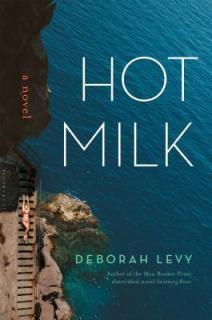
hot milkThe setting of this book, on the southern coast of Spain, is the perfect backdrop for a summer book.  Sofia has taken her mother, Rose,  to a clinic in Spain in order to treat her intermittent walking problems.  Sophia and Rose rent an apartment that overlooks the beach but Sofia’s mother doesn’t appreciate the beautiful setting because the only thing she can focus on is her poor health.

The main theme of the book is Sofia’s failure at life; she hasn’t finished her Ph.D. in Anthropology, she has a menial job in England as a coffee barista, and doesn’t even have her own home or apartment.  She is at the constant beck and call of her mother whose health issues have been the centerpiece of both of their lives.  Sophia’s mother has mortgaged her home in England in order to pay for this expensive clinic and it is their last ditch effort to get to the bottom of Rose’s health issues.  But it is evident from the beginning of the story that Rose is a hypochondriac and that many of her health problems are psychosomatic.  Have Rose’s health problems held Sophia back from having her own adult life or is Sophia just using her mother’s health problems as an excuse?  Sophia spends their time in Spain mulling over these issues and more.

Levy’s writing style is what I would describe as sparse.  We get the bare minimum as far as the plot is concerned.  For example, Sophia’s father walked out when she was a child and she hasn’t spoken to him in over ten years.  She thinks a lot about him and his new wife and daughter while she is in Spain.  All of a sudden towards the end of the book Sophia is on a plane to Athens to try and reconnect with her father but there is not much of an explanation as to the process of how she decides to get on that plane.  I can appreciate the fact that Levy chooses to spend her words on setting a scene or the inner dialogue of the characters, but as someone who enjoys the details of a plot I would have appreciated more of a back story.

Readers will either love or hate Sophia who seems numb and awash in what is happening around her.  It is perfectly clear that her mother’s illnesses are not serious but she lets her mother take advantage of her good nature as she waits on her hand and foot.  Sophia also has two sexual relationships with both a man and a woman while she is in Spain.  She doesn’t seem especially attached to either of her partners and her sexual preferences for male or female are ambiguous as well.  Sophia’s sexuality is another issue in her life about which she cannot come to a decision.  The most shocking example of her indifference towards her life is her constant encounters on the Spanish beach with medusa jellyfish.  She doesn’t heed the warnings posted on the beaches and swims through these creatures and suffers painful stings.  We wonder if these wounds are self-inflicted just so that she can prove to herself that she is still alive and can feel something.

Finally, I have to say a word about Dr. Gomez who runs the clinic where Rose becomes a patient.  He is well-dressed, well-spoken and since his wife has died, his greatest love is the cat who serves as the mascot for his clinic.  It is evident that Dr. Gomez sees Rose’s health issues for what they really are and Levy’s sense of humor come out through the battle of wills between Rose and Dr. Gomez.  One of the funniest scenes in the book is a luncheon arranged by Dr. Gomez at which he entices a stray cat to scratch Rose’s foot by dropping calamari onto the floor of the restuarant.  His clever little plot reveals that Rose’s feet can’t possibly be numb if she can feel a cat scratch.

This is an interesting books as far as the setting and the character study.  I am curious to see what others think about Levy’s latest novel.  Does anyone think it will make the Man Booker shortlist?

About the Author:
D LevyDeborah Levy trained at Dartington College of Arts leaving in 1981 to write a number of plays, highly acclaimed for their “intellectual rigour, poetic fantasy and visual imagination”, including PAX, HERESIES for the Royal Shakespeare Company, CLAM, CALL BLUE JANE, SHINY NYLON, HONEY BABY MIDDLE ENGLAND, PUSHING THE PRINCE INTO DENMARK and MACBETH-FALSE MEMORIES, some of which are published in LEVY: PLAYS 1 (Methuen)

Deborah wrote and published her first novel BEAUTIFUL MUTANTS (Vintage), when she was 27 years old. The experience of not having to give her words to a director, actors and designer to interpret, was so exhilarating, she wrote a few more. These include, SWALLOWING GEOGRAPHY, THE UNLOVED (Vintage) and BILLY and GIRL (Bloomsbury). She has always written across a number of art forms (see Bookworks and Collaborations with visual artists) and was Fellow in Creative Arts at Trinity College, Cambridge from 1989-1991.

11 Comments

Filed under British Literature, Literary Fiction

Review: The Trouble with Goats and Sheep by Joanna Cannon

I received an advanced review copy of this title from Scribner via Netgalley.

My Review:
Sheep and GoatsThis was the perfect book for me to take on my recent beach vacation to Maine.  The story is set in England during a sweltering heat wave in the summer of 1976.  This neighborhood in the English Midlands is so tight knit that when Mrs. Creasy goes missing, every one notices, even ten-year-old friends Tilly and Grace.  Since Tilly and Grace are on summer vacation, they decide to use their time to look for clues around The Avenue in order to find out what happened to Mrs. Creasy.  The first person they seek out for advice is the local pastor.

The pastor tries to reassure Tilly and Gracie who are worried about Mrs. Creasy.  The girls don’t want anyone else in their neighborhood to disappear so they look to the pastor for comfort and he tells them that God is everywhere and will protect them.  So in addition to finding Mrs. Creasy, the girls also set out to find where God is hiding himself on The Avenue.  As they visit each house, we are given a glimpse into the quirky and oddball characters that inhabit The Avenue.  Joanna Cannon has written a book that is chock full of likeable and sympathetic characters in whose lives we become emotionally invested.

Some might be hesitant to read a story from a child’s perspective, but the characters of Grace and Tilly are charming and funny.  The girls have some of the most droll and amusing lines in the book.  It is Grace who aptly describes the oppressive heat of the summer: “We had to share bathwater and half-fill the kettle, and we were only allowed to flush the toilet after what Mrs. Morton described as a special occasion.  The only problem was, it meant that everyone knew when you’d had a special occasion, which was a bit awkward.”

As the girls visit their neighbors on The Avenue we are introduced to an engaging cast of characters.  Mr. Creasy is plagued with an obsessive-compulsive disorder and is consumed with counting things.  His wife, Mrs. Creasy, was the only person who could keep his anxiety at bay and now that she is gone his neurosis is back in full force.  Mrs. Forbes is a nervous wreck most of the time as well and her tendency to forget things forces her to constantly make to-do lists.  Mr. Lamb is a widower whose pride and joy is his lush garden.  These are just a few of the interesting characters that we meet on The Avenue.

As much as I enjoyed the characters and the clever writing style of the book, the author’s greatest strength is her ability to create meaningful and compelling relationships between the characters.  Grace and Tilly are best friends and it is touching how Grace is worried for Tilly because of her fragile health.  Grace and Tilly have a touching relationship with Mrs. Morton, a widow who lives alone on The Avenue.  Mrs. Morton takes care of the girls while their parents are having a rest and they feel just as comfortable in her home as in their own.  Grace tells us, “My mother spent most of 1974 having a little lie-down, and so I was minded by Mrs. Morton quite a lot.”  And  Mrs. Creasy, who has a gift for listening and compassion, has a special relationship with many of her neighbors on The Avenue.  We understand throughout the course of the book why everyone is so eager to have this kind woman back in their lives.

The title cleverly points out an important lesson that Tilly, Grace and the rest of The Avenue learn through the mystery of Mrs. Creasy’s disappearance.  All of the neighbors are whispering about some secret that they have been keeping for quite a few years.  They suspect that Mrs. Creasy must have discovered this secret and fled The Avenue. The guilt and the shame of whatever it is that they have done starts to weigh on the neighbors and they start to point fingers at one another.  Tilly and Gracie attend church one Sunday and are fascinated when the pastor reads Matthew 25:31-46:

31 “When the Son of Man comes in his glory, and all the angels with him, he will sit on his glorious throne. 32 All the nations will be gathered before him, and he will separate the people one from another as a shepherd separates the sheep from the goats. 33 He will put the sheep on his right and the goats on his left.

What Grace and Tilly, and really the rest of The Avenue can’t figure out, is how do we tell who is a sheep and who is a goat?  The entire Avenue has decided that their eccentric neighbor Walter Bishop is a goat and as a result they been excluded him from their community.  When I was reading the sections about Walter and his mistreatment at the hands of his neighbors I kept thinking of the famous character of Boo Ridley in To Kill a Mockingbird. Walter Bishop lives alone, is very shy and quiet and has some interesting hobbies like photography.  But The Avenue sees him as a threat to their peaceful cul-de-sac and blame him when anything goes wrong.  But Gracie and Tilly are on a mission and they even visit Walter on their quest to find God and Mrs. Creasy.  These little girls give their neighbor the respect and kindness that no one else will show him and in the process they also learn that it is not always easy to separate the goats from the sheep.

This story was funny, charming and engaging.  I was surprised to find out that this is Joanna Cannon’s first novel because she has the talent of a mature and experienced author.  This has been one of my favorite reads so far this summer.

For more information about Joanna Cannon visit her website: https://joannacannon.com/


13 Comments

Filed under British Literature, Literary Fiction, Summer Reading

Review: This Must Be the Place by Maggie O’Farrell

My Review:
This Must be the PlaceO’Farrell’s talent as an author lies in her ability to weave together the points-of-view of multiple characters into one seamless and captivating story.  The centerpiece of the book is the marriage of Daniel and Claudette but we view their histories and their paths toward each other through different people in their lives including ex-spouses, children, and employees.

The first person we encounter in the book is Daniel himself who is about to embark on a journey from his home in rural Donegal, Ireland to visit his family in Brooklyn, New York.  It is his estranged father’s ninetieth birthday and Daniel is making the trip back home in an attempt to reconnect with his family.  While Daniel is on his way to the United States memories of his past come flooding back and he decides that he wants to also reach out to his children, Niall and Phoebe from a previous marriage.  The storyline moves back and forth between the present and the past; as he is travelling to the United States, where he hasn’t been in ten years, it is natural for Daniel to think of the two children whom he was forced to give up.

Daniel is a linguistics professor and while he spent time teaching at Berkeley he met his first wife.  Their marriage had a bitter ending and his vengeful ex-wife wins custody of their two young children and refuses to allow Daniel to see them.  One of my favorite parts of the book is Daniel’s reunion with Niall and Phoebe in a coffee shop in California where he explains to them that he never stopped trying to have a relationship with them.  He wrote them hundreds of letters over the years, all of which their mother intercepted.  This meeting is the beginning of a meaningful and long-lasting relationship with his oldest children.

Daniel’s next stop on his making amends tour is to Brooklyn where he has vivid and heartbreaking memories of his mother.  She never seemed happy in her marriage and she was the only person in the family to have any real affection for Daniel.  O’Farrell weaves into the narrative the life and struggles of Daniel’s mother and how his relationship with her has had a profound effect on his current life.

While Daniel is in Brooklyn, he decides to make one last stop in London before he finally goes home to Ireland.  He learns that an ex-girlfriend from his college days died shortly after they broke up and Daniel feels responsible for her death.  But while Daniel is on his making amends tour, his wife feels neglected and left out.  It is ironic that Daniel’s making amends tour marks the beginning of trouble and estrangement for Daniel and Claudette.

Claudette is one of the most interesting characters in the book because she is quirky and unpredictable.  The beginnings of her career as a world-famous actress are told in great detail from various points-of-view.  While living in California with her long-time boyfriend and her five-year-old son, Ari, she decides that she just can’t take the attention and fame of being an actress any longer so she decides to disappear.  Claudette ends up in a remote, old farmhouse in Donegal Ireland where she just so happens to run into Daniel.  Their accidental meeting is a great example of O’Farrell’s deft ability to weave the lives of characters together with an amusing and heartwarming storyline.

The last part of the book focuses on Daniel and Claudette’s struggling marriage.  By all accounts Daniel should be happy with Claudette, their two children and his career as a linguist.  But his making amends tour appears to have had a negative effect on his mental stability and he begins to ignore what should be his greatest priorities.  We are left wondering whether or not Daniel will be able to make amends one final time with Claudette.   The place in the world where he seems happiest and where his life is the most complete is at that old farmhouse in Donegal.  Will Daniel ever be able to make his way back to this life?

This is my first Maggie O’Farrell book and I am eager to explore her other titles.  I am wondering if all of her books have such strong and interesting characters.  Two of my favorite characters in this book are Daniel’s sons, Ari and Niall, and I think she could get two more books out of them alone.

About the Author:
M O'FarrellMaggie O’Farrell (born 1972, Coleraine Northern Ireland) is a British author of contemporary fiction, who features in Waterstones’ 25 Authors for the Future. It is possible to identify several common themes in her novels – the relationship between sisters is one, another is loss and the psychological impact of those losses on the lives of her characters.

7 Comments

Filed under British Literature, Literary Fiction
