Author Archives: Melissa Beck

Melissa Beck's avatar

About Melissa Beck

My reading choices are rather eclectic. I enjoy reading a wide range of books especially classics, literature in translation, history, philosophy, travel writing and poetry. I especially like to support small, literary presses.

Review: Young Skins by Colin Barrett

In I received an advanced review copy of this collection of short stories from Grove Press through Edelweiss.

My Review:

Young SkinsThis collection of stories is a bold glimpse into the daily struggles of young people trying to carve out some type of existence in their small Irish town.  The rural Irish town of Glanbeigh is short on opportunities but has plenty of pubs and nightclubs in which the local population can get into lots of trouble.  The opening lines of the collection perfectly capture the setting and the mood of each story:

My town is nowhere you have been, but you know its ilk. A roundabout off a national road, an industrial estate, a five-screen Cineplex, a century of pubs packed inside the square mile of the town’s limits.  The Atlantic is near; the gnarled jawbone of the coastline with its gull-infested promontories is near. Summer evenings, and in the manure-scented pastures of the satellite parishes the Zen bovines life their heads to contemplate the V8 howls of the boy racers tearing through the back lanes.

I am young, and the young do not number many here, but it is fair to say we have the run of the place.

In the first story, “The Clancy Kid,” Jimmy is sitting in a pub nursing a hangover from the previous night’s festivities by sipping a beer.  In his state of intoxication the night before,  Jimmy has also had a tryst with his ex-lover, Marlene.  We learn later in the story that his feelings for her run deeper than he is willing to admit.  Jimmy’s friend Tug, the town bully, helps him get the lady’s attention in a most unusual way.

“Calm with Horses,” is more of a novella than a short story that is included in the collection.  Arm and Dympna are making a living in this small town by dealing drugs and Arm is the “muscle” of the operation.  Even though he makes a living through the use of violence, Arm does have a softer, more understanding side which comes through when he is taking care of his autistic son.  At several times throughout the story he tries to help other people out of their miserable situations; but it is this unwavering and even naïve support of his friend that leads to Arm’s own downfall

In “Diamonds,” the main character tries to move away from his small town but he finds nothing but work in a pub which exacerbates his status as an alcoholic.  The details in these stories, which are oftentimes omitted in the brevity of short stories, makes the tales brilliant.  For example, it’s not the loss of his job, relationships or health that drives this character to straighten out his life.  It is the death of his beloved cat Ruckles, who accidentally ingests some of the narrators drugs, that forces him to reexamine his life.  And we are deftly reminded of Ruckles former existence throughout the story.

The principal at his former high school offers the narrator a job as a groundskeeper which position comes with housing and a small stipend.  The principal is cleverly called “The Sentimental Authoritarian” because he has a romantic nostalgia for the past but also demands that the main character do his job properly and stay sober.  But, ironically enough, after he meets a woman at an AA meeting, his tenuous grasp on sobriety immediately goes out the window.

The prose, the flawed characters and the ugly, yet realistic setting are all characteristics which make Barrett’s writing intense and vivid.   YOUNG SKINS is a must-read for those who love short stories and contemporary Irish Literature.

About The Author:

Barrett, Colin (c) Lucy Perrem 2013Colin Barrett was born in 1982 and grew up in County Mayo. In 2009 he completed his MA in Creative Writing at University College Dublin and was awarded the Penguin Ireland Prize. His work has been published in The Stinging Fly magazine and in the anthologies, Sharp Sticks, Driven Nails (Stinging Fly Press, 2010) and Town and Country (Faber and Faber, 2013).
1 Comment

Filed under Short Stories

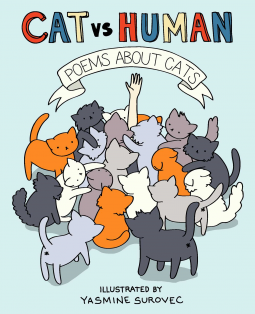
Review: Poems About Cats with illustrations by Yasmine Surovec

In order to celebrate poetry month I will be reviewing a series of poetry books and for the first one I chose a whimsical little title about our furry friend, the cat.  This collection includes poems about cats from a wide range of poets including Shakespeare, Wordsworth and Dickenson.  Thanks so much to the publisher, Andrews McMeel,  for granting me an advanced review copy of this title through NetGalley.

My Review:

Poems about CatsCats are the kind of cute creature that countless creative minds have celebrated in their compositions.  The creative minds in this collection capture, through their couplets and verse-chimes,  the constant commotion caused by cats.  Wordsworth in his poem “The Kitten and Falling Leaves” writes:

But the Kitten, how she starts,
crouches, stretches, paws, and darts!
First at one, and then its fellow,
just as light and just as yellow.
There are many now – now one,
now they stop and there are none:
What intenseness of desire,
in her upward eye of fire!

In the poem “A Cat’s Conscience” the author considers the uncanny characteristic of a cat to ignore it’s conscience, and, unlike their fellow canines, cats do not care if they cause a ruckus, just so long as they don’t get caught!

A dog will often steal a bone,
But conscience lets him not alone,
And by his tail his guilt is known.
But cats consider theft a game,
And, howsoever you may blame,
Refuse the slightest sign of shame.

In conclusion, Christopher Smart (1722-1771) casts the cat as the center of the household.  I found this to be one of the most touching of all the poems and the illustration which accompanies it captures the verse perfectly.

Poems about Cats pgs. 60 and 61Whether you have a clowder of cats or just a couple, this is a great book to keep on your coffee table as a conversation piece.  I hope you enjoyed my little attempt at alliteration to capture the playful spirit of these poems.  What are you reading for poetry month?  For a preview of some additional poetry I will be reviewing click here.


4 Comments

Filed under Poetry

Review: Diamond Head by Cecily Wong

I received an advanced review copy of this book from Harper.

My Review:
Diamond HeadBohai is a quiet, unassuming man who, growing up in China at the beginning of the 20th century, is viewed as different even from his early childhood.  This book is a narrative of his life as seen through the eyes of the women that surround him: his mother, his wife and his daughter.  It seems that none of them truly understood or appreciated him until his early and tragic death.  Their grief forces them to look back on their own lives, their family secrets and their experiences that greatly impacted this silent, yet honorable man.

Lin Leong, Bohai’s mother, could not produce a child for her husband.  She has two stillbirths, both of which produce girls and she is so desparate to produce a boy to become his father’s heir, that she hires a concubine for her husband.  The concubine, only 14 years old at the time, gives birth to Bohai and dies shortly thereafter.  Lin and her husband dote on their only son until the age of five when they realize that he is not like other children. Instead of being active like other boys his age, he rarely speaks and he is content to sit quietly in his room and read books.  His mother doesn’t think he will ever marry and for a while she even fears Bohai is gay.  When her husband moves the family from their home in China to Hawaii, Lin is hoping that this will be a new beginning for the entire family.

Amy, Bohai’s wife comes from a very poor family of twelve.  It is evident from her narrative that she wants nothing more in life than to dig herself out of her poverty.  When she starts working for her father’s photography business, World War II has just broken out and dozens of men who are ready to be shipped out come to the studio to have their pictures taken.  This is when Amy meets a handsome engineer named Henry.  They have a whirlwind, month long romance and before Henry goes off to war in Europe, he asks Amy to wait for him.  While Henry is away, she is introduced to the Leong family and marriage is proposed between Amy and the shy Bohai.  Amy has a difficult decision, but in the end she opts for wealth and security over passion and love.

The final woman connected to Bohai is his eighteen year old daughter Theresa who is pregnant and, at such a young age, has a life fraught with hardship and difficult decisions.  When Bohai dies, Theresa is told all of the long-buried family secrets about her father and his family.  Theresa also took Bohai for granted when he was alive and now she deeply regrets that she did not build a closer relationship with her father when she had the chance.

DIAMOND HEAD is a novel that kept my attention from beginning to end. The author is adept at building the storyline of the family a bit at a time to keep the reader turning the pages. I highly recommend this interesting historical fiction novel, a triumphant first piece of writing from Cecily Wong.

About The Author:
Cecily WongCecily Wong is Chinese-Hawaiian. She was born on Oahu and raised in Oregon. Diamond Head grew from family stories told to her by her parents and grandparents. Wong graduated from Barnard College, where the first pages of this novel won the Peter S. Prescott Prize for Prose Writing. She lives in New York City.

Click on the TLC tour banner below to see the full list of stops on the blog tour:

tlc-logo-resized

11 Comments

Filed under Historical Fiction

Review: The Given World by Marian Palaia

I received a review copy of this title from Simon and Schuster through NetGalley.

My Review:
Given WorldRiley is a sad, lost, melancholy soul who has commitment issues and is not really even sure if she is capable of loving anyone.   When she is nine, her beloved older brother, Mick, goes off to fight in Vietnam where goes MIA.  The fact that her brother died is difficult enough for her to deal with, but not knowing how he dies or where he is buried compounds her grief.  When Riley is in high school she has a boyfriend named Darrell who also goes off to the war.  It is this second loss of a male in her life that really seems to push Riley over the edge.

Riley leaves Montana and takes off for the Ocean, which she longs to see and be near.  She ends up in San Francisco where her life is a tumultuous string of jobs, friends, drugs and dwellings.  She seems to be running from something, but she doesn’t know from what, and she seems to be looking for something, but she doesn’t know what that something is either.

Since it is  the Vietnam War that has so altered Riley’s life, she decides to leave San Francisco and live in Saigon for nine months.  I thought that from the descriptions of the book Riley was going to actively look for her brother there to figure out what happened to him.  But her life in Vietnam is much the same as it was in San Francisco with binge drinking, sleeping with random men and living recklessly.  I did not find this part of the book particularly interesting, although I suppose it was the author’s attempt at trying to portray the fact that Riley is running farther and farther away from her life and her problems.

In the end, an illness brings Riley back to Montana and she learns she really should not have pushed away her parents who, in dealing with their own grief over their lost son,  could have helped her get over her own.  Riley keeps saying that she wanted to leave her small town in Montana and not be trapped, when all along it is the one true place where she is accepted and loved unconditionally.   THE GIVEN WORLD is an sad coming-of-age story in which the main character learns that instead of running away, she should have dealt with the world as it was given to her.

About The Author:
Marian PalaiaMarian Palaia lives in San Francisco, California, and sometimes, when it is not winter, in Missoula, Montana. She is a graduate of the MFA program at Madison, Wisconsin, where she received the 2012 Milofsky Prize, and of the MA program in Creative Writing at San Francisco State University. She was a 2012-2013 John Steinbeck Fellow at San Jose State University and a 2014 recipient of a grant from the Elizabeth George Foundation. Her work has been published most recently in The Virginia Quarterly review (http://www.vqronline.org/fiction/cu-chi); TriQuarterly (http://www.triquarterly.org/issues/issue-144/last-place-she-stood); and Joyland (http://www.joylandmagazine.com/regions/san-francisco/hello-kitty-justice-league-selections). Two of these stories are also chapters in her forthcoming (April 14, 2015 from Simon and Schuster) novel The Given World.


1 Comment

Filed under Historical Fiction

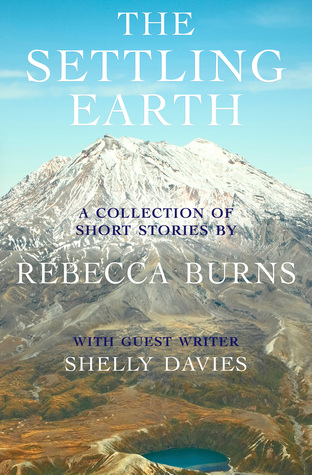
Review: The Settling Earth by Rebecca Burns

I received an advanced review copy of this collection of short stories from the author.

My Review:
The Settling EarthAll of the characters in these short stories are connected by their sense of alienation and misery while living an emigrant’s life in the hot, dusty colony of New Zealand in the 19th century.  The book begins with Sarah, whose parents have given her away to an older man named William Sanderson who drags her off to live on his isolated farm in New Zealand.  Sarah is lonely, homesick and stuck in an unhappy marriage.  She seems to be wandering around her home in a daze, either not fully aware of her surrounding or in denial of her situation.

William himself is also the focus of one of the stories in the book and he doesn’t seem to want to live in New Zealand any more than his wife does.  In order to relieve his stress and find an outlet for his frustrations, he likes to visit a brothel in Christchurch.  William is also a bigot and has a severe dislike for the Maori natives.

Several characters from the brothel also have their own stories.  The owner of the brothel, having left England and started her business, tries to look after her “girls” as best she can.  But, despite the fact that precautions are taken,  several of them still manage to get pregnant.  The women in the brothel are just as sad as Sarah and trapped in a lonely and demeaning life.

The saddest, and most heart-rending story in the collection, is that of Mrs. Gray who takes in the babies of unwed mothers.  These fallen women and their children are judged harshly and shunned by the colony.  It is ironic that many of these women have come to the colony for a fresh start but the colony also rejects them because of their perceived sins.  Mrs. Gray believes that she is helping these women and her babies, but the help that she is giving these women is not what they are expecting.

THE SETTLING EARTH is a well-written group of stories, full of downcast and moving characters.  My only complaint about the book, if indeed it can be called a “complaint,” is that just when I became fully invested in a character the story would end. This collection could easily have been made into one, continuous, thought-provoking book;   I would love to see what a talented author like Rebecca Burns could do with a full-length novel.

About The Author:

Rebecca Burns is an award-winning writer of short stories, over thirty of which have been published online or in print. She was nominated for a Pushcart Prize in 2011, winner of the Fowey Festival of Words and Music Short Story Competition in 2013 (and runner-up in 2014), and has been profiled as part of the University of Leicester’s “Grassroutes Project”—a project that showcases the 50 best transcultural writers in the county. In November 2014 she won the Black Pear Press short story competition with her story, “Seaglass”. Her piece is the title story in the Black Pear Press anthology, “Seaglass and Other Stories” – available from December 2014 at http://blackpear.net/2014/12/28/wonde…

Rebecca’s debut collection of short stories, “Catching the Barramundi”, was published by Odyssey Books in November 2012 and is available to order from Amazon at http://www.amazon.com/Catching-Barram…. In March 2013 it was longlisted for the Edge Hill Short Story Award.

The Settling Earth is Rebecca’s second collection of short stories.

2 Comments

Filed under Historical Fiction, Short Stories