Tag Archives: New York Review of Books

Review: The Door by Magda Szabo

The Door was originally published in 1987 in the original Hungarian. The New York Review of Books has released this edition which has been translated by Len Rix.

My Review:
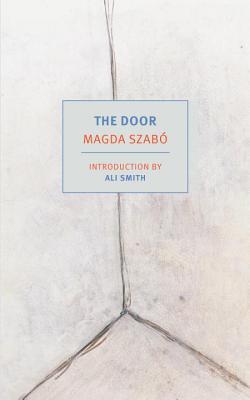
The DoorEmerence was the sole inhabitant of her empire-of-one, more absolute than the Pope in Rome.”

The Door is about the unlikely relationship forged between two very different women.  Magda is a writer and an intellect and the pressures of her schedule force her to seek out a cleaning lady who will keep her home in order while she pursues her career.  Emerence, an old woman who lives in their neighborhood in Budapest, is well-known for her intense work ethic as well as her singular personality.

As the book progresses, one wonders why Magda puts up with some of Emerence’s eccentricities.  Magda at several points suffers from extremely harsh words and criticism when she argues with Emerence.  The housekeeper actually mocks Magda’s faith and religion to the point where Magda sneaks off to Church on Sunday so she will not have to endure Emerence’s verbal attacks.  As time goes on it is evident that, although they fight and argue, Magda and Emerence cannot live without each other; their lives are entangled together to the point that they cannot stand to be apart.

Emerence has a plethora of eccentricities, all of which are gradually explained throughout the book.  She has an intense fear of thunderstorms, she will only sleep in a loveseat, and she completely objects to religion or faith of any kind.  Emerence has also made a lot of money which she is saving up to buy an elaborate crypt in which to be buried.  But the most mysterious quirk of hers is the fact that she will not allow anyone, under any circumstances to enter her home.  Her door is permanently barred to her family, her close friends and her employer of 20 years.

Throughout the novel, Magda comes to truly care for the old woman and she tries to figure out what is behind the door to Emerence’s apartment.  Magda also attempts to get behind the figurative doors that Emerence has put up in order to emotionally protect herself from other people.  Can Magda ever truly break down these barriers and obtain the close and tender relationship with Emerence that she so desires?  Or will Magda’s attempts to break down these literal and figurative doors end up destroying this woman whom she has come to love as family?

THE DOOR is a unique and intense novel about relationships, loyalty, and love which I highly recommend.  Thanks to the New York Review of Books for bringing this brilliant Hungarian author to our attention.

About The Author:
Magda Szabó was a Hungarian writer, arguably Hungary’s foremost woman novelist. She also wrote dramas, essays, studies, memories and poetry.

Born in Debrecen, Szabó graduated at the University of Debrecen as a teacher of Latin and of Hungarian. She started working as a teacher in a Calvinist all-girl school in Debrecen and Hódmezővásárhely. Between 1945 and 1949 she was working in the Ministry of Religion and Education. She married the writer and translator Tibor Szobotka in 1947.

She began her writing career as a poet, publishing her first book Bárány (“Lamb”) in 1947, which was followed by Vissza az emberig (“Back to the Human”) in 1949. In 1949 she was awarded the Baumgarten Prize, which was – for political reasons – withdrawn from her on the very day it was given. She was dismissed from the Ministry in the same year.

During the establishment of Stalinist rule from 1949 to 1956, the government did not allow her works to be published. Since her unemployed husband was also stigmatized by the communist regime, she was forced to teach in an elementary school within this period.

Her first novel, Freskó (“Fresco”), written in these years was published in 1958 and achieved overwhelming success among readers. Her most widely read novel Abigél (“Abigail”, 1970) is an adventure story about a schoolgirl boarding in eastern Hungary during the war.

She received several prizes in Hungary and her works have been published in 42 countries. In 2003 she was the winner of the French literary prize Prix Femina Étranger for the best foreign novel.


5 Comments

Filed under Classics, Literature in Translation, New York Review of Books

Review: The Woman Who Borrowed Memories by Tova Jannson

I am very excited whenever I have the opportunity to receive an advanced reader’s copy of a book from the New York Review of Books Classics collection.  All of these stories were originally written in Swedish and this collection of short stories is the first English edition of Tova Jannson’s stories.

My Review:

The Woman Who Borrowed MemoriesThis collection of short stories is divided into four sections, the first of which is entitled “The Listener” and was originally published in 1971.  I found the stories in this part of the collection to have a dream-like, almost surreal quality to them.  In the story that is the title to the collection, “The Listener”, a woman who is called Aunt Gerda has always been a great listener to her family.  She listens intently to all of their stories and woes and when she is about fifty-five years old her personality starts to change.  She seems to forget names and people and starts to spend a lot of time by herself.

Continue reading

8 Comments

Filed under Classics, New York Review of Books, Short Stories, Uncategorized

Review and Giveaway: Conversations With Beethoven by Sandford Friedman

I received an advanced copy of this book from The New York Review of Books through NetGalley. I invite you to read my review and scroll down to the end of the page to win a copy of your own. Open Internationally.

My Review:

Conversations With BeethovenThe format and style of this book is nothing short of genius. Because of his deafness, Beethoven would use conversation books to communicate in the last years of his life. His friends and family would write their parts of a conversation in the books and he would respond orally. CONVERSATIONS WITH BEETHOVEN attempts to reconstruct the conversation book from the last year of his life.

These conversations with the great maestro portray a man who was irascible and paranoid. He believed that all women had loose morals that would give you a disease. He constantly accused people in his life of trying to poison him or steal from him. He had an explosive temper and those around him would often try to calm him down and make him stop shouting. Beethoven’s paranoia resulted in several hilarious exchanges between himself and his family members. There are many funny conversations between Beethoven and his brother Johann in which Beethoven is accusing Johann of stealing from him or Beethoven is telling Johann that his wife is sleeping around.

The conversations also reveal a touching side to the composer, who was thoroughly devoted to his family and always passionate about writing music. His nephew Karl, whom he adopted after the death of his brother, gives him many reasons for worry and heartache. Throughout all of the trials and tribulations with Karl, the affection and attention that he gives to his nephew never wanes. Beethoven also has several devoted assistants and friends that he cares for greatly. The unique style of the conversations lets the reader see, in their own words, the genuine affection that friends, family and acquaintances had for Beethoven.

If you read one new book this fall then it should be CONVERSATIONS WITH BEETHOVEN. The New York Review of Books had issued yet another great reprint that will allow a new generation of readers to enjoy and appreciate Sanford Friedman’s work.

add-to-goodreads-button3


Giveaway:

I enjoyed this book so much and I know you will too so I have decided to do a giveaway.  If you would like to win a copy leave a comment below telling what is the most unique book (style, content, really anything) that you have read.  I will choose a winner on 9/5.  US/Canada can choose a hardcopy or Kindle edition from Amazon. Open Internationally as long as you can receive an Amazon Gift Code for the book.

The winner of the giveaway is Carolyn M.  Thanks to everyone for the great comments and book suggestions!

20 Comments

Filed under Classics, Historical Fiction, New York Review of Books

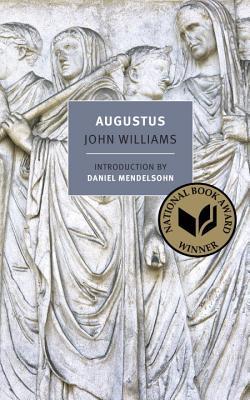
Review: Augustus by John Edward Williams

AugustusI have been studying the ancient world for the better part of 25 years, having taken  and taught countless history, mythology and literature classes.  Like every good student I have familiarized myself with important people, events, dates, etc.  But nothing has given me the experience of Ancient Rome and the Emperor Augustus quite like reading John Williams historical fiction about Augustus.

The style of this book is epistolary, whereby we learn about Augustus through the letters of those people who were most important in his life.  In Book I, Octavian, not quite yet The August, is in Apollonia with his closest friends, Marcus Agrippa, Gaius Maecenas and Salvidienus Rufus practicing his military skills and honing his philosophical abilities when he gets the word that his uncle Julius Caesar is murdered.  This young man, at the age of 19, stands at a significant crossroad in life and must decide either to also be swallowed by his uncle’s enemies, or  to embrace a position of power and leadership.  Luckily for Rome he chose the latter.

Octavian returns to Rome where Mark Antony is rude and dismissive to the young man who is the heir of Julius Caesar’s fortunes.  Although Octavian and Antony mistrust each other and view one another as rivals, they form an uneasy peace in order to avenge the death of Julius Caesar.  Williams depicts the men sitting in a primitive hut as they write proscription lists in order to eradicate everyone who was involved in Caesar’s assassination.  Cicero, the famous orator himself, who opportunely plays both sides, is also one of their victims and his head and hands are displayed on the rostra in the Roman Forum.

Through the condescending jabs and insults that Octavian and Antony throw at each other, Williams brilliantly foreshadows the civil war that erupts between Octavian and Antony.  When Antony is on campaign in the east and marries Cleopatra, the fragile peace that exists between them is shattered.  Throughout Book I, Octavian is never portrayed as a vengeful, warmongering military man, but instead he is viewed by his friends as someone who is doing the best he can to ensure peace and stability for Rome.  Maecenas states in one of his letters that Octavian did not wish Cleopatra dead and, in fact, he thought she would have made a great administrator and could have kept titular control over Egypt.

My favorite part of the novel was Book II in which we hear from Augustus’ daughter, Julia.  Julia is the only biological child of the Emperor and she gives us the image of a man who adores and dotes on his only child.  However, as Julia becomes older she is called on by her father to fulfill her duty to Rome through various marriages that are advantageous to the Empire’s political stability.

First, Julia is married to Marcellus, Augustus’ nephew and heir-apparent.  When Marcellus dies at the tender age of 19 from a sudden fever, Julia is then given in marriage to Agrippa, Augustus’ long-time friend and second in command.  Julia bore him 5 children and her time with Agrippa is some of the happiest in her life.  However, when Agrippa dies, Julia is forced to marry Tiberius, her father’s stepson, who is despised by the emperor because of his cruelty and brutality.  When she takes a lover of her own choosing, this decision leads to her downfall and lonely exile far away from Rome.  Julia’s letters are emotional, reflective and even philosophical as she contemplates her role in the legacy of Rome and the fact that woman of her rank have no control over their own circumstance.

In the final part of the book we actually hear from the Emperor himself when, in the last days of his life, he writes to his friend Nicolaus of Damascus.  At this point Augustus talks about his legacy and the peace and stability that he has bequeathed to Rome.  He worries for his empire’s future, especially because of the German barbarians who always threaten invasion from the North.  He remembers some of his old friends, especially the poets Vergil, Horace and Maecenas with whom he found true friendship.  Finally, he ponders the ephemeral nature of this life and realizes that no matter what he has done to ensure Roman peace and prosperity, his empire will not and cannot last forever.  Williams’ Augustus becomes for us the literary symbol of all leaders who struggle to deal with power, fame, fortune, strife, decision-making and the plethora of other responsibilities that weigh on them so heavily.

I do not use rhetorical hyperbole when I write that this novel is a brilliant work of literary genius.  It is John Williams crowning achievement.  What better way to commemorate the 2000th anniversary of Augustus’ death on August 19th than by spending a little time with the Emperor between the pages of Williams’ novel.

I am eternally grateful for The New York Review of Books for sending me an Advanced Copy of this novel.

add-to-goodreads-button3


7 Comments

Filed under Classics, Historical Fiction, New York Review of Books

Review: Journey by Moonlight and Agostino from NYRB Classics

A few months back I read Stoner by John Williams.  I was so moved by this book that I did a little research and found that it was a reissue of this book by the New York Review of Books.  I was very eager to find more books like Stoner and I was pleased when I found so many fantastic books available on their website.  Many of their titles are translations of literature into English. You can read more about their unique titles on their website: http://www.nybooks.com/books/about/

I have recently read two more wonderful titles in translation from the New York Review of Books.  I received advanced copies of both of these titles from the publisher through Edelweiss.  The first novel, translated from the Hungarian and originally published in 1937,  is entitled Journey by Moonlight. The novel begins when Mihaly and Erzsi are on their honeymoon in Italy. Journey by Moonlight They are accidentally separated when Mihaly takes the wrong train and this physical separationfrom Erzsi mirrors Mihaly’s mental separation from reality.  We are brought on a journey through Italy and through Mihaly’s many mental states: he vacillates among many moods which include anxiety, depression, paranoia, euphoria and numbness. Throughout his lone journey he encounters some of his childhood friends from Budapest that make him terribly nostalgic for his youth.  He really can’t go home and face the mundane life of working in his father’s firm and dealing with his family.  He feels that he is trapped in Italy but really has no plan or purpose for being there either.  The author also writes the story from Erzsi’s point of view at several times in the narrative.  Erzsi, once left on her own, is also forced to make important decisions about her life and future.

There are so many interesting aspects to this book that it is difficult to truly do it justice in a brief review.  The characters, although they tend to make stupid and impulsive decisions, are fascinating nonetheless.  The way that the author simultaneously explores major themes such as love, relationships, and death throughout the narrative is truly an amazing literary feat.  JOURNEY BY MOONLIGHT is a fascinating study of the human mind and I highly recommend it to anyone who appreciates true literary genius. For more on this book and where to preorder here is the link on Goodreads: https://www.goodreads.com/book/show/20176024-journey-by-moonlight.

The next book is entitled Agostino and is a translation from the Italian that was first published in 1944.  This brief Agostinostory is a bold and daring peak into one boy’s transition from boyhood to adulthood.  The author tackles some taboo and Freudian issues through a brief period of time in Agostino’s life.  Agostino is a 13 year old boy who is vacationing at a beach with his mother, whom he still views with innocence at the beginning of the story.  His mother starts to take boat rides with a man and Agostino grows very jealous.  When Agostino starts to hang around with a rough gang of older boys they clue him in to the possible sexual relationship his mother is having with her gentleman friend.

This book has so many complex layers in its few pages.  Agostino struggles with fitting in among his peers, his blooming sexual awareness, and his changing relationship with his mother.  He is left frustrated at the cruel nature of this transitional period in his young life.  I highly recommend AGOSTINO to anyone who wants to experience a true coming of age story that is realistic and eye opening. For more information on this title and where to preorder here is the link on Goodreads: https://www.goodreads.com/book/show/18666080-agostino

Up next on my reading list from the New York Review of Books is the The Mad and The Bad and Tristana.  What classics are on your reading list?  Let me know in the comments!


5 Comments

Filed under Classics, New York Review of Books