
I received an advanced review copy of this title from the publisher, Istros Books. This English version has been translated by John K. Cox.
My Review:
 This latest release from Istros Books is a fictional account of Lord Byron’s tour around parts of the Ottoman Empire in 1809 during which trip he is the guest of a local Albanian ruler, Ali Pasha. The story takes place during a period of two weeks on his travels when Byron is accompanied by a retinue of English servants as well as his good friend John Hobhouse. As they reach the city of Ali Pasha, they are greeted by a severed arm that is hanging from a tree and being slowly eaten by birds of prey. There is an undercurrent of uneasiness throughout their stay in Yannina as they immediately understand that the political and social landscape of The Ottoman Empire is very different from England.
When Byron and his retinue arrive in Yannina, Ali Pasha is not at his palace because he is off in the north fending off one of his enemies. So Byron is entertained and shown around the town by a man named Isak, who is a personal doctor of this local despot. Isak has lived all over Europe and his English is quite good so he serves as Byron’s interpreter. He also tells Byron many stories about the Balkans and also educates him about Eastern European customs. The most important lesson Isak teaches Byron is about the Balkan words Dert and Sevdah, which mean a yearning and a craving desire, love and passion. In the Balkans there is a woman born once every three hundred years, Isak tells him, who are known for their beauty throughout the Empire. Men feel Dert and Sevdah if they are lucky enough to set their eyes on one these beauties who are usually hidden by their families until they are given away to a Prince for marriage.
One such woman, whose name is Zuleiha, is rumored to be in the vicinity of Yannina. Isak starts acting very strangely when he hears this rumor and he disappears for long periods of time in an attempt to get information on her whereabouts. Byron listens to Isak’s story about this beautiful woman, but to him it is just a story, just a myth, until Byron sets eyes on Zuleiha himself.
It is apparent that Ali Pasha will not make it home in time to greet his British guest, so he invites them to his palace in the north. Byron and his fellow travelers are accompanied by Isak on a long, arduous journey during the rainy season through the Balkans. The rain is so intense at one point that they have to take shelter in a cave and then in a han, which is the Balkan word for hotel. It is at this han that Byron gets a glimpse at the rare beauty of Zuleiha. Byron is instantly smitten with her and at the sight of this woman he fully comprehends the meanings of Dert and Sevdah.
The exciting culmination of the book deals with Byron’s crazy plan to win Zuleiha as his wife. I thoroughly enjoyed the entire story which, although brief, brought to life the personal details about this famous English poet. We experience the fascinating mythology, cultural and landscape of the Balkans through Byron’s point-of-view and we better understand its influence on Byron’s writings. When I was reading this book the image of Byron in his elaborate Albanian costume, which in the book is given to him as a gift, kept coming to mind.
About the Author:
 Muharem Bazdulj, born in 1977, is one of the leading writers of the younger generation to appear in the countries of the former Yugoslavia. He writes in a wide variety of genres, including novels, short stories, poetry, and essays; he is also active as a journalist and a translator. Bazdulj’s work has been published `Best European Fiction 2012´ (Ed. Aleksandar Hemon, Dalkey Archive Press) alongside Milan Kundera, Ryszard Kapuscinski, Vladimir Sorokin, Victor Pelevin, Péter Esterházy and Andrzej Stasiuk. Short stories and essays in `World Literature Today´, `Creative Nonfiction´, `Habitus´, `Absinthe´ etc.Translations:One of his short story collections has appeared in English (The Second Book, Northwestern University Press, 2005). Bazdulj is the author of nine books in all, including his most recent set of stories, Magic. He currently lives in Travnik and Sarajevo. – See more at: http://istrosbooks.com/products/authors/muharem-bazdulj-68/#sthash.xWNOQwUS.dpuf
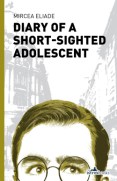 As a seventeen-year old adolescent living in the capitol of Romania in the twentieth century, Eliade faces the typical struggles of every teenage boy. Eliade records his thoughts in his diaries with the hopes that he will eventually turn his writings into a novel. When the entries in this diary begin, he is spending most of his time attending school at the lycee, hanging around with his friends and reading voraciously in his bedroom attic. He is trying to figure out what the plot of his novel will be and decides he wants to have a hero as the center character of his novel. He introduces us to his friends, especially Robert and Dinu, whom he contemplates basing the novel of his hero on.
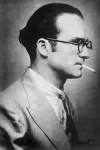 Mircea Eliade was born in 1907 in Bucharest, the son of an army officer. He lived in India from 1928-1932, after which he obtained a doctorate in philosophy with a thesis on yoga, and taught at the University of Bucharest for seven years. During the war he was a cultural attaché in London and Lisbon, and from 1945 taught at the École des haut études in Paris and several other European universities.
 Dada has grown up in a small town in Croatia from which she escaped as soon a she could at the age of eighteen. But she is drawn back to this bizarre town by the horrible suicide of her younger brother, Daniel. The book is told from Dada’s point of view and we are given information about her life and hometown as Dada remembers it. She speaks of memory being like a tape that “rolls forward and backwards. Fw-stop-rew-stop-rec-play-stop, it stops at important places, some images flicker dimly frozen in a permanent pause, unclear.” The narrative runs in the same way that Dada describes a tape: sometimes we get a passage that is an old memory and then all-of-sudden we are thrust into her present; Dada also likes to fast forward to her future and speculate on what she will do next.
 Olja Savičević is an awarded poet and novelist, who burst onto the authorial stage with her short story collection Make the Dog Laugh in 2006. Last year, her collection of poems Mamasafari and Other Things was short-listed for the ‘Kiklop Award for Best Collection of 2012’, awarded annually by the Pula Book Fair. Her best-selling book Farewell, Cowboy has already achieved great success in the region, and was even adapted into a stage play. The book was translated by Celia Hawkesworth and published by Istros Books in April, 2015.
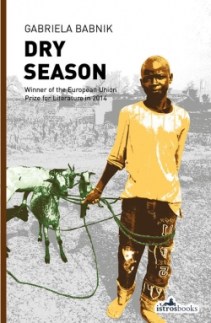 I have to admit that before I read this book I really knew nothing about the small West African nation of
  Gabriela Babnik was born in 1979 in Göppingen, Germany. After finishing her studies at Ljubljana University, she spent some time in Nigeria before working on a master’s degree on the modern Nigerian novel. Since 2002, she has regularly contributed articles to all major daily and weekly publications in Slovenia. In 2005, Babnik graduated in Comparative Literature and Literary Theory at the University of Ljubljana.


 The Book Binder's Daughter