Tag Archives: Classics

Review: Seven for a Secret by Mary Webb

I read what is probably Mary Webb’s most famous novel, Precious Bane, a few months back.  So when a friend and follow bibliophile offered me his extra copy of this novel I was thrilled at the prospect of reading another of Webb’s books.

My Review:
Seven for a SecretGillian is the only child of a very wealthy farmer, so whomever she marries will not only be lucky to have a pretty bride, but will also have the added benefit of inheriting a large fortune.  Gillian is nineteen when the novel opens and she is a starry-eyed romantic who wants to flirt with men so that they will fall in love with her.  Gillian, in many ways, still acts like a child and she is is selfish, narcissistic and silly towards others in her life.  The kind and simple shepherd named Robert who is employed by her father is oftentimes the target of her coquetry.  But Gillian keeps telling herself that she can never fall in love with Robert because she doesn’t want a simple farm hand for a husband;  she wants excitement, passion and a man who can ride a horse bareback.  Webb beautifully foreshadows the suffering that Gillian will have to endure before she can have her happily ever after.

Robert is the only son of Mrs. Makepeace who lost her husband when Robert was a very young boy.  Mrs. Makepeace has remarried a man named Jonathan who, despite being so clumsy, is a great husband and stepfather.  Mrs. Makepeace knows her son Robert well, so she senses it when Robert begins to fall in love with Gillian.  Robert is the main farm hand and does the lion’s share of the work for Gillian’s father; he has grown up with Gillian and as they both mature he sees her in a very different light and begins to develop deep romantic feelings for her.  It is sweet that since he cannot express his love to her directly, he composes penillion verses about her and his love for her.   He is a gifted poet but he never writes his poetry down or shares it with anyone, especially not Gillian.

When another sheep farmer comes to town and buys the local inn, Robert is very suspicions of this mysterious man from the beginning.  Ralph Elmer is not married, or so he says, and lives with his servants Fringal and Rwth.  Rwth is mute and Robert treats her very badly.  Both Robert and Gillian take pity on Rwth and treat Rwth with kindness and compassion;  Gillian’s kind treatment of Rwth, for me, was the beginning of her transformation into a mature and less selfish woman.

Unfortunately, Gillian is smitten with Ralph Elmer and despite the warnings from Robert, she continues to spend a lot of time with Ralph.  Ralph makes physical advances toward Gillian that show us he is not a gentlemen.  But Gillian is too silly and young to make the distinction between passion and physical lust and true love.  While she is allowing Mr. Elmer to court and kiss her and do other things to her, she is really thinking about Robert and wishing it was the shepherd-poet who was paying her so much attention.

In the end, Gillian does have to suffer in order to become a better human being; she becomes someone with whom we can sympathize and someone who is finally worthy of Robert’s love.  I am so glad I had the opportunity to read another of Webb’s novels and I would like to read even more of her works.

About The Author:
Mary WebbMary Webb (1881-1927) was an English romantic novelist of the early 20th century, whose novels were set chiefly in the Shropshire countryside and among Shropshire characters and people which she knew and loved well. Although she was acclaimed by John Buchan and by Rebecca West, who hailed her as a genius, and won the Prix Femina of La Vie Heureuse for Precious Bane (1924), she won little respect from the general public. It was only after her death that the Prime Minister, Stanley Baldwin, earned her posthumous success through his approbation, referring to her as a neglected genius at a Literary Fund dinner in 1928. Her writing is notable for its descriptions of nature, and of the human heart. She had a deep sympathy for all her characters and was able to see good and truth in all of them. Among her most famous works are: The Golden Arrow (1916), Gone to Earth (1917), and Seven for a Secret (1922).
 

4 Comments

Filed under British Literature, Classics

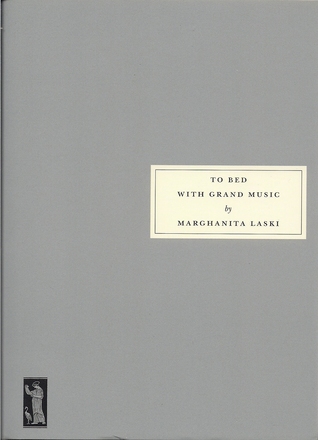
Review: To Bed with Grand Music by Marghanita Laski

I am so delighted that it is finally fall and the temperatures are getting cooler and the NFL season has begun here in the U.S.  I am a huge New York Giants fan and I am hoping for a stellar year.  Speaking of sports, this is another interesting Persephone title, the plot of which involves a woman using sex as a game while her husband is away at war.

My Review:
To BedI thought that the first scene in this book was quite shocking, but as it turns out the subject matter of the entire book is rather bold.  Deborah is in bed with her husband, Graham, who is about to leave for the middle east where he will be stationed during World War II.  Graham informs her that there is no way he can be expected to be faithful to her for the duration of the war.  Graham also gives Deborah permission to have a dalliance of her own since he will be away for so long.  I couldn’t decide what was more shocking: his declaration of intended unfaithfulness or his suggestion that his wife have an affair as well.

Deborah is the type of woman who needs a man to complete her identity.  When she is left alone with her three-year-old son and her housekeeper she thinks she will go crazy from the boredom and the monotony.  Deborah’s mother suggests that she get a job to help pass the time until the war is over.  Deborah eventually finds a job in London as a clerk and it is also in London that she has her first indiscretion with a man.  The first one night stand disgusts her and she runs off in shame, but she quickly changes her mind and her attitude towards having extramarital affairs.

Deborah eventually comes to the conclusion that it is acceptable to have lovers while her husband is gone so that she isn’t lonely.  The first prolonged affair that she has is with an officer named Joe who lavishes attention on Deborah and even gets along well with her son.  When Joe is sent to the frontlines Deborah takes on yet another lover.

The rest of the novel is an account of Deborah’s string of lovers.  Some of the book is very funny, especially when she finds ridiculous reasons to dump one man and move on to the next.  One of her lovers gets along very well with Deborah’s mother and Deborah is extremely irked by this.  So she casts him off and moves on to the next soldier.  Many of Deborah’s lovers provide her with lavish gifts, jewelry, expense differs and clothes.  Deborah is not a sympathetic characters since she is taking advantage of the situation of war to have a series of affairs which are all to her emotional and material benefit.

One part of the book that I found particularly sad is the fact that Deborah cannot bring herself to move back home and take care of her son.  The little boy craves his mother’s attention and the scenes in which she leaves him to go off to London with one of her many lovers is pathetic.  The boy becomes more and more attached to his nanny and we wonder whether or not his mother’s abandonment will have a lasting effect on his life.

This is a very interesting book to compare to Laski’s other World War II title, Little Boy Lost.  Both books bring up a very different side of the war that are somewhat controversial.  And children do not fair well in the lives of adults in either book.  If I found the subject matter of this book bold then I wonder what the reaction to it was in 1946 when it was originally published.

About The Author:
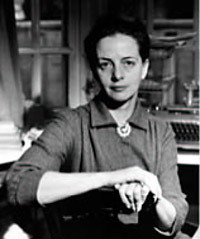
M LaskiEnglish journalist, radio panelist, and novelist: she also wrote literary biography, plays, and short stories.

Lanksi was to a prominent family of Jewish intellectuals: Neville Laski was her father, Moses Gaster her grandfather, and socialist thinker Harold Laski her uncle. She was educated at Lady Barn House School and St Paul’s Girls’ School in Hammersmith. After a stint in fashion, she read English at Oxford, then married publisher John Howard, and worked in journalism. She began writing once her son and daughter were born.

A well-known critic as well as a novelist, she wrote books on Jane Austen and George Eliot. Ecstasy (1962) explored intense experiences, and Everyday Ecstasy (1974) their social effects. Her distinctive voice was often heard on the radio on The Brains Trust and The Critics; and she submitted a large number of illustrative quotations to the Oxford English Dictionary.

An avowed atheist, she was also a keen supporter of the Campaign for Nuclear Disarmament. Her play, The Offshore Island, is about nuclear warfare.


6 Comments

Filed under British Literature, Classics, Historical Fiction, Persephone Books

Review: The Man in a Hurry by Paul Morand

I received an advanced review copy of this title from Pushkin Press through Edelweiss.  This book was originally written and published in French in 1941 and this English translation has been done by Euan Cameron.

My Review:
The Man In A HurryPierre has been in a hurry for all of his life.  He does multiple tasks at a time in order to speed up his life.  He shaves, gets dressed and brushes his teeth simultaneously; he drives too fast and he takes stairs three and four at a time.  There is no task for which Pierre will slow down.  The parts of the book that describe his lightening fast lifestyle are humorous.  For example, there is an incident in which his car breaks down after an accident and instead of waiting for help, Pierre abandons the car with his friend in it and proceeds to his destination on foot.

But Pierre’s fast life has not allowed him to slow down and forge any true or lasting relationships.  His closest friend and partner, the one whom he abandons with his care, decides he has had enough and severs their business relationship.  His manservant who has worked for Pierre for many years is tired of being yelled at and almost run over by Pierre so he quits.  Pierre is essentially alone in his life until he meets Hedwige.

Hedwige, her two sisters and her mother are the opposite of Pierre.  Their favorite activity is lounging around on their mother’s bed; they are never in a hurry for anyone or anything.  When they meet Pierre they are amused by this quirky man and his swiftness.  Pierre is immediately attracted to Hedwige and proposes marriage.  But can the love of a good woman really slow Pierre down and make him appreciate his life?

When Hedwige marries Pierre, the most beautiful gift that he decides he can give her is to delay the conjugal relations on their wedding night.  Pierre arranges for separate bedrooms in their apartment and decides to wait six weeks to get to know Hedwige before he has sex with her.  What better gift can he possibly give her than his patience, especially when it comes to putting off one of the most basic human drives.

When Hedwige becomes pregnant, the old pull of always being in a hurry starts to draw Pierre back in.  How can he possibly wait for nine months to see his child?  Hedwige begins to find comfort again in her mother’s bedroom with her other sisters and she slowly shuts Pierre out.  The matter comes to an ugly head when Pierre wants Hedwige to induce labor when she is only seven months pregnant.

This book has a humorous side as we read all of the ridiculous things Pierre does to hurry up.  But there is also an important social commentary about appreciating what we have and living in the moment.  If we are always in a hurry and worrying about what is happening next then we don’t appreciate those who are most important to us.

About The Author:
Paul MorandPaul Morand was a French diplomat, novelist, playwright and poet, considered an early Modernist.

He was a graduate of the Paris Institute of Political Studies (better known as Sciences Po). During the pre-war period, he wrote many short books which are noted for their elegance of style, erudition, narrative concision, and for the author’s observation of the countries he visited combined with his middle-class views.

Morand’s reputation has been marred by his stance during the Second World War, when he collaborated with the Vichy regime and was a vocal anti-Semite. When the Second World War ended, Morand served as an ambassador in Bern, but his position was revoked and he lived in exile in Switzerland.

Post-war, he was a patron of the Hussards literary movement, which opposed Existentialism. Morand went on to become a member of the Académie française; his candidature was initially rejected by Charles de Gaulle, the only instance of a President ever exercising his right to veto electees to the academy. Morand was finally elected ten years later, though he still had to forgo the official investiture).

Paul Morand was a friend of Marcel Proust and has left valuable observations about him.

11 Comments

Filed under Classics, France, Literature in Translation, Literature/Fiction

Review: Little Boy Lost by Marghanita Laski

My Review:
Little Boy LostIt’s about time that I reviewed another title from Persephone Books.  I haven’t found one yet that I didn’t like.  Although, I must admit, that I wasn’t sure if I would make it through this one because the beginning is so incredibly sad.

Hilary Wainwright returns to France after World War II in order to find his lost infant son.  He has only met his son once, on the day he was born, and so he has very little information to go on to track him down.  Hilary’s wife, Lisa, was living in Paris during the war and working for the resistance when the Nazis discovered her secret operations and arrested her.  Just before she is arrested, she passes off her baby to a family friend named Jean whom she hopes will be able to keep him safe.  But Jean is also arrested by the Nazis and she, too, has to relinquish the child before she is caught.  Jean’s fiancé, Pierre, is the only one who can help Hilary track down his son with the few clues that Jean left behind.

Hilary is so devastated by Lisa’s horrible and tragic death; she was the love of his life and his entire world and after the war he is not sure that he even wants to find his son.  To a lot of us this does not seem to make any sense.  Hilary’s son is a part of or an extension of his love with Lisa, but Hilary is afraid of more emotional turmoil if he fails to find his missing boy.  Hilary doesn’t want to open his heart again only to experience disappointment or hurt again.

Hilary’s search for his son leads him to an orphanage in a small town in France.  The scenes of the pathetic and abandoned children in the orphanage are heart wrenching.  When Hilary meets little Jean, the child whom they suspect is his son, Hilary is hesitant to become attached to the child for fear that he will experience another crippling emotional loss.   Hilary notices that Jean does not have any gloves and so he buys him a small pair of red gloves.  This is one of the most emotional scenes in the book because, although the gloves are too small for Jean, he insists on keeping them because he has never had such a nice gift before.

The end of the book deals with Hilary’s decision on whether or not to accept this son as his own.  For a while he even distracts himself from making a decision by entertaining a floozy he meets at his hotel.  The boy resembles Jean in a cursory way and we have to remember that there aren’t any DNA tests in the 1940’s.  Jean seems to want an obvious sign from the heavens pointing to the fact that this is his son.  It was my wish, though, that regardless of whether or not Jean was his biological son, that he would take pity on this small, abandoned boy anyway and decide it was worth opening up his heart again.

About The Author:
M LaskiEnglish journalist, radio panelist, and novelist: she also wrote literary biography, plays, and short stories.

Lanksi was to a prominent family of Jewish intellectuals: Neville Laski was her father, Moses Gaster her grandfather, and socialist thinker Harold Laski her uncle. She was educated at Lady Barn House School and St Paul’s Girls’ School in Hammersmith. After a stint in fashion, she read English at Oxford, then married publisher John Howard, and worked in journalism. She began writing once her son and daughter were born.

A well-known critic as well as a novelist, she wrote books on Jane Austen and George Eliot. Ecstasy (1962) explored intense experiences, and Everyday Ecstasy (1974) their social effects. Her distinctive voice was often heard on the radio on The Brains Trust and The Critics; and she submitted a large number of illustrative quotations to the Oxford English Dictionary.

An avowed atheist, she was also a keen supporter of the Campaign for Nuclear Disarmament. Her play, The Offshore Island, is about nuclear warfare.

6 Comments

Filed under British Literature, Classics, Persephone Books

Review: Confusion by Stefan Zweig

I have not been very active on the blog this week, but I have a great excuse.  Classes have started again so that means I am back in the classroom.  I have a record number of students who have signed up for Latin this year.  So when someone makes the comment that Latin is a “dead language” I reference my robust numbers of enthusiastic students.  Confusion is the perfect book to review for back-to-school since it highlights a rather unusual relationship between a student and teacher.  This book was originally published in the German in 1929 and this English translation is done by Anthea Bell.

My Review:
ConfusionWhen the novella opens, Roland is celebrating his sixtieth birthday and his thirtieth anniversary of teaching in the Department of Languages and Literature.  His colleagues and students have presented him with a book that is a complete biography of his academic career.  The only thing missing is an account of how he was inspired to begin his career in academics.  The rest of the story is an account of Roland’s youth and his experience with the teacher that inspired his career.

Roland first attends university in Berlin where he is bored and uninspired and as a result he does not take his studies seriously.  He spends months lounging around in coffee-houses and sleeping with many women and not tending to his studies at all.  One day his father shows up unannounced and this incident makes for a very funny and awkward scene in the book.  Roland is so embarrassed by his behavior that he agrees to leave Berlin and attend university in a small provincial town in central Germany.  This is where he encounters the teacher that will change his life and infuse in him a lifelong passion for literature.

When he first arrives at his new university, Roland stumbles into a lecture on Shakespeare which is being given by a passionate and well-spoken professor.  All of the students listening are captivated by this teacher and Roland is instantly inspired as well.  He finds the professor and enlists his help in mapping out a plan for his academic future.  Roland lives in the same building as the teacher and his wife so he quickly becomes very close with the couple.  Roland eats meals with the couple, spends evenings in the teacher’s study, and even goes on various social outings separately with the wife.

From the beginning it becomes clear that the teacher and his wife have a very strange marriage.  They never display an affection for each other and seem to be more roommates than husband and wife.  As Roland spends time with the wife, she drops hints here and there that they are not happily married and that the teacher is rather a difficult person to live with.  But the true details about the non-traditional relationship between husband and wife are not revealed until the very end of the book.

Throughout his time with the teacher, Roland is plagued by the constant mood swings of his mentor.  Sometimes his teacher is encouraging and kind and then all of a sudden he is insulting, distant and cold.  Roland works hard at his studies to impress his teacher, even to the detriment of his mental and physical health.  Roland feels like he is walking on eggshells because he never knows if his teacher will be kind or cruel.  The teacher’s feelings and reasons for his changeable behavior are not revealed until the end of the book.

As a teacher this book was interesting to read because it reminded me that we oftentimes never know what kind of an impact we can have on students’ lives and careers.  Roland has this one man to thank for his long and successful career but he never gets to tell the teacher about his inspiration.  It is significant that the teacher is never given a name; he remains a nameless entity even though he has such an amazing impact on Roland’s fate.   Furthermore, there could not be a more apt title for this book than the word “confusion.”  Roland is confused about his relationship to his teacher, and he is also confused about the relationship between the teacher and his wife.  And until the very end, the reader is confused about what, exactly, is going on with the teacher.

This is a touching, powerful and short read that I highly recommend.  I look forward to reading more of Zweig’s works.  Thanks to the New York Review of Books for reviving another fantastic classic work in translation.

About The Author:
Stefan Zweig was one of the world’s most famous writers during the 1920s and 1930s, especially in the U.S., South America and Europe. He produced novels, plays, biographies and journalist pieces. Among his most famous works are Beware of Pity, Letter from and Unknown Woman and Mary, Queen of Scotland and the Isles. He and his second wife committed suicide in 1942.

Zweig studied in Austria, France, and Germany before settling in Salzburg in 1913. In 1934, driven into exile by the Nazis, he emigrated to England and then, in 1940, to Brazil by way of New York. Finding only growing loneliness and disillusionment in their new surroundings, he and his second wife committed suicide.

Zweig’s interest in psychology and the teachings of Sigmund Freud led to his most characteristic work, the subtle portrayal of character. Zweig’s essays include studies of Honoré de Balzac, Charles Dickens, and Fyodor Dostoyevsky (Drei Meister, 1920; Three Masters) and of Friedrich Hlderlin, Heinrich von Kleist, and Friedrich Nietzsche (Der Kampf mit dem Dmon, 1925; Master Builders). He achieved popularity with Sternstunden der Menschheit (1928; The Tide of Fortune), five historical portraits in miniature. He wrote full-scale, intuitive rather than objective, biographies of the French statesman Joseph Fouché (1929), Mary Stuart (1935), and others. His stories include those in Verwirrung der Gefhle (1925; Conflicts). He also wrote a psychological novel, Ungeduld des Herzens (1938; Beware of Pity), and translated works of Charles Baudelaire, Paul Verlaine, and mile Verhaeren.

Most recently, his works provided inspiration for the 2014 film ‘The Grand Budapest Hotel’

12 Comments

Filed under Classics, German Literature, Literature in Translation, New York Review of Books, Novella