
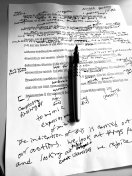
 I’ve been thinking and reading a lot about poetry lately. In an end-of-semester bout of insomnia last night my thoughts wandered towards Aristotle’s Poetics. This section, 1448b, is a discussion of the origins of poetry and the Greek word mimesis. Translation is my own:
There seems to be altogether two natural causes for the origins of poetry. It is innate for men to imitate and from childhood they differ from other animals in this capability—that imitation is possible and they first form learning through imitation; and everyone takes pleasure in imitations. The indication of this is carried out in our actions: some things are painful to look at, but if we look at their exact likeness instead we can take pleasure in them—for example, the shape of very deformed wild beasts, or corpses. The reason for this is that it is not only pleasant for philosophers to learn, but it is similarly pleasant for everyone else to learn, although most people have a shorter experience with this. People take pleasure in observing likenesses because it comes upon us to learn from and to make inferences about those things we observe—what each thing is like and that this person is like that person: and if we should happen to see before us the original, it is not the imitation that brings us pleasure, but its workmanship or appearance or some other such cause.
Needless to say there are so many aspects of this short paragraph to ponder over.


 This, certainly, is a deserted spot, a quiet place for my complaints
 This long weekend in May in the United States is a federal holiday which is meant to remember and honor veterans who have died while serving in the United States Armed Forces. As I was reading Robert Musil’s essay entitled, “Twilight of War” I thought it sad and ironic that this holiday is called Memorial Day because we really do not seem to learn or retain the lessons that history has taught us. What Musil wrote during the early part of the 20th Century is not only relevant, but good advice today for my country in particular:


 The Book Binder's Daughter