Category Archives: Russian Literature

Review: Calligraphy Lesson-Collected Stories by Mikhail Shishkin

I received an advanced review copy of this title from Deep Vellum Publishing.  This is the first English-language collection of short stories by Russia’s greatest contemporary author, Mikhail Shishkin, the only author to win all three of Russia’s most prestigious literary awards.

My Review:
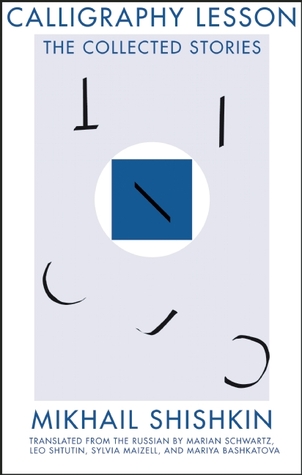
Calligraphy LessonThe theme that pervades all of these stories is the tragic oppression and enslavement of Russia’s people by its Soviet government.  Shishkin offers stories about himself and various members of his family and the devastating impact of Soviet rule had on their lives for generations.

My favorite story in the collection is the first one entitled “The Half-Belt Overcoat” in which the author describes the hardships of his mother who serves as a school headmistress.  On the one hand she is expected to inculcate the students into the ideals of the Soviet, communist state.  On the other hand she must teach the children to think yet not express any of their ideas that would defy the communist rulers.

When the author is a teenager he has an argument with his mother over a girl with whom he has fallen in love.  He mother does not approve so he doesn’t speak to his mother for over a year.  Later in life when his mother is dying of cancer, he feels deep regret for punishing her with silence.  But he can never find the words to express his sorrow and his appreciation for her struggle before she dies

The story “Of Saucepans and Star Showers,” presents us with the struggles of the author’s father as they relate to living under the Soviet regime.  His father was in the Russian navy and served on a submarine.  He is proud of his service to his country and dons his uniform every year to show his national pride.  But when the Soviet government starts doling out food rations that come from Germany, his father begins to think that his sacrifices to defeat the enemy during World War II were all in vain.  He lives out the rest of his sad, pathetic days alone and drowning his sorrows in bottles of vodka.

The final story that must be mentioned is entitled “The Bell Tower of San Marco.”  Lydia is a Russian who is studying in Zurich to become a doctor.  While in medical school she meets, falls in love with and marries a Swiss doctor named Fritz.  Lydia’s greatest ambition in life is to take a position as a doctor in the poorest parts of Russia and help the masses realize that they are being enslaved by the tsarist regime.  Lydia is a fervent socialist and wants to create an uprising of the masses which, she believes, will result in a complete revolution.

Lydia moves back to Russia and leaves Fritz in Zurich to practice medicine.  Their married life consists mainly of letters and when they are together they seem unhappy and dissatisfied.  Lydia eventually realizes that the poor do not want a revolution and the socialist values which she represents are meaningless to them.  At 40 she becomes an old, depressed, woman who feels that her entire life has been wasted on useless ideals.  Perhaps when the bell tower of the famous church of San Marco collapsed during their honeymoon to Venice, she should have taken that as a sign or an omen of the tragedy that was to become her life.

I highly recommend CALLIGRAHPY LESSONS for the beautiful language, moving stories and the emotional characters.  This collection of short stories has made me want to delve into Shishkin’s longer works.

About The Author:

M ShishkinMikhail Shishkin was born in Moscow in 1961. He won the 2000 Booker Prize for his The Taking of Izmail and the 2005 National Bestseller Prize and the 2006 National “Big Book” Prize for his Maidenhair (Open Letter, 2012). He lives in Switzerland.

6 Comments

Filed under Literature in Translation, Russian Literature, Short Stories

Review: The Librarian by Mikhail Elizarov

I received an advanced review copy of this title from publisher through NetGalley.  The original book was written and published in Russian in 2007 and this English version has been published by Pushkin Press.

My Review:
The LibrarianI recently read an article in The New York Review of Books by Ian Frazier in which he describes Russian satire and humor and the ways in which it differs from the rest of Europe and the United States.  Frazier writes, “Given the disaster Russian history has been more or less continuously for the last five centuries, its humor is of the darkest, most extreme kind. Russian humor is to ordinary humor what backwoods fundamentalist poisonous snake handling is to a petting zoo. Russian humor is slapstick, only you actually die.”  Elizarov’s The Librarian is a perfect literary example of  Frazier’s description of Russian humor.

The book opens with a description of a fictional Soviet-era writer named Gormov whose books were mass-produced but were of such poor quality that they were relegated to the bargain bin in used bookstores almost immediately.  After the fall of the Soviet Union, Gormov’s books are rediscovered and are also found to have magical effects on their readers.  The Book of Joy, for instance, puts readers into a temporary state of euphoria that is reminiscent of a drug high.  There are seven such magical books in the Gormov collection.  As groups acquire copies of these powerful books, they are called “Libraries.”  These libraries then engage in ridiculous, epic battles to fight for ownership of Gormov’s books.

The most absurd “library” of the bunch is a group of frail and senile old women living in a nursing home to whom the Book of Endurance is read.  All of a sudden their newly acquired strength turns these geriatrics into a fierce and bizarre army of warrior-like Amazons who kill people by the hundreds in order to protect their precious library.  There is an excessive amount of stabbing with knitting needles and pounding heads with hammers which ridiculous and droll scenes present us with the “slapstick” humor that Frazer describes but where characters “actually die.”

The main character of the book is a meek young man named Alexei whose only concern in life is to be an actor.  Of course, his acting career has never taken off so he finds himself divorced and living at home with his parents.  When his uncle dies he is asked to put his things in order and sell his uncle’s apartment.  The contents of the apartment contain one of Gormov’s books so naturally Alexei is drawn into the world of the libraries.  His lack of reaction as people are stabbed and killed around him in order to protect the book is ridiculous and comical.  He eventually dons his own armour, which consists of old truck tires, and launches himself headlong into the bloody fray.

The problems with Alexei’s own library and its inevitable clash with other libraries is the topic of the second half of the book.  There are many battle scenes where the rival libraries have more and more comical battles in which the clash of these book warriors resemble video games.  In the end, Alexei is saved by the brigade of geriatric warriors who lock him up and want to use him as their guinea pig to test out the effects of reading all seven books at once.  The ending has a more serious tone then the rest of the book and provides and interesting commentary on worshipping and overvaluing objects, blindly following leaders without questioning their motives and the sacrificing of one person for the safety of the whole community.  For a sampling of Russian humor and satire THE LIBRARIAN is a perfect choice, but I will warn you to be prepared for a wild ride.

3 Comments

Filed under Humor, Literature in Translation, Russian Literature

Review: The Prank-The Best of Young Chekhov by Anton Chekhov

I received an advanced review copy of these stories from The New York Review of Books.

My Review:
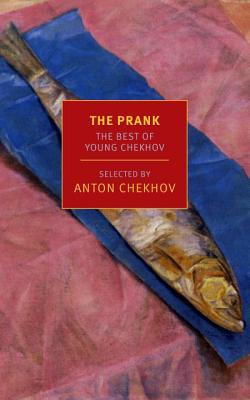
The PrankThese short stories have been collected and published in one volume for the first time and this collection also features two stories that have never before been translated into English.  The book includes an index in which the original publication is mentioned for each story as well as any changes that Chekhov made to each narrative before final publication.

The collection is a humorous and sarcastic commentary on Russian life in the 19th century; Chekhov particularly likes to poke fun at relationships and marriage.  In “The Artist’s Wives,” various types of creative men are featured, including a painter, a novelist and a sculptor, all of whom have trouble controlling their pesky spouses.

Secret lovers, dark humor and narcissism all play a role in the marriages that Chekhov describes.  In “Before the Wedding,” a mother is giving her newly engaged daughter advice about marriage.  She has a long list of complaints about her own husband and tells her daughter, “Marriage is something only single girls like but there’s nothing good about it.”

My favorite story is the one entitled “A Confession” in which a man is writing a letter to his friend to explain why, after 39 years, he is still a bachelor.  He has a few interesting stories about various engagements to women that are foiled because of ridiculous reasons which include a biting gosling, bad writing and hiccups.

The New York Review of books Classics has given us another brilliant and funny collection of translated short stories.  If you are interested in trying to read Russian literature, THE PRANK is a great work with which to start.

About The Author:
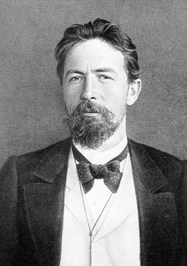
ChekhovAnton Chekhov was born in the small seaport of Taganrog, southern Russia, the son of a grocer. Chekhov’s grandfather was a serf, who had bought his own freedom and that of his three sons in 1841. He also taught himself to read and write. Yevgenia Morozova, Chekhov’s mother, was the daughter of a cloth merchant.

“When I think back on my childhood,” Chekhov recalled, “it all seems quite gloomy to me.” His early years were shadowed by his father’s tyranny, religious fanaticism, and long nights in the store, which was open from five in the morning till midnight. He attended a school for Greek boys in Taganrog (1867-68) and Taganrog grammar school (1868-79). The family was forced to move to Moscow following his father’s bankruptcy. At the age of 16, Chekhov became independent and remained for some time alone in his native town, supporting himself through private tutoring.

In 1879 Chekhov entered the Moscow University Medical School. While in the school, he began to publish hundreds of comic short stories to support himself and his mother, sisters and brothers. His publisher at this period was Nicholas Leikin, owner of the St. Petersburg journal Oskolki (splinters). His subjects were silly social situations, marital problems, farcical encounters between husbands, wives, mistresses, and lovers, whims of young women, of whom Chekhov had not much knowledge – the author was was shy with women even after his marriage. His works appeared in St. Petersburg daily papers, Peterburskaia gazeta from 1885, and Novoe vremia from 1886.


2 Comments

Filed under Classics, Humor, New York Review of Books, Russian Literature, Short Stories