
 The nine stories in this collection are Stendhal’s translations and retellings of historical records from Italy in the 16th century which depict the upper classes behaving very badly: forbidden love, murder, adultery, torture, poisoning are all found within the pages of Stendhal’s translations. Written between 1829 and 1840, most of the stories in this volume were not published until Stendhal’s death. He tells us himself, in the beginning of “The Duchess of Palliano”, why the stories from this time period and in this part of Europe so fascinated him. Stendhal believes that “Italian passion” is something that no longer exists in the literature and culture of his own era. Love, in particular, he observes, has given rise to so many tragic events among the Italians and Stendhal is fascinated with visiting Italy and searching through the archives of Rome, Florence and Siena to find stories of these “Italian passions”:
In order to get some idea of this “Italian passion,” that our novelists speak about with such assurance, I found it necessary to study history; and I found that the great histories written by men of talent, though often quite majestic, say almost nothing of such details. They tend to take note only of the follies committed by kings or princes.
Stendhal, in his extensive research, has a penchant for finding stories in which upper class Italian women from prominent 16th century families fall in love with men of lower rank for which unforgiveable indiscretions they are put on trial and condemned to death. In “The Duchess of Palliano,” A Duke, in service to his uncle Pope Paul IV, takes advantage of his authority by pillaging local villages and engaging in all sorts of erotic debauchery. One of his favorite pastimes is bringing home mistresses, one after the other, while at the same time expecting that his wife, the Duchess of Palliano, remain faithful and look the other way as far as his own sexual trysts are concerned. Inevitably, the neglected Duchess falls in love with a handsome young man of the court and through a series of betrayals the Duchess and her lover are found out. Her lover’s throat is slit and the Duchess herself is put to death by strangulation. Stendhal doesn’t hold back from translating the gruesome details of these Italian chronicles—descriptions of torture, murder, suicide are all included in these passionate stories.
The longest story in the collection, “The Abbess of Castro” is one that has the most passion because of the primary source letters that Stendhal translates. Elena de Campireali, the daughter of a noble family who possessed great wealth and many estates in the kingdom of Naples, is the central figure of this tragic story. Elena’s father and brother are horrified when they learn she has fallen in love with a lower class brigand named Giulio Branciforte. I found Stendhal’s introduction to Elena’s story particularly amusing:
It would appear that Elena knew Latin. The verse she was made to learn spoke always of love, a love that would seem completely ridiculous to us if we were to come across it in 1839; that is, it treated of passionate love, love that was nourished by great sacrifices, love that can subsist only in an atmosphere of mystery, and love that is always found accompanying the most horrible misfortunes.
A fair warning from the author for those who might engage in too much translation of Catullus, Ovid, or Propertius!
Guilio visits Elena every night by standing under her balcony window and giving her a bouquet of flowers with a letter attached. Stendhal includes translations from large excerpts of their passionate letters. Guilio writes to Elena in one of the notes embedded in her flowers:
To tell the truth, I do not know why I love you; I certainly cannot propose that you come and share my poverty. But what I do know is that if you do not love me, my life is worthless to me; it is useless to say that I would give it up a thousand times over for you. But before your return from the convent, this life was not an unfortunate one; on the contrary, it was full of the most wonderful dreams. So I can say that the sight of my happiness has made me miserable.
Stendhal has a valid point: we don’t see letters like this in the 19th or, for that matter, in the 21st century, do we? Like the other stories in the collection, there is no happy ending for these two lovers. Even though they profess their undying, eternal love for one another, in the end they cannot prevent her family from keeping them apart.
Despite the fact that these stories end in with the lovers’ deaths, they are full of passion, intrigue and interesting historical descriptions and details that Stendhal uncovers through his research. Italian Chronicles is a fascinating look into the lives of 16th century Italian nobility through the eyes of the astute, erudite 19th century French novelist.
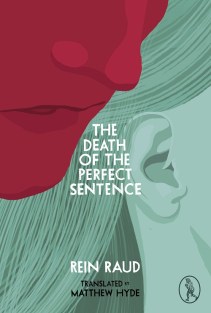 In Rein Raud’s latest novel he cleverly inserts his own voice into his narrative by including text boxes with personal stories, observations, anecdotes and proverbs. For example, one such text box in the novel states:
 Rein Raud was born in Estonia in 1961. Since 1974, he has published numerous poetry collections, short stories, novels, and plays. For his works he has received both the Estonian Cultural Endowment Annual Prize and the Vilde Prize. Having earned his PhD in Literary Theory from the University of Helsinki in 1994, Raud is also a widely published scholar of cultural theory as well as the literature and philosophy of both modern and pre-modern Japan. For more information on purchasing The Death of the Perfect Sentence visit
  As I was reading Teffi’s memoir about her katabasis from Russia to Constantinople during the Bolshevik Revolution in Russia, two words from Vergil’s Aeneid kept coming to mind: fato and profugus . After barely escaping from the burning and destruction of Troy, Aeneas is profugus–“exiled”, “driven forward”, he is essentially a fugitive or a refugee. The fate of his sea voyage and his various landings are the result of fatum, “fate” driving him along from one place to the next; he rarely, if ever, chooses his next destination. Like Aeneas, Teffi is a refugee and much of her flight from her motherland is a result of fate and circumstance. At one particularly dramatic part of her journey in Odessa she reflects, “And then there I was, rolling down the map. Fate had pushed me on, forcing me wherever it chose, right to the very edge of the sea. Now, if it so wished, it could force me right into the sea—or it could push me along the coast. In the end, wasn’t it all the same?”
 ἀρετή τιμὴν φέρει, (excellence brings honor), are the first words spoken by Magris’s protagonist in A Different Sea. Enrico has graduated from the Royal Imperial Staatsgymnasium of Gorizia and has decided to set sail for Patagonia in an attempt to live an authentic life, free from material items, worry, and The Great War which is about to break out in Europe. His mind has been shaped by the Ancient Greek texts that he and his friends Nino and Carlo are so fond of reading in Nino’s attic room:
 The unnamed protagonist in Blameless has been obsessively collecting items associated with fighting and warfare for decades in order to establish a war museum in his native home of Triste. His collecting began shortly after World War II, during which time he helped negotiate the liberation of Triste. He gathered so many items throughout the course of these post-World War II years that they could only be stored in a hangar. His entire life was consumed with establishing his museum to the point that he even slept among his objects and papers. When he dies in a fire that consumes him and some of his precious objects in the hangar, it is a woman named Luisa that is tasked with curating the museum and organizing his notes, objects and stories.


 The Book Binder's Daughter