Category Archives: Literary Fiction

Review: The Last Word by Hanif Kureishi

I received an advanced review copy of this book from the publisher through NetGalley.

My Review:
Last WordMamoon Azam is an Indian born British writer who is now in his seventies and living a quiet and unassuming life in the bucolic English countryside.  Although he has produced many thought-provoking and award-winning books in his career, it has been several years since he has been relevant in the publishing world.  Mamoon, his wife Liana and a major publishing house decide that a biography of the writer would be just the thing to make Mamoon important again as well as rich.

Harry Johnson, a struggling writer himself, is hired by the publisher to write a scintillating, scandalous and lascivious biography of Mamoon.   The first half of the book is a hilarious satire not only of authors, but of everyone involved in the publishing industry.  The old novelist is portrayed as an acrimonious,  self-absorbed recluse who has not written anything worthwhile in years.  Harry, Mamoon’s biographer, is a bottom-feeder in the publishing industry because he is trying to make a living by writing about another man’s career.  Rob, the editor at the publishing company, is greedy for a tell-all biography which will unveil shocking and unseemly secrets about Mamoon’s life.

At a party given him by his overly emotional and needy wife, Mamoon is awkwardly asked to deliver an impromptu speech for his friends, family and fans.  His remarks about writers and their role in the world of publishing is a sad, yet accurate commentary on what this industry has become: “These days a writer without bodyguards can hardly be considered serious. A bad review is the least of our problems.  Every idiot believing any insanity has to be humored: it is their human right.  The right to speech is always stolen, always provisional.  I fear the game is almost up for truth.  People don’t want it; it doesn’t help them get rich.”

The most interesting character in the novel is Harry himself who has a heavy load of emotional baggage over his paranoid, sex-crazed, suicidal mother.  Harry has a fiancé but he cannot seem to stay faithful to her.  His own life is a mess and in a state of crisis while he is chasing a reluctant, and at times recalcitrant, Mammon around his home trying to pry details out of the novelist about his life.  Harry’s personal affairs are presented as a ridiculous farce and, much like the author whose life he is trying to capture, he has a tumultuous history of relationships with women.

Overall, THE LAST WORD is an entertaining and starkly vivid satire about what the state of the publishing world has become in the 21st century.  Mamoon knows that he has an important life and career which ought to be documented, but at the same time he is running away from that very corrupt and profit-focused industry that is in charge of illustrating his life.

About The Author:
Hanif KureishiHanif Kureishi is the author of novels (including The Buddha of Suburbia, The Black Album and Intimacy), story collections (Love in a Blue Time, Midnight All Day, The Body), plays (including Outskirts, Borderline and Sleep With Me), and screenplays (including My Beautiful Laundrette, My Son the Fanatic and Venus). Among his other publications are the collection of essays Dreaming and Scheming, The Word and the Bomb and the memoir My Ear at His Heart.

Kureishi was born in London to a Pakistani father and an English mother. His father, Rafiushan, was from a wealthy Madras family, most of whose members moved to Pakistan after the Partition of India in 1947. He came to Britain to study law but soon abandoned his studies. After meeting and marrying Kureishi’s mother Audrey, Rafiushan settled in Bromley, where Kureishi was born, and worked at the Pakistan Embassy.

Kureishi attended Bromley Technical High School where David Bowie had also been a pupil and after taking his A levels at a local sixth form college, he spent a year studying philosophy at Lancaster University before dropping out. Later he attended King’s College London and took a degree in philosophy. In 1985 he wrote My Beautiful Laundrette, a screenplay about a gay Pakistani-British boy growing up in 1980’s London for a film directed by Stephen Frears. It won the New York Film Critics Best Screenplay Award and an Academy Award nomination for Best Screenplay.


3 Comments

Filed under Humor, Literary Fiction

Review: A Slant of Light by Jeffrey Lent

I received an advanced review copy of this novel from the publisher through NetGalley.

My Review:

A Slant of LightOne of my favorite places to visit is The Finger Lakes region in New York so I was thrilled to find an historical fiction novel that is set in this beautiful place.  Malcolm Hopeton moves from New Hampshire with his elderly grandfather and buys a plot of land to farm near Seneca Lake.  Malcolm toils from dawn to dusk for years in order to yield a fertile bounty and he is very successful.  He hires a young boy named Amos Wheeler as farm help which will prove to be one of the biggest mistakes of his life.

Malcolm also meets Bethany and they have a brief and whirlwind romance and settle down to a blissful, married life.  When Malcolm decides to go and fight in The Civil War, and chooses to stay away for all four years of the war, his farm, his wife and all that he holds dear are taken away from him.  He commits a horrific act of violence against Amos and Bethany for which he stands trial.  As the story unfolds we learn that Malcolm is an honorable man who is driven to his breaking point.

The narrative also focuses on the character of Augustus, who I found to be the most interesting character in the novel.  Augustus is also a hardworking farmer that has suffered tragedy very early on in his life.  His pregnant wife, Narcissa, dies in childbirth and he vows to be alone for the rest of his days.  He quickly realizes that he needs someone to help take care of his house and feed him, so he hires Becca Davis and they get along very well.  But Augustus is so focused on staying faithful to his dead wife that he refuses to see what a great match he and Becca would make.

One theme that is carried throughout the novel is the abuse of women.  Bethany is treated poorly by her father and is beaten mercilessly when he perceives that she has committed a sin.  She finds solace and love with Malcolm, who turns around and abandons her to go off to war.  When Malcolm is gone she is emotionally and physically abused by Amos Wheeler.  Bethany’s life comes to a tragic end at the hands of her husband who, brought to his breaking point, kills Wheeler and in the ensuing struggle accidentally kills her as well.

Becca is treated well by Augustus but it becomes clear that she feels more for him than an employee feels for an employer.  When Augusts takes in Becca’s teenage brother the three of them live together as a pseudo-family and Becca seems especially content with her living situation.  But at two kept points in the novel Becca tries to have a serious conversation with Augustus and she is frustrated that she is still treated by him like nothing more than the hired help.

The bucolic language of the book captures the beauty and peacefulness of this region and the serene landscape stands in sharp contrast to the turmoil of the characters’ struggles.  A SLANT OF LIGHT is an intense read that comes to an abrupt and incomplete ending.  I was happy to read on Jeffrey Lent’s website that this book is the first in a two book deal with Bloomsbury.  I look forward to the next installment.

Visit the author’s website for more information about his other novels: http://www.jeffreylent.com/

1 Comment

Filed under Historical Fiction, Literary Fiction

Review: Cat Out of Hell by Lynne Truss

I received an advanced review copy of this book from Melville House through Edelweiss.

My Review:
Cat Out of HellHave you ever wondered what your pet’s voice would sound like if it could talk?  Oh come on, I can’t be the only one!  Well, Roger, the talking cat in CAT OUT OF HELL, has a voice that sounds like Vincent Price.  He is also intelligent, well-read, well-traveled and immortal.

Roger has had a very interesting life and he begins to tell this story to a man named Wiggy.  Wiggy, whose sister Jo has mysteriously disappeared, has inherited Roger from his sister and discovers within a few days that Roger, a tabby cat, can actually talk.  And when he does talk he has a lot of things to say.

Roger is not the only talking cat in the story.  Roger’s long-time best friend, Captain, who is an enormous black cat, can also communicate with humans but, unlike Roger, Captain is evil and sinister.  What else would one expect from a gigantic talking, black cat!

The other main, human, character in the book is Alec whose wife has unexpectedly died.  Together Alec and Wiggy discover that Captain is part of an evil group of cats who are ruled by a Cat Master and have caused more than a few human deaths.  Can Alec, Wiggy and Roger team up and defeat Captain and the evil Cat Master before this satanic and sinister duo can do any more damage?

If you are thinking that the premise of this book is ridiculous, you are correct.  But the writing is so clever and funny that I thoroughly enjoyed every page.  CAT OUT OF HELL is a quick read that will give you lots of good belly laughs.  It will also make you wonder what your pets are really up to when you are not around.

About The Author:
Lynne TrussLynne Truss is a writer and journalist who started out as a literary editor with a blue pencil and then got sidetracked. The author of three novels and numerous radio comedy dramas, she spent six years as the television critic of The Times of London, followed by four (rather peculiar) years as a sports columnist for the same newspaper. She won Columnist of the Year for her work for Women’s Journal. Lynne Truss also hosted Cutting a Dash, a popular BBC Radio 4 series about punctuation. She now reviews books for the Sunday Times of London and is a familiar voice on BBC Radio 4. She lives in Brighton, England.

Leave a comment

Filed under Humor, Literary Fiction

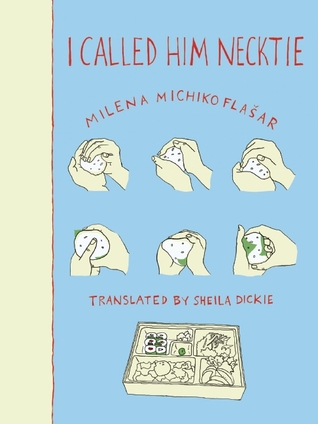
Review: I Called Him Necktie by Milena Michiko Flasar

I received an review copy of this book from New Vessel Press.  This book was originally written and published in German in 2012.  The English version has been translated by Shelia Dickie.

My Review:
NecktieHikikomori is the Japanese term for youths who shut themselves into a room in their parent’s home and have very little contact with their family. According to Flasar, these young people may lock themselves away from society for up to fifteen years because they are overwhelmed by the expectations to conform and achieve in school and in their careers. Since being a hikikomori is an embarrassment to a family, no one knows the exact number of them that exist.

Flasar captures the loneliness, isolation and sadness that is felt by a hikikomori through the character of Taguchi Hiro in I CALLED HIM NECKTIE.  Taguchi has not come out of his bedroom in his parent’s home for two years and he even eats the meals that his mother leaves at his door in isolation.  One day Taguchi remembers the pleasantness of childhood when his mother would bring him to the park, so he ventures outdoors and sits in the same park.  He has waves of anxiety and nausea as he is trying to fight through his agoraphobia and the one thing that calms him down is a man who, dressed in a suit and tie, sits on a bench near him and meticulously eats the lunch from his bento box.

Taguchi and the man he calls “Necktie” show up at the park every weekday and eventually they strike up a conversation.  Taguchi’s family, neighbors, and teachers at school all put a tremendous amount of pressure on him to succeed and to fit in.  His conformity leads to what he believes are tragic consequences that involve two of his fellow classmates.  When the pressure to conform becomes too much, he closes himself off from his family, declares, “I can no longer” and he does not speak for two years.  The first person to whom Taguchi speaks after those two years is “Necktie” from the park and once Taguchi starts talking he does not stop.

“Necktie,” whose real name is Ohara Tetsu, comes to the park everyday because he has lost his job and cannot bring himself to admit this fact to his wife.  He adheres to his normal routine of waking up everyday at 6 a.m., dressing for work, taking the bento box that his wife has prepared, and riding the commuter train.  Ohara is the result of what happens to the youth in society who do conform: he is tired and worn out and thoroughly embarrassed when his career is taken away.

Ohara and Taguchi spend hours confiding in each other and through their conversation we learn of their struggles, heartaches, losses and phobias.  They both needed human interaction and human contact and fate brought them together at just the right time.  It is worth noting that they rarely have a dialogue in the book.  Either one of them is talking at length or the other.  They each longed for someone to truly listen without judgment and that is the gift that they give to one another.

The writing of the book is terse and curt with no quotations marks.  This is fitting for Taguchi and Ohara as their stories spill out from their mouths, sometimes in fragments and sometimes in philosophical reflections;  it seems as though they are desperate to share their lives with each other and make a connection as urgently as possible.

I CALLED HIM NECKTIE is an uplifting story about two people who feel isolated and abandoned by their society but find comfort in the attentive ear of one another.  I highly recommend this short, yet inspiring tale.


About The Author:
FlasarMilena Michiko Flašar (St. Pölten, 1980) studied comparative literature, Germanic and Roman languages at the University of Vienna, and taught German to non-native speakers. After several successful publications in a variety of literary magazines, she made her debut in 2008 with the collection Ich bin (I am). This volume includes three short stories about love and parting. The short story Okaasan – Meine unbekannte Mutter (Okaasan – My unfamiliar Mother) appeared in 2010, telling the story of her dying demented mother. She has received several prizes and scholarships for her work. Meanwhile she has started writing full-time. In feburary 2012 her new book Ich nannte ihn Krawatte was published.

Visit New Vessel Press for their fantastic selection of titles.  You can also download a translation from their site of the Chekhov short story “The House Call.”


5 Comments

Filed under Literary Fiction, Literature in Translation

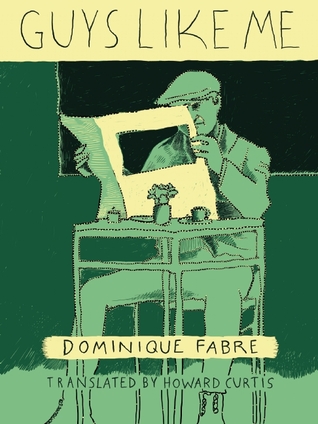
Review: Guys Like Me by Dominique Fabre

I received an advanced review copy of this book from the publisher through Edelweiss.

My Review:
Guys Like MeWhat surprised me most about this brief novel is how emotionally invested I became in the unnamed narrator.  Fabre creates a man who describes for us his everyday existence as a fifty-four year old man, living in Paris, divorced for 15 years, with a grown son.  He works a lot to pass the time and spends most nights alone in his small apartment.  He has two close friends he sees on a regular basis and has had a few casual relationships with women he has met on dating websites.  He continually and sadly says to himself throughout the first part of the narrative, “There are no second acts.”

He likes to reminisce about his past life and speaks about the anger he had for his ex-wife after she divorces him; their separation is so nasty that they haven’t stepped foot in the same room or spoken for 5 years.  But now that so much time has passed, he begins to wonder why he was ever so angry.  The best thing in his life that has come out of his marriage is his son Benjamin with whom he has a close, supportive and touching relationship.

The narrator’s two close friends serve as an interesting contrast to his own life.  His friend Jean, with whom he has just reconnected after many years, has been out of work and on welfare for years and he suffers from long bouts of depression.  Although the narrator is oftentimes lonely, his life is never as sad or miserable as Jean’s.  Marc Andre is the narrator’s other friend who is also divorced, but is happily remarried and has a large blended family.  The narrator’s relationship with Marco proves that as we get older, it is not the number of friends that becomes so important to us, but the depth of the relationships with the few people we keep close.

About halfway through the book, the narrator meets a woman online named Marie and it is hard to tell if he really cares about her or if she just fills up some of his lonely hours.  But as the story goes on, he subtly stops saying “There is no second act.”  He seems to really turn a corner in his life and be able to declare that good things still can happen to “guys like me.”

GUYS LIKE ME is a fast and emotional must-read; it will keep you wondering if F. Scott Fitzgerald was wrong and that second acts are possible for all of us.

About The Author:
Dominique-Fabre-Dominique Fabre, born in 1960, writes about people living on society’s margins. He is a lifelong resident of Paris. His previous novel, The Waitress Was New, has also been translated into English.

I love to support small presses that provide us with wonderful books like Guys Like Me.  Please support New Vessel Press and visit their website for more titles: newvesselpress.com.

1 Comment

Filed under France, Literary Fiction, Literature in Translation