I am so excited today to bring you a review of The Naïve Guys by Harry Patz. Thanks to Harry for the advanced copy of the book, which I thoroughly enjoyed. Harry also graciously agreed to let me interview him and I think everyone will appreciate his thoughtful answers. Harry is also giving away 4 copies of his book (open internationally). Please scroll down to the end of my review to enter to win your own copy, add the book to Goodreads and to connect with Harry through his website and social media.
My Review:
 Vergil, Rome’s most famous epic poet, tells the story of the hero Aeneas who, after escaping the burning of his hometown of Troy, wanders the seas in search of a new place to settle. At the core of Vergil’s Aeneid is the theme of wandering, new beginnings and finding one’s place in life. It is no surprise that Mark, the main character in Harry Patz’s new novel The Naïve Guys, has a dog eared and well-worn copy of The Aeneid among his treasured possessions in his childhood bedroom. Mark has just graduated from Boston College in 1992 and he, like his fellow graduates, believes that the job offers will start pouring in. But after moving back in with his mother and Uncle Frankie, who serves as a surrogate father, Mark realizes that the “real world” outside of the protective walls of college is a lot harder to deal with than he ever imagined.
When Mark finally lands a job as a software salesman at Fishsoft, an up-and-coming company in the infant technology industry, he is too naïve to realize that he failed to negotiate his salary. As Mark is trying to navigate the world of office politics, he is also trying to keep in touch with his group of old friends who are a link to the happy and carefree days of college. Mark and his friends have some very funny adventures throughout the book and the author’s sense of humor was one of my favorite aspects to the story. I laughed out loud so many times while reading the story that my husband stopped asking me what was so funny.
Mark and his friends engage in some of the most interesting and hilarious conversations in the book especially around the topic of women and relationships. Mark wants to find a woman who is intelligent and with whom he can have stimulating conversation, but she must also be sexy and “stimulate” him in other ways. Throughout the story Mark has relationships that only fulfill half of this perfect formula. One of the reasons why I found Mark to be such a likeable character is that he truly wants to fall in love and have a connection with the right woman. The fact that he can never quite get it right makes him sympathetic and makes us cheer him on and wish for him to find his happy ending.
Sports, especially football, play a prominent role in Mark’s memories about the early 1990’s. Another reason that I really enjoyed this book is due to the sports references and history. Mark and his friends use football games as bonding moments and their attendance at the games keeps them close as a group of friends. When his favorite teams win, their victories serve as a pick me up, especially when Mark suffers low points in his personal and family life. I have learned through my own students that, whether they are players on a team or fans cheering on the sidelines, participation in athletic events serves to build their self-confidence and to provide them with a sense of belonging to a community. Part of what helps Mark to cope in his transition period is the fact that he still feels a part of the Boston College community through sports.
I would classify THE NAIVE GUYS not just as literary fiction, but also as historical fiction because of its accurate depiction of life in the early 90’s in New York. Mark has to use pay phones, e-mail is a new technology that most people don’t know about, and his “laptop” computer is really not at all portable. For anyone who was in high school or college during the 1990’s this book is a fun and nostalgic read. The combination of great characters in which the reader becomes truly invested and an interesting plot kept me eagerly turning the pages of THE NAIVE GUYS until the very end.

Giveaway: Open Internationally:
Harry is giving away TWO signed copies of The Naïve Guys to someone in US/Canada and TWO ebooks to someone in any other country. Winners will be notified via email on October 2nd. CLICK HERE TO ENTER THE GIVEAWAY
About the Author:
 Harry Patz, Jr. is a twenty-year veteran of the tech and media industries. He has been a participant of the Nantucket Atheneum Writer’s Group since October, 2013. Harry contributed a short story, “Off Season” for the group’s published anthology collection, “The Moving Pen: A Nantucket Atheneum Writer’s Group Anthology,” published in June, 2014.
Harry holds an MBA from The Johnson School at Cornell University and a BS in Management from Boston College. He resides in Westchester, New York.
Connect with Harry-
Website: www.thenaiveguys.com
Twitter: @harrypatz, @thenaiveguys
Facebook: www.facebook.com/thenaiveguys
Author Q&A:
1. In The Naïve Guys, Mark has a close group of friends that are like family to him. Did you base any of these characters on your own friends?
HP – I definitely drew on relationships from various aspects of my life. Some characters are based on my own friends and acquaintances, some are composites, and many are purely imagined. Some personality traits of my friends were accentuated, while others were combined and deemphasized. And there is a bit of me in each of the “guys,” sometimes from different periods of my life. One of my favorite movies growing up was American Graffiti. I later read that the film’s creator, George Lucas (of Star Wars fame) stated that each of three main characters were based on himself at different stages of his life. His construct made a huge impression on me.
2. Sports, especially football, have a prominent role in “The Naïve Guys”. Why, of all things you could have chosen to explore about the early 90’s, did you decide to include these details in the book?
HP – Mark and his friends are very much trying to figure out who they are, as Mark still lives in his childhood bedroom, with sports pennants of his favorite teams hanging on the wall. In this time of uncertainty, and especially as Mark, Pete and Kostas are all Boston College alumni, the rebirth of that football team provides not only a pastime, but a sense of comfort, belonging and pride for these fellows when they are so unsure of themselves in both the career and (female) relationship aspects of their lives. The nine game winning streak of the BC football team in 1993, including the landmark victory over #1 Notre Dame allowed Mark to push many of the less-established elements of his psyche to the side.
3. Mark is very “naïve” about getting a job when he is fresh out of college. Do you think that young people graduating from college today are just as naïve, more so, or less so about their job prospects?
HP – I am going to cop out here a tad and say both more and less naïve.J On the one hand, today’s college grads, growing up in the age of Columbine and ubiquitous mobile phones, cameras, and “selfies,” are so much more media and tech aware than prior generations. We see brilliant tech founders in high school, let alone those who forego or depart college early. The era of lifetime and long-term employment is dissolving from their parents’ and grandparents’ generations right before their eyes, so they are focused on not just getting a job but acquiring skills, all within a great work environment. And they lead very public lives; it’s just in their DNA.
On the other hand, I’m not sure, in general (to be fair), that they have developed the deepest level of reading, oratory, and critical thinking skills that prior generations had. While every college will extol their first class sushi bar and fitness facilities, I’m not sure they are graduating students with the best foundation to help them lead long-term successful lives, even while working on “the next big thing.”
4. I really enjoyed Mark’s references to the Aeneid in the book. Did you have other parallels in mind between Aeneas and Mark besides the obvious one of transitions ( i.e. both characters at a crossroads in their lives and trying to find their place in life)?
HP – One of the key themes in the The Nave Guys is the balance between fate and free will. What, if anything is predestined, and what is a choice? That choice can be to not make a decision, or to choose a very different path. And it’s not just Mark, it’s Sally, Vinny, Uncle Frankie, and many others who have to grapple with this question.
So for fans of the Aeneid, you may recall that Aeneas is destined to find (create) the Roman race, but he diverges from that path for a dalliance with the beautiful, sexual Dido among other stops on his journey, and we’re not really sure he is going to defeat rival Turnus though it is foretold as such.
I think one can view Mark’s journey through a similar prism. He thinks he is smart and it will all work out for him, but he is unsure if it really will. I always loved that passage in the Aeneid where Aeneas is given three imperatives – establish the peace, spare the vanquished, and crush the haughty. (The passage is much prettier in Latin, by the way). Mark, in his own life and in his own way, with respect to his friends, his family, his work colleagues and the women who enter his life…he tries to do those exact things.
5. At the end of the book Mark mentions traveling the world and alludes to his future. Is there another book in the works about what happens next to Mark Amici?
HP – I was on a long-drive today from Boston to New York and I thought about where the story will pick up for Mark and his friends. So yes, I will continue the journey for them at some point. Like all of us, Mark and the guys will grow in different and unexpected ways.
But to give that next chapter justice, I will take a break from them for a while. I plan to work on a themed short story collection first. Hopefully it is one your readers will enjoy. Thank you Melissa for the time and for sharing The Naive Guys with your readers.

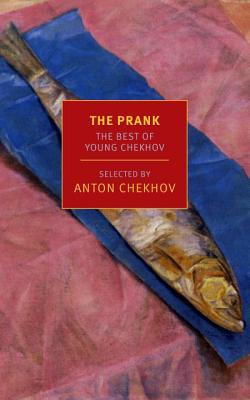 These short stories have been collected and published in one volume for the first time and this collection also features two stories that have never before been translated into English. The book includes an index in which the original publication is mentioned for each story as well as any changes that Chekhov made to each narrative before final publication.
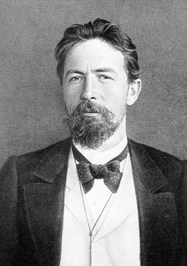 Anton Chekhov was born in the small seaport of Taganrog, southern Russia, the son of a grocer. Chekhov’s grandfather was a serf, who had bought his own freedom and that of his three sons in 1841. He also taught himself to read and write. Yevgenia Morozova, Chekhov’s mother, was the daughter of a cloth merchant.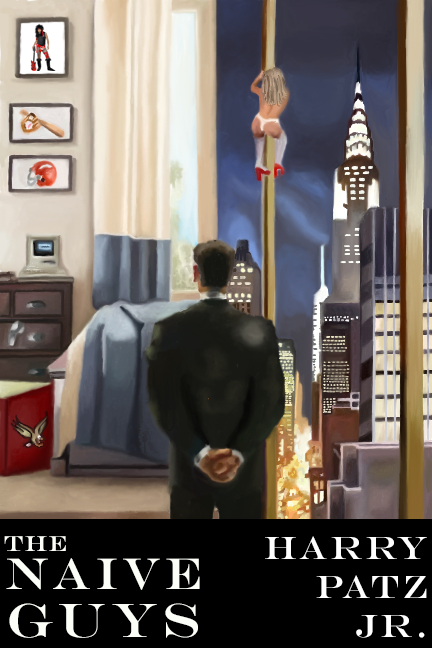




 The Book Binder's Daughter