Category Archives: Classics

Review and Giveaway: Conversations With Beethoven by Sandford Friedman

I received an advanced copy of this book from The New York Review of Books through NetGalley. I invite you to read my review and scroll down to the end of the page to win a copy of your own. Open Internationally.

My Review:

Conversations With BeethovenThe format and style of this book is nothing short of genius. Because of his deafness, Beethoven would use conversation books to communicate in the last years of his life. His friends and family would write their parts of a conversation in the books and he would respond orally. CONVERSATIONS WITH BEETHOVEN attempts to reconstruct the conversation book from the last year of his life.

These conversations with the great maestro portray a man who was irascible and paranoid. He believed that all women had loose morals that would give you a disease. He constantly accused people in his life of trying to poison him or steal from him. He had an explosive temper and those around him would often try to calm him down and make him stop shouting. Beethoven’s paranoia resulted in several hilarious exchanges between himself and his family members. There are many funny conversations between Beethoven and his brother Johann in which Beethoven is accusing Johann of stealing from him or Beethoven is telling Johann that his wife is sleeping around.

The conversations also reveal a touching side to the composer, who was thoroughly devoted to his family and always passionate about writing music. His nephew Karl, whom he adopted after the death of his brother, gives him many reasons for worry and heartache. Throughout all of the trials and tribulations with Karl, the affection and attention that he gives to his nephew never wanes. Beethoven also has several devoted assistants and friends that he cares for greatly. The unique style of the conversations lets the reader see, in their own words, the genuine affection that friends, family and acquaintances had for Beethoven.

If you read one new book this fall then it should be CONVERSATIONS WITH BEETHOVEN. The New York Review of Books had issued yet another great reprint that will allow a new generation of readers to enjoy and appreciate Sanford Friedman’s work.

add-to-goodreads-button3


Giveaway:

I enjoyed this book so much and I know you will too so I have decided to do a giveaway.  If you would like to win a copy leave a comment below telling what is the most unique book (style, content, really anything) that you have read.  I will choose a winner on 9/5.  US/Canada can choose a hardcopy or Kindle edition from Amazon. Open Internationally as long as you can receive an Amazon Gift Code for the book.

The winner of the giveaway is Carolyn M.  Thanks to everyone for the great comments and book suggestions!

20 Comments

Filed under Classics, Historical Fiction, New York Review of Books

Review and Giveaway: Darcy’s Tale by Stanley Michael Hurd

Austen In August

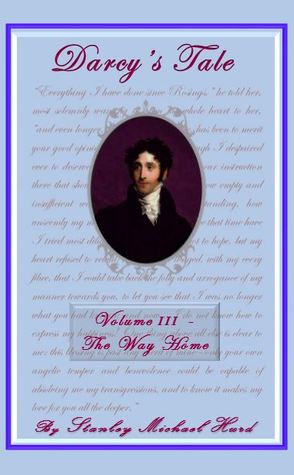
I am thrilled to be taking part in the Austen in August event.  Thanks so much to Lost Generation Reader for organizing such a great literary exchange.  Jane Austen has been one of my favorite authors since I was in high school.  Please click on the image above to see the full list of blogs participating in this event.  I will be reviewing Darcy’s Tale Volume III: The Way Home and giving away a copy of Darcy’s Tale Volume I: Into Hertfordshire so that you can get started on the series (open internationally).

Review:

Last fall I decided to reread all of Jane Austen’s works, including my favorite novel which is Pride and Prejudice. After I finished Austen’s works I was still eager for more of Austen’s stories and became curious about the genre of Austen fan fiction that is so popular. I was particularly looking for a novel that would give me the story of Pride and Prejudice from Darcy’s perspective and in my search I came across Stanley Michael Hurd’s books. I quickly devoured Darcy’s Tale Volumes I and II and I was Darcy's Taledisappointed to find that I would have to wait for summer to read Volume III. But it was well worth the wait.

I believe that of all the characters in what is arguably Austen’s most famous work, Darcy is the one who undergoes the biggest transformation. From the time of his prideful proposal to Elizabeth at Rosings, to his encounter with her at Pemberly he is a changed and humbled man. I, like many others,  have wondered what exactly happened during this time to make him reassess his attitude and approach towards Elizabeth. Stanley Michael Hurd’s latest book Darcy’s Tale Volume III: The Way Home fills in the story of Pride and Prejudice from Darcy’s perspective and picks up Darcy’s story just after the failed proposal.

In Darcy’s Tale Volume III, Darcy is at first angry at his rejected offer but he admits that he still loves Elizabeth and he cannot stop thinking about her. After a heart to heart talk with his aunt, Lady Andover, who is also Colonel Fitzwilliam’s mother, he understands the error of his ways. He vows if he ever sees Elizabeth again that he will prove to her that he is a humbled man and a true gentleman.

This book also fills in the details about Darcy’s involvement in tracking down Wickham and Lydia. I enjoyed this part of the book because it showed us a more daring and adventurous side of Mr. Darcy of Pemberly. Colonel Fitzwilliam is also a character in this part of the book which is very interesting since in Pride and Prejudice he has a very limited role.

The final part of the book, as one would expect, deals with Bingley’s proposal to Jane, Darcy’s successful proposal to Elizabeth and the double wedding. Georgiana is also a character who features prominently in these books and it was delightful to see her grow from being shy and unsure of herself to a true friend and sister to Elizabeth.  I truly enjoyed all three volumes in this set and if you are a fan of Pride and Prejudice then all three volumes of Darcy’s Tale are a must read.

add-to-goodreads-button3


Giveaway (Open Internationally):

Darcy's Tale V1In order to get you started on this great series, I am giving away a copy of Darcy’s Tale Volume I: Into Hertfordshire.   Please leave a comment telling me what your favorite Jane Austen novel is.  I will randomly pick a winner on August 28th and email the winner.  This giveaway is open internationally as long as you can receive an Amazon gift code.  If you live in the U.S. you may choose an electronic or hard copy of the book.

*The winner of the giveaway is Sylvia.  Thanks so much to everyone who entered!

Thanks for stopping by my blog.  If you like what you read, please feel free to sign up for The Book Binder’s Daughter via email on the sidebar so you don’t miss any posts or giveaways.

50 Comments

Filed under Classics, Giveaways, Historical Fiction

Review: Collected Stories by Frank O’Connor

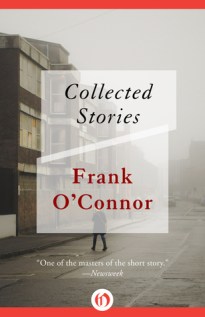
I was thrilled when Open Road Integrated Media gave me an advanced review copy of Collected Stories by Frank O’Connor.  O’Conner (1903-1966) was an Irish author best known for his short stories and memoirs. For more information on this prolific author, visit the  Frank O’Connor Research Website.


Frank O'ConnorThe first story in the collection, “Guests of the Nation”, is arguably one of his most famous.  Four men are sitting around a cottage playing cards, talking and relaxing with each other and their hostess who is a kind old lady.  It becomes apparent from the story that two of the men are English and are actually being held as captive by the other two characters in the story who are presumably IRA soldiers.  The juxtaposition of the slow-paced and calm first part of the story and the fast moving climax in the second half of the story is a testament to O’Connor’s writing genius.
In “The Bridal Night,” a mother tells the story of how her shy son’s love for a local school teacher has driven him mad and now the son lives out his days in an asylum.  This is a tragic story and the reader feels the pain of the mother and son, but there is a surprising twist at the end when the woman with whom the young man is in love does him a kindness that no one expects.

I was very glad to see a story in this collection that was loosely tied to World War I since I have been reviewing so many World War I historical fiction books.  In “My Oedipus Complex”, a young boy, Larry, is used to his mother’s undivided attention while his father is away fighting in World War I.  But when the war is over, the boy’s father comes home and now the boy must share his mother’s attention.  I found it fascinating to see this story from the child’s point of view.  As adults we are oftentimes so caught up with our own problems, we tend to minimize and ignore the complaints of children, which to them seem like the end of the world.  There is also a humorous change of fortunes at the end of this story when the father and his son are compelled to become allies instead of sworn enemies.

Overall, this is an impressive collection of short stories and even though I have only highlighted a few of my favorites, I enjoyed all of the stories in this volume.  Do you like to read short stories?  I would love to have some short story recommendations from my readers in the comments.

5 Comments

Filed under Classics, Short Stories

Review: J.D. Salinger Three Early Stories

J.D. Salinger CoverI was recently reading an article in Publishers Weekly about an Indie publishing company, The Devault-Graves Agency, that is reissuing lost literary classics as e-books.  I was thrilled when they kindly agreed to send me a copy of J.D. Salinger’s collection of three short stories.

Most people know about The Catcher in the Rye when author J.D. Salinger is mentioned.  But he wrote quite a few short stories, including the three from this collection.  They have not been published since 1940’s and the Devault-Graves company has rescued this collection from literary obscurity.  In “The Young Folks”, Salinger puts us in the setting of a party where we feel the immediate awkwardness that ensues when a man and a woman are introduced by a mutual friend. They try to have a forced conversation and we continually are told my the young man that he should really be leaving the party to write a theme for one of his college classes.

The relationship between a sister and a protective brother is explored in “Go See Eddie.”  The brother is worried that his sister’s amorous affairs are gaining her an unfortunate reputation. He tries to continually steer his sister towards applying for a job that she doesn’t want any part of.  The ending of this story was clever and entertaining.

Finally, in “Once a Week Won’t Kill You” a man is packing to leave his wife to join the army.  He says goodbye to an aunt who has raised him as her own son.  It is amazing how many details are subtly conveyed to us about this young man’s life through his brief goodbye with his aunt.

If you are eager to read some Salinger but want something a little different from his most famous novel, then I highly recommend giving these short stories a try.  They are a quick and entertaining read.  Please check out the Devault-Graves Agency for their full list of publications, which also include some Jack Kerouac publications.

4 Comments

Filed under Classics, Short Stories

Review: Augustus by John Edward Williams

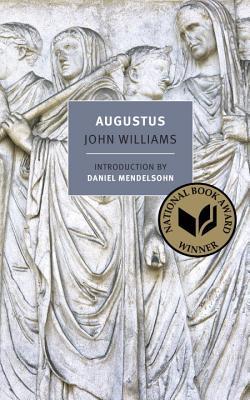
AugustusI have been studying the ancient world for the better part of 25 years, having taken  and taught countless history, mythology and literature classes.  Like every good student I have familiarized myself with important people, events, dates, etc.  But nothing has given me the experience of Ancient Rome and the Emperor Augustus quite like reading John Williams historical fiction about Augustus.

The style of this book is epistolary, whereby we learn about Augustus through the letters of those people who were most important in his life.  In Book I, Octavian, not quite yet The August, is in Apollonia with his closest friends, Marcus Agrippa, Gaius Maecenas and Salvidienus Rufus practicing his military skills and honing his philosophical abilities when he gets the word that his uncle Julius Caesar is murdered.  This young man, at the age of 19, stands at a significant crossroad in life and must decide either to also be swallowed by his uncle’s enemies, or  to embrace a position of power and leadership.  Luckily for Rome he chose the latter.

Octavian returns to Rome where Mark Antony is rude and dismissive to the young man who is the heir of Julius Caesar’s fortunes.  Although Octavian and Antony mistrust each other and view one another as rivals, they form an uneasy peace in order to avenge the death of Julius Caesar.  Williams depicts the men sitting in a primitive hut as they write proscription lists in order to eradicate everyone who was involved in Caesar’s assassination.  Cicero, the famous orator himself, who opportunely plays both sides, is also one of their victims and his head and hands are displayed on the rostra in the Roman Forum.

Through the condescending jabs and insults that Octavian and Antony throw at each other, Williams brilliantly foreshadows the civil war that erupts between Octavian and Antony.  When Antony is on campaign in the east and marries Cleopatra, the fragile peace that exists between them is shattered.  Throughout Book I, Octavian is never portrayed as a vengeful, warmongering military man, but instead he is viewed by his friends as someone who is doing the best he can to ensure peace and stability for Rome.  Maecenas states in one of his letters that Octavian did not wish Cleopatra dead and, in fact, he thought she would have made a great administrator and could have kept titular control over Egypt.

My favorite part of the novel was Book II in which we hear from Augustus’ daughter, Julia.  Julia is the only biological child of the Emperor and she gives us the image of a man who adores and dotes on his only child.  However, as Julia becomes older she is called on by her father to fulfill her duty to Rome through various marriages that are advantageous to the Empire’s political stability.

First, Julia is married to Marcellus, Augustus’ nephew and heir-apparent.  When Marcellus dies at the tender age of 19 from a sudden fever, Julia is then given in marriage to Agrippa, Augustus’ long-time friend and second in command.  Julia bore him 5 children and her time with Agrippa is some of the happiest in her life.  However, when Agrippa dies, Julia is forced to marry Tiberius, her father’s stepson, who is despised by the emperor because of his cruelty and brutality.  When she takes a lover of her own choosing, this decision leads to her downfall and lonely exile far away from Rome.  Julia’s letters are emotional, reflective and even philosophical as she contemplates her role in the legacy of Rome and the fact that woman of her rank have no control over their own circumstance.

In the final part of the book we actually hear from the Emperor himself when, in the last days of his life, he writes to his friend Nicolaus of Damascus.  At this point Augustus talks about his legacy and the peace and stability that he has bequeathed to Rome.  He worries for his empire’s future, especially because of the German barbarians who always threaten invasion from the North.  He remembers some of his old friends, especially the poets Vergil, Horace and Maecenas with whom he found true friendship.  Finally, he ponders the ephemeral nature of this life and realizes that no matter what he has done to ensure Roman peace and prosperity, his empire will not and cannot last forever.  Williams’ Augustus becomes for us the literary symbol of all leaders who struggle to deal with power, fame, fortune, strife, decision-making and the plethora of other responsibilities that weigh on them so heavily.

I do not use rhetorical hyperbole when I write that this novel is a brilliant work of literary genius.  It is John Williams crowning achievement.  What better way to commemorate the 2000th anniversary of Augustus’ death on August 19th than by spending a little time with the Emperor between the pages of Williams’ novel.

I am eternally grateful for The New York Review of Books for sending me an Advanced Copy of this novel.

add-to-goodreads-button3


7 Comments

Filed under Classics, Historical Fiction, New York Review of Books