Category Archives: Author Interviews

Review, Giveaway and Author Q&A: The Poet’s Wife by Rebecca Stonehill

I received an advanced review copy of The Poet’s Wife from the publisher through NetGalley.  Please read my review, enter to win your own copy (open internationally) and read my Q&A with the author Rebecca Stonehill.
My Review:

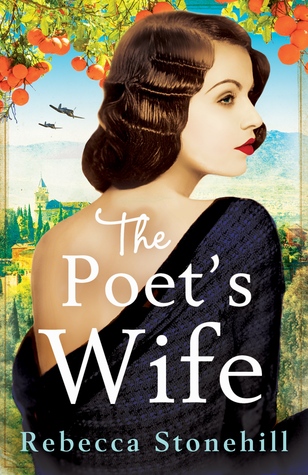
The Poet's WifeThe Poet’s Wife is the narrative of one family’s struggle during the tumultuous years of the Spanish Civil War and the time following.  The book alternates between 3 different points of view.  The first character to speak is Luisa, who grows up in a wealthy, upper-class home in Spain.  She is expected to marry and have a family and really not do anything else with her life.  Her parents have almost given up on her to spinsterhood, when a dashing young poet named Eduardo takes a fancy to her.  Luisa’s parents are not thrilled with the prospect of their daughter marrying a man who claims he is a poet, but his family is wealthy and so they capitulate.

The part of Luisa’s narrative describes her marriage to Eduardo, the large family they have, and their interaction with two women who are considered gypsies and live on the outskirts of society.  The  book highlights a lot of social issues that Spain faces in the 20th century.  Gypsies are considered outcasts and it is dangerous for Eduardo and Luisa to befriend gypsies, but they do it anyway.

The next part of the narrative is from the point of view of Eduardo and Luisa’s daughter, Isabel.  This part of the story covers the period of Civil War in Spain and a great deal of the text is spent on explaining the political factions that are warring with each other.   Eduardo and Luisa are hopeful that Spain with end up with a republican government, but when the Facists take over the country the family struggles to keep out of danger.  Isabel has some freedoms that are not allowed to her mother, such as her occupation of nursing.  When she is working at a hospital, Isabel falls in love with and marries an Englishman named Henry.

The final piece of the book is told through the eyes of Isabel and Henry’s daughter, Paloma.  Out of all of the women in the book, Paloma has the most liberty and rights and the author makes it a point to trace the freedom of Spain and the freedom of women throughout the narrative.  Paloma attends university and travels, both of which her mother and grandmother never would have dreamed.

THE POET’S WIFE is full of details about Spanish history, culture, and traditions.  I have not seen very many historical novels that deal with this time period in Spanish history.  If you want something that is a little different and rich with political deals of the era then give THE POET’S WIFE a try.

Giveaway:
The author and publisher are giving away an ebook copy of The Poet’s Wife.  This giveaway is open Internationally.  Please leave a comment below and just let me know you want to win!  It’s that easy!  The giveaway ends on 10/9.  Winners will be notified via email and will have 48 hours to respond.
The Winner of this giveaway is: Sarah H.  Thanks so much to everyone who entered!


About The Author:
Rebecca-Stonehill-author-photoI’m Rebecca Stonehill, author of The Poet’s Wife and creative writing teacher.

I’m from London but currently live in Nairobi with my husband and three children where I teach creative writing to school children. Many years ago, I spent eighteen months living in Granada, completely falling in love with it and being inspired to write The Poet’s Wife. I have also had many short stories published, including in Vintage Script, What The Dickens magazine and Ariadne’s Thread.

The Poet’s Wife is my debut novel and I am currently working on my second book, set in Kenya.

Author Q&A:
 1. In the story, Eduardo so desperately wants to be a poet and earn his living this way. But he spends more of his time working as a lawyer to pay the bills. Why did you use the title “The Poet’s Wife”? Were there other working titles you had in mind?

Before being signed up by Bookouture, the novel was called ‘In the shade of the orange tree.’ It was decided that ‘The Poet’s Wife’ had more of an emotional hook to draw readers in whereas the significance of the orange tree only becomes apparent upon reading the book.

Although Eduardo never received the recognition he would have liked with his poetry, along with his family and Federico García Lorca, it was the great passion and joy of his life and he identified far closer with this than with his career as a lawyer.

2. Historical fiction that is set in Spain does not seem to be as popular as historical fiction set in other parts of the world. What made you choose Spain and, in particular, this period of history in Spain?

I have loved Spain for many years. When I was in my early twenties, my father moved there and I longed to be able to speak the language which I found incredibly beautiful and lyrical to listen to. So I packed up my belongings and headed out to Andalucia, spending time with my father in Malaga then going to Seville where I did a CELTA course (learning how to teach English). I finally settled in Granada for a year and a half. I completely fell in love with this city and the more I became immersed in the language and the culture, I also started to hear fragments of information about the civil war that ravaged the country before the Second World War. It was very clear that although it had ended so long ago, it was still a taboo and there’s nothing like a taboo for a nosey aspiring writer to start asking questions! The more I found out about it, the more I knew there was a story there, particularly as it’s a fascinating slice of modern European history that I don’t feel people from my native UK in particular know much about, despite more Brits visiting Spain on holiday than any other nation.

3. All of the female characters in this book are strong women who maintain a positive outlook even under dire circumstance. Why did you choose to tell the story through the eyes of Eduardo’s wife, daughter and granddaughter?

My first few drafts of the novel were divided between Isabel’s first person narrative and a third-person narrative. I knew it wasn’t there yet and eventually sought the advice of an authors’ advisory service. The first thing that was suggested to me was that I try to re-write it in three first-person voices. This was a huge undertaking but definitely worth it – suddenly the characters became more authentic, owning their voices and experiences and the novel as a whole benefitted hugely from this shake-up.

4. When you are not writing, what types of books do you like to read? Is there a favorite book that you have read in the past year that has really stuck with you?

I live in Nairobi and good, reasonably priced books are not all that easy to come by here, so I tend to read novels that people lend me or that I find in the local mitumba’s (flea markets), rather than going with the current fiction trends. That being said, I do also haul lots of books back from the UK when I visit in the summer. I enjoy reading widely and out of my comfort zone as well as for sheer pleasure. A few books that I have loved this past year and really stand out are Americanah by Chimamanda Ngozie Adichie which I’m sure will be remembered as one of the finest novels of the decade, The Stolen Girl by Renita D’Silva (also published by Bookouture) which insightfully and sensitively potrays exile, deception and bulimia and Ghostwritten by David Mitchell which I found nothing short of astonishing.
13 Comments

Filed under Author Interviews, Giveaways, Historical Fiction

Review, Giveaway and Author Q&A: The Naive Guys by Harry Patz

I am so excited today to bring you a review of The Naïve Guys by Harry Patz. Thanks to Harry for the advanced copy of the book, which I thoroughly enjoyed.  Harry also graciously agreed to let me interview him and I think everyone will appreciate his thoughtful answers.  Harry is also giving away 4 copies of his book (open internationally).  Please scroll down to the end of my review to enter to win your own copy, add the book to Goodreads and to connect with Harry through his website and social media.

My Review:

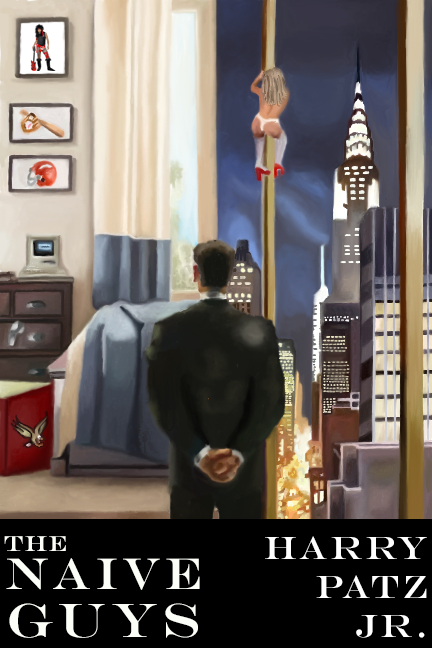
The Naive GuysVergil, Rome’s most famous epic poet, tells the story of the hero Aeneas who, after escaping the burning of his hometown of Troy, wanders the seas in search of a new place to settle.  At the core of Vergil’s Aeneid is the theme of wandering, new beginnings and finding one’s place in life.  It is no surprise that Mark, the main character in Harry Patz’s new novel The Naïve Guys, has a dog eared and well-worn copy of The Aeneid among his treasured possessions in his childhood bedroom.  Mark has just graduated from Boston College in 1992 and he, like his fellow graduates, believes that the job offers will start pouring in.  But after moving back in with his mother and Uncle Frankie, who serves as a surrogate father, Mark realizes that the “real world” outside of the protective walls of college is a lot harder to deal with than he ever imagined.

When Mark finally lands a job as a software salesman at Fishsoft, an up-and-coming company in the infant technology industry, he is too naïve to realize that he failed to negotiate his salary.    As Mark is trying to navigate the world of office politics, he is also trying to keep in touch with his group of old friends who are a link to the happy and carefree days of college.  Mark and his friends have some very funny adventures throughout the book and the author’s sense of humor was one of my favorite aspects to the story.  I laughed out loud so many times while reading the story that my husband stopped asking me what was so funny.

Mark and his friends engage in some of the most interesting and hilarious conversations in the book especially around the topic of women and relationships.  Mark wants to find a woman who is intelligent and with whom he can have stimulating conversation, but she must also be sexy and “stimulate” him in other ways.  Throughout the story Mark has relationships that only fulfill half of this perfect formula.  One of the reasons why I found Mark to be such a likeable character is that he truly wants to fall in love and have a connection with the right woman.  The fact that he can never quite get it right makes him sympathetic and makes us cheer him on and wish for him to find his happy ending.

Sports, especially football, play a prominent role in Mark’s memories about the early 1990’s.  Another reason that I really enjoyed this book is due to the sports references and history.  Mark and his friends use football games as bonding moments and their attendance at the games keeps them close as a group of friends.  When his favorite teams win, their victories serve as a pick me up, especially when Mark suffers low points in his personal and family life.  I have learned through my own students that, whether they are players on a team or fans cheering on the sidelines, participation in athletic events serves to build their self-confidence and to provide them with a sense of belonging to a community.  Part of what helps Mark to cope in his transition period is the fact that he still feels a part of the Boston College community through sports.

I would classify THE NAIVE GUYS not just as literary fiction, but also as historical fiction because of its accurate depiction of life in the early 90’s in New York.  Mark has to use pay phones, e-mail is a new technology that most people don’t know about, and his “laptop” computer is really not at all portable.  For anyone who was in high school or college during the 1990’s this book is a fun and nostalgic read.  The combination of great characters in which the reader becomes truly invested and an interesting plot kept me eagerly turning the pages of THE NAIVE GUYS until the very end.

add-to-goodreads-button3


Giveaway: Open Internationally:

Harry is giving away TWO signed copies of The Naïve Guys to someone in US/Canada and TWO ebooks to someone in any other country.  Winners will be notified via email on October 2nd. CLICK HERE TO ENTER THE GIVEAWAY


About the Author:

Harry PatzHarry Patz, Jr. is a twenty-year veteran of the tech and media industries. He has been a participant of the Nantucket Atheneum Writer’s Group since October, 2013. Harry contributed a short story, “Off Season” for the group’s published anthology collection, “The Moving Pen: A Nantucket Atheneum Writer’s Group Anthology,” published in June, 2014.

Harry holds an MBA from The Johnson School at Cornell University and a BS in Management from Boston College. He resides in Westchester, New York.

Connect with Harry-
Website: www.thenaiveguys.com
Twitter: @harrypatz, @thenaiveguys
Facebook: www.facebook.com/thenaiveguys

Author Q&A:

1. In The Naïve Guys, Mark has a close group of friends that are like family to him. Did you base any of these characters on your own friends?

HP – I definitely drew on relationships from various aspects of my life. Some characters are based on my own friends and acquaintances, some are composites, and many are purely imagined. Some personality traits of my friends were accentuated, while others were combined and deemphasized. And there is a bit of me in each of the “guys,” sometimes from different periods of my life. One of my favorite movies growing up was American Graffiti. I later read that the film’s creator, George Lucas (of Star Wars fame) stated that each of three main characters were based on himself at different stages of his life. His construct made a huge impression on me.

2. Sports, especially football, have a prominent role in “The Naïve Guys”. Why, of all things you could have chosen to explore about the early 90’s, did you decide to include these details in the book?

HP – Mark and his friends are very much trying to figure out who they are, as Mark still lives in his childhood bedroom, with sports pennants of his favorite teams hanging on the wall. In this time of uncertainty, and especially as Mark, Pete and Kostas are all Boston College alumni, the rebirth of that football team provides not only a pastime, but a sense of comfort, belonging and pride for these fellows when they are so unsure of themselves in both the career and (female) relationship aspects of their lives. The nine game winning streak of the BC football team in 1993, including the landmark victory over #1 Notre Dame allowed Mark to push many of the less-established elements of his psyche to the side.

3. Mark is very “naïve” about getting a job when he is fresh out of college. Do you think that young people graduating from college today are just as naïve, more so, or less so about their job prospects?

HP – I am going to cop out here a tad and say both more and less naïve.J On the one hand, today’s college grads, growing up in the age of Columbine and ubiquitous mobile phones, cameras, and “selfies,” are so much more media and tech aware than prior generations. We see brilliant tech founders in high school, let alone those who forego or depart college early. The era of lifetime and long-term employment is dissolving from their parents’ and grandparents’ generations right before their eyes, so they are focused on not just getting a job but acquiring skills, all within a great work environment. And they lead very public lives; it’s just in their DNA.

On the other hand, I’m not sure, in general (to be fair), that they have developed the deepest level of reading, oratory, and critical thinking skills that prior generations had. While every college will extol their first class sushi bar and fitness facilities, I’m not sure they are graduating students with the best foundation to help them lead long-term successful lives, even while working on “the next big thing.”

4. I really enjoyed Mark’s references to the Aeneid in the book. Did you have other parallels in mind between Aeneas and Mark besides the obvious one of transitions ( i.e. both characters at a crossroads in their lives and trying to find their place in life)?

HP – One of the key themes in the The Nave Guys is the balance between fate and free will. What, if anything is predestined, and what is a choice? That choice can be to not make a decision, or to choose a very different path. And it’s not just Mark, it’s Sally, Vinny, Uncle Frankie, and many others who have to grapple with this question.

So for fans of the Aeneid, you may recall that Aeneas is destined to find (create) the Roman race, but he diverges from that path for a dalliance with the beautiful, sexual Dido among other stops on his journey, and we’re not really sure he is going to defeat rival Turnus though it is foretold as such.

I think one can view Mark’s journey through a similar prism. He thinks he is smart and it will all work out for him, but he is unsure if it really will. I always loved that passage in the Aeneid where Aeneas is given three imperatives – establish the peace, spare the vanquished, and crush the haughty. (The passage is much prettier in Latin, by the way). Mark, in his own life and in his own way, with respect to his friends, his family, his work colleagues and the women who enter his life…he tries to do those exact things.

5. At the end of the book Mark mentions traveling the world and alludes to his future. Is there another book in the works about what happens next to Mark Amici?

HP – I was on a long-drive today from Boston to New York and I thought about where the story will pick up for Mark and his friends. So yes, I will continue the journey for them at some point. Like all of us, Mark and the guys will grow in different and unexpected ways.

But to give that next chapter justice, I will take a break from them for a while. I plan to work on a themed short story collection first. Hopefully it is one your readers will enjoy. Thank you Melissa for the time and for sharing The Naive Guys with your readers.


10 Comments

Filed under Author Interviews, Historical Fiction, Humor, Literature/Fiction

Review and Author Q&A: Small Blessings by Martha Woodroof

I am very excited about the book I am reviewing today, Small Blessings.  It really is a fantastic novel and I highly recommend you pick up a copy when it comes out on 8/12.  Read my full review and scroll down for a Q&A with the talented and gracious author, Martha Woodroof.

My Review:

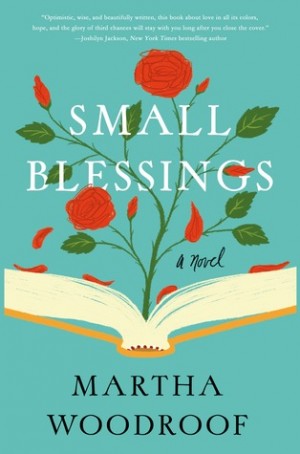
Small BlessingsIf I were to make a list of my favorite books this year SMALL BLESSINGS by Martha Woodroof would be at the top.  This is saying a lot for me because, according to Goodreads, I have read more than 90 books so far this year.

Tom has been muddling his way through life, without thinking and without feeling, just trying to get through one day at a time.  He, along with his mother-in-law Agnes, is trying to take care of his mentally unstable wife.  Marjory, who is paranoid and incapable of going outside of the house on her own, has been Tom’s responsibility for the past twenty years.

One day an encounter with a cheerful and optimistic new employee at the local college bookstore changes all of their lives.  During the same week, Tom receives a letter from a past lover saying that he is the father of a 10 year-old boy named Henry who is being sent to live with him.  How can this much change possibly happen to a person who was leading such a quiet and unassuming life?

This book is rich with well-rounded characters with whom you cannot help but admire.  Although Tom is clearly caught in a loveless marriage, he has made the ultimate sacrifice by never abandoning his wife.  Marjory’s mother Ages, who became a widow and a single mother at a very young age, has a resilience that many of us would envy.  Henry is a 10 year-old boy that is sweet and kind and flourishes in a home where he is loved and wanted.  Even the lesser characters, such as Russell and Iris who are also on the university faculty, have their own problems and struggles that enrich the storyline.

Sometimes a book begins slowly but has a strong ending.  Sometimes a book beings strongly but the ending is weak.  Sometimes a book has both a strong beginning and ending but the middle lags.  That is absolutely not the case with SMALL BLESSINGS.  There are twists and turns and unexpected surprises that one encounters throughout all of the wonderfully written prose.   I loved every single page of this book, which is a very rare thing to say.  Martha Woodroof has written a book that everyone needs to include SMALL BLESSINGS on their must read list.

*Thanks so much to NetGalley and the publisher for giving me an advanced copy of this book.

add-to-goodreads-button3


Author Q&A:

1. I really enjoy books with university/academic settings.  Did you have a particular experience at a university that made you use this setting?

My mother taught English at the University of North Carolina at Greensboro and used to regale me  with stories of departmental meetings. As an adult, I’ve managed to live mostly in college towns, and I enjoy hanging out on campus  and people-watching. To me, the campus of a small college functions as a societal bell jar in that it’s a closed community where people can’t escape each other’s company. Setting a novel on such a campus was the ideal way for me to examine all sorts of human relationships, from the petty and adversarial, to the loyal and loving.

About the bookstore in Small Blessings: My own  life is pretty much divided into the years before and after I got sober. My first real job in sobriety was at the Sweet Briar College Book Shop, working for the wondrous Roscoe (Skipper) Fitts, who was, to quote a late member of the English Department, “a real book man.” My job was Rose’s job; I ran the Espresso machine and did event programming.  It was while working there that I developed a  wish to write about a college whose heart beat in its bookstore.

2. Tom’s wife seems to have symptoms that would suggest she is on the autism spectrum.  Did you have a particular diagnosis in mind for her?

I did not, other than that she is irreparably damaged.  And I wanted explore what happens in a relationship between two loyal, well-meaning people that can  never, ever be a happy one.

3. Your first attempt, in my opinion, at novel writing is nothing short of amazing. What was the most exciting part in the entire process of having your first novel published?

Why thank-you so much, Melissa. Really, really, really!

The most exciting part is really that it’s happening.  Period. I’m old enough and have done enough National Public Radio stories on publishing to be terribly, terribly grateful to my agent Kate Garrick and my editor at St. Martins, Hilary Teeman, for taking me on. And I’m completely  tickled that they did. My only plan right now is to enjoy the adventure. I feel as though I’m up on a surfboard, riding a gigantic and exhilarating wave.

4. What is the best book, fiction or non-fiction that you have read so far this year?

I think in terms of can’t-put-it-down, cracking good story, probably The Son by Philipp Meyer. The characters in it are still with me, and I finished it a month ago.
5. Since Small Blessings has been such a success, do you have any plans for writing another novel? 

First draft is done. Second draft is being cranky, but I’ll get there.


About The Author:

Martha WoodroofMARTHA WOODROOF was born in the South, went to boarding school and college in New England, ran away to Texas for a while, then fetched up in Virginia. She has written for NPR, npr.org, Marketplace and Weekend America, and for the Virginia Foundation for Humanities Radio Feature Bureau. Her print essays have appeared in such newspapers as the New York Times, The Washington Post, and the San Francisco Chronicle. Small Blessings is her debut novel. She lives with her husband in the Shenandoah Valley. Their closest neighbors are cows.


Special thanks to Martha for being so kind and answering my questions.

3 Comments

Filed under Author Interviews, Literature/Fiction, Summer Reading

Review of The Seeds of Sorrow and Q&A with Author Lisa Brown

My Review:

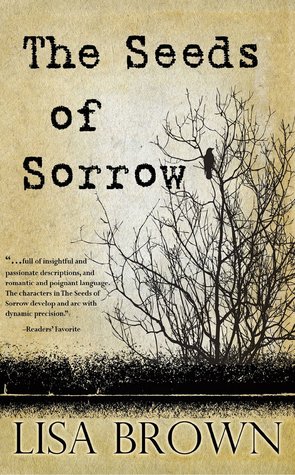
The Seeds of SorrowAlthough The Seeds of Sorrow is the sequel to Lisa Brown’s first book entitled The Porter’s Wife, it is a stand alone book and you do not have to read the first book in the series to understand this novel.

We are introduced to Agnes Berry on her wedding day in 1919.  She is surrounded by her friends and family and could not be happier to be marrying the love of her life, Art Craig.  As a gift from Agnes’ parents, Agnes and Art have a dream honeymoon in Winnepeg’s finest hotel.  But on the first night of their life together, Art has a terrible nightmare, and in a fit of thrashing around, he accidentally gives his new bride a black eye.

We come to understand that Art is a veteran of World War I and sleep eludes him as he cannot shake the horrible memories of the trenches and the deaths of his friends.  Agnes is an inspirational heroine as she tries to be as supportive as possible without embarrassing him or pushing Art too hard to talk about his experiences.

The first half of the novel deals with the everyday lives of Agnes and Art as they try to figure out the ins and outs of marriage and attempt to build a life together.  There are no great tragedies or revelations or surprise moments in this part.  Lisa Brown takes her time to portray realistic characters to whom the reader can relate on both an emotional and spiritual level.  Art and Agnes are surrounded by their loving family and close friends and together they also encounter some of the issues of the times such as prohibition and later the Great Depression.  Lisa builds characters with whom you will become emotionally invested and hope the best for.

When Agnes’ two older sisters, with whom she is very close, move across Canada to Vancouver, Agnes and Art decide that they also want to relocate and start a new life.  Lisa takes her time to describe beautifully the Canadian landscape as the family travels west by train.  This book makes me want to plan a vacation to western Canada, a part of the world I would never have considered traveling.

But will everything really work out for Agnes and Art?  What trials and tribulations will the family face in a new city?  Should they have ever left Winnepeg in the first place?

The title itself is definitely a hint that you should be ready with some tissues at the end of this book.  The reason we like tragedy and suffering in art is due to the fact that it helps us deal with and find a catharsis for our own grief in real life.  THE SEEDS OF SORROW is a must read for anyone who wants a profound emotional experience and enjoys historical fiction set in the early 20th Century.

Q&A with the Author Lisa Brown:

1. How did you decide to make Agnes the focus of this book as opposed to some of the other characters?

It was always going to be about Agnes (my great grandmother).  I had always planned on The Seeds of Sorrow being “the story” I had to tell.  My first novel, The Porter’s Wife, was more of a prequel or a foundational piece of work to build the characters.  I was fascinated by the strength of a woman (Sarah) who could survive as beautifully as she did under the conditions she faced, but it was the defining event of The Seeds of Sorrow that I believe had the most significant impact on my family; it was one that altered my family’s foundation and one whose effects are with me today, more than eighty years and a couple of generations later. 
 
I am fascinated by human nature, including my own strengths and quirks, and I grew up trying to understand the women in my family and what made them who they were so I could better understand myself.  My family did not share a lot in terms of feelings, and in fact many subjects were taboo, and I really needed to understand why … to help explain personalities and see if I could draw parallels.  I did my own research and uncovered the content for The Seeds of Sorrow.  It explained so much to me and I felt compelled to write about the events and relationships of my direct line.
 

2. What type of research did you do for Art’s character as far as Post Traumatic Stress Disorder? 

I actually didn’t do any research.  It was never about PTSD for me.  My reader’s labelled it that way.  It was a eureka moment for me when I read the first review.  It was by someone that was a student of PTSD, and I thought “Wow”!  For me, it was about my great grandfather’s painful journey.  For me, it was purely emotional, not clinical.  But it goes to show you that we are all emotional beings and our experiences, as well as our actions and reactions, are rarely unique.

3. How did you come up with the title “The Seeds of Sorrow”?  It is much more subtle than the title for your first book.  Did you have other working titles that you were considering?

The Seeds of Sorrow, as a title, perfectly captured what I have experienced in my own family over time.  It speaks to the lasting effects of trauma and sadness that can trickle down through the generations.  It can be much more lasting and impactful on who we are as people than happiness can.  Some of us can manage through the difficulties, and even come through them stronger, and some are not as successful.  It is the nurture part of nature versus nurture, the emotional impact of our family relationships, that I believe has the greater impact on who we are.

 I did contemplate The Broken Window as an alternate title, but it only captured “the moment” and not the effects of “the moment,” which was more important to me.

4. Are you planning on writing a third book?  It seems that you could continue writing the story of this family through any of the daughters’ children.

I hadn’t planned on writing a third, but I am rethinking that.  The reaction to The Seeds of Sorrow has been surprising to me in terms of the strength of the opinions.  I really worried about the ending because so many of the comments that I received from The Porter’s Wife included “heartwarming, happy ending, etc.” and this book is completely different. I worried about disappointing people.  My proofreader reassured me and said, “It doesn’t have to have a happy ending; it just has to have a powerful ending.  It has to be either really happy or really sad, but it has to make people feel strongly.  Then you know you have done your job as a writer.”  I like to make people happy, so it has been a challenge!
 
Agnes died before I was born and her sister Mary took her place.  My grandmother (Dorothy) was very close to her cousins (Margaret and Norma) and she called her Aunty Mary “Mum” after her own mother died.  As a child I have very fond memories of my Aunty Mary, who was an absolute sweetheart.  There is a third book in there, but it probably won’t come for a while.  The closer the story gets to me, the harder it is to tell…the seeds of sorrow flourished!
About the Author:  
Lisa BrownLisa Brown is an avid genealogist and enjoys writing about the fascinating lives of generations past.  She is the author of The Porter’s Wife and its sequel, The Seeds of Sorrow, both of which loosely follow three generations of women in her family history.  Lisa currently resides in Ontario, Canada with her husband and three sons.
Thanks so much to Lisa for providing the book to me and doing the Q&A.  If you would like to add THE SEEDS OF SORROW to your Goodreads list you can do so here as well as enter a GIVEAWAY on Goodreads to win a free copy:
  add-to-goodreads-button3


Leave a comment

Filed under Author Interviews, Historical Fiction, World War I