Author Archives: Melissa Beck

Melissa Beck's avatar

About Melissa Beck

My reading choices are rather eclectic. I enjoy reading a wide range of books especially classics, literature in translation, history, philosophy, travel writing and poetry. I especially like to support small, literary presses.

Help Me Choose a Header/Logo for BBD

I have spent hours trying to work with Microsoft Publisher to come up with a  new header and logo for The Book Binder’s Daughter.  Here is what I have come up with so far.  Vote and tell me what you like (if any).  Be kind, this is my first attempt!

1.

BBD Official Logo 3


2.


cropped-bbd-official-logo-32-e1405222336790.jpg


3.

Yet another logo


Click Here to Vote

Thanks so much for giving me your opinion.  If you have any other suggestions, leave them in the comments!


2 Comments

Filed under Uncategorized

Review of The Seeds of Sorrow and Q&A with Author Lisa Brown

My Review:

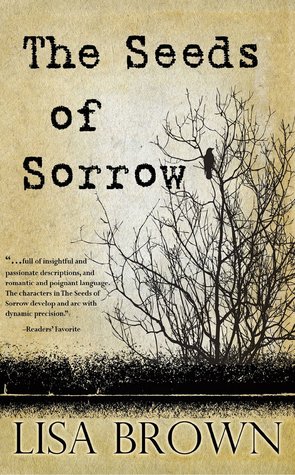
The Seeds of SorrowAlthough The Seeds of Sorrow is the sequel to Lisa Brown’s first book entitled The Porter’s Wife, it is a stand alone book and you do not have to read the first book in the series to understand this novel.

We are introduced to Agnes Berry on her wedding day in 1919.  She is surrounded by her friends and family and could not be happier to be marrying the love of her life, Art Craig.  As a gift from Agnes’ parents, Agnes and Art have a dream honeymoon in Winnepeg’s finest hotel.  But on the first night of their life together, Art has a terrible nightmare, and in a fit of thrashing around, he accidentally gives his new bride a black eye.

We come to understand that Art is a veteran of World War I and sleep eludes him as he cannot shake the horrible memories of the trenches and the deaths of his friends.  Agnes is an inspirational heroine as she tries to be as supportive as possible without embarrassing him or pushing Art too hard to talk about his experiences.

The first half of the novel deals with the everyday lives of Agnes and Art as they try to figure out the ins and outs of marriage and attempt to build a life together.  There are no great tragedies or revelations or surprise moments in this part.  Lisa Brown takes her time to portray realistic characters to whom the reader can relate on both an emotional and spiritual level.  Art and Agnes are surrounded by their loving family and close friends and together they also encounter some of the issues of the times such as prohibition and later the Great Depression.  Lisa builds characters with whom you will become emotionally invested and hope the best for.

When Agnes’ two older sisters, with whom she is very close, move across Canada to Vancouver, Agnes and Art decide that they also want to relocate and start a new life.  Lisa takes her time to describe beautifully the Canadian landscape as the family travels west by train.  This book makes me want to plan a vacation to western Canada, a part of the world I would never have considered traveling.

But will everything really work out for Agnes and Art?  What trials and tribulations will the family face in a new city?  Should they have ever left Winnepeg in the first place?

The title itself is definitely a hint that you should be ready with some tissues at the end of this book.  The reason we like tragedy and suffering in art is due to the fact that it helps us deal with and find a catharsis for our own grief in real life.  THE SEEDS OF SORROW is a must read for anyone who wants a profound emotional experience and enjoys historical fiction set in the early 20th Century.

Q&A with the Author Lisa Brown:

1. How did you decide to make Agnes the focus of this book as opposed to some of the other characters?

It was always going to be about Agnes (my great grandmother).  I had always planned on The Seeds of Sorrow being “the story” I had to tell.  My first novel, The Porter’s Wife, was more of a prequel or a foundational piece of work to build the characters.  I was fascinated by the strength of a woman (Sarah) who could survive as beautifully as she did under the conditions she faced, but it was the defining event of The Seeds of Sorrow that I believe had the most significant impact on my family; it was one that altered my family’s foundation and one whose effects are with me today, more than eighty years and a couple of generations later. 
 
I am fascinated by human nature, including my own strengths and quirks, and I grew up trying to understand the women in my family and what made them who they were so I could better understand myself.  My family did not share a lot in terms of feelings, and in fact many subjects were taboo, and I really needed to understand why … to help explain personalities and see if I could draw parallels.  I did my own research and uncovered the content for The Seeds of Sorrow.  It explained so much to me and I felt compelled to write about the events and relationships of my direct line.
 

2. What type of research did you do for Art’s character as far as Post Traumatic Stress Disorder? 

I actually didn’t do any research.  It was never about PTSD for me.  My reader’s labelled it that way.  It was a eureka moment for me when I read the first review.  It was by someone that was a student of PTSD, and I thought “Wow”!  For me, it was about my great grandfather’s painful journey.  For me, it was purely emotional, not clinical.  But it goes to show you that we are all emotional beings and our experiences, as well as our actions and reactions, are rarely unique.

3. How did you come up with the title “The Seeds of Sorrow”?  It is much more subtle than the title for your first book.  Did you have other working titles that you were considering?

The Seeds of Sorrow, as a title, perfectly captured what I have experienced in my own family over time.  It speaks to the lasting effects of trauma and sadness that can trickle down through the generations.  It can be much more lasting and impactful on who we are as people than happiness can.  Some of us can manage through the difficulties, and even come through them stronger, and some are not as successful.  It is the nurture part of nature versus nurture, the emotional impact of our family relationships, that I believe has the greater impact on who we are.

 I did contemplate The Broken Window as an alternate title, but it only captured “the moment” and not the effects of “the moment,” which was more important to me.

4. Are you planning on writing a third book?  It seems that you could continue writing the story of this family through any of the daughters’ children.

I hadn’t planned on writing a third, but I am rethinking that.  The reaction to The Seeds of Sorrow has been surprising to me in terms of the strength of the opinions.  I really worried about the ending because so many of the comments that I received from The Porter’s Wife included “heartwarming, happy ending, etc.” and this book is completely different. I worried about disappointing people.  My proofreader reassured me and said, “It doesn’t have to have a happy ending; it just has to have a powerful ending.  It has to be either really happy or really sad, but it has to make people feel strongly.  Then you know you have done your job as a writer.”  I like to make people happy, so it has been a challenge!
 
Agnes died before I was born and her sister Mary took her place.  My grandmother (Dorothy) was very close to her cousins (Margaret and Norma) and she called her Aunty Mary “Mum” after her own mother died.  As a child I have very fond memories of my Aunty Mary, who was an absolute sweetheart.  There is a third book in there, but it probably won’t come for a while.  The closer the story gets to me, the harder it is to tell…the seeds of sorrow flourished!
About the Author:  
Lisa BrownLisa Brown is an avid genealogist and enjoys writing about the fascinating lives of generations past.  She is the author of The Porter’s Wife and its sequel, The Seeds of Sorrow, both of which loosely follow three generations of women in her family history.  Lisa currently resides in Ontario, Canada with her husband and three sons.
Thanks so much to Lisa for providing the book to me and doing the Q&A.  If you would like to add THE SEEDS OF SORROW to your Goodreads list you can do so here as well as enter a GIVEAWAY on Goodreads to win a free copy:
  add-to-goodreads-button3


Leave a comment

Filed under Author Interviews, Historical Fiction, World War I

Review: The Confessions of Frances Goodwin by Robert Hellenga

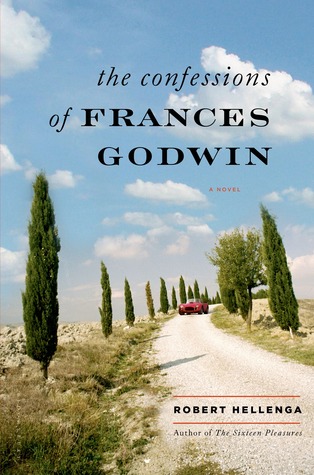
The Confessions of Frances GoodwinWhen I saw that this book was about a retired Latin teacher who looks back on her life, I jumped at the chance to get it from a Goodreads giveaway.  I felt it was my obligation as a Latin teacher to read this book and I guess that Goodreads agreed with me because they chose me as a winner and sent me the book right away.

We first meet Frances Goodwin when she is cleaning out her classroom and looking over the artifacts of her thirty plus year career as a high school Latin teacher in Illinois.  The beginning of the book has many references to Roman history and Latin authors as Frances looks back at the topics she has taught in her career.  She also interweaves classical philosophy and history throughout her meditations on life.  When she takes a course in Rome on spoken Latin, quite a bit of the language comes up in the text, all of which is of course translated for the reader.

I expected to learn more of Frances’ career and her life at school, but this book actually centers around her life at home with her husband and daughter.  She meets her husband, Paul when she is in college and taking his Shakespeare course.  He is already married at the time so they have a passionate affair which she does not expect to last.  But they do get married and have a little girl named Stella.  Her traditional, Polish, Catholic family is horrified by Frances’ non-traditional relationship.

When Frances’ husband is diagnosed with lung cancer and her daughter Stella drops out of college and gets involved with an abusive boyfriend, she starts to wonder about the purpose and direction of her life.  She is constantly reflecting on the choices she has made and wondering what fate will bring her next.  Another poignant theme of the book challenges the reader to ask how far will one go to protect one’s child.  Frances and Paul feel helpless and frustrated when they interact with Stella’s abusive boyfriend Jimmy.  Is Frances the type of person to take extreme measures to keep her daughter safe?

Overall, the plot of the book was its greatest strength.  Frances’ choices, challenges and confessions kept me reading.  THE CONFESSIONS OF FRANCES GOODWIN is full of Ancient History, Latin and Classical references.  I recommend this book if you have an interest in the Ancient World and particularly in the Roman Poet Catullus.

add-to-goodreads-button3


Leave a comment

Filed under Uncategorized

Review: A Triple Knot by Emma Campion

It’s been a while since I have read an historical novel, so I jumped at the chance to read and review Blogging for BooksA Triple Knot when it was offered by Blogging for Books.  This site has a huge selection of titles in all different genres and they will give you a free book in exchange for an honest review.  Check out their site if you are a blogger or want to start a blog and get some free books.

Now for my review of A Triple Knot:

A Triple KnotJoan of Kent, like many medieval noble women, has very little choice about whom she marries.  Since her cousin is King Edward III of England, he wants to marry her off to Arnaud Amanieu in order to form a political alliance for the crown.  When Arnaud’s father turns out to be a scheming ladies’ man who makes inappropriate advances towards his future daughter-in-law, the betrothal is called off.

Joan does fall in love with one of the king’s knights, a man named Thomas Holland.  She secretly marries Thomas but while he is away waging battles on behalf of the King, her family forces her to marry another nobleman named William Montagu. Despite the fact that she is compelled to marry someone else, the love and devotion that Joan has for Thomas never waivers.  Much of the book deals with their struggles to be together as man and wife.

Throughout all of her trials and tribulations, Joan must also deal with the advances of her cousin Ned who is the Prince of Wales and next in line to succeed his father Edward III.   Ned pledges his love for Joan at a very early age and vows to make her his queen.  Ned is constantly a sinister presences who keeps insinuating himself into Joan’s already complicated life.

The first half of this book was difficult for me to get through.  I found it predictable and some of the descriptions of court life rather lengthy and unnecessary.  I have to admit that at one point I was actually tempted to abandon the book.  But I pressed on with it and found that the second half of the book was more enjoyable.  By that point the characters were better developed and I became more curious about their fates.

This historical fiction is not for everyone. If you have a deep interest in 14th Century England and the story of Joan of Kent then I would recommend giving A TRIPLE KNOT a try.

add-to-goodreads-button3


You Might also Like:

Sisters of Treason

Sisters of Treason

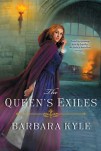
The Queen's Exiles

The Queen’s Exiles


Leave a comment

Filed under Historical Fiction, Summer Reading

Review: The Hundred Year House by Rebecca Makkai

I received an advanced copy of this book from the Viking through NetGalley

The acclaimed author of The Borrower returns with a dazzlingly original, mordantly witty novel about the secrets of an old-money family and their turn-of-the-century estate, Laurelfield.


100 year houseThe Devohr family mansion in the Midwest, which in 2000 is celebrating its 100th birthday, has a rich and haunted history.  The unique setup of this novel traces the history of Laurelfield Estate beginning in 1999 and working back to 1900.  The first part of the book centers around Doug and his wife Zee who are living in the coach house of the Devohr mansion.  I found this to be the most humorous part of the book as it approaches being an academic satire.  Zee works as a professor at the local university and Doug is trying to write a manuscript about an obscure poet, Edward Parfitt, so that he too can get a job in academia.  While Doug is trying to get a handle on his writing he develops a connection with Miriam, a quirky artist who is also sharing the coach house.

The second part of the book deals with Grace Devohr and her abusive, playboy husband George who come to live in the house after their marriage in 1954.  At this point the tone of the story changes to one that is sad and tragic.  Some of the mysteries of the house and its inhabitants that are brought up in part one are solved in this second part.  It is very unique that an author can seamlessly combine such different tones as satire and tragedy such as Rebecca Makkai does in this novel.

The third part of the book describes the artist colony which the house is turned into during a 25 year period beginning in 1929.  The artists are a mixture of interesting personalities who can be somewhat mischievous.  When Gamby Devohr threatens to shut down the colony, the artists ban together and cleverly “convince” Gamby to keep the colony open for at least another 25 years.  The author really displays her writing talent in this chapter as well when some of the narrative takes the form of letters and notes.

The final part of the book is the briefest and describes Augustus Devohr and his reasons for building the house for his wife Violet in the first place. It is Violet’s soul that is said to haunt the house.  Although the initial construction of the house is not fortuitous, we know from the unique structure of the book that later generations will have a happy ending in the house.

The Hundred Year House in a unique combination of both literary fiction and historical fiction. This is one of those rare books that has something for everyone.  If you like a little mystery, some romance or a touch of tragedy then I highly recommend The Hundred Year House.


1 Comment

Filed under Historical Fiction, Literature/Fiction, Summer Reading