
I receive a review copy of this title from Seagull Books. This book was published in the original Norwegian in 2011 and this English version has been translated by James Anderson.
My Review:
 When the book opens the main character, Tomas, is at a party where he meets a girl that is twenty years his junior; despite their age difference they appear to have an instant connection. Tomas reflects on the famous literary couple of Abelard and Heloise who have a passionate and scandalous love affair despite their age gap. But things did not turn out very well for Abelard and Heloise, so is this Tomas’ way of foreshadowing what will happen with his own relationship?
The book then flashes back to Tomas’ teenage years during which he spends the summer working in the same textile factory where his father is employed. He wakes up every day at the crack of dawn to do a physically difficult and monotonous job of fixing and oiling looms at the factory. The only bright spot in his day is when he is able to ride his bicycle over to his girlfriend’s house where he has dinner with her family. After dinner, without any protest or interference from her parents, he retires to the family guestroom with his girlfriend where he engages in what he calls his “adult education.” Tomas’ swears that he is madly in love with his girlfriend and wants nothing more than to marry her. He does stay with her for quite a few years into his early adulthood, but the only clue he gives us about the disintegration of this relationship is that when they tried to live together it “didn’t work out.”
The girl that Tomas ends up marrying is an actress from his home town whom he has run into from time to time when they were younger. Agnete is home for a visit while promoting a play that she is doing in Rome and it is on this trip home that she connects with Tomas. Tomas, at this point, has decided that he wants to be an author; when he meets Agnete he is the quintessential lonely writer who lives in a sparse bachelor pad and can barely make ends meet. And he is attracted to Agnete because, like any lonely writer, when he gives up his loneliness it must be for a relationship that is as unpredictable and volatile as possible. When they fight Agnete throws objects at Tomas and even gives him a black eye and some broken ribs. It is obvious that this tumultuous relationship cannot be sustained forever, and it does last for much longer than one would think. When it is finally over Tomas seems more relieved than anything else.
At the end of the book we are brought back to Tomas’s relationship with the younger woman whose name we are told is Janne. When she moves into his house he feels that for the first time in his life he is happy and content. Mundane things like reading in bed, cooking dinner and sitting on the couch make him happy. He goes on for quite a few pages about what happiness is and how he has finally achieved a level of happiness in his own life. But when Janne decides that the gap in their age is too much to handle she moves out and Tomas’ happiness is utterly shattered. The last forty pages of the book are a transcription of his notebooks or journals which he keeps during the time of his break-up. To call his notebooks sad or depressing would be a serious understatement; he wallows in his sorrow and at times his descent into loneliness, excessive drinking and inertia were very difficult to read. Tomas’ notebooks reminded me of the Roman poet Catullus, who writes his own depressing break-up poems after he has an affair with a married woman; there is also a significant age gap in this relationship between Catullus and this woman. I would highly recommend that Espedal read Catullus’ poems if he isn’t already familiar with them.
Finally, I have to mention the title, “Against Nature” and this theme that is constantly present in the book. Tomas always seems to be straining against what is considered “natural” or at least society’s perception of what is natural. It isn’t natural for a man in his mid-forties to have a relationship with a woman twenty years his junior. It isn’t natural that Tomas should stay in a tumultuous relationship with his wife long after all love is lost between them. Tomas and Agnete live in a farmhouse surrounded by nature and he never feels comfortable there; it is more natural for him to be in a city, away from nature. The book is an interesting reflection on the things we accept as natural; who decides what is natural and what is not? If we go against nature, does that make us unnatural or some type of an outcast?
Against Nature is a thought-provoking and poetic read. This book has made me excited to explore additional titles in the Seagull books catalogue.
About the Author:
 Tomas Espedal debuted as a writer in 1988. In 1991, he won awards in the P2/Bokklubbens rome competition for She and I. Founder of the Bergen International Poetry Festival, Espedal’s later works explore the relationship between the novel and other genres such as essays, letters, diaries, autobiography and travelogue. Espedal’s Go. Or the Art of Living a Wild and Poetic Life (2006) and Nearly Art (2009) have been nominated for the Nordic Council Literature Prize.
 Dada has grown up in a small town in Croatia from which she escaped as soon a she could at the age of eighteen. But she is drawn back to this bizarre town by the horrible suicide of her younger brother, Daniel. The book is told from Dada’s point of view and we are given information about her life and hometown as Dada remembers it. She speaks of memory being like a tape that “rolls forward and backwards. Fw-stop-rew-stop-rec-play-stop, it stops at important places, some images flicker dimly frozen in a permanent pause, unclear.” The narrative runs in the same way that Dada describes a tape: sometimes we get a passage that is an old memory and then all-of-sudden we are thrust into her present; Dada also likes to fast forward to her future and speculate on what she will do next.
 Olja Savičević is an awarded poet and novelist, who burst onto the authorial stage with her short story collection Make the Dog Laugh in 2006. Last year, her collection of poems Mamasafari and Other Things was short-listed for the ‘Kiklop Award for Best Collection of 2012’, awarded annually by the Pula Book Fair. Her best-selling book Farewell, Cowboy has already achieved great success in the region, and was even adapted into a stage play. The book was translated by Celia Hawkesworth and published by Istros Books in April, 2015.
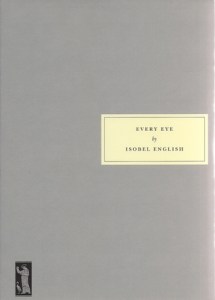 Hattie is a shy and awkward girl who is unsure of herself even into young adulthood. She was born with an eye that turns in and what she views as a gross, physical deformity harms her self esteem and her ability to connect with other people in her life. Hattie’s father died when she was very young, so she is raised by her mother and her father’s brother, Uncle Otway and his wife Aunt Cynthia.


 The Book Binder's Daughter