
My Review:
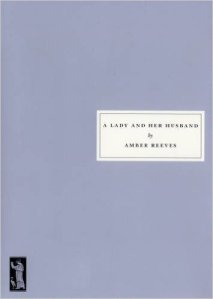 This latest release from Persephone Books is a charming and entertaining look into the life of a middle-aged British couple that has been married for twenty-seven years. When the book begins Mary is being told by her second eldest daughter, Rosemary, that she is engaged to be married. Mary tries very hard to be stoic about this announcement even though she is upset because another one of her children is flying the coop. Mary married John at a very young age and she has been a devoted wife and mother for her entire adult life. The thought that of all three of her children no longer need her makes her sad and she feels lost.
Rosemary feels so guilty that she is going to be leaving her mother that she comes up with an idea of how Mary can now occupy her time. Mary’s husband, John, owns a successful chain of tea shops and Rosemary thinks it would be a great idea for her mother to take an interest in the shop girls and find ways to improve their working conditions in the shops. Rosemary is much more liberal and progressive than her mother so she knows that this task is way outside her mother’s comfort zone. But Rosemary encourages her mother to have a life beyond her home. Mary has never ventured into the realm of social causes so she is very hesitant to agree to this little project but she does so reluctantly after her husband John talks her into it.
The real conflict in the book begins when Mary starts to form her own ideas about improving the working conditions in the tea shops. Mary wants the girls to wear more comfortable shoes, to have a proper place to eat their lunch, and she wants to increase their wages. When Mary timidly approaches John with her suggestions, his temper explodes and he berates her for what he calls her silly little reforms. Mary’s idea to increase wages for his employees is especially worrisome to John who believes that he pays his workers a fair wage. John immediately rejects all of Mary’s ideas for changing the tea shops and tells her that she is naïve and that none of her ideas are practical and would work in the real world.
There is an underlying commentary in the book on the differences between men and women and how they must recognize and learn to work around those differences in a marriage. Mary and John have had a marriage that is free of arguing and misunderstandings because she stays at home and doesn’t have anything to do with John’s business. John often comes across as condescending when he calls Mary “little mother” or “poor old thing.” He does truly care for her but he draws the line at wanting to please her when she tries to interfere with his business. Mary, on the other hand, after visiting John’s shops, better understands the plight of the poor and working classes and she approaches these issues from an emotional angle. At one point in the book she recognizes that she cannot make a rational decision free from emotion with John around so she takes a flat in London to give herself time to think.
This book was written in 1914 so it brings up many political and social issues that were relevant at the turn of the last century and which continue to be discussed into the 21st Century. Debates that have taken place during the recent elections in the U.S. have reminded us that women are still paid less than their male counterparts, the minimum wage for workers continues to be too low, and millions of Americans still do not have access to proper healthcare. Reeves has written a charming and humorous book about the differences between men and women and the perils of navigating a successful marriage. But there is also a serious side to the book that highlights issues that persistently affect the working classes and the poor.
I cannot recommend this book highly enough. If you love the titles in the Persephone catalog then you must read this book.
About the Author:
Amber Reeves, the daughter of William and Maud Pember Reeves, was born in 1887 in New Zealand. When her father was appointed Agent-General in 1896 her parents moved to England. Amber went to Kensington High School. Her mother was active in the Fabian Society and in 1912 wrote Round About a Pound a Week (now Persephone Book No. 79). In 1905 Amber, ‘a clear and vigorous thinker’, went up to Newnham College, Cambridge to read philosophy. After her affair with HG Wells led to pregnancy, in 1909 she married a young lawyer, Rivers Blanco White. Two more children were born in 1912 and 1914. She published three novels including A Lady and Her Husband (1914), worked at the Admiralty, and ran the Women’s Wages Department at the Ministry of Munitions; later she was briefly a civil servant, wrote a fourth novel, stood for Parliament, taught at Morley College for 37 years and published books on ethics and economics. She died in 1981.
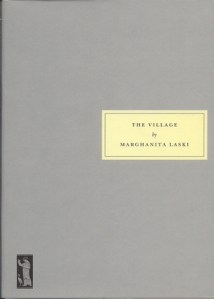 This novel opens in 1945 on the day in which the end of World War II has just been announced in the small village of Priory Dean. Everyone is celebrating and dancing in the streets but Martha Trevor and Edith Wilson still show up to their post duty at the Red Cross. During the course of their conversation we learn that they are from very different social classes; Martha is part of the upper-class gentry that live on the Hill in town and Edith is part of the working class families that live on the other end of town. At one point Edith worked as Martha’s housekeeper before Martha’s family hit some financially hard times.
 The Ashby family has maintained their estate in the south of England for many generations. The current family members who inhabit the estate are best known for their stables of beautiful horses. Aunt Bee, the matriarch of the family, oversees the care of her ten-year-old nieces Jane and Ruth. Bee supervises and runs the horse estate with the help of her niece Elenor and nephew Simon who are young adults. Although to visit them for afternoon tea, one would believe that this is a happy and well-adjusted family, the Ashby’s have suffered some terrible tragedies.
 I absolutely feel in love with the quirky, charming and free-spirited character of Cluny Brown. We first meet her through the eyes of her Uncle Arn, who is distressed because he feels that Cluny doesn’t seem to know her proper place in life. He tells a stranger that he meets in the park that his twenty year-old niece had the nerve to treat herself to tea at the Ritz. Uncle Arn is simply beside himself that Cluny doesn’t understand that she is a plumber’s niece and has no business having tea at the Ritz.
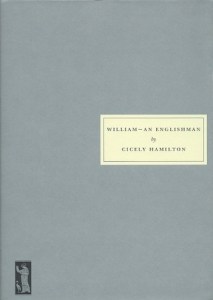 I was not surprised to find out the author composed this novel in a tent on the front lines of World War I. The novel is a gruesome, starkly honest portrayal of the horrors of war. The author, however, draws the readers in at first with a light and satirical description of its gentle, naïve and optimistic main characters, William and Griselda.



 The Book Binder's Daughter