
I am very excited to welcome TLC book tours back to the Book Binder’s Daughter with an historical fiction novel. Please read my review and look at the other stops on the blog tour.
My Review:
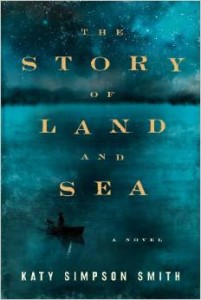 This book is profoundly sad from beginning to end. When the story opens John lives alone with his 10 year old daughter, Tabitha, in the shoreline town of Beaufort in North Carolina. John met his wife and married her after his time spent as a soldier fighting against the British in the Revolutionary War. John’s regiment was stationed near Helen’s home and he courts her and eventually even saves her life. But their time together, although among the happiest of their lives, is brief because Helen dies in childbirth. Now John is doing the best he can to raise his daughter on his own. When Tabitha becomes deathly ill with the yellow fever, he is desperate to save her life. John believes that the sea can heal his daughter so he boards a ship bound for the Caribbean in the hopes of curing his pathetically ill child.
The second part of the story flashes back to Helen’s early life as she is also raised by a single father. Helen’s own mother dies in childbirth and her father, Asa, struggles to nurture and provide for his only child. There are many similarities between John and Asa’s stories. Although Asa does not approve of Helen and John’s marriage, the two men eventually reach a state of mutual respect which, I believe, is due to a sympathetic understanding of one another’s shared grief.
When Helen is ten years old her father gives her a slave of her own named Moll. Helen and Moll grow up together and the lines between slave and owner are blurred. The two women act more like siblings than as servant and owner as they play together, fight and share secrets. Moll is very bitter when Helen’s father forces her to marry another slave named Moses. Moll goes on to have four healthy babies even though she never seems to have a true affection for her husband. The juxtaposition of two women’s stories is an interesting lesson in the role that fate plays on our lives. Moll is a slave and not free to make her own choices, but she has a healthy family and husband; Helen is free to make her own choices and adores her husband, but fate cruelly snatches her away from them too soon.
The final part of the book describes Asa and John’s grief and the different ways in which they deal with their loss. Although I do not require a happy ending for me to count a story as being successful, I do like to see some positive or uplifting aspects within the plot. THE STORY OF LAND AND SEA is melancholy throughout and Smith’s message through these characters appears to be that, at least in the 18th century, life is cruel and harsh and rarely has any glimpse of hope.

About the Author:
 Katy Simpson Smith was born and raised in Jackson, Mississippi. She attended Mount Holyoke College and received a PhD in history from the University of North Carolina at Chapel Hill and an MFA from the Bennington Writing Seminars. She has been working as an Adjunct Professor at Tulane University and is the author of We Have Raised All of You: Motherhood in the South, 1750-1835. She lives in New Orleans. You can read more about her at her website: http://www.katysimpsonsmith.com/
Thanks so much for stopping by. Click here to view the other stops on the tour.







 The Book Binder's Daughter