
 Even in reading this brief interview with literary critic, scholar and polyglot George Steiner one is impressed with the scope of his erudition. Born in Paris in 1929, his Jewish parents had fled Vienna because his father sensed the impending danger posed by the Nazis. Steiner’s father moved the family, once again, to America just as the Germans were invading Paris. The details of his upbringing and early years as a scholar that he discusses with his interviewer Laure Adler in this book are fascinating.
I thought it would be fitting for my last post of this year to share Steiner’s metaphor of “A Long Saturday” of life. Steiner explains in greater detail what he meant when he wrote in his book Real Presences, “Ours is the long day’s journey of the Saturday.”
I took the Friday-Saturday-Sunday schema from The New Testament. Christ’s death on Friday, with the darkness that descended on earth, the tearing of the veil of the Temple; then the uncertainty that—for the believers—had to be beyond horror, the uncertainty of the Saturday when nothing happened, nothing moved; finally the resurrection on Sunday. It’s a schema with limitless power of suggestion. We live through catastrophes, torture, anguish; then we wait, and for many the Saturday will never end. The Messiah won’t come, and Saturday will continue.
So how should we live this Saturday?
This Saturday of the unknown, of waiting with no guarantees, is the Saturday of our history. In this Saturday there’s an element both of despair—Christ killed in a terrible manner, buried—and of hope. Despair and hope, of course, are the two sides of the coin of the human condition.
It’s very hard for us to imagine a Sunday, except (and this is important) in the realm of our private lives. Those who are happy in love have known Sundays, epiphanies, moments of total transfiguration.
This was another book that someone from literary Twitter recommended to me in the early fall. Time’s Flow has done a wonderful series of posts on Steiner which I highly encourage everyone to visit, that reminded me I had this book sitting on my shelf. I am so grateful for the literary community of likeminded readers who have had a profound influence on my reading choices for this year.
Happy New Year and happy reading in the new year.
 In this epistolary novel, a woman named A’ida writes to her boyfriend Xavier who has been given two life sentences for committing some non-specific political act against the totalitarian regime under which they live. Xavier is not allowed to have any visitors and their request for a marriage license is denied three times, so they only means of contact they have is through letters. A’ida’s missives to Xavier are full of images of her daily life—visits with friends, her work as a pharmacist, trips to the market, run ins with soldiers from the military. The enduring message in all of her writing is her longing, always hopeful, to keep a human connection with Xavier no matter how long he is in prison. Images of different senses pervade her letters. First touch: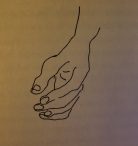
 I’ve fittingly ended the year by reading another classic piece of German Literature, Rock Crystal by Adalbert Stifter. I have to, once again, thank literary Twitter for steering me towards this author. The NYRB Classics edition I read also includes a lovely introduction by W.H. Auden.
 The following is an introduction to a review that I have contributed to the latest edition of The Scofield. The theme of this issue is Kobo Abe & Home; the link to the issue that includes my full review is below:


 The Book Binder's Daughter